How Often to Water a Peace Lily: The Droop Is a Warning, Not a Schedule
By the Windchime Walker editorial team
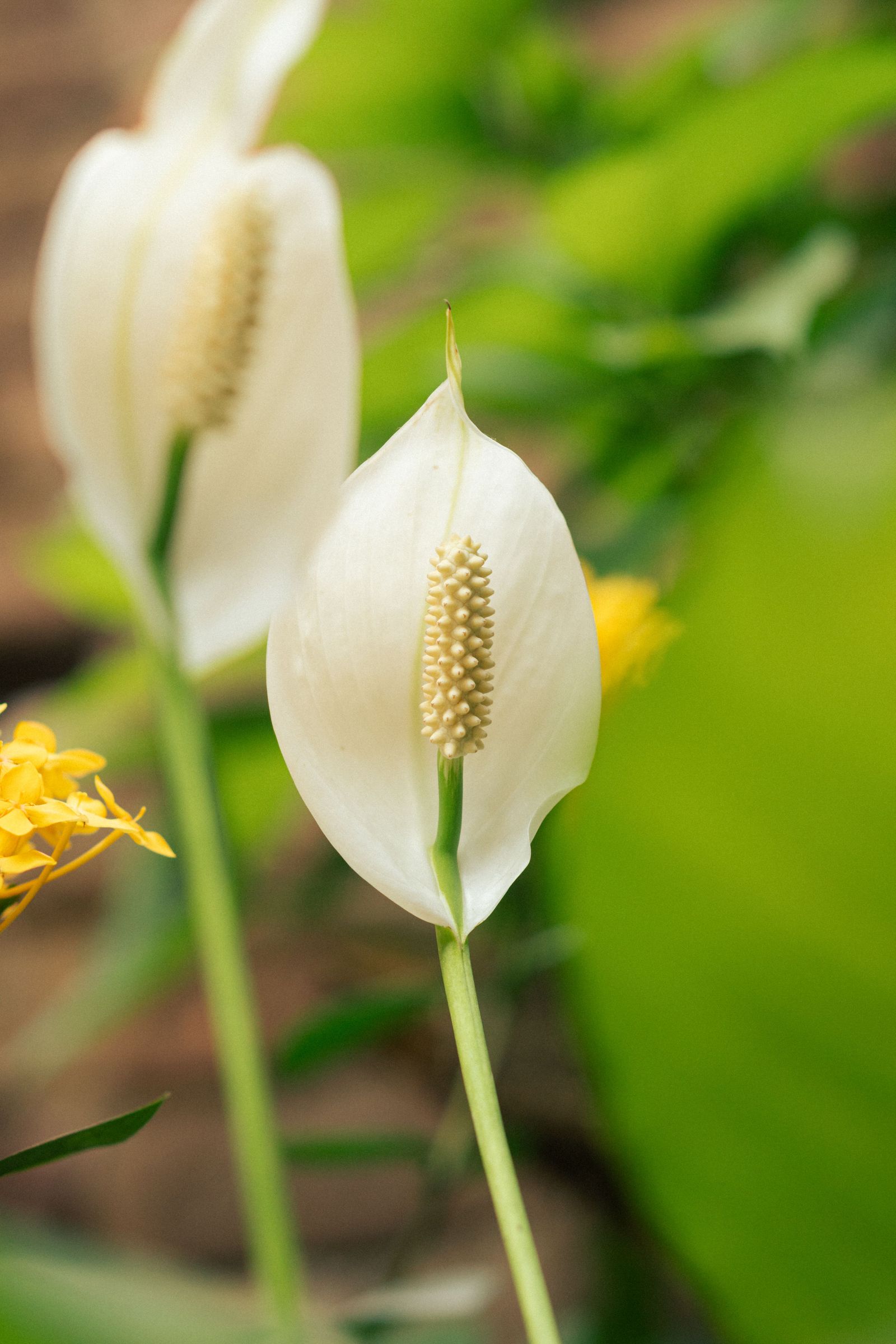
Photo: Subhrajyoti Paul / Pexels
The peace lily is the houseplant that talks, and what it says first fools almost every new owner. The leaves droop, dramatically, and the owner waters, and the plant stands back up within hours, and a habit is born: wait for the droop, then water. The habit works just well enough to keep the plant alive and just badly enough to keep it stressed. This page replaces it with the peace lily's actual watering system, which is simple, checkable, and kinder.
Our houseplant watering chart owns intervals across many plants. This page owns the peace lily alone: its check, its soak, its water quality problem, and its rescue.
Interactive tool
Watering Calculator: The Peace Lily Pot Audit
The inch check gives the day; this gives the amount. Enter your pot diameter as both length and width below and a depth of about 1 inch to see what one thorough soak actually is for a pot that size, then water only when the top inch of mix says dry.
19.9 gallons
For 32 square feet at 1 inch deep. That is about 76 liters, or 10 trips with a standard 2 gallon watering can.
A rain gauge or a straight sided can set in the bed tells you when a sprinkler or soaker hose has actually delivered this depth. Time alone is a guess, because hose pressure varies from house to house.
The conversion is arithmetic, not opinion: one inch over one square foot is 144 cubic inches of water, and a US gallon holds 231 cubic inches, so each square foot at one inch takes 0.62 gallons.
The Short Answer, Then the System
Water when the top inch of potting mix feels dry to your fingertip. In an average room that works out to roughly once a week in the growing season, stretching to every 10 to 14 days in winter when light and growth slow. When you water, water thoroughly: pour slowly until water runs from the drainage holes, let the pot drain completely, and empty the saucer. University of Florida IFAS guidance for the plant lands in the same place: keep the mix moist, and never let the pot sit in water. The inch check is the system; the week is just what the check usually says.
Why the Droop Is a Late Warning
The famous droop is the plant's emergency signal, not its thirst signal. A peace lily wilts when its leaf cells lose pressure, and it recovers fast because the roots are usually still functional. But a plant that faints every cycle is spending its energy on collapse and recovery instead of growth and flowers, and repeated hard wilting yellows the oldest leaves and shortens the plant's life. Use the droop as a diagnostic: if your plant drooped, your check interval is too long, and the fix is to check more often, not to water more each time. Owners who check the top inch twice a week almost never see the droop at all, which is the entire goal.
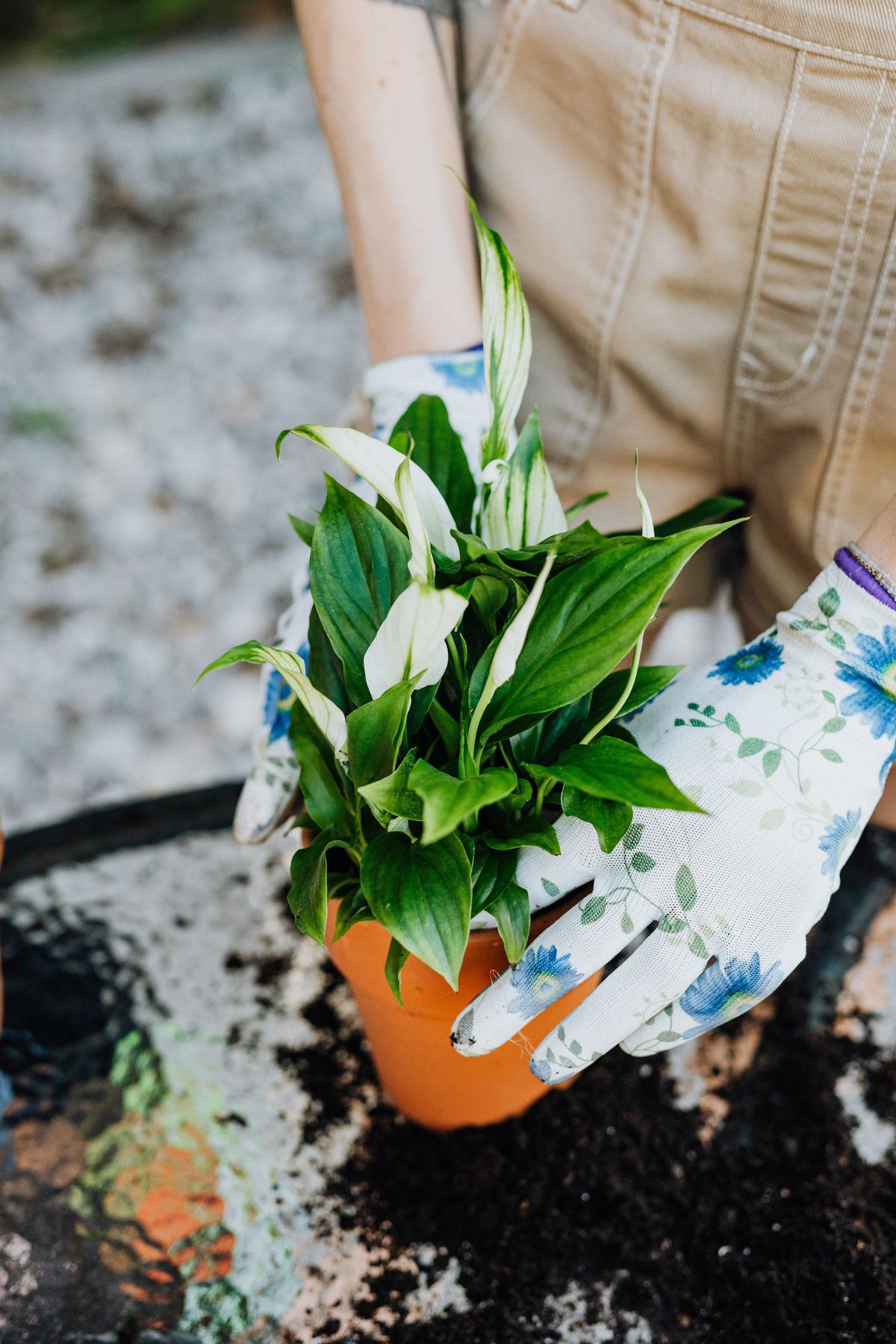
Green peace lily leaves in a pot indoors
The Soak, Done Right
Peace lilies want an even, complete wetting. Pour water slowly over the whole surface rather than in one spot, because dry potting mix channels: a fast pour runs down the inside of the pot and out the holes while the center stays dry, and the owner concludes the plant was watered when it was only rinsed around the edges. If the mix has dried hard and pulls away from the pot wall, set the pot in a sink or bowl of water for 15 to 20 minutes and let it drink from below, then drain. A pot that feels light as foam is a pot that needs this soak rather than a splash. After watering, the pot should feel honestly heavy; that weight becomes your reference for the next check, because a light pot on check day is a dry pot regardless of what your fingers think of the surface.
The Brown Tip Problem Is a Water Problem, Not a Watering Problem
The most common peace lily complaint after the droop is brown leaf tips on a plant whose watering is, by the inch check, correct. The cause is usually what is in the water rather than how much: peace lilies are sensitive to the fluoride and chlorine in tap water and to fertilizer salts that build up in the mix, and the tips are where the plant deposits what it cannot use. The fixes, in order of effort:
Rest the water. Fill the watering can the day before and let it stand uncovered overnight; chlorine dissipates, and the water reaches room temperature, which roots prefer.
Flush monthly. Once a month, water slowly and excessively, letting a generous volume run through the pot and out, carrying accumulated salts with it. Do this at a sink, not over the saucer.
Feed weakly. Fertilizer at half the label strength, a few times in the growing season only, is plenty for a plant grown for foliage and the occasional white spathe. More food is the fastest route to more brown tips.
Consider the source. If tips keep browning despite the above, rainwater or distilled water for a month is the diagnostic: tips that stop browning on the new leaves confirm the tap water was the issue.
Trim brown tips with clean scissors, following the leaf's natural point and leaving a hair of brown rather than cutting into green tissue, which just starts a new brown edge further up.
Season, Light, and Pot: the Three Dials
The inch check absorbs most variables, but three dials explain why your interval will not match a friend's. Light is the biggest: a peace lily in bright indirect light drinks far faster than one in a dim corner, and the dim corner plant is the one most often rotted by a weekly calendar. Season is second: winter's short days slow growth and evaporation together, which is why the interval stretches toward two weeks. Pot material is third: terracotta breathes and dries the mix faster than glazed ceramic or plastic, and a plant moved from plastic to terracotta often needs checking a day or two sooner. None of this needs a spreadsheet. It needs the fingertip, twice a week, and the willingness to believe it over any schedule printed anywhere, including this page's first paragraph.
The Collapsed Plant Rescue
A peace lily found fully collapsed, leaves flat against the pot rim, is usually recoverable, because the droop is this plant's party trick. Set the pot in a sink, water thoroughly from the top, then let it stand in an inch of water for 30 minutes while the mix rehydrates. Drain it fully and put it in indirect light, out of sun, while it recovers; most plants are standing again within a few hours and fully recovered by the next day. Then read the lesson: check the leaves over the following week for yellowing elders, trim any that do not recover, and shorten your check interval so the collapse does not repeat. A plant that collapses and does not recover after a thorough soak has a root problem instead: slide it from the pot and look. Healthy roots are white and firm; brown, mushy, or sour smelling roots mean rot, and the rescue becomes surgery, cutting away the dead roots with clean scissors, repotting into fresh mix in a clean pot, and watering lightly until new growth shows the plant has taken over again.
A Safety Note This Plant Requires
Peace lilies are listed toxic to cats and dogs by the ASPCA. They carry insoluble calcium oxalate crystals that burn the mouth and digestive tract of a chewing pet. They are not true lilies, and they do not carry the true lily's kidney failure risk to cats, but they do not belong within reach of a pet that chews plants. Our dog and cat safe plant lists exist for households solving exactly this problem, and the peace lily is on the move up or move out side of both.
Repotting and Dividing: the Watering Reset
Every peace lily eventually outgrows its pot, and the watering usually announces it first: the inch check starts saying dry a day or two sooner than it used to, roots appear at the drainage holes, and the plant wilts between waterings it once handled easily. Repot in spring, one size up, into fresh mix, and water thoroughly afterward to settle the roots. The repot is also the moment to divide, because a mature peace lily is not one plant but a cluster of crowns, and dividing it is both propagation and rejuvenation. Slide the plant out, tease and cut the root mass into sections, each with its own crown and a healthy share of roots, and pot each section in its own container at the size the section deserves, which is usually smaller than instinct suggests. Freshly divided plants are watered by the same inch check but watched more closely for the first month, because a reduced root system drinks less than the foliage expects; keep them in indirect light while they reestablish, and expect the first new leaf, not the calendar, to declare the division a success. Owners who divide every few years never own a struggling peace lily, because they never own an old one: the collection renews itself, and every plant in it is in the vigorous middle of its life, which is also when its watering is most forgiving.
Frequently Asked Questions
How often should I water my peace lily?
When the top inch of mix is dry to the touch, which in an average room is roughly weekly in spring and summer and every 10 to 14 days in winter. The check is the rule; the calendar is only what the check usually says. Check twice a week and water only when the check says so.
Why does my peace lily droop even though I water it?
Either the interval between waterings is too long, so the plant reaches the wilt point before each drink, or the water is not actually wetting the root ball, running down the sides of dry mix and out. Fix the first by checking more often; fix the second with a slow pour or a 15 to 20 minute bottom soak.
Should I mist my peace lily?
Misting raises humidity for minutes and is not a watering method. Peace lilies appreciate humid air, and a pebble tray or a nearby humidifier helps more than a spray bottle. What matters is the mix moisture, which only real watering changes. If you mist for the ritual of it, keep water off the white spathes, which spot.
Why are my peace lily's leaf tips brown?
Most often water quality: fluoride, chlorine, and fertilizer salts accumulate and burn the tips. Rest tap water overnight before use, flush the pot monthly at a sink, feed at half strength only in the growing season, and test rainwater or distilled water for a month if tips keep browning on new leaves.
Can a peace lily recover from wilting completely flat?
Usually yes, and fast. Soak it thoroughly, let it stand in an inch of water for 30 minutes, drain fully, and give it indirect light. Most plants stand within hours. If yours does not recover after a real soak, suspect root rot and inspect the roots.
Is the peace lily safe around pets?
No. The ASPCA lists it toxic to cats and dogs; its calcium oxalate crystals burn a chewing pet's mouth and gut. It is not a true lily and does not pose the lily kidney risk, but it belongs out of reach in a pet household, and pet households do better starting from a verified safe list.
Why is my peace lily not flowering?
Usually light, age, or a plant that has been in survival mode. A peace lily kept on the droop cycle spends its energy on recovery rather than bloom; a plant on the inch check, in bright indirect light, fed lightly in the growing season, and divided when crowded, flowers as a byproduct of being unstressed. Give a corrected plant a full season before judging it.
Photo credits: Subhrajyoti Paul (Pexels); Kaboompics (Pexels). Photos are served from this site; follow the credit to the library page for the original.