How Often to Water a Spider Plant: the Storage Root Rule and the Brown Tip Verdict
By the Windchime Walker editorial team
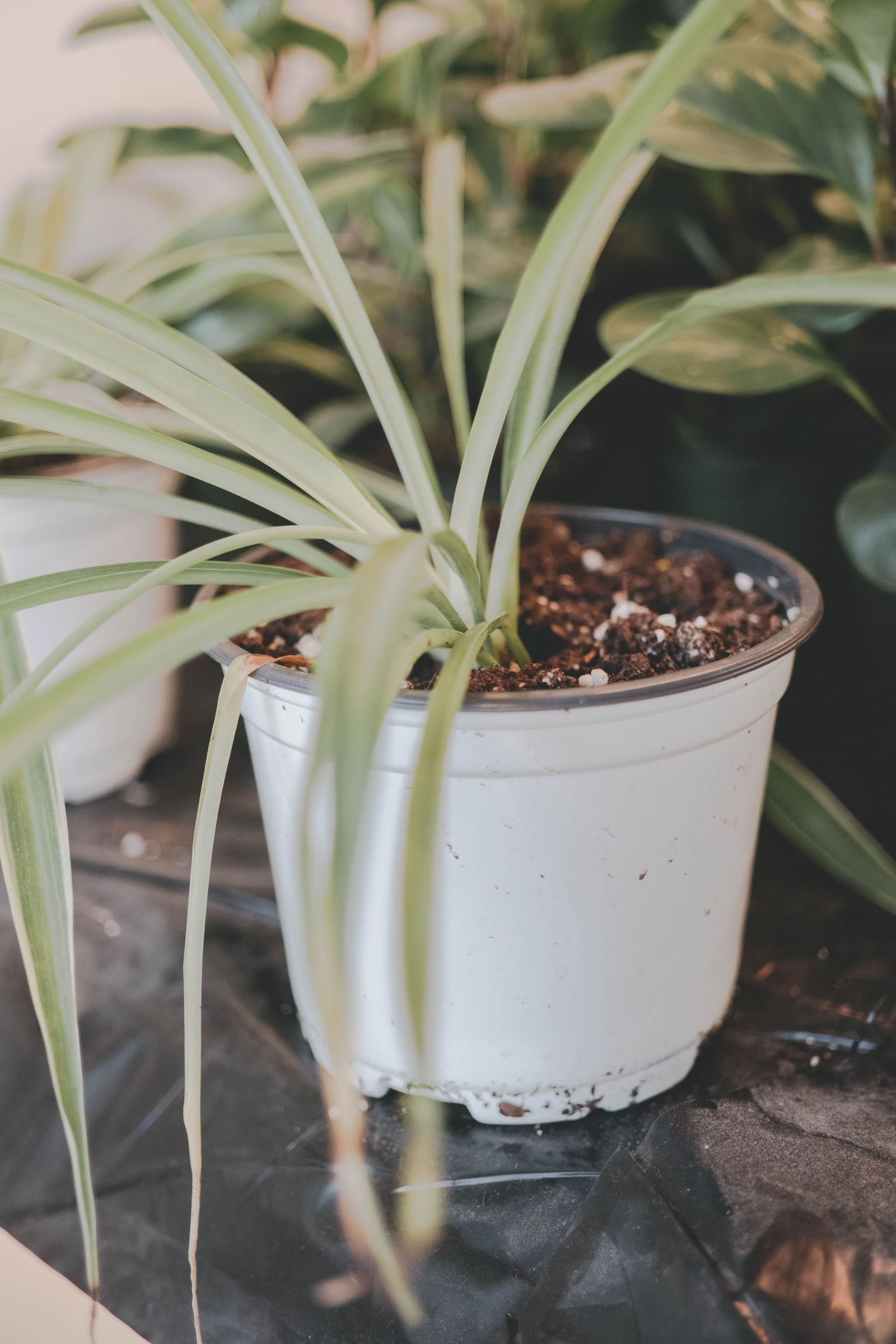
Photo: Joshua Mcknight / Pexels
The spider plant keeps its own water supply. Slice into the root mass of a mature plant and you find thick, pale, tuberous roots, closer to a cluster of small potatoes than to ordinary roots, and they exist to store water against a dry spell. That one fact sets the whole watering system: a plant carrying its own reservoir does not need a strict schedule, forgives a forgotten week, and rots if you water it like a fern. This page builds the interval from those roots, then settles the question spider plant owners actually lose sleep over, the brown leaf tips.
Our houseplant watering chart owns intervals across plants. This page owns the spider plant: its storage roots, its soak, and its tips.
Interactive tool
Watering Calculator: The Spider Plant Pot Audit
A thorough watering wets the whole root ball until it drains, then the storage roots carry the plant. Enter your pot diameter as both length and width below and a depth of about 1 inch to see how much water a full soak takes for a pot that size.
19.9 gallons
For 32 square feet at 1 inch deep. That is about 76 liters, or 10 trips with a standard 2 gallon watering can.
A rain gauge or a straight sided can set in the bed tells you when a sprinkler or soaker hose has actually delivered this depth. Time alone is a guess, because hose pressure varies from house to house.
The conversion is arithmetic, not opinion: one inch over one square foot is 144 cubic inches of water, and a US gallon holds 231 cubic inches, so each square foot at one inch takes 0.62 gallons.
The Short Answer
Water when the top 1 to 2 inches of mix are dry to the touch. In an average room in the growing season that lands at about every 7 to 10 days; in winter, with low light and slow growth, it stretches to every 12 to 21 days. When you water, water thoroughly: pour over the whole surface until water runs from the drainage holes, let the pot drain completely, and empty the saucer. Then leave it alone until the check says water again. The storage roots bridge the gap between drinks; your job is to refill the reservoir fully, then let the plant spend it.
Why the Check Depth Is Deeper Than for Most Houseplants
Most houseplants get the top inch rule. The spider plant gets 1 to 2 inches because the top of the pot is not where this plant keeps its water. The tuberous roots sit through the whole root ball and stay plump long after the surface mix has dried, so a surface check makes the plant look thirstier than it is and invites the classic spider plant death spiral: frequent small waterings, a constantly wet crown, and rot starting where the leaves meet the mix. Push a finger in to the second knuckle, or lift the pot: a watered spider plant is noticeably heavy, and a thirsty one is light. Weight is the most honest gauge this plant offers, especially for hanging baskets you check by lifting rather than by reaching.
The Brown Tip Verdict: It Is Usually the Water, Not the Watering
Brown, crispy leaf tips are the spider plant's signature complaint, and the cause is usually chemistry rather than frequency. Spider plants are sensitive to fluoride and to chlorine and salts that concentrate in the mix, and the damage shows at the leaf tips first. University of Florida IFAS guidance on the plant points the same way: where tap water is fluoridated, rainwater or distilled water avoids the tip burn. Read the evidence before changing your schedule. Tips browning on a plant whose watering rhythm is right, with the browning worst on the oldest leaves and no mushiness at the crown, is a water quality report. The fixes, in order: switch to rainwater or distilled water for a month and compare new growth; if you stay on tap water, let it sit uncovered overnight before use and flush the pot at a sink every month or two to wash out accumulated salts; and check your fertilizer hand, because overfeeding produces the same tip burn by the same salt route. Brown tips do not heal. Judge the fix by the new leaves, and trim the dead tips with clean scissors if the look bothers you, cutting just into the brown so you do not wound green tissue.
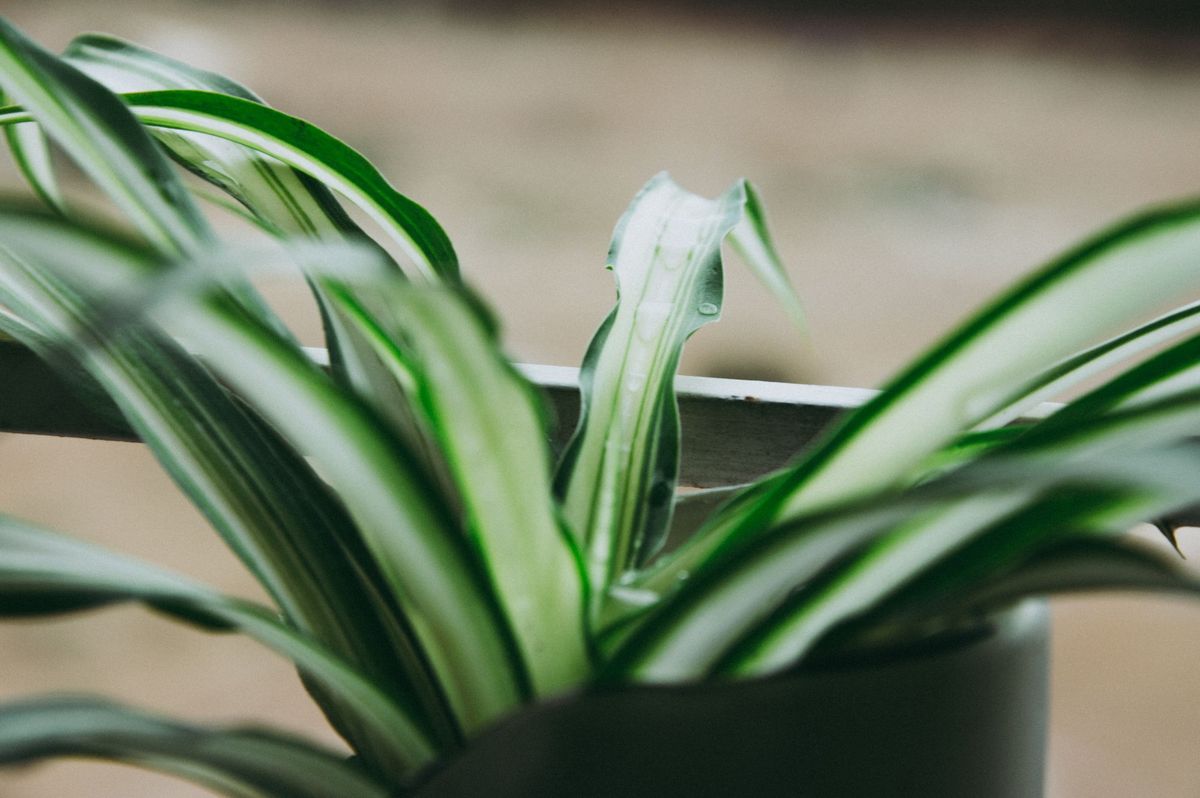
Spider plant leaves beaded with water droplets
Hanging Baskets Dry Differently
Most spider plants live hanging, and a hanging pot is a different watering problem from the same plant on a shelf. Air moves around the whole pot, the mix dries from all sides, and the plant sits above eye level where nobody notices the mix at all. Baskets in bright rooms can reach the dry check in 5 to 7 days in summer even while a shelf plant in the same room takes 10. Take the basket down to water it: carry it to a sink, soak it, let it drain fully before rehanging, because watering in place either underwaters (a cautious splash that never reaches the bottom roots) or drips onto the floor and furniture below. The lift test doubles as the check: a basket you take down twice a week to weigh in your hands will never surprise you.
Plantlets Drink on Their Own Schedule
The dangling babies are the reason most people grow this plant, and their watering depends on where they are in life. Plantlets still attached to the mother are watered by her; do nothing extra. A plantlet pinned to its own small pot of mix while still attached, the easiest propagation method, needs its little pot kept lightly moist until its own roots take hold, which is a different rhythm from the mother's deep and dry cycle, so water the baby pot separately with small amounts. Once cut free and growing, a young plant graduates to the adult rule over its first season as its storage roots thicken. A plantlet potted straight into a large pot is the one common failure: too much wet mix around too few roots. Start plantlets small, in pots barely wider than the plantlet, and pot up as they fill in.
Winter, Light, and the Honest Interval
The winter stretch to 12 to 21 days surprises owners who water on a summer calendar, and it is where most rot happens. The plant is not drinking less because it is unhappy; it is drinking less because low light means slow growth and cool rooms mean slow evaporation. Move the check, not the plant: in winter, test the mix before every watering without exception, and expect the answer to be not yet more often than not. Light drives the other end of the range too. A spider plant in a bright window, the placement that gives the strongest variegation, can run a full third faster than the same plant in a dim hallway. There is no single correct number of days for this plant; there is a correct check, and the days are whatever the check reports in your room.
A Note for Pet Owners
Spider plants are listed by the ASPCA as nontoxic to cats and dogs, which is one reason they hang in so many pet households. Cats still chew the leaves and bat the plantlets, and a plant used as a cat toy suffers mechanically rather than chemically. Hang it a jump beyond reach, and let the plantlets dangle where they will be admired instead of harvested.
The Mix and Pot That Make the Rhythm Possible
The 1 to 2 inch check only works in a pot that drains and a mix that dries. A spider plant in a hole free decorative pot, or in dense garden soil that stays wet for two weeks, cannot be watered correctly by any schedule, because the reservoir roots sit in water they cannot escape. Use a pot with drainage holes, keep the pretty pot as a cachepot you empty after watering, and plant in a standard peat or coir based potting mix with perlite; the plant is not fussy about brand, only about air in the root zone. Repot when the tuberous roots start lifting the plant out of the pot or crowding through the drainage holes, usually every year or two for a vigorous plant, and go up one size only. An oversized pot holds more wet mix than the roots can drink between waterings, and the deep dry check stops working because the bottom third never dries at all. Repotting is also the one moment to inspect the reservoir itself: healthy storage roots are pale, thick, and firm. Brown, stringy, or mushy roots get trimmed back to firm tissue with clean scissors before the plant goes into fresh mix.
Yellow Leaves, Pale Leaves: the Other Two Reports
Tips are the famous complaint, but the leaves file two other reports worth reading. Whole leaves yellowing and going limp at the base, on a plant whose mix stays wet, is the overwatering report: check the cachepot for standing water, let the plant dry to the full check depth, and if the base feels soft, unpot and trim rotted roots before repotting. Leaves going pale and washed out, with the variegated stripes fading toward green, is a light report rather than a water one: the plant is alive but underlit, and it wants a brighter window, where it will also drink a little faster and show its stripes again. A plant that sheds a few of its oldest outer leaves each season while pushing new growth from the center is doing neither; it is aging normally, and the correct response is to trim the spent leaves and leave the schedule alone. Diagnosis before adjustment is the whole skill this plant teaches: three similar looking declines, three different causes, and only one of them is fixed with the watering can.
Frequently Asked Questions
How often should I water a spider plant?
When the top 1 to 2 inches of mix are dry: about every 7 to 10 days in the growing season and every 12 to 21 days in winter in most rooms. Soak thoroughly until water drains, empty the saucer, and let the storage roots carry the plant to the next check.
Why are my spider plant's leaf tips brown?
Usually water chemistry, not watering frequency. Fluoride, chlorine, and fertilizer salts concentrate in the mix and burn the tips. UF/IFAS guidance points to rainwater or distilled water where tap water is fluoridated. A monthly sink flush and a lighter fertilizer hand help; judge the fix by new growth, since browned tips do not heal.
Can a spider plant recover from underwatering?
Almost always, and faster than almost any other houseplant. The tuberous roots store water for exactly this emergency. A plant that has gone limp and pale after a missed month usually perks up within a day of a full soak. Repeated droughts cost leaves, but a single one rarely costs the plant.
How do I water a spider plant in a hanging basket?
Take it down. Baskets dry from all sides and faster than shelf pots, and watering in place underwaters or drips. Carry it to a sink, soak until water runs through, drain it completely, then rehang. Lift the basket between waterings: light means the check is due.
Is the spider plant safe around cats and dogs?
Yes. The ASPCA lists the spider plant as nontoxic to cats and dogs. Cats may still chew leaves and play with the dangling plantlets, which damages the plant rather than the cat, so hang it beyond easy jumping range.
Photo credits: Joshua Mcknight (Pexels); Ravi Kant (Pexels). Photos are served from this site; follow the credit to the library page for the original.