How Often to Water an Aloe Vera Plant: Dry All the Way Down
By the Windchime Walker editorial team
Photo: Lidia Bekenova / Pexels
More aloe vera plants are killed by kindness than by any other cause. The plant comes home plump and architectural, the owner waters it like a houseplant, and within two months the leaves go soft, translucent, and sad at the base, and the owner waters more, because the plant looks unwell. It was drowning. Aloe is a desert succulent storing its water supply in its own leaves, and its watering rule is the opposite of a fern's: long dry spells, then a flood. This page gives the rule, the signs that tell thirst from rot, and the rescue for the plant that has already been loved too wet.
Our succulents guide owns the group method of soak and dry. This page owns aloe alone: its deeper dryness standard, its leaf diagnosis, and its rescue.
Interactive tool
Watering Calculator: The Aloe Pot Audit
When the skewer finally says dry, the soak should be complete. Enter your pot diameter as both length and width below and a depth of about 1 inch to see what one desert rain is for a pot that size, then put the can away for weeks.
19.9 gallons
For 32 square feet at 1 inch deep. That is about 76 liters, or 10 trips with a standard 2 gallon watering can.
A rain gauge or a straight sided can set in the bed tells you when a sprinkler or soaker hose has actually delivered this depth. Time alone is a guess, because hose pressure varies from house to house.
The conversion is arithmetic, not opinion: one inch over one square foot is 144 cubic inches of water, and a US gallon holds 231 cubic inches, so each square foot at one inch takes 0.62 gallons.
The Short Answer, Then the Reasoning
Water when the mix has dried a couple of inches down from the surface, and in a small pot, when it is dry most of the way through. Then water deeply, until it runs from the drainage holes, and empty the saucer. In practice that lands at roughly every 2 to 3 weeks during spring and summer growth, and every 4 to 6 weeks in winter. The range is wide because the interval is not really about time: it is about how fast your pot, your mix, your light, and your room dry the plant out. A skewer pushed to the bottom of the pot and pulled out clean and dry is a more trustworthy schedule than any number of days, including ours.
Why Aloe Wants Drought
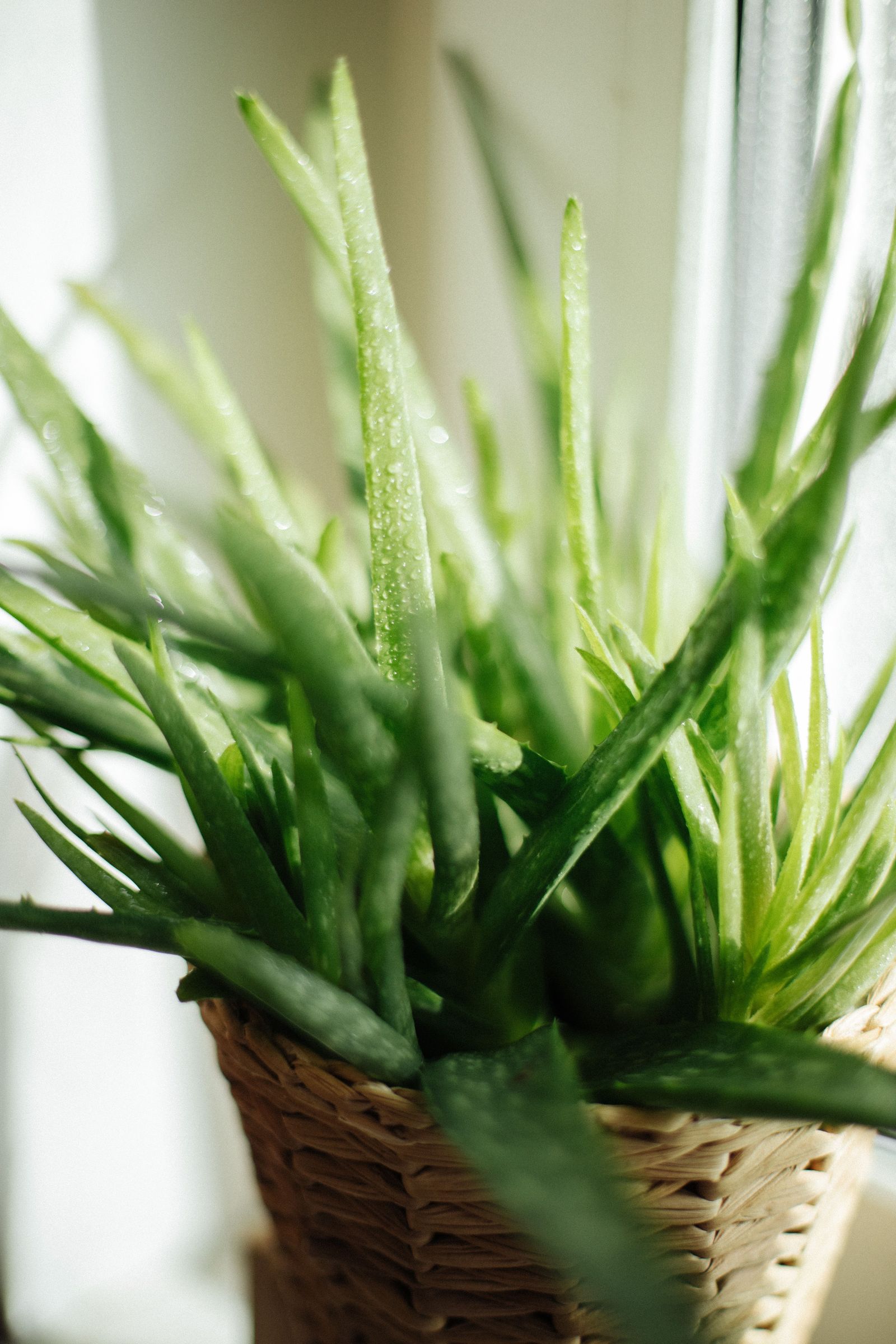
Understand the plant and the rule stops feeling like neglect. Aloe vera evolved in arid country, and its thick leaves are water tanks: the gel that people prize for sunburn is the plant's reservoir, held against dry months. The roots are built to drink hard during rare rain and then sit in dry soil, and they are not built to sit wet: in constantly moist mix they suffocate and rot, and the rot climbs into the leaf bases, which is why the collapse, when it comes, starts at the bottom of the plant. NC State Extension notes the plant's wide tolerance for light, from bright sun to moderate indoor light, and that tolerance matters here because light is the throttle on the whole system: the brighter the plant, the faster it grows and drinks, and the shorter the honest interval. Aloe in a sunny south window and aloe on a dim desk are on different schedules, and both are fine, as long as each is watered by dryness rather than by the other's calendar.
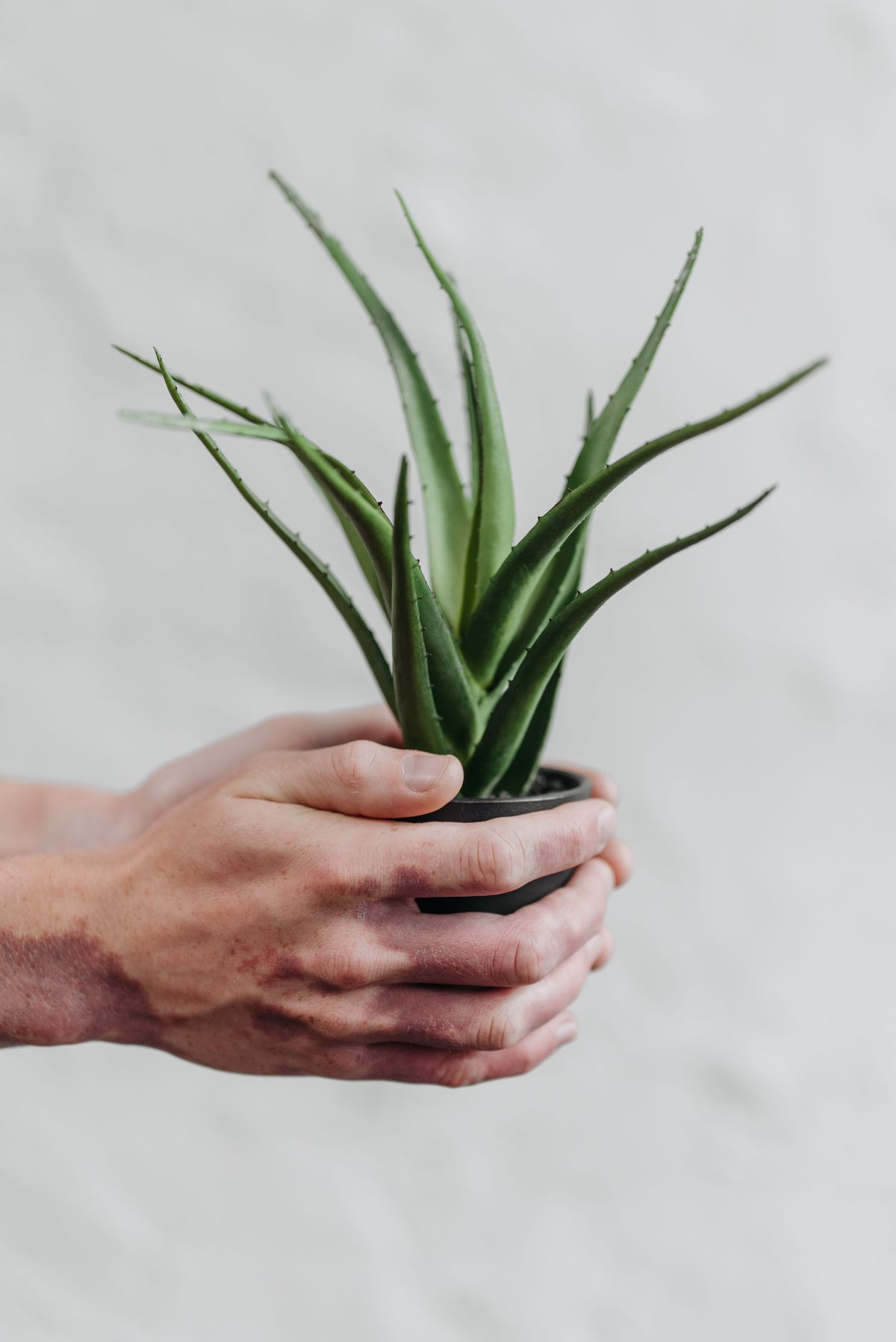
An aloe vera rosette with thick green leaves
The Diagnosis Ladder: Reading the Leaves
Aloe talks with its leaves, and the skill is telling its two complaints apart, because their cures are opposites.
Thirsty aloe. Leaves thin and flatten slightly, their plump curve going concave; the leaf edges may curl inward, and the color dulls toward a grayish or slightly reddish cast in strong light. The mix is dry deep down and the pot feels light. Cure: one deep soak. The leaves plump again over the following days, slowly, not in hours; a plant that perks up overnight was not this thirsty.
Overwatered aloe. Leaves go soft, mushy, or translucent, especially at the base; the color yellows or browns from the bottom up; the mix smells sour, and the plant may wobble in its pot because the roots that anchored it are gone. Cure: stop watering entirely and go to the rescue below. More water, at this stage, is the disease being offered as the medicine.
Sunburned aloe. A plant moved suddenly into harsh direct sun bleaches or browns on the exposed leaf faces while staying firm. Not a water problem at all; move it back and reintroduce sun over a week or two. Beginners misread this as thirst constantly, and it is worth naming on a watering page because the wrong cure, a big drink for a burned plant in wet mix, creates the second problem while solving nothing.
The Pot and Mix That Make the Rule Possible
The dry rule only works if the pot lets the mix dry. Three requirements, none optional. First, a drainage hole: aloe in a pot without one is aloe on a timer, because every watering leaves a hidden reservoir at the bottom exactly where the roots sit. Second, a fast mix: a cactus or succulent mix, or regular potting mix cut with a third to a half of perlite or coarse sand, so water passes through in seconds rather than lingering. Third, a pot sized to the plant: an oversized pot holds a large volume of mix that stays wet far from the roots, and more aloes rot in too big pots than in too small ones. Terracotta is the forgiving choice for beginners because it breathes and dries evenly and its weight keeps a top heavy rosette upright. Repot only when the plant is crowded or toppling, in spring, and wait a week after repotting before watering, so any roots torn in the move can callus rather than rot.
Watering Day, Step by Step
When the skewer says dry, water like desert rain. Take the plant to a sink. Pour slowly over the whole surface until water runs freely from the holes; wait a minute and do it again, because the first pass mostly wets channels. Let the pot drain for ten minutes until dripping stops, then return it to its saucer or cachepot empty. Never leave an aloe standing in the runoff, and never water on a schedule that ignores the skewer because a trip is coming: a healthy aloe would rather go an extra week dry than be watered a week early, every time, and a plant sitter should be told exactly that, in writing if necessary. In winter, cut both frequency and enthusiasm: the plant is resting, the light is weak, and the mix dries slowly, so the 4 to 6 week end of the range is normal and not a cause for concern.
The Unpot and Rescue
For the overwatered plant, the rescue is surgery and it works more often than owners expect. Slide the plant out of its pot and shake and wash the mix from the roots. Healthy roots are pale and firm; rot is black or brown and turns to mush between your fingers. Cut away every rotted root and any leaf that is soft at the base, using a clean knife, and keep cutting until what remains is firm and pale. Then do the counterintuitive part: leave the plant out of its pot, in open air and indirect light, for two to three days, so the cuts callus. Rot enters through wet wounds; callused cuts in dry mix are safe. Repot into fresh, dry, fast mix in a clean pot with a hole, and wait a full week before the first light watering. Most rescued aloes, given this drought discipline, push new firm leaves from the center within a month, and the owner emerges from the rescue converted: the skewer, the drainage hole, and the patience are the whole religion of this plant.
Pups, and the Gel Leaf Question
A happy aloe announces itself with pups, the offsets that crowd around the mother rosette, and pups are both the plant's propagation and a watering consideration: a crowded pot dries unevenly and the pups compete for the same drink. Separate them at repotting, when a pup has reached about a fifth of the mother's size and has roots of its own, twisting or cutting it free and treating any wound with the same callus discipline as the rescue: a day or two of air before potting into dry mix, then a week before the first watering. And the gel leaf question, which every aloe owner eventually asks at a sunburn: yes, the leaf gel is the traditional remedy, and a leaf cut for gel should be a lower, outer leaf, taken cleanly at the base. But a plant being watered correctly should be giving up a leaf rarely, not regularly; a plant harvested hard is a plant being mined, and it thins and weakens exactly as an underwatered one does. Grow a second aloe for the medicine cabinet if the household uses gel often, and let each plant be harvested at the pace it can replace leaves, which is the pace of a plant on the dry discipline this page teaches.
Frequently Asked Questions
How often should I water my aloe vera plant?
When the mix has dried a couple of inches down, and in small pots nearly all the way through, then deeply until it drains. That is roughly every 2 to 3 weeks in the growing season and every 4 to 6 weeks in winter, but the dryness check, a skewer pulled out clean and dry, outranks any day count.
What are the signs of overwatering an aloe?
Soft, mushy, or translucent leaves, yellowing or browning from the base upward, a sour smell from the mix, and a plant that wobbles because its roots have rotted. Stop watering immediately and inspect the roots; the rescue is to cut away rot, callus the cuts for two to three days, and repot into dry fast mix.
What does a thirsty aloe look like?
Its leaves thin, flatten, and curl slightly at the edges, losing their plump curve, and the color dulls. The pot feels light and the mix is dry deep down. One deep soak fixes it, with the leaves replumping over several days rather than overnight.
Can aloe vera sit in water or a pot without drainage?
No. Standing water and hole free pots are the two most reliable ways to rot this plant. Aloe needs a drainage hole, a fast draining mix, and a saucer that gets emptied. If a decorative pot has no hole, keep the aloe in a plain nursery pot inside it and lift it out to water.
Why is my aloe turning brown in the sun?
Probably sunburn from a sudden move into harsh direct sun, not thirst. The leaves bleach or brown on the exposed faces while staying firm. Move the plant back to indirect light and reintroduce sun gradually over a week or two; watering will not fix it and a soaked plant in wet mix trades one problem for another.
Should I water aloe after repotting?
Not right away. Wait about a week after repotting before the first watering, so roots torn in the move can callus. A fresh repot into slightly moist mix, then patience, then a normal deep watering once the plant has settled, is the sequence that avoids rot.
Can I keep an aloe vera plant in a bathroom?
It will tolerate the humidity, but bathrooms usually fail the plant on light, and light is the throttle on its whole water economy: a dim bathroom aloe grows pale and stretched and dries so slowly that even monthly watering can rot it. If the bathroom has a genuinely bright window it can work; otherwise the plant belongs in the brightest room you have, where the dry discipline on this page runs at its natural pace.
Photo credits: Lidia Bekenova (Pexels); ROCKETMANN TEAM (Pexels). Photos are served from this site; follow the credit to the library page for the original.