Bamboo is two plants wearing one name, and three situations wearing one question. The plant most people mean is true bamboo, a giant grass, and the plant half the search results answer for is lucky bamboo, which is not a bamboo at all but a dracaena growing in a vase of water. Their watering has nothing in common, so this page settles the identity first. After that, true bamboo splits by situation: a container plant lives on sessions, a new planting lives on an establishment schedule, and an established clump lives on a weekly inch budget. The dracaena page on this site owns lucky bamboo in soil, and the lucky bamboo page owns the vase; this page owns true bamboo in its pots and in the ground.
Home / Gardening Basics for Beginners
How Often to Water a Bamboo Plant: The Container Rhythm, the Establishment Year, and the Leaf Curl Signal
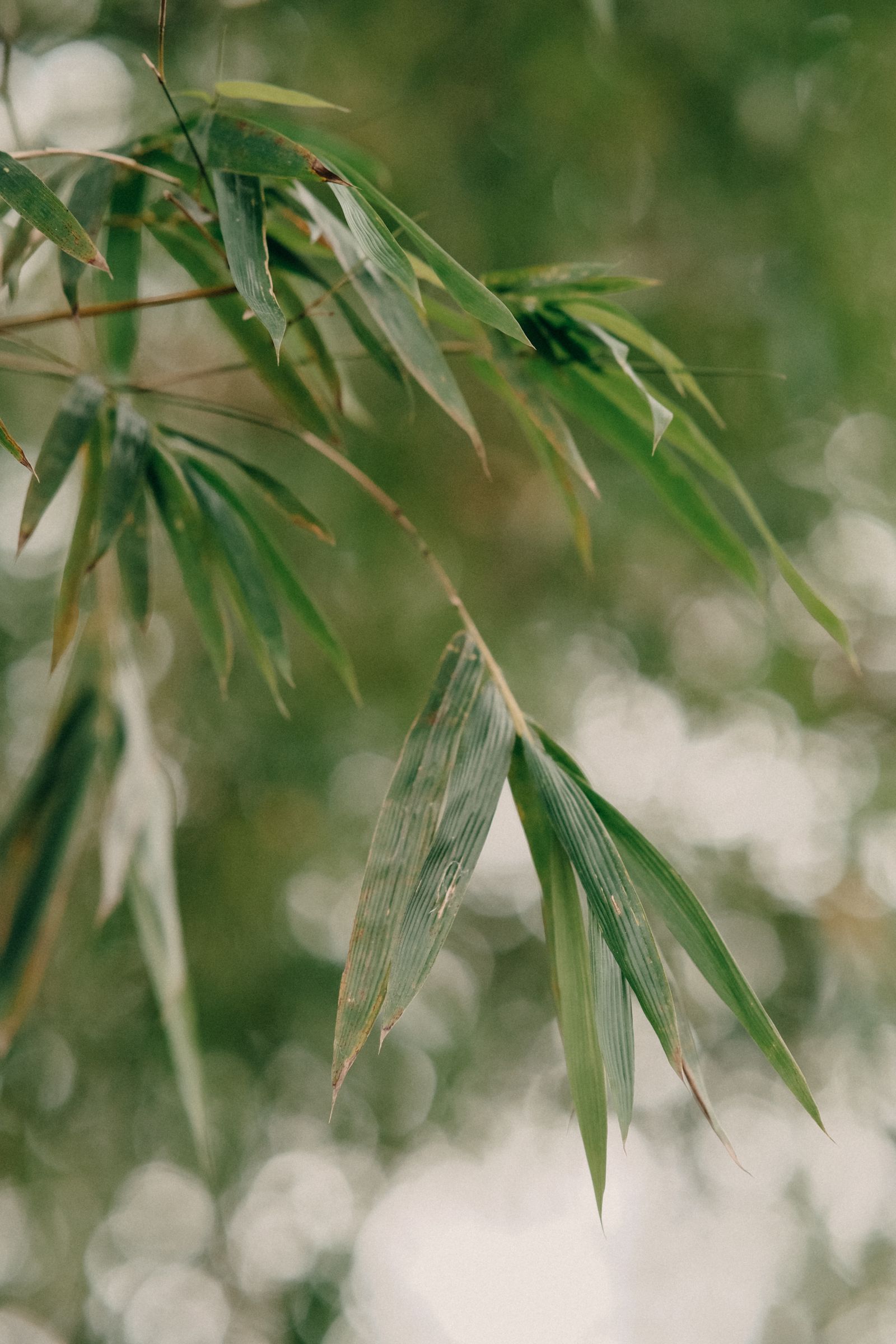
Photo: Pew Nguyen / Pexels
Interactive tool
Watering Calculator: The Bamboo Pot Audit
True bamboo in a pot drinks by the session, not the week: 1 to 2 gallons until it drains for a large container. Enter your pot diameter as both length and width below and a depth of about 1 inch to size one session, then water when the top of the mix says dry.
19.9 gallons
For 32 square feet at 1 inch deep. That is about 76 liters, or 10 trips with a standard 2 gallon watering can.
A rain gauge or a straight sided can set in the bed tells you when a sprinkler or soaker hose has actually delivered this depth. Time alone is a guess, because hose pressure varies from house to house.
The conversion is arithmetic, not opinion: one inch over one square foot is 144 cubic inches of water, and a US gallon holds 231 cubic inches, so each square foot at one inch takes 0.62 gallons.
The Identity Split: True Bamboo Is Not Lucky Bamboo
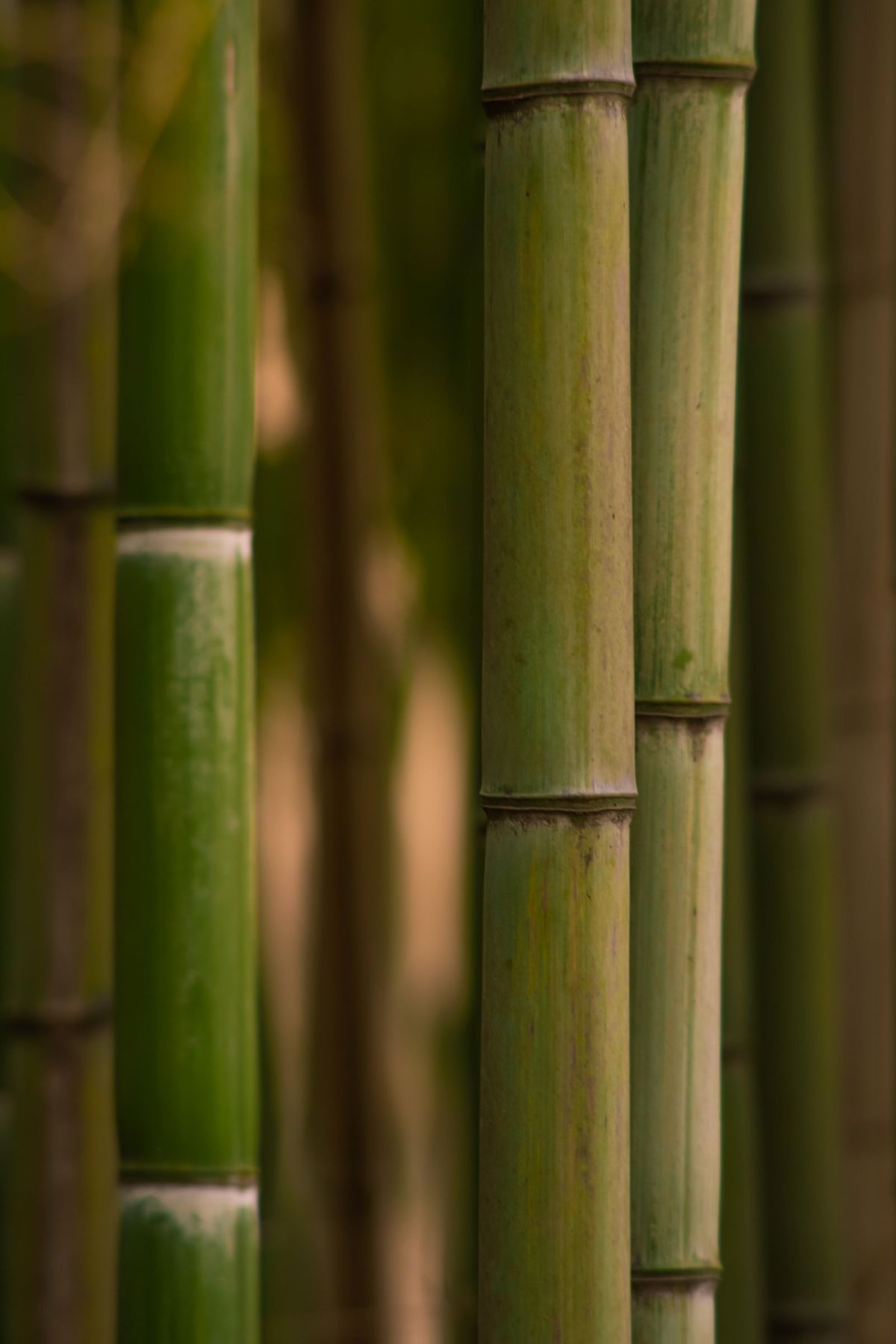
True bamboo has jointed canes, called culms, with papery sheaths at the nodes and leaves on branching stems, and it grows as a clumping or running grass. Lucky bamboo has a fleshy green stalk, often trained into spirals, with strap leaves from the top, and it is Dracaena sanderiana, sold for desks and gifts. If your plant stands in water with pebbles and has no culms, it is the dracaena: its rule is a full water change every 1 to 2 weeks, not a watering schedule, and nothing else on this page applies to it. If your plant has culms, read on. The confusion matters because the advice crosses badly: a true bamboo treated to a vase plant's still water rots at the rhizome, and a lucky bamboo planted and watered like a lawn grass sulks. One look at the stem settles which page you are on.
The Container Rhythm: Sessions, Not Weeks
A potted bamboo has no soil reserve beyond its pot, so it is watered in sessions rather than on a weekly budget. The trigger is the surface: water when the top of the mix appears dry, and water completely, until it runs from the drainage holes. In normal summer weather that lands at 2 to 3 sessions a week; in extreme heat, a large plant in full sun can need a session every day. The volume is real: a big container bamboo takes 1 to 2 gallons a session, and a timid sprinkle that wets the top inch and stops is the most common container failure, because the root ball below stays dry while the surface looks watered. Use the calculator above to size a session for your pot. In winter the rhythm stretches as growth stops, but a container never goes fully dry for long: the rhizome sits in that small volume with nowhere to draw from, and a pot that bakes dry in a heated room loses leaves it did not need to lose.
The Establishment Year in the Ground
A bamboo planted this season is a container plant wearing a landscape costume: its roots still live in the original root ball, and that ball dries faster than the soil around it. Water new plantings deeply 2 to 3 times a week for the first 6 to 12 months, soaking the root ball itself, not just the bed around it. The classic establishment failure is a ring of moist soil around a bone dry root ball, with the plant wilting in wet ground. Push a finger or a skewer into the ball, not beside it, before you decide the plant has been watered. Mulch helps honestly here: 2 to 3 inches over the root zone slows the surface drying that drives the rhythm. As the roots run out into the native soil through the first year, the sessions space out, and by the second season the plant graduates to the established budget below.
The Established Budget: One to Two Inches a Week
An established clump in the ground runs on 1 to 2 inches of water a week, rain included, delivered deeply enough to wet the root zone rather than the surface. In a rainy week the budget is already spent and the can stays in the shed; in a dry, windy week the full 2 inches is due. Mature clumps in decent soil settle near the low end, about an inch a week, and many run largely on rainfall outside drought. Running types with aggressive rhizomes drink toward the high end while they are colonizing new ground, because new rhizome tips are new roots being built. The deep and weekly pattern beats a daily sprinkle for the same reason it does on a lawn: roots follow moisture down, and a bamboo whose water arrives at depth carries its reservoir where a dry week cannot take it in a day.
The Leaf Curl Signal and the Yellow Leaf Triage
Bamboo talks in its leaves, and the clearest word is the lengthwise curl: leaves that fold or roll along their length in the heat of the day are short of water, and a plant that curls every afternoon is asking for a deeper session, not a daily splash. Curling that appears in the morning, or that does not relax by evening, is a plant in real trouble. Yellowing is the ambiguous signal and needs the triage: old leaves yellow and drop in spring as the clump sheds, which is housekeeping, not thirst; yellowing on new growth with wet soil points at waterlogging and rhizome rot, the overwatered end; yellowing with dry soil and curl is the dry end. Read the soil before you read the leaf. A bamboo that is yellowing in a swamp does not need the hose, and a bamboo curling at noon in a dry pot does not need fertilizer. Water is the answer to exactly one of the three, and the check takes ten seconds.
Rootbound: When the Pot Itself Changes the Rhythm
Running and clumping bamboos in pots eventually fill the pot with rhizome and root until there is more root than mix. The signs are readable: water runs straight through and out of the drainage holes in seconds, the plant lifts itself in the pot as the rhizomes push upward, and the check reads dry a few hours after a thorough drink because there is barely any mix left to hold water. No watering rhythm fixes a rootbound pot; the fix is mechanical. Every 2 to 3 years, in spring, slide the plant out and saw the root ball into divisions, or step the whole plant up a pot size, with fresh mix worked in. The first weeks after division run on the wet end of the ladder, with daily checks, because cut rhizomes and disturbed roots drink poorly while they reestablish. A bamboo that needs water twice a day in mild weather is almost never asking for more water. It is asking for a bigger pot.
Frequently Asked Questions
How often should I water a potted bamboo?
When the top of the mix appears dry, water completely until it drains. In normal summer weather that is 2 to 3 times a week; in extreme heat a large plant in sun can need water daily. A large container takes 1 to 2 gallons a session. The surface check is the rule and the calendar is only what the check usually produces; a shaded pot in a cool week may go 4 or 5 days, and it should, because the rhizome rots in a pot kept wet on schedule.
How much water does bamboo in the ground need?
New plantings: deep watering 2 to 3 times a week for the first 6 to 12 months, aimed at the root ball itself. Established clumps: 1 to 2 inches a week including rainfall, with mature plants in good soil settling near an inch. Rain counts toward the budget, so a wet week cancels the session, and a dry windy week calls the full amount due.
Is lucky bamboo watered the same way?
No, because it is not bamboo. Lucky bamboo is a dracaena, usually grown in a vase of water, and its rule is a complete water change every 1 to 2 weeks with clean, low salt water. The true bamboo rules on this page, sessions for pots and inches for the ground, apply only to plants with jointed culms. The dracaena and lucky bamboo pages on this site own that plant's full care.
Why are my bamboo leaves curling?
Lengthwise leaf curl is the plant's thirst signal: it folds its leaves to cut water loss when the roots cannot keep up. An afternoon curl that relaxes by evening calls for deeper sessions; a curl present in the morning means the root zone is genuinely dry or the roots are damaged. Check the soil at root depth before watering: curling over wet soil points at root or rhizome trouble, not at a watering gap.
Why is my bamboo turning yellow?
Three causes, three fixes. Spring yellowing of old leaves is normal shedding as new culms rise. Yellowing with dry soil and curled leaves is thirst: deepen the sessions. Yellowing with wet, sour soil is waterlogging, and the fix is drainage and restraint, not more water. Read the soil first and the leaf second; the same yellow leaf sits on opposite problems.
Photo credits: Pew Nguyen (Pexels); Simeon Stoilov (Pexels). Photos are served from this site; follow the credit to the library page for the original.