Every bonsai schedule printed on a calendar is wrong, including the ones on gift tags, because the interval is not a property of the tree. It is a property of a very small volume of soil, in a shallow pot, in specific weather, and it changes with all three. A bonsai pot can hold less soil than a coffee mug, and that soil can swing from soaked to dry in a single windy summer day, or sit wet for a week in a cool room. The growers who keep trees alive for decades share one habit: they do not water on days, they water on evidence. This page teaches the evidence: the dryness checks, the soak that follows them, the mix physics that stretch or shrink the gap, and the seasonal ladders the checks usually produce. The juniper bonsai page on this site owns that species in depth; this page owns the watering system every species shares.
Home / Gardening Basics for Beginners
How Often to Water a Bonsai Tree: The Dryness Check, the Two Pass Soak, and the Mix That Sets the Interval
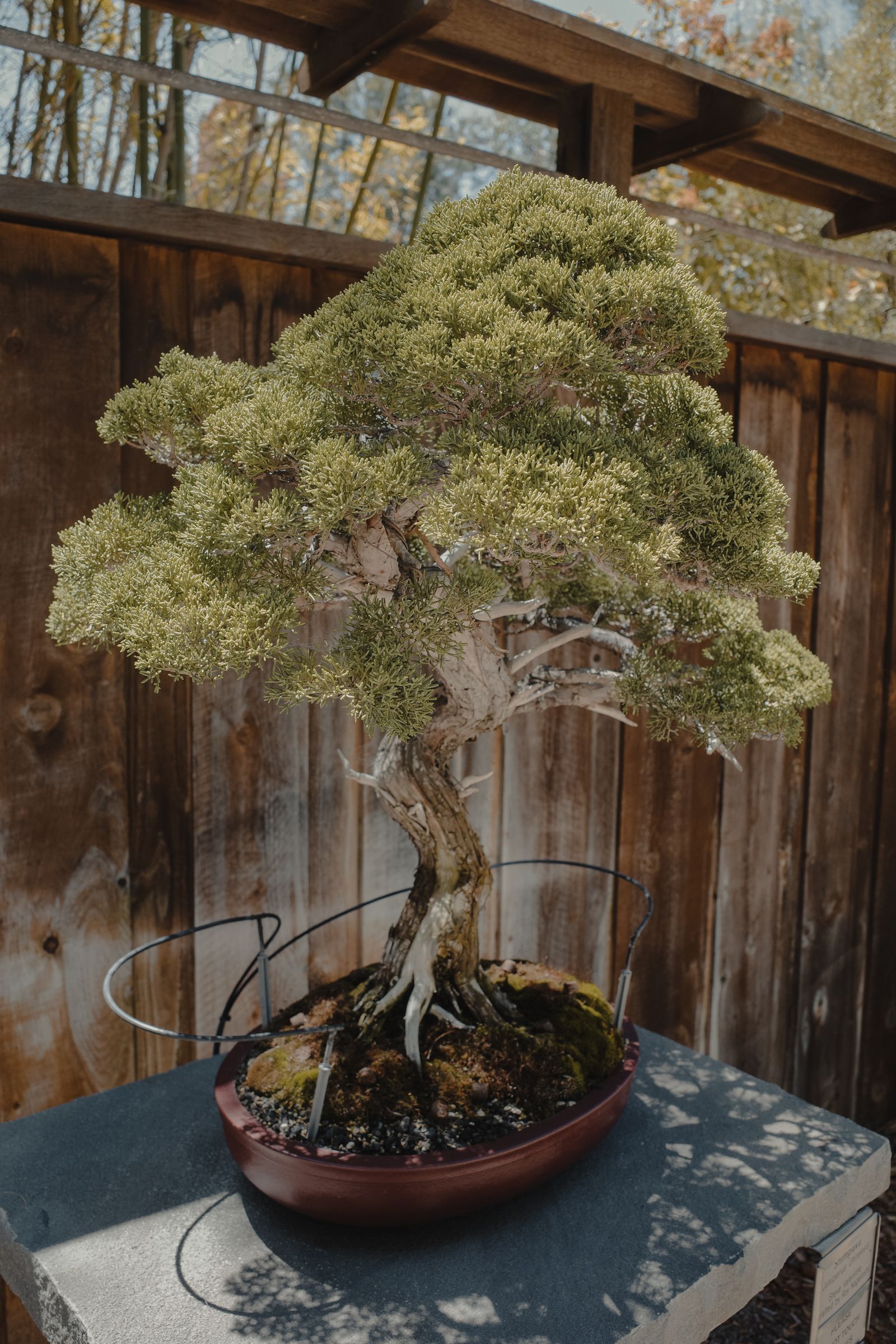
Photo: Jon Mangold / Pexels
Watering Calculator: The Bonsai Pot Audit
A bonsai pot holds a teacup of soil and swings from wet to dry in a day of summer wind. Enter your pot diameter as both length and width below and a depth of about 1 inch to size the two pass soak that runs to drainage.
19.9 gallons
For 32 square feet at 1 inch deep. That is about 76 liters, or 10 trips with a standard 2 gallon watering can.
A rain gauge or a straight sided can set in the bed tells you when a sprinkler or soaker hose has actually delivered this depth. Time alone is a guess, because hose pressure varies from house to house.
The conversion is arithmetic, not opinion: one inch over one square foot is 144 cubic inches of water, and a US gallon holds 231 cubic inches, so each square foot at one inch takes 0.62 gallons.
The Check: Water on Evidence, Not on Days
The standard check is depth: push a fingertip or a wooden chopstick into the mix, and water when the top centimeter or so, roughly the first half inch, has gone slightly dry while the mix below is still faintly cool. The chopstick is the better instrument: pull it out and read it like a dipstick, dark and damp means wait, pale and dry means water. The weight check is the second instrument: a freshly watered pot is noticeably heavier than a dry one, and after a week of lifting your own pots the difference is unmistakable. What the check replaces is the calendar, and the reason is arithmetic: the same tree can drink its pot dry in a day at 95 degrees F with wind, and take 5 days at 60 degrees and still air. No printed interval survives both weeks. Check daily in summer, every day or two in the shoulder seasons, and let the tree, not the date, call each watering.
The Two Pass Soak
When the check says water, the watering itself is a soak, not a sprinkle. Water the whole surface slowly until it runs freely from the drainage holes, wait a few minutes, and water again: the first pass wets the channels, the second pass is the one that actually recharges the mix, because dry granular soil and dry peat both shed the first water along paths of least resistance. Each pass takes 15 to 30 seconds on a small pot. An 8 inch pot drinks roughly a pint to a quart across the full soak. The sink method, setting the pot in water up to the rim for 10 to 15 minutes, is the rescue version for a tree that has gone fully dry, because a baked dry mix can refuse surface water entirely. What never works is the daily splash: a tablespoon a day keeps the surface damp, the core dry, and the roots growing upward into the wet layer where the next missed day kills them.
The Mix Is the Interval
Two trees of the same species in the same room can run intervals days apart, and the difference is usually the soil they stand in. Dense retail mixes built on peat hold water in the core long after the surface looks dry: the center of the pot can stay wet for 5 to 7 days, which is why the depth check matters and why surface reads lie. Free draining mineral mixes, akadama, pumice, and lava in the classic bonsai recipe, behave the opposite way: they wet completely, drain completely, and dry in 1 to 2 days in summer, which is the point of them and the reason trees in mineral mix are watered daily in heat. Neither mix is wrong, but they are different instruments and the check has to reach the depth where each one keeps its secret: the surface for mineral mix, an inch down for peat. Repotting into a mineral mix shortens the interval and lengthens the tree's life, because roots in a wet core suffocate in the dark between waterings that the surface said were safe.
The Seasonal Ladders the Check Produces
Run the check honestly and the intervals settle into a pattern by situation. Outdoor trees in granular mix in summer: daily, and twice daily when temperatures pass 90 degrees F or wind strips the pot. The same trees in spring and fall: every 1 to 3 days. Indoor tropicals, ficus and its kin, in a bright room: every 2 to 4 days in the growing season, stretching to every 4 to 6 days in winter when light and growth fall away. Outdoor trees in winter dormancy are not watered on a rhythm at all: they are checked about weekly and watered lightly when the mix has dried, because a dormant tree barely drinks and a frozen, saturated pot is a root killer. The ladders are descriptions of what the check finds, not instructions to follow blind; a tree that breaks the ladder is telling you something about its pot, its mix, or its health, and the check is how you hear it.
Wilt Triage: Thirst Is Only One Cause
A wilting bonsai is not automatically a thirsty one, and watering a wilted tree on reflex kills the ones whose problem is the opposite. Thirst wilt comes with dry mix at depth and recovers within hours of a proper soak. Root loss wilt looks identical above the soil and opposite below it: the mix stays wet for days because there are no living roots drinking, the trunk may feel loose in the pot, and the foliage crisps from the tips while the soil is still damp. That tree needs the watering stopped, shade, and time, not another soak. The third case is the newly repotted tree, whose cut roots drink slowly for the first weeks: it wants the mix kept evenly moist and the foliage misted, on a gentler rhythm than its established neighbors. Read the chopstick before the leaves. In bonsai, the leaves report the problem a week after the roots started it, and the soil is the only witness that was present.
When the Soil Ages, the Calendar Drifts
Bonsai soils are mineral and open when fresh, and they do not stay that way. Akadama, the backbone of many mixes, breaks down over 2 to 3 years into finer particles that hold more water and admit less air, so the same tree in the same pot on the same bench quietly moves to a longer interval as its soil ages, and an owner watering by the old calendar begins to keep it too wet. The check absorbs the drift automatically, which is one more reason the finger and the chopstick outrank any schedule. Repotting, done in spring every 1 to 3 years depending on the tree's vigor, resets the mix and the calendar together, and the first season in fresh soil runs at the fast end of the tree's rhythm again.
Frequently Asked Questions
How often should I water my bonsai tree?
When the top centimeter or so of mix has gone slightly dry, checked with a fingertip or a chopstick, then soak until it drains, twice. In practice that is daily for outdoor trees in summer heat, every 1 to 3 days in spring and fall, every 2 to 4 days for indoor tropicals, and about weekly checks for dormant outdoor trees in winter. The check is the rule; those intervals are just what the check usually finds.
Can I water my bonsai on a set schedule?
No, and the calendar is how gift bonsai die. A shallow pot of soil dries at the speed of the week's weather, the room, and the mix: the same tree can need water daily in a hot windy week and go 5 days in a cool still one. A schedule waters a dry tree late and a wet tree into rot. Check daily instead; it takes ten seconds and it is the entire skill.
How much water does a bonsai take at each watering?
Enough to run freely from the drainage holes, applied in two passes a few minutes apart. An 8 inch pot typically drinks a pint to a quart across the full soak. The second pass is the one that counts: dry mix sheds the first water along channels, and only the repeat pass recharges the whole root ball. A tree that has gone completely dry may need a 10 to 15 minute soak in a sink instead.
Why does my bonsai dry out so fast compared to my houseplants?
Volume and exposure. A bonsai pot can hold less soil than a coffee mug, it is shallow so the surface to volume ratio is high, and outdoor trees stand in sun and wind that a windowsill plant never meets. A mineral bonsai mix is also built to drain and dry: akadama and pumice can go from soaked to dry in 1 to 2 summer days, where a peat houseplant mix holds a wet core for the better part of a week.
My bonsai is wilting but the soil is wet. What is wrong?
Probably the roots, not the water. Foliage wilts the same way for thirst and for root loss, but root loss leaves the mix wet for days because nothing is drinking. Stop watering, move the tree to shade, and let the mix approach dry before the next light drink. If the trunk wiggles in the pot or the mix smells sour, the roots are largely gone and the tree needs recovery care, not a schedule.
Photo credits: Jon Mangold (Pexels); Erik Mclean (Pexels). Photos are served from this site; follow the credit to the library page for the original.