How Often to Water a Boston Fern: the Never Dry Rule and the Frequency Sprawl, Explained
By the Windchime Walker editorial team
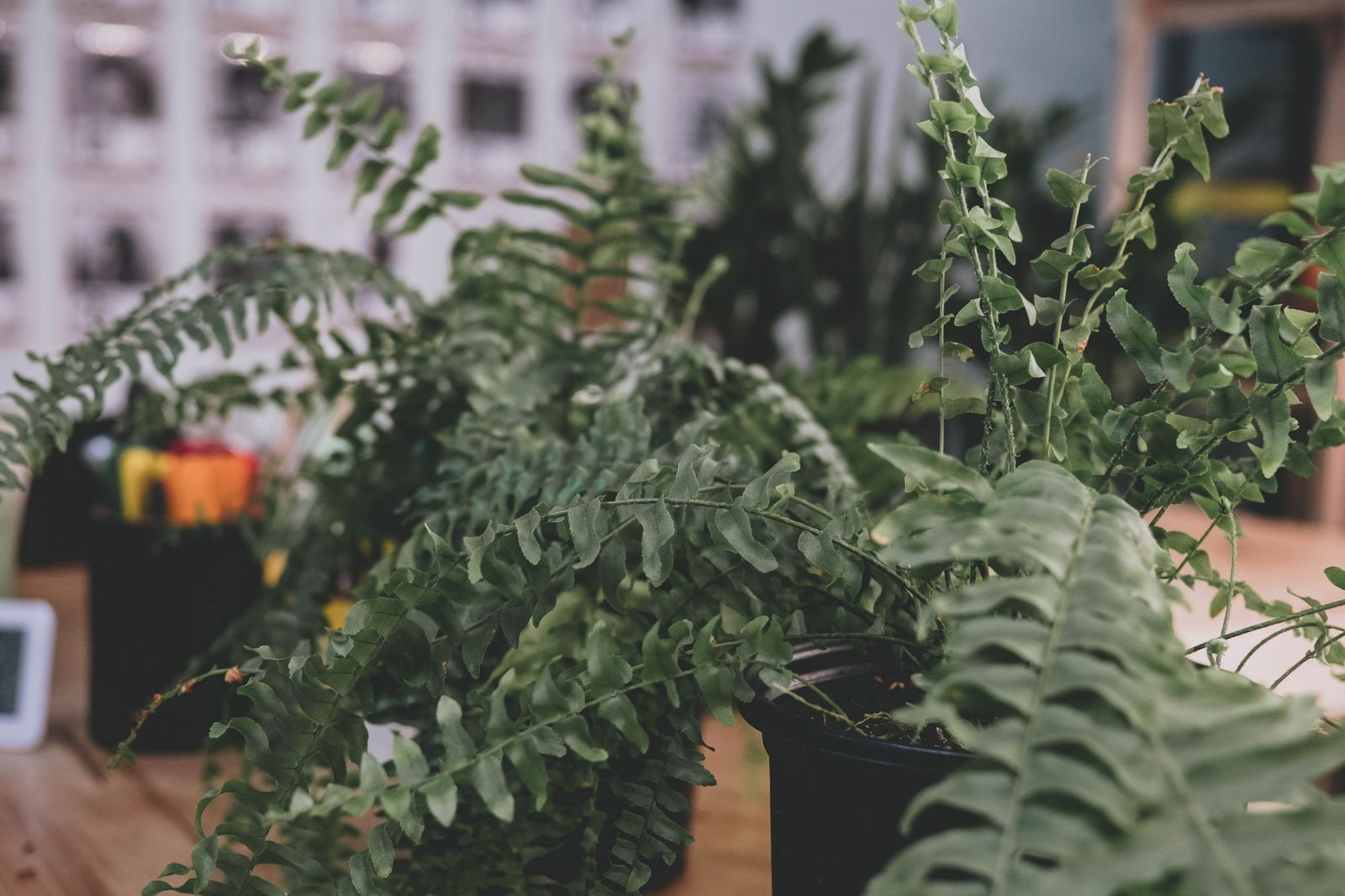
Photo: Joshua Mcknight / Pexels
Ask how often to water a Boston fern and the guides give you three different plants: one watered every 2 to 3 days, one watered weekly, and one watered every 1 to 2 weeks. All three answers come from real ferns in real homes, which is the clue. The Boston fern's rule never changes, keep the mix evenly moist, but the number of days that rule produces depends on the pot, the placement, and the air, more than on the fern. This page explains the sprawl instead of picking one number from it, then gives you the deciders that produce your number.
Our fern houseplant care guide owns the fern family system and the species ladder. This page owns the Boston fern's water, and the generic fern watering questions land here too, because the Boston is the fern those questions almost always mean.
Interactive tool
Watering Calculator: The Boston Fern Pot Audit
A Boston fern wants its whole root ball evenly moist, never dry and never standing in runoff. Enter your pot diameter as both length and width below and a depth of about 1 inch to see what a full soak delivers to a pot that size.
19.9 gallons
For 32 square feet at 1 inch deep. That is about 76 liters, or 10 trips with a standard 2 gallon watering can.
A rain gauge or a straight sided can set in the bed tells you when a sprinkler or soaker hose has actually delivered this depth. Time alone is a guess, because hose pressure varies from house to house.
The conversion is arithmetic, not opinion: one inch over one square foot is 144 cubic inches of water, and a US gallon holds 231 cubic inches, so each square foot at one inch takes 0.62 gallons.
The Rule Underneath Every Answer
A Boston fern's roots and rhizomes want constant, even moisture: never dried out, never swimming. Check the top of the mix with a fingertip. When the top inch, about the top 2 cm, feels barely dry rather than moist, water. When it still feels moist, wait, even if the calendar says the day has come. Water slowly over the whole surface until it runs from the drainage holes, let the pot drain fully, and empty the saucer, because a fern standing in its own runoff rots at the crown while its fronds still look green. Every frequency anyone quotes is just this rule translated through their pot and their room.
Why the Frequencies Sprawl, and How to Find Yours
Three variables move the interval more than the plant does. First, pot size and material: a small plastic nursery pot holds little water; a large ceramic pot holds a reservoir; unglazed clay breathes water out through its walls and can halve the interval. Second, placement: a hanging basket, the classic Boston fern home, is surrounded by moving air and dries from every side, and warm air rises, so the basket lives in the driest layer of the room. Third, humidity: in air at 50 percent humidity or above, the fronds lose water slowly and the mix check stretches; in heated winter air at 25 percent, the same plant can need water twice as often and still look thirsty, because the fronds are losing water the roots cannot replace fast enough. Start with the check every 2 to 3 days until you learn your plant's rhythm, then let the rhythm set the schedule. Most shelf plants in average rooms settle near weekly; most baskets settle at twice a week in summer; a big pot in a humid bathroom can honestly go 10 days. All three guides were right about their own fern.
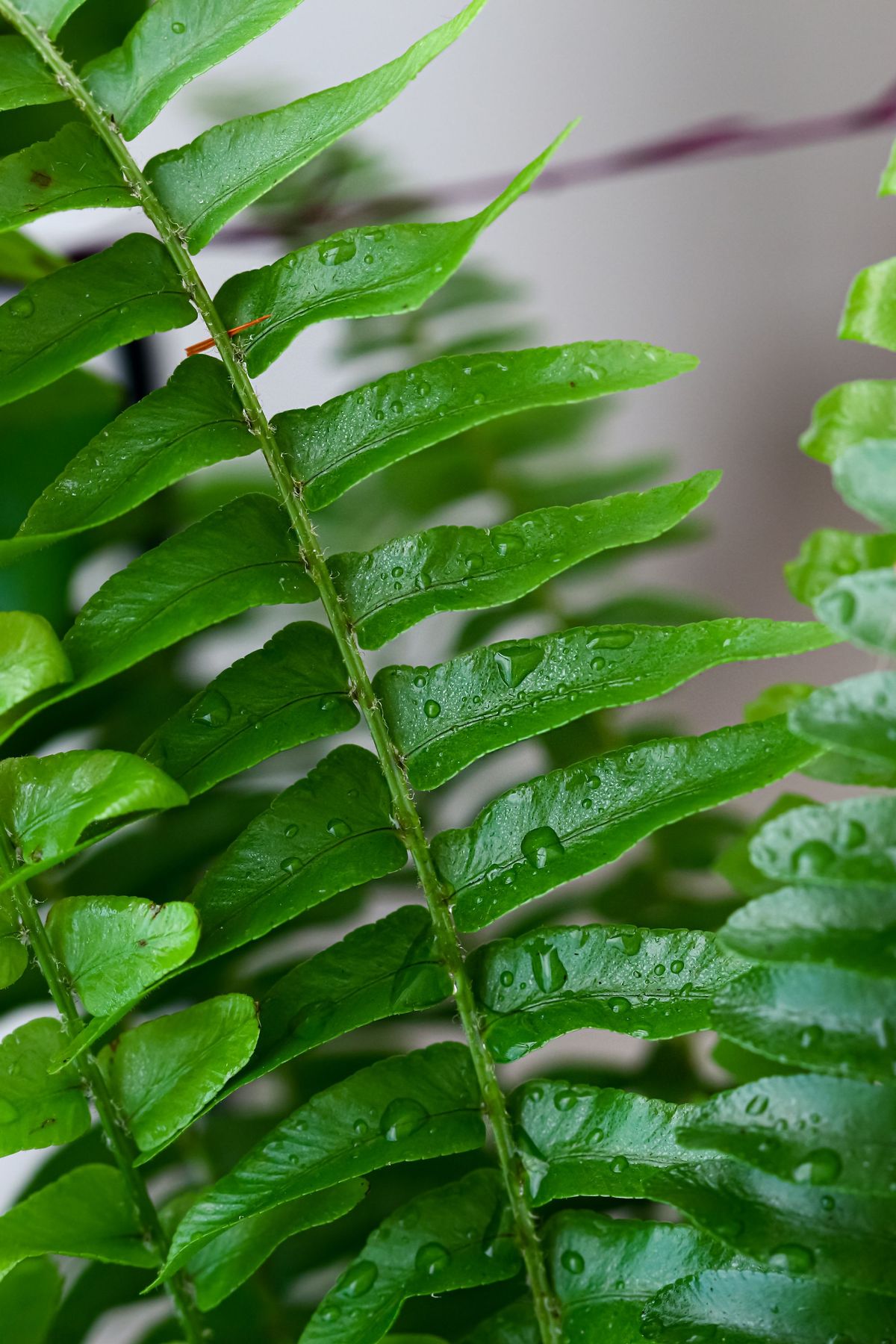
Fern fronds carrying fresh water droplets
The Hanging Basket Case
The basket is where Boston ferns go to be neglected beautifully. It hangs above eye level, out of casual reach, and its owner waters by stretching up with a can and pouring a hopeful splash that wets the center and misses the edges. Do it properly: take the basket down once or twice a week, set it in a sink or tub, and soak the whole root ball, then let it drain until the dripping stops before rehanging. Between soak days, the lift test is the check: a freshly watered basket is heavy, a thirsty one is startlingly light, and your arms learn the difference in two weeks. A basket that has gone fully dry once will shed fronds for a month in protest; a basket on the soak rhythm holds its arch and stops raining leaflets on the floor.
Humidity: the Other Half of Watering
A Boston fern in dry air is a plant losing an argument: the roots deliver water, the fronds evaporate it, and the leaflets brown at the edges and drop even though the mix is correctly moist. This is the most misdiagnosed fern problem, because the owner's instinct, more water, makes the roots worse while the air stays dry. The fixes that work raise the water in the air, not in the pot. A humidifier near the plant is the reliable one. Grouping ferns and other houseplants together raises the local humidity measurably. A pebble tray, a wide shallow tray of pebbles and water under the pot, helps a little and costs nothing. Misting the fronds, the most recommended fix, raises humidity for minutes and is mostly a ritual; do it if you enjoy it, but do not count it as the system. Bathrooms with a window are the fern's favorite room for a reason: the shower does the humidifying daily.
Shedding and Browning: Read the Pattern
A Boston fern talks in leaflets. Shedding dry, pale leaflets from the inner and lower fronds, on a plant whose mix has dried out hard at least once, is thirst history: the plant is dropping the foliage it cannot support. Restore the soak rhythm and cut away the dead fronds at the base; new growth from the crown is the recovery signal. Browning at the leaflet edges and tips with the mix correctly moist is the dry air pattern above. A plant that yellows and goes limp with a sour smell at the crown is the opposite failure, overwatering and rot: unpot it, cut away blackened roots and rhizome, repot in fresh mix, and rebuild on the check. Fronds that stretch pale and sparse are asking for more light, not more water; the Boston wants bright indirect light, and no watering schedule compensates for a dark corner.
Winter: Heat Is the Enemy, Not Cold
Winter fern decline is rarely about temperature. It is about heating systems stripping the air while the plant sits in its usual spot, often nearer a vent than it was in summer. Move the fern away from heat registers, expect the mix check to come due faster even as growth slows, and hold the humidity line with the humidifier or the bathroom move. Do not feed in winter; resume a light feeding in spring when new fronds unroll. A fern that limps through winter on the check and the humidity fix comes back fast; a fern watered on a summer calendar in dry winter air arrives at spring rotted, which is the one outcome it cannot reverse.
The Pot and Mix Behind the Rhythm
The never dry rule is only achievable in the right container. A Boston fern in a small unglazed clay pot in a dry room can pass from moist to bone dry in two days, which turns the owner's life into a watering vigil and the fern's life into a cycle of small droughts. The forgiving setup is a plastic or glazed pot, sized generously for the plant, with drainage holes and a saucer you actually empty, in a peat or coir based mix that holds moisture evenly. Hanging baskets lined with coco fiber look the part and leak moisture from every side; lining the basket with a plastic layer pierced for drainage, or choosing a solid sided hanging pot, stretches the interval by days. Repot a rootbound fern in spring, when the rhizomes crowd the surface and water runs straight through the pot without wetting it, a classic false reading: the mix is not dry because the plant drank, it is dry because the water never stayed. A rootbound ball that has gone fully dry once may need a full submersion soak, pot and all in a bucket for 20 minutes, to rewet at all.
Summer Outside, Winter Inside
Many Boston ferns summer on a shaded porch and winter indoors, and the move changes every number on this page. Outside in shade with moving air and summer humidity, a basket can want water every 2 to 3 days and thrive on it, growing the lush arch the plant is famous for. Brought inside in fall, the same basket in heated air wants the humidity system from the section above and a slower mix rhythm, and it will shed while it adjusts to lower light no matter what you do with the can. Stage the transition: bring the fern in before nights turn cold, wash it down outside first to leave the insects on the porch, cut back any tired fronds, and expect a month of protest shedding before it settles. The owners who keep a Boston fern for years, and they do live for years, treat it as two seasonal plants with one root system and keep two rhythms, rather than hunting for one schedule that fits both halves of its year.
Frequently Asked Questions
How often should I water a Boston fern?
Whenever the top inch of mix has just stopped feeling moist, which works out to every 2 to 3 days for a hanging basket in a dry room, about weekly for a shelf plant in an average room, and up to every 1 to 2 weeks for a large pot in humid air. The guides disagree because their ferns live in different pots and rooms; the fingertip check settles it for yours.
Why is my Boston fern shedding leaflets everywhere?
Read the mix history first. A plant that has dried out hard sheds dry inner leaflets for weeks afterward; restore the soak rhythm and remove dead fronds. Shedding with correctly moist mix points at dry air, the humidity problem, not a watering problem.
Should I mist my Boston fern?
Misting raises humidity for a few minutes and does not substitute for real humidity. A humidifier, grouping plants, a pebble tray, or a bright bathroom does the actual work. Mist if you like the ritual, but build the system on the fixes that last all day.
How do I water a Boston fern in a hanging basket?
Take it down and soak it in a sink or tub until the whole root ball is wet, drain it fully, then rehang. Between soaks, lift the basket: heavy means wait, light means the check is due. Splashing water upward into a hanging basket wets the center, misses the edges, and is how baskets dry out while being watered.
Can a Boston fern recover after drying out completely?
Usually, if the crown is alive. Soak the root ball, cut away fully dead fronds at the base, hold the humidity up, and wait for new fronds from the center. A plant that went dry once sheds for a while, then rebuilds. A plant rotted by overwatering is the harder rescue.
Photo credits: Joshua Mcknight (Pexels); Kader D. Kahraman (Pexels). Photos are served from this site; follow the credit to the library page for the original.