Most houseplants are watered into their soil, and a bromeliad watered that way is being answered in the wrong organ. The common tank bromeliads, the guzmanias, aechmeas, and vrieseas of the flower trade, hold a well at their center where the leaf bases overlap, and in the wild that cup catches rain and debris and is the plant's real mouth. The roots below are largely anchors. So the watering system for this family runs in the opposite order from every other plant on the shelf: cup first, on a weekly flush cycle; water quality second, because the family burns on salts; soil last and least, on a dryness check. This page runs that order, and separates the tank types from the terrestrial types that genuinely do drink through their roots.
Home / Gardening Basics for Beginners
How Often to Water Bromeliads: The Cup Rule, the Weekly Flush, and the Soil as the Second Drink
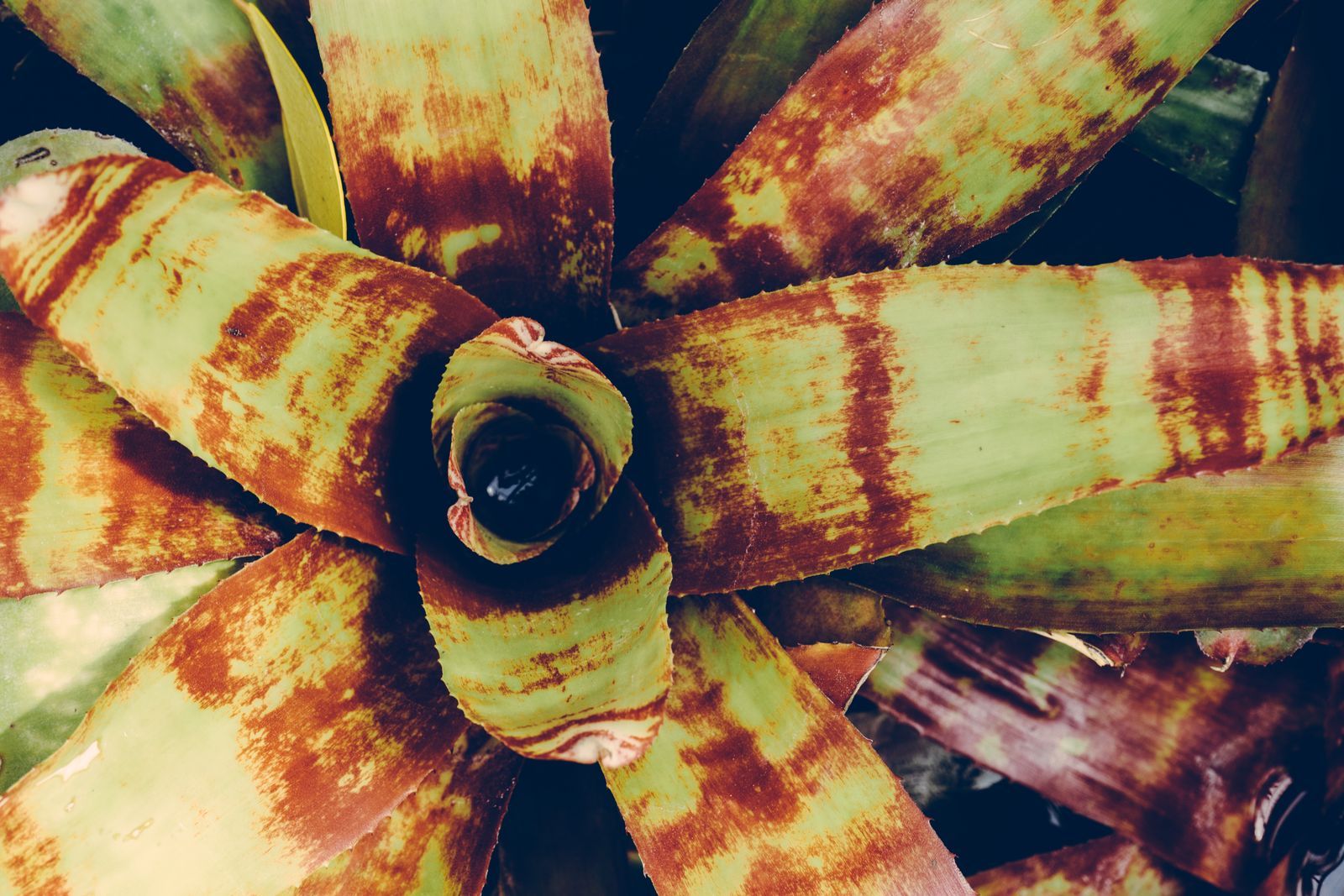
Photo: Scott Webb / Pexels
Interactive tool
Watering Calculator: The Bromeliad Cup Audit
The cup is the main drink and the soil is the second one: for a potted terrestrial bromeliad, enter your pot diameter as both length and width below and a depth of about 1 inch to size the soil watering that follows the weekly cup flush.
19.9 gallons
For 32 square feet at 1 inch deep. That is about 76 liters, or 10 trips with a standard 2 gallon watering can.
A rain gauge or a straight sided can set in the bed tells you when a sprinkler or soaker hose has actually delivered this depth. Time alone is a guess, because hose pressure varies from house to house.
The conversion is arithmetic, not opinion: one inch over one square foot is 144 cubic inches of water, and a US gallon holds 231 cubic inches, so each square foot at one inch takes 0.62 gallons.
The Cup Is the Watering Organ
Keep the central cup a quarter to half full of water at all times. That reservoir is what the plant drinks between waterings, absorbing through the leaf bases that form the well, and a cup allowed to run dry for weeks leaves the plant thirsty in wet soil, the signature confusion of bromeliad care. The cup does not need to brim: a quarter full is a working reservoir, and half full is the ceiling, because an overfilled cup in a cool room spills into the leaf axils and sits where rot starts. Check the cup when you pass the plant, the way you would glance at a pet's water bowl, and top it to the line. Plants grown outdoors catch their own rain and need the check less; the indoor plant depends on you entirely, and its check is a look, not a schedule.
The Weekly Flush: Old Cup Water Is the Enemy
A standing cup of water ages badly. It collects dust and debris, grows bacteria, breeds mosquito larvae outdoors, and concentrates salts as it evaporates, and the plant drinks all of it. The flush is the fix and it is the real weekly rhythm of bromeliad care: once a week, tip the old cup water out, rinse the cup, and refill it fresh. Tipping a large plant is awkward, and a turkey baster or a siphon tube does the same job in place. The flush is also the moment to look at the leaf bases: brown, soft, or sour smelling tissue at the base is rot announcing itself while there is still time to act, and it is almost always a stagnation story, a cup that went unflushed in a cool, still room. Weekly sounds frequent until you price the alternative, which is a plant that rots from the center outward and cannot be pruned back to health.
Water Quality: The Family Burns on Salts
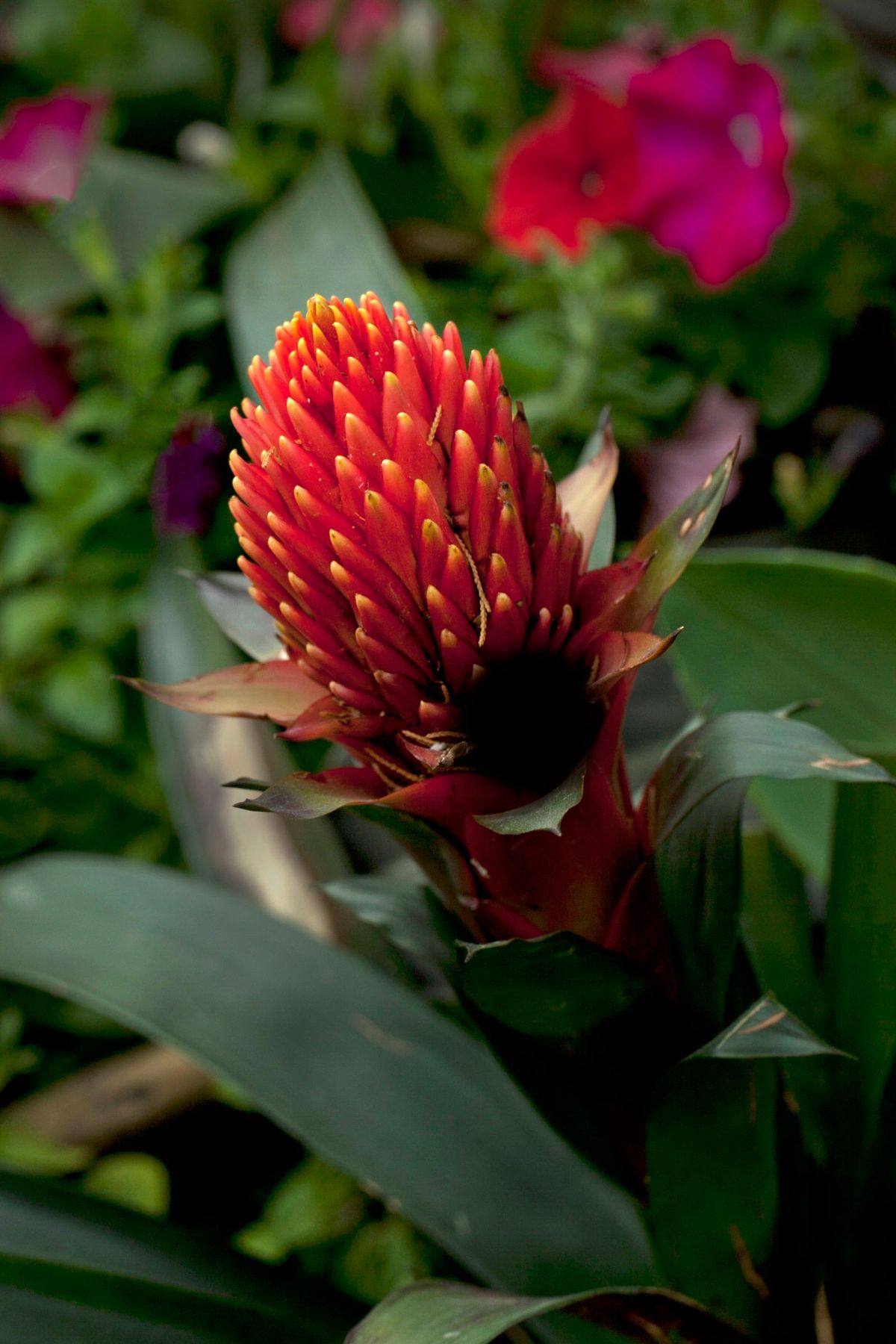
Bromeliads are sensitive to what is dissolved in the water, more than most houseplants. The salts in hard tap water accumulate in the cup and the mix and burn leaf tips and edges; fluoride is a named offender, and copper and zinc from some algaecides and containers are outright toxic to the family. Rainwater is the first choice, distilled water the reliable second, and tap water the fallback, best left standing overnight and used with a periodic thorough flush of the mix to carry salts out. The cup makes the exposure worse than for other plants, because cup water evaporates in place and leaves its minerals behind on the leaf bases, which is the second reason the weekly flush matters: it is a mineral reset, not just a freshness habit. Brown tip burn that creeps despite correct watering is usually this page's section, not the interval's.
The Soil Rule, Split by Type
The roots still want a drink, just a modest and well timed one. For tank types in pots, water the mix only when the top 1 to 1.5 inches are dry: in practice about every 7 to 14 days in summer and every 2 to 3 weeks in winter, soaking through and draining completely, because the anchor roots rot in a mix kept wet. Terrestrial bromeliads, the earth stars and the pineapple kin grown as soil plants, drink more like ordinary houseplants and take the same dryness check on a slightly shorter leash. Epiphytic types mounted on bark or grown in very coarse mix are misted or soaked instead, and their rule is humidity and air, not soil moisture at all. When in doubt, read the plant's shape: a cup means the cup rule leads, a flat rosette hugging the soil means the soil rule leads, and a plant on a mount means the spray bottle leads.
Rot Triage: Reading the Base
Bromeliad failure is almost always at the base, and it reads in a short list. A center that pulls out with a gentle tug, or leaf bases gone brown and soft, is cup rot: empty the cup, let the plant dry for several days, and resume with flushed, clean water at a lower fill. Blackening at the soil line with a wet mix is root and stem rot from the other direction, soil kept wet for a plant that wanted it dry: unpot, cut away soft tissue, and repot in fresh coarse mix. Tip burn on otherwise firm leaves is chemistry, the salts of the section above. And a mother plant that browns slowly after flowering is none of these: bromeliads flower once and decline while their pups grow at the base, and the correct response is to keep the cup routine going for the pups and let the mother finish. Not every brown bromeliad is a watering error; some are a completed life cycle with the next generation already attached.
Mounted Bromeliads: The Other Water Job
Not every bromeliad lives in a pot. Many tank species and the air plant types are mounted on bark, cork, or wood, and a mount changes the water job completely: there is no mix to check and no reservoir but the cup and the leaf bases, so the mount itself must be wetted. The routine is a soak or a heavy misting 2 to 3 times a week in a heated room, less often in humid air, with the plant tilted afterward so the cup holds its inch and the crown does not sit in a puddle against the bark. A mounted plant dries in hours rather than days, which is why mounts live happily in bathrooms and over sinks, where the room's air does part of the work. After flowering, the mother rosette declines over months while pups form at her base; keep watering the family exactly as before, because the pups draw through the mother's roots until they reach about a third of her size and are ready to pot up or mount on their own.
Frequently Asked Questions
How often should I water a bromeliad?
The cup weekly and the soil on a check. Empty and refill the central cup every week, keeping it a quarter to half full between flushes. Water the mix only when the top 1 to 1.5 inches are dry, which lands about every 7 to 14 days in summer and every 2 to 3 weeks in winter. The cup is the plant's main drink; the soil watering is the secondary one, and more bromeliads die of wet soil than of an empty cup.
Should I water a bromeliad in the cup or the soil?
Both, in that order of importance. Tank bromeliads absorb most of their water through the central cup their leaves form, and their roots serve largely as anchors. Keep the cup filled and flushed weekly, and water the soil only when its top inch or so has dried. Terrestrial types without a real cup reverse the emphasis and are watered mainly through the soil on the same dryness check.
What kind of water do bromeliads need?
Rainwater first, distilled water second. The family is sensitive to dissolved salts and fluoride, which accumulate in the cup as water evaporates and burn the leaf tips and bases. If tap water is all you have, let it stand overnight, use it for the weekly flush so old water never concentrates, and flush the mix thoroughly from time to time to carry salts out of the pot.
Why is my bromeliad rotting in the middle?
Stagnant cup water is the usual cause. A cup left unflushed in a cool, still room grows bacteria, and the leaf bases at the center soften and rot outward. Tip the old water out weekly and refill fresh. For a plant already soft at the center, empty the cup, keep it dry for several days, and check whether the center pulls free with a gentle tug; if it does, that rosette is finished, and any pups at the base become the plant to save.
My bromeliad is browning after it flowered. Is that a watering problem?
Usually not. A bromeliad rosette flowers once, then declines over months while producing pups around its base. That slow browning is the life cycle, not a watering error. Keep the cup filled and flushed so the pups establish, and when a pup is about a third the mother's size it can be separated and potted, or left to form a clump in place.
Photo credits: Scott Webb (Pexels); Jeffry Surianto (Pexels). Photos are served from this site; follow the credit to the library page for the original.