Ask how often to water a cactus and the honest answer is a method, not a number: soak the pot completely, then do not water again until the mix is dry all the way through. For a desert cactus indoors that cycle lands every 1 to 3 weeks during spring and summer growth, depending on pot size, light, and heat. In winter the same plant rests, and the cycle stretches to every 4 to 8 weeks or stops entirely. Forest cacti, the Christmas and Easter cacti and their kin, are the standing exception: they come from tree branches in rainforest, not from desert floor, and they want lighter water more often and never a full bake dry. This page runs the system: the soak and dry cycle, the full dry check that times it, the forest exception, the winter rest, and the triage for a plant already in trouble. Nearly every cactus death in a home is rot from kindness, and the system below is built to make kindness wait for evidence.
Home / Gardening Basics for Beginners
How Often to Water a Cactus: The Soak and Dry Cycle, the Forest Exception, and the Winter Rest
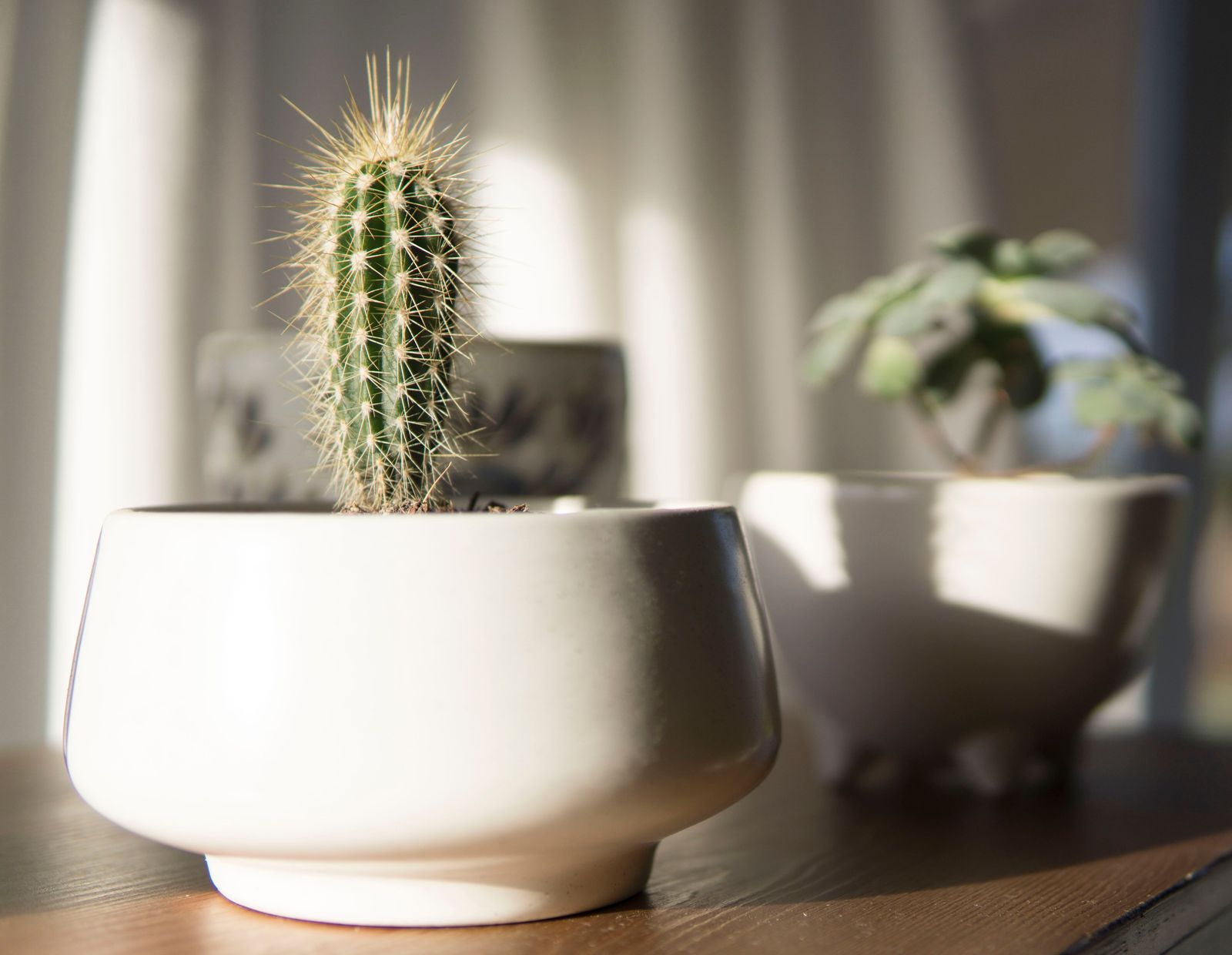
Photo: Elle Hughes / Pexels
Watering Volume Calculator: The Cactus Pot Audit
A desert cactus drinks deep and then not at all until the mix is dry to the bottom. Enter your pot diameter as both length and width with a depth of 1 inch to size the soak that ends each drought.
19.9 gallons
For 32 square feet at 1 inch deep. That is about 76 liters, or 10 trips with a standard 2 gallon watering can.
A rain gauge or a straight sided can set in the bed tells you when a sprinkler or soaker hose has actually delivered this depth. Time alone is a guess, because hose pressure varies from house to house.
The conversion is arithmetic, not opinion: one inch over one square foot is 144 cubic inches of water, and a US gallon holds 231 cubic inches, so each square foot at one inch takes 0.62 gallons.
The Soak and Dry Cycle: What One Watering Looks Like
When a desert cactus is watered, it is watered completely. Pour water over the surface slowly until it runs from the drainage hole, let the pot drain for ten minutes, and empty the saucer; a cactus standing in runoff is a cactus rotting on a schedule. Then the clock that matters starts: the mix must dry through the whole pot before the next soak. A shallow sip every few days is the worst of both worlds, wetting only the surface roots while the plant never gets a real drink and the top of the mix stays damp enough to invite rot at the stem base. The deep soak works because the plant itself is the reservoir. A healthy desert cactus stores the water in its stem and meters it out over the dry weeks that follow, which is why the interval feels wrong to anyone used to houseplants. Use the calculator above to size one soak for the pot you actually own; most owners are surprised how much water a proper soak takes, and how long the plant then goes without asking for more.
The Full Dry Check: Replacing the Calendar
The interval is read off the plant, not the calendar, and the read is whether the mix is dry at depth, not at the surface. The surface of a cactus mix dries in two days and tells you nothing. Three checks work. The weight check is the most reliable: lift the pot right after a soak and learn its heavy weight, then lift before watering; a pot at its light weight is dry through. The skewer check is the beginner version: push a wooden skewer to the bottom of the pot, leave it a minute, and pull it; crumbs or dust mean dry, damp soil clinging means wait. The finger check, a knuckle pushed 2 inches down, works only in larger pots where that depth is a fair sample. Pot size drives the result more than any other variable: a 3 inch pot on a sunny sill can dry in a week, while a 10 inch pot in a cool room can hold moisture at depth for a month. Terracotta dries days faster than glazed ceramic or plastic. Read your own pot with one of the checks and the 1 to 3 week range resolves into your plant's actual rhythm.
The Forest Exception: Christmas Cactus Is Not a Desert Plant
Christmas cactus, Easter cactus, and the other epiphytic cacti grow on tree branches in Brazilian rainforest, rooting in leaf litter that is moist and airy at once. Treating them on the desert cycle, weeks of bone dry between soaks, shrivels their flat stem segments and drops their buds. The forest rule is lighter and more frequent: water when the top inch of mix is dry, which indoors is typically every 1 to 2 weeks in growth, and keep the dry end shallow, never the full bake the desert plants demand. Bud set has its own water note: as flower buds form in fall, keep the moisture steady, because a hard dry spell at bud stage is the commonest reason a Christmas cactus drops every bud in a week. The two tribes share a name and a family and almost nothing else about water. Identify which one you own before any other advice on this page is applied; the care labels at the garden center rarely bother, and the leaf shape is the tell, flat segmented stems for the forest tribe, spines and columns or barrels for the desert.
The Winter Rest: The Season That Rots Cacti
More cacti rot in winter than die of thirst in summer, because the growth stops and the watering habit does not. A desert cactus in a cool room with short days is barely drinking; its roots sit in mix that dries at a fraction of the summer rate, and a monthly soak that was safe in July keeps the roots wet for weeks in January. The winter protocol for desert types is a rest: water every 4 to 8 weeks at most, a light drink rather than a full soak in the coldest, darkest weeks, and nothing at all for plants kept genuinely cold, below about 50 degrees F, where a dry plant survives and a wet one rots. Growth is the signal to resume: new spines, a brightening crown, or flower buds in spring mean the plant is drinking again and the soak and dry cycle can return to its summer rhythm. Forest cacti rest more lightly, a modest stretch of the interval rather than a stop. The fertilizer rule rides along: feed only in active growth, a dilute cactus feed two or three times across spring and summer, never in the rest.
Rot Triage: Reading a Plant in Trouble
A cactus in trouble from water shows it at the base and in the flesh, and the two directions look different. Overwatering and rot present as a soft, translucent, or yellowing base, flesh that gives like a ripe fruit, and a sour smell at the soil line; the rot climbs from the roots, so a plant soft at the base is an emergency, not a watering adjustment. The rescue is surgery: unpot, cut away every soft or discolored part back to firm, clean tissue, let the cut surface callus in air for several days, and re-root in dry, gritty mix, watering only once roots form. Thirst, by contrast, presents as a plant that is firm but shrinking, ribs pulling in, spines dulling, and it recovers within days of one proper soak. Etiolation, the pale, stretched, narrow growth at the top, is a light verdict rather than a water one, and no watering change fixes it; the plant needs a brighter window, and the stretched growth will never widen back, though new growth will come in correctly. Read the base before you read the calendar, and most cactus losses become cactus lessons instead.
Frequently Asked Questions
How often should I water my cactus indoors?
On the soak and dry cycle: water completely until it drains, then wait until the mix is dry through the whole pot. For a desert cactus in average indoor conditions that lands every 1 to 3 weeks in spring and summer. A small terracotta pot in a sunny window sits at the fast end; a large glazed pot in a cool room at the slow end. In winter, stretch to every 4 to 8 weeks or stop. Use the weight or skewer check rather than the calendar, because pot size and material move the answer by weeks.
Can you overwater a cactus with small sips?
Yes, and it is the commonest way to kill one. Small frequent sips keep the surface and the stem base damp while never delivering a real drink, and damp at the base is exactly where rot starts. The plant is built for the opposite pattern: a flood, then a drought. One deep soak that drains fully, followed by a complete dry out, matches the desert rain cycle the plant evolved with. If you are watering more often than once a week in any season, the pattern, not the plant, is wrong.
How do I know when my cactus is completely dry?
Lift the pot. A freshly watered pot is noticeably heavy; a pot dry through is light, and the difference is easy to learn after one cycle. The skewer test confirms it: a wooden skewer pushed to the bottom comes out clean and dry from a dry pot, with damp crumbs clinging to it from a pot that still holds moisture at depth. Never judge by the surface, which dries within days even when the root zone is still wet.
Should I water my cactus in winter?
Barely, and for cold kept plants, not at all. Desert cacti rest in winter and drink very little; a light drink every 4 to 8 weeks suits a plant in a heated room, and a plant kept below about 50 degrees F should stay dry until spring. Wet mix around resting roots is the main cause of winter rot. Forest cacti such as Christmas cactus are the exception: keep them on a lighter version of their normal rhythm, top inch dry, through the winter.
Why is the base of my cactus turning soft and yellow?
That is rot, almost always from mix staying wet too long, and it climbs from the roots upward. A soft, translucent, or yellowing base will not recover with a longer interval, because the tissue is already dead. Unpot the plant, cut back to firm healthy tissue with a clean blade, let the cut callus for several days, and re-root in dry gritty mix. Water only after roots form. A plant that is firm but shrunken is thirsty instead, and answers to one deep soak.
Photo credits: Elle Hughes (Pexels); Asfin Tegar (Pexels). Photos are served from this site; follow the credit to the library page for the original.