Calathea is the houseplant that makes careful owners feel careless, because its leaves crisp at the edges on people who water on a perfect schedule with the wrong water. The plant asks for two things at once. The moisture rule is simple: keep the mix evenly moist, like a wrung out sponge, watering when the top inch has dried, which lands every 5 to 7 days in summer and every 10 to 14 days in winter. The chemistry rule is the one that decides whether the leaves stay clean: calathea is sensitive to fluoride, chlorine, and dissolved salts, and the North Carolina State Extension profile for peacock plant, a calathea relative sold under the same care, recommends rainwater or distilled water for exactly this reason. Add a humidity floor of 50 to 60 percent and the famous fussiness mostly dissolves. This page runs all three: the sponge rule, the water quality protocol, the humidity floor, and a symptom table that separates chemistry burns from true thirst, because the two look alike and their fixes are opposites.
Home / Gardening Basics for Beginners
How Often to Water Calathea: The Wrung Sponge Rule, the Water Quality Verdict, and the Humidity Floor
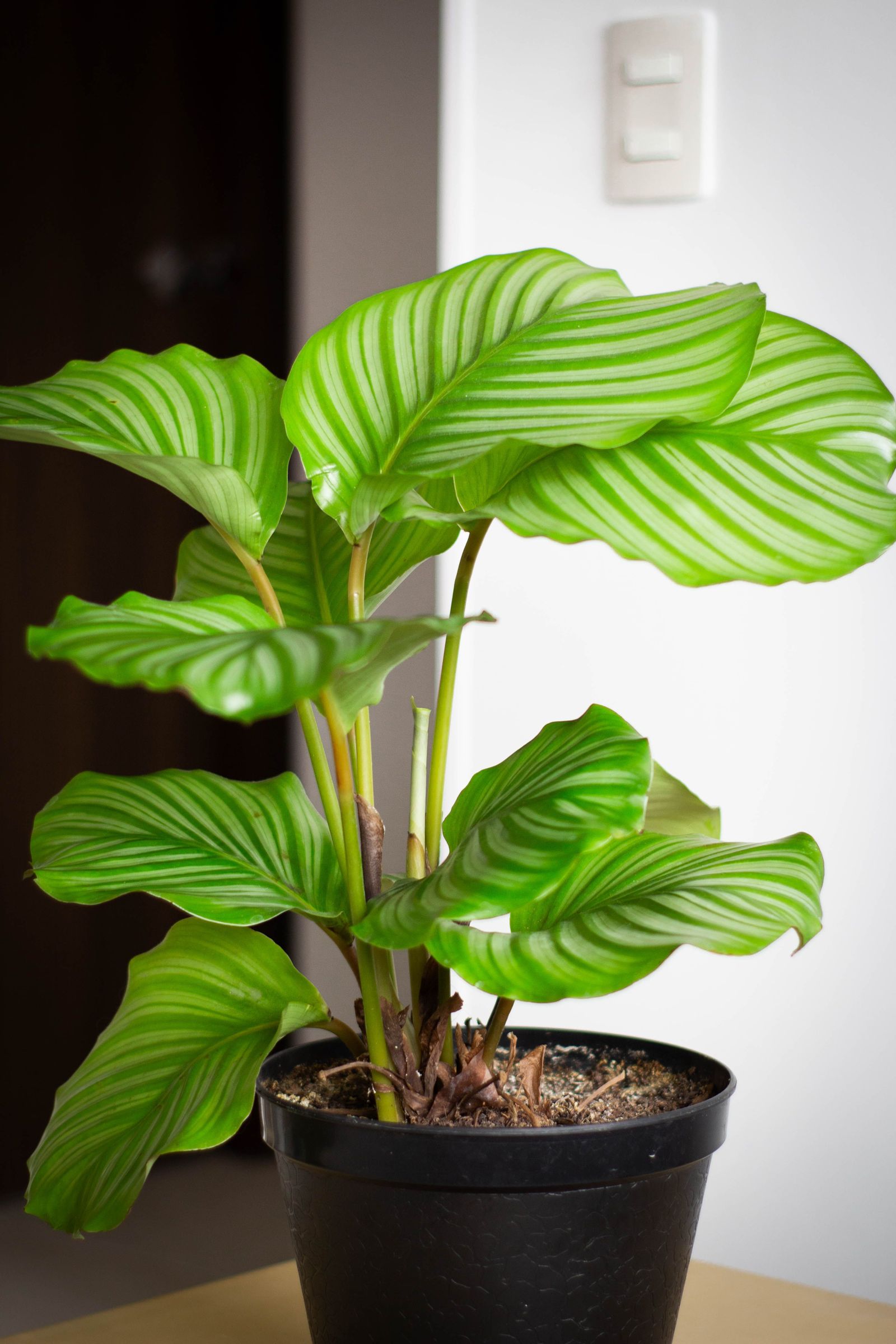
Photo: Jardín De Neko / Pexels
Watering Volume Calculator: The Calathea Pot Audit
A calathea wants a wrung out sponge, never a flood and never a drought. Enter your pot diameter as both length and width with a depth of 1 inch to size one even drink.
19.9 gallons
For 32 square feet at 1 inch deep. That is about 76 liters, or 10 trips with a standard 2 gallon watering can.
A rain gauge or a straight sided can set in the bed tells you when a sprinkler or soaker hose has actually delivered this depth. Time alone is a guess, because hose pressure varies from house to house.
The conversion is arithmetic, not opinion: one inch over one square foot is 144 cubic inches of water, and a US gallon holds 231 cubic inches, so each square foot at one inch takes 0.62 gallons.
The Wrung Sponge Rule: Evenly Moist, Never Wet, Never Dry
Picture a sponge that has been wrung out hard: damp throughout, holding water in its body, dripping nothing. That is the moisture state a calathea wants permanently. The check is the top inch: when the surface inch has dried, the sponge is starting to dry at the edges and it is time to water, thoroughly, until a little runs from the drainage hole, restoring the even damp without ever creating a swamp at the bottom. The two failure states are symmetric. A plant allowed to dry hard wilts dramatically, leaves rolling and stems drooping flat, and although it usually stands back up within hours of a drink, repeated hard droughts cost it leaf edges and eventually leaves. A plant kept wet, in mix that never dries even at the surface, rots at the roots and shows it as yellowing leaves that no schedule change rescues. The interval that holds the sponge state in a typical 6 inch pot is 5 to 7 days in summer growth; winter halves the plant's drinking and the same check lands every 10 to 14 days. Small pots and bright rooms run fast, large pots and dim corners run slow, and the finger at an inch deep arbitrates all of it.
The Water Quality Verdict: What Comes Out of the Tap Matters
Calathea leaves are thin, patterned, and chemically honest: fluoride and salt burn shows as brown, crispy tips and margins on otherwise healthy leaves, and it accumulates, because the plant cannot shed what the water keeps delivering. Municipal tap water in many regions carries fluoride at levels this genus objects to, plus chlorine and dissolved minerals that concentrate in the mix as water evaporates. The extension backed answer is to change the water, not the schedule: rainwater is the traditional choice and the one the North Carolina State profile names alongside distilled water. Distilled or reverse osmosis water works the same way. Two compromises help where neither is practical: tap water left standing uncovered for 24 hours loses its chlorine, though not its fluoride, which is the more common culprit; and a monthly flush, running a full pot volume of plain water slowly through the mix and out the drainage holes, carries accumulated salts with it. If your plant burns at the tips on a correct moisture rhythm, the water is the first suspect, ahead of the interval, ahead of the light. Owners who switch a burning plant to rainwater or distilled typically see the damage stop on new growth within a month; old burned edges never heal, and the new leaves are the report card.
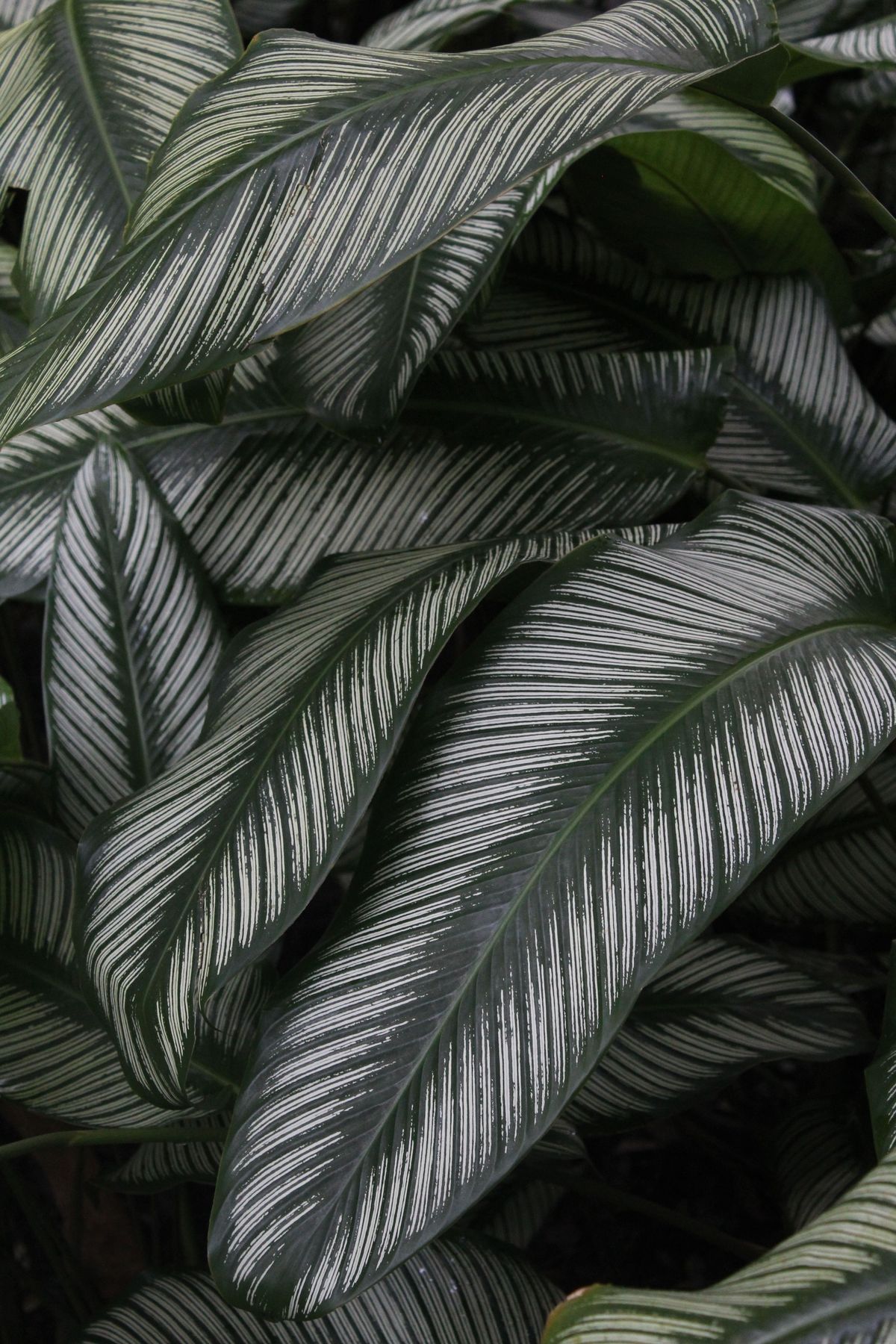
The Humidity Floor: The Room Is Half the Watering
A calathea in dry air loses water through its leaves faster than its roots can replace it even in correctly moist mix, and the leaf edges pay for the difference. The floor is about 50 percent relative humidity, with 60 percent the comfort zone; a heated winter room can sit at 25 to 35 percent, which is why calatheas that sailed through summer crisp in January on an unchanged routine. The fixes work at room scale: group the plant with other plants so their transpiration humidifies the shared air, run a small humidifier nearby, or stand the pot on a wide tray of pebbles with water kept below the pot's base. Misting is the popular non fix: it raises humidity for minutes, wets foliage that spots easily, and does nothing for the other twenty three hours of the day. Brown edges that arrive with the heating season, on a plant whose mix and water check out, are the humidity signature. A cheap hygrometer next to the plant settles the question in one reading, and it is the best money this genus ever asks for after the distilled water.
The Symptom Table: Burns, Thirst, and Normal Behavior
Calathea symptoms sort into four piles, and only one of them is answered with the watering can. Crispy brown tips and edges on many leaves, with moist mix and a tap water history, are chemistry burn; change the water and flush the pot. A whole plant drooped flat with dry mix is thirst; it will usually stand within hours of a thorough drink, and the droop is this genus's dramatic way of filing the report early rather than late. Yellowing lower leaves with mix that never dries at the surface are overwatering and root trouble; unpot, trim anything black or mushy, and repot into fresh mix on a stricter check. And the behavior that is not a symptom at all: the leaves fold upward at night and open by day, the prayer plant movement, nyctinasty, driven by light and a healthy internal clock. Owners regularly report this as wilting and water a healthy plant into trouble. A plant that prays is a plant whose water relations are working. Read the pile before you pour, and calathea care stops feeling like an argument.
Potting, Feeding, and the Steady State
The mix and pot hold the sponge state or fight it. A peat or coir based houseplant mix with perlite holds even moisture without staying dense; a pot with free drainage is non negotiable, and the cache pot must be emptied after every watering so the base never stands in runoff. Calatheas resent disturbance and hard water more than they resent a tight pot, so repot only when roots circle the drainage hole, one size up, in spring. Feeding is light: a balanced houseplant feed at quarter to half strength, monthly in the growing season, always into moist mix, and skipped entirely in winter; overfeeding is another salt source and shows up in the same leaf tips as bad water, which is one more reason the genus has a fussy reputation it only partly deserves. Put the pieces together, sponge moist mix, clean water, humid air, and the plant the internet calls a diva becomes one of the steadier houseplants on the shelf, patterned leaves held flat and clean, folding up each night like it is satisfied. It usually is.
Frequently Asked Questions
How often should I water my calathea?
When the top inch of mix has dried, keeping the pot evenly moist like a wrung out sponge the rest of the time. In a typical home that is every 5 to 7 days in summer and every 10 to 14 days in winter. Water thoroughly until a little drains, and empty the saucer. Never let the plant dry out completely, and never keep it soggy; this genus punishes both ends, which is why the check matters more than the count.
Why are my calathea's leaf tips brown and crispy?
Most often, the water. Fluoride, chlorine, and dissolved salts in tap water accumulate in the leaf tips of this sensitive genus and burn them. The North Carolina State Extension profile for peacock plant recommends rainwater or distilled water for calathea for this reason. Dry air below about 50 percent humidity causes the same signature, especially in heated winter rooms. Check the humidity, switch the water, and flush the pot monthly; judge the fix by new leaves, since burned edges do not heal.
Does calathea really need distilled water?
In many homes, yes, if the leaves are to stay clean. Where tap water is fluoridated or hard, the tips and margins burn steadily no matter how good the schedule is. Rainwater is the traditional alternative and costs nothing but a bucket. Tap water rested uncovered for 24 hours loses chlorine but keeps its fluoride, so it is a partial fix. If your plant's edges stay clean on your tap water, your water is fine and nothing needs changing; the leaves are the test.
Why does my calathea droop and then recover?
Two different droops look alike. A plant that droops with dry mix is thirsty and recovers within hours of a thorough watering; that dramatic wilt is an early warning system, not damage, unless it repeats constantly. A plant whose leaves fold upward every night and open every morning is not drooping at all; that is nyctinasty, the prayer plant movement, and it is a sign of health. Water for the first, admire the second, and never water a plant whose mix is still moist just because its leaves moved at dusk.
What humidity does a calathea need?
Fifty percent relative humidity as a floor, with 50 to 60 percent the comfort range. Below that, leaf edges crisp even in perfectly moist mix, because the leaves lose water faster than the roots replace it. Grouping plants, a pebble tray with water below the pot base, or a small humidifier all work at the scale the plant experiences. Misting does not; it wets the foliage for minutes and leaves the other hours of the day as dry as before.
Photo credits: Jardín De Neko (Pexels); Eli Fransen (Pexels). Photos are served from this site; follow the credit to the library page for the original.