The Chinese money plant has a friendly reputation and one reliable way to kill it, which is kindness on a schedule. Pilea peperomioides grows fast in bright light, throws pups from its base, and stores a modest reserve of water in its thick stems, and owners read that vigor as thirst. It is not a thirsty plant. It is a plant that wants a full soak and then a genuine dry interval, timed by the soil and not by the week, and the gap between those two habits is where most pileas are lost to root rot. This page runs the system: the depth check that times the drink, the seasonal ladder with its honestly conflicting winter figures, the soak and saucer protocol, and the leaf signals, which in this species are unusually specific once you learn to read them.
Home / Gardening Basics for Beginners
How Often to Water a Chinese Money Plant: The Two Inch Check, the Winter Spread, and the Leaf Signals
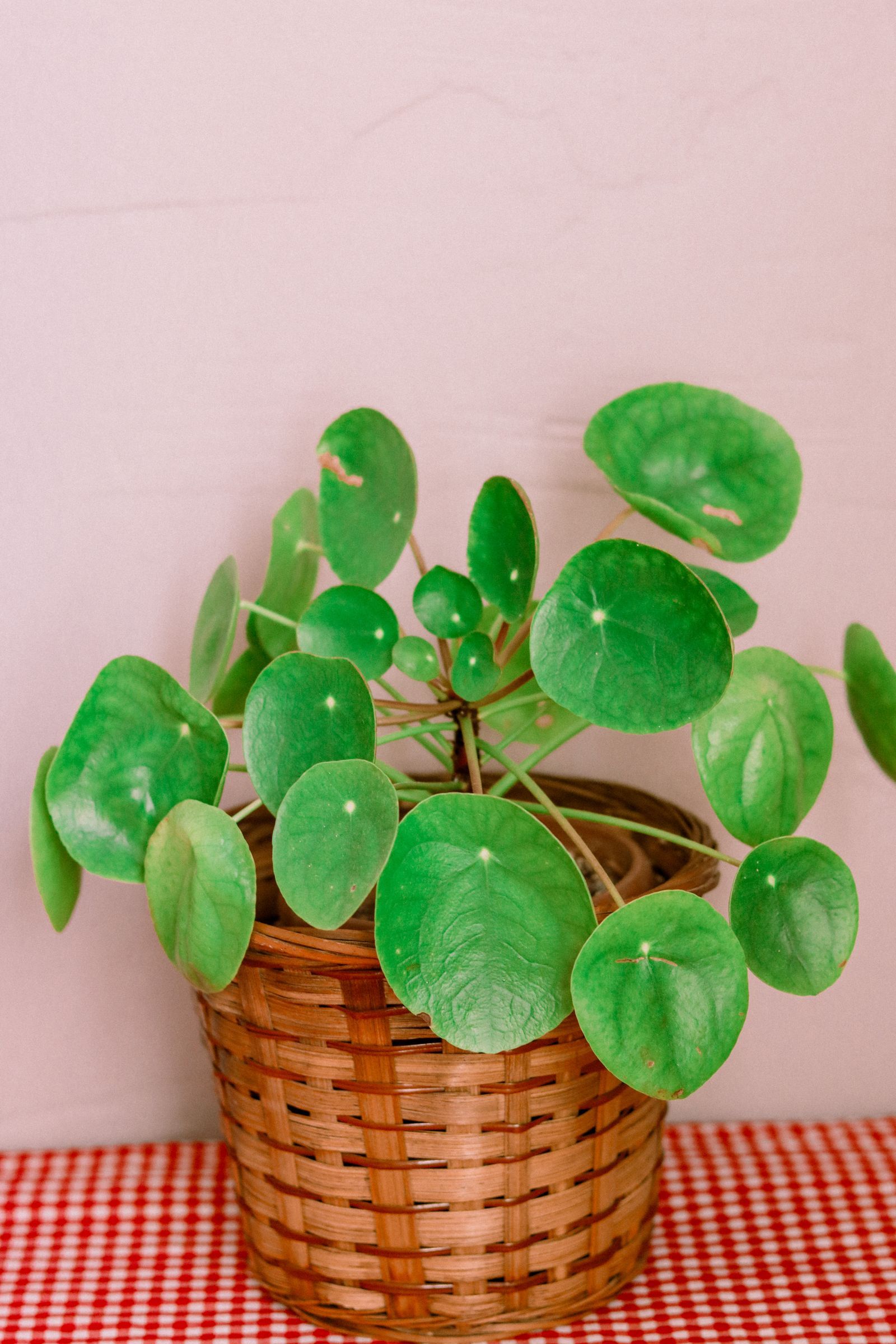
Photo: Fadime Demirtaş / Pexels
Watering Calculator: The Chinese Money Plant Pot Audit
A pilea is soaked fully, then left until the top 1 to 2 inches are dry. Enter your pot diameter as both length and width below and a depth of about 1 inch to size that soak for the pot you actually own.
19.9 gallons
For 32 square feet at 1 inch deep. That is about 76 liters, or 10 trips with a standard 2 gallon watering can.
A rain gauge or a straight sided can set in the bed tells you when a sprinkler or soaker hose has actually delivered this depth. Time alone is a guess, because hose pressure varies from house to house.
The conversion is arithmetic, not opinion: one inch over one square foot is 144 cubic inches of water, and a US gallon holds 231 cubic inches, so each square foot at one inch takes 0.62 gallons.
The Check: Top One to Two Inches Dry
Push a finger into the mix. When the top 1 to 2 inches are dry and the mix below is just barely cool, the plant is ready; while the top inch is still damp, it is not, whatever the calendar says. Small pots run the shallow end of the check, about an inch, because their whole volume turns over quickly; a large pot earns the full 2 inches, because its core holds moisture long after the surface dries and watering on a surface read floods a core that never emptied. The check takes five seconds and replaces every interval on this page, which are only descriptions of what the check finds in typical rooms. A moisture meter or a wooden skewer does the same job for growers who dislike the finger test; the instrument matters less than the depth, because pilea roots rot from the bottom up in a pot whose base never dries.
The Seasonal Ladder and the Honest Winter Spread
In bright summer conditions, with the plant growing hard, the check comes due about every 5 to 7 days in a small pot and about weekly in a larger one. Spring and fall stretch that by a few days as growth slows. Winter is where the sources honestly disagree, and this page flags the spread instead of splitting it: some guides run every 10 to 14 days, others every 2 to 3 weeks, and both can be right, because the variable is the room. A pilea in a warm, bright, heated room keeps growing and keeps drinking near the short end; a pilea in a cool room under short days nearly rests and belongs at the long end. The check arbitrates: in winter, water only when the top 2 inches are dry and the pot feels light, and expect the interval to double the summer one in a cool house. What winter pileas cannot survive is the summer schedule carried into January out of habit.
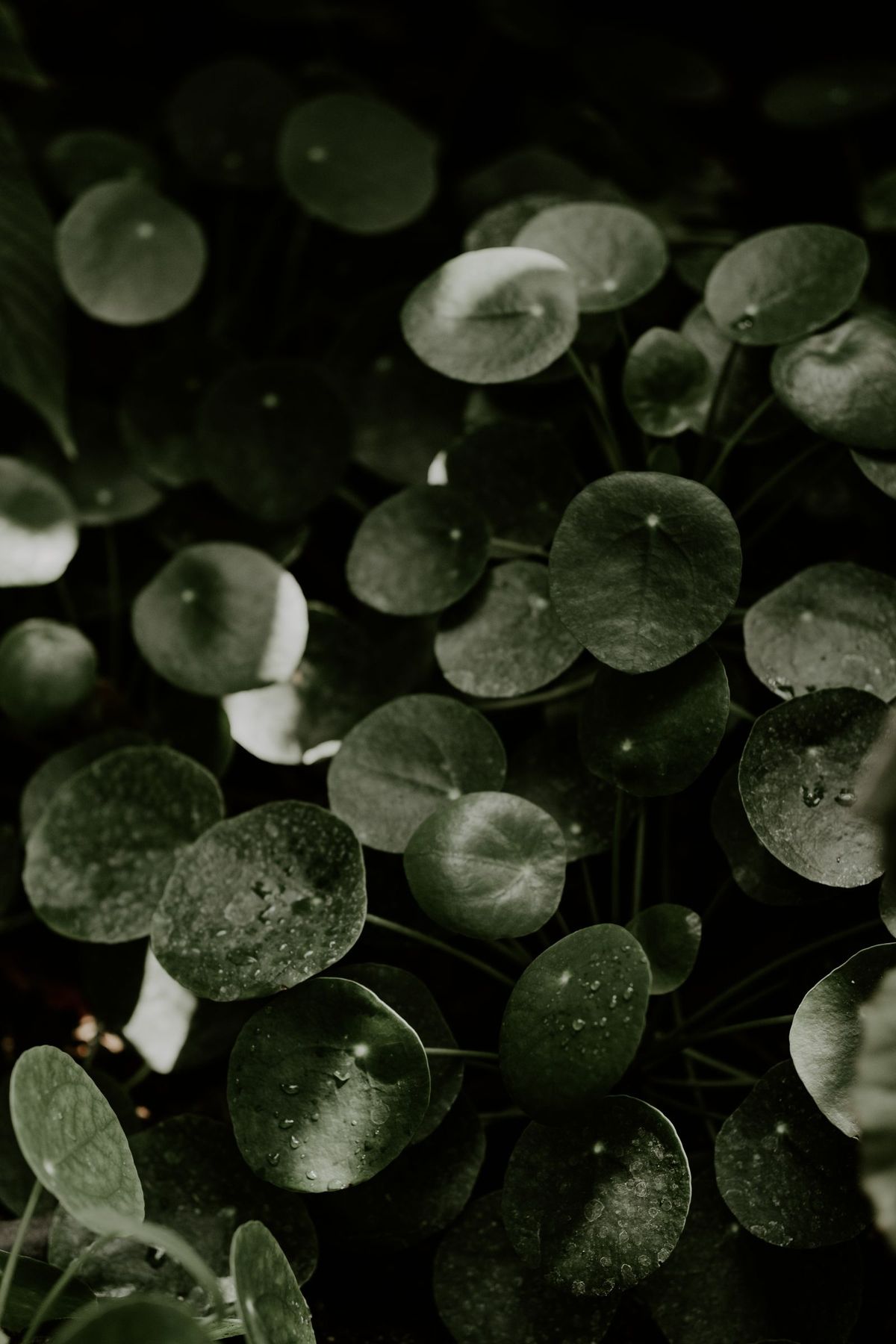
The Soak and the Saucer
When the check says water, water completely: pour slowly over the whole surface until it runs freely from the drainage holes, which for most pots is the volume the calculator above sizes for a 1 inch depth over the pot's footprint, and then some. Half measures wet the top half of the root ball and train the roots upward. The step owners skip is the saucer: a pilea left standing in its runoff is sitting in the rot it was just protected from, so empty the saucer within half an hour, every time. Bottom watering is a fair alternative for a plant whose stems crowd the surface, setting the pot in a tray for 20 to 30 minutes and then draining it fully. Either way the rhythm is the same shape: a complete drink, a complete drain, and then a dry interval long enough for the top of the mix to earn the next one.
The Leaf Signals: Curl, Dome, and Drop
Pilea leaves report water status in three distinct shapes, and they are worth learning because they look similar to an untrained eye. Curling, leaves cupping upward at the edges, is the thirst and heat signal: check the mix, and if it is dry, water. Doming, leaves bulging upward in the center like little umbrellas, is usually a light and growth response in a plant pushing hard, not a water complaint at all. Dropping lower leaves, yellowing as they go, on a plant whose mix stays wet, is the overwatering signature, and the fix is the opposite of the instinct: stop, let the pot dry well down, and check that the drainage holes are open. A plant can also drop a few of its oldest leaves as housekeeping while it grows pups, which is neither signal. The pattern is the diagnosis: one leaf is gossip, a trend across the plant is news, and the soil check is how you confirm which story is true before you act on it.
Rotation, Light, and the Pup Economy
Two habits keep a pilea handsome rather than merely alive, and both interact with watering. Rotation first: the plant leans hard toward its light, and a quarter turn at each watering keeps the famous coin leaves arranged around the stem instead of all facing the window like an audience. Light second: bright indirect light is what lets the plant use water at the summer rhythm; a pilea in a dim corner drinks at half the rate, and its interval stretches whether the calendar approves or not, which is why the check outranks every printed figure. The pups that crowd the base are the plant's savings account: leave them for a fuller pot, or separate them when they have a few leaves of their own, pot them in small pots, and water the divisions on the small pot rhythm, more often and in smaller drinks, until their roots fill the new volume.
Pups, Lean, and the Quarter Turn
A healthy Chinese money plant reports how the water is going in two visible ways. The first is pups: offsets that sprout from the base and even through the drainage holes when the plant is content, each one a new plant that can be cut free with a bit of root and potted on its own. A plant that never pups in a year of good light is usually a plant living on the edge, most often slightly underwatered or hungry. The second is lean: pilea grows hard toward its light and will bend into a question mark at a window, and the fix is a quarter turn of the pot at each watering, which also attaches the watering check to a habit with a rhythm of its own. Water around new pups rather than over them, keep the saucer discipline at the crowded base, and the mother plant becomes a small nursery, which is exactly how this species earned its friendship plant name.
Frequently Asked Questions
How often should I water a Chinese money plant?
When the top 1 to 2 inches of mix are dry. In bright summer conditions that is about every 5 to 7 days in a small pot and about weekly in a larger one. In winter the honest range is every 10 to 14 days in a warm bright room to every 2 to 3 weeks in a cool one. Soak until it drains, empty the saucer, and let the check, not the calendar, call each watering.
Why are my pilea leaves curling?
Curling upward at the edges is the plant's thirst and heat signal. Check the mix: if the top 2 inches are dry, give it a full soak and the leaves usually relax within a day. If the mix is wet and the leaves still curl, look at heat and light instead, a plant pressed against a hot window or sitting over a radiator curls with wet roots, and the fix is the move, not the watering can.
Why is my Chinese money plant dropping leaves?
Read the pattern. A few oldest leaves yellowing and dropping while pups grow is housekeeping. A trend of dropping leaves on a plant whose mix stays wet is overwatering, the species' top killer: the thick stems store water, the roots rot in a pot that never dries, and the leaves go as the roots fail. Let the pot dry well down, confirm the drainage holes are open, and resume on the depth check.
Can a pilea recover from overwatering?
Often, if the stems are still firm. Stop watering, let the mix dry thoroughly, and trim any blackened, soft roots if you unpot it, repotting into fresh mix in a pot with open drainage. The stem bases are the verdict: firm green stems will push new growth once the roots recover; soft, translucent, or sour smelling stem bases mean the rot has reached the plant itself, and healthy pups or leaf stem cuttings are the salvage.
Should I mist my Chinese money plant?
It does no harm and little good. Pilea tolerates ordinary room humidity and does not need misting; its water relations run through the pot, not the leaves. Misting cannot substitute for a watering and does not fix curling caused by dry mix. If the air is very dry in winter, a pebble tray or a humidifier near the plant group helps more honestly than a spray bottle.
Photo credits: Fadime Demirtaş (Pexels); Mathilde Langevin (Pexels). Photos are served from this site; follow the credit to the library page for the original.