How Often to Water a Christmas Cactus: the Bloom Calendar, Not the Desert Rule
By the Windchime Walker editorial team
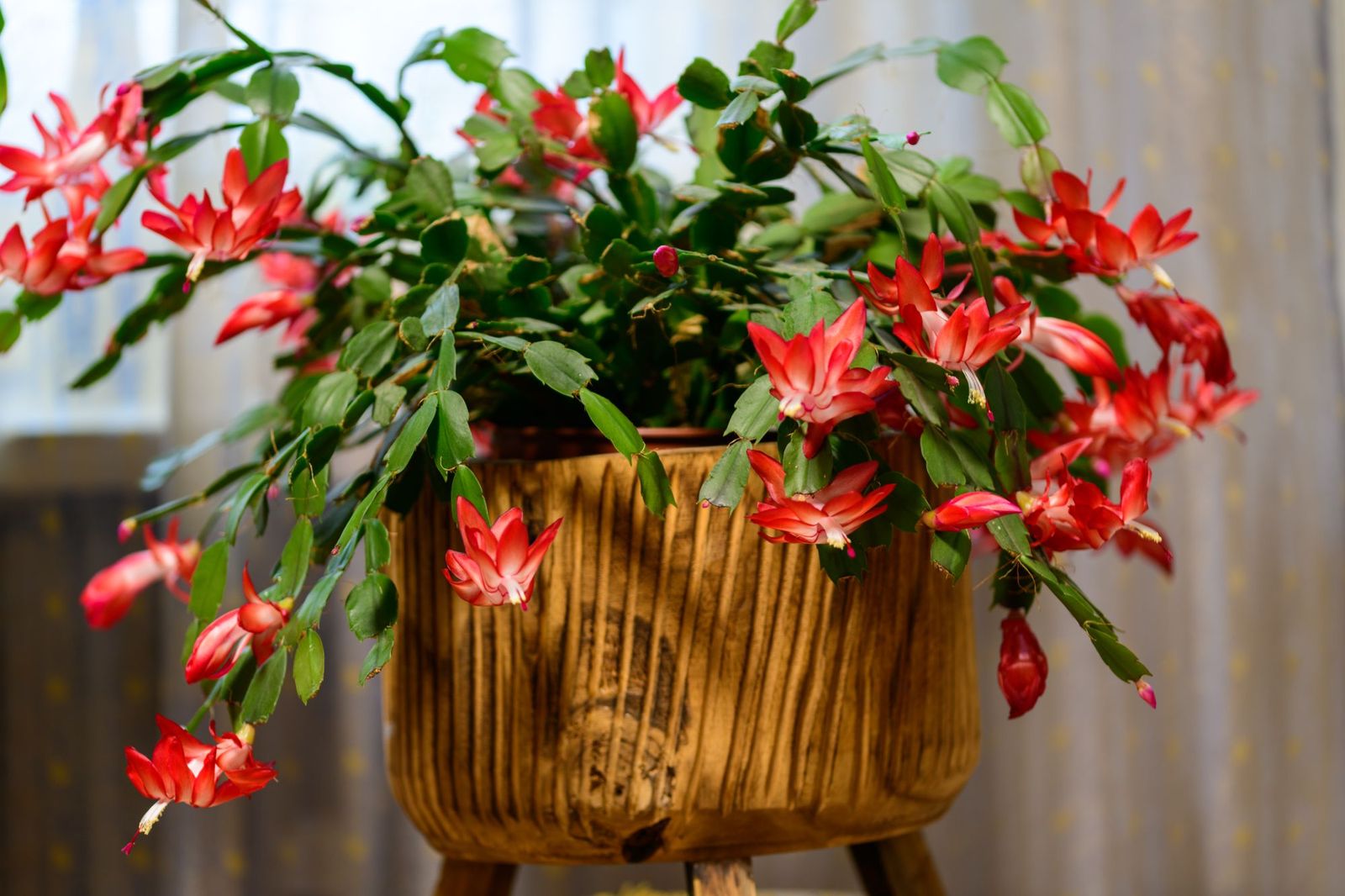
Photo: Sergej ***** / Pexels
The Christmas cactus is the most miswatered plant in the holiday aisle, because its name files it with the desert cacti and its body disagrees. Schlumbergera grows wild in the coastal mountains of Brazil, rooted in leaf litter in tree crotches and rock crevices, in humid air and frequent rain. It is a rainforest cactus. Water it like a desert plant and it shrivels and drops its segments; water it on a fern's schedule and it rots. The rhythm it actually wants is a calendar, because the plant's whole year is organized around one event: blooming on time. This page gives the watering year in its four seasons.
Our succulent and houseplant watering pages own their plants. This page owns the Christmas cactus and its calendar: the rest that makes the buds, and the moisture that keeps them.
Interactive tool
Watering Calculator: The Christmas Cactus Pot Audit
In the growth season a Christmas cactus is soaked fully, then left until the top inch is dry. Enter your pot diameter as both length and width below and a depth of about 1 inch to see how much water that soak takes for a pot your size.
19.9 gallons
For 32 square feet at 1 inch deep. That is about 76 liters, or 10 trips with a standard 2 gallon watering can.
A rain gauge or a straight sided can set in the bed tells you when a sprinkler or soaker hose has actually delivered this depth. Time alone is a guess, because hose pressure varies from house to house.
The conversion is arithmetic, not opinion: one inch over one square foot is 144 cubic inches of water, and a US gallon holds 231 cubic inches, so each square foot at one inch takes 0.62 gallons.
The Growth Season Rhythm (Spring and Summer)
From the end of the post bloom rest through early September, the plant is growing new segments, and the rule is simple: water when the top inch of mix is dry, then water thoroughly until it drains, and empty the saucer. In most rooms that is every 1 to 3 weeks depending on pot size, light, and warmth, with the check, not the count, in charge. The flat, jointed segments are the gauge between checks: plump and firm means the plant is hydrated; segments that look thin, wrinkled, or limp at the tips mean the check is overdue. Feed lightly during this season, a balanced houseplant fertilizer at half strength about once a month, because the segments built now are the stems that carry December's flowers. Bright indirect light, or a few hours of gentle morning sun, keeps growth compact; a plant stretching pale and leggy is asking for light, and no watering pattern fixes that.
The September Rest: Where the Buds Come From
In mid September, the calendar turns. Bud set in Schlumbergera is triggered by the combination of long nights and a drier, cooler rest, and watering is the lever you control indoors. From about mid September, let the mix dry deeper between waterings, the top half of the pot rather than the top inch, and keep the plant cool if you can, near a bright window away from heating vents. Do not fertilize. This is not neglect; it is the signal. A plant kept on the generous summer rhythm through fall often grows beautifully and blooms barely or not at all, because nothing told it the season changed. After roughly 6 weeks of the rest, tiny buds appear at the segment tips. That is your confirmation that the signal landed, and it is also the moment the watering rule flips again.
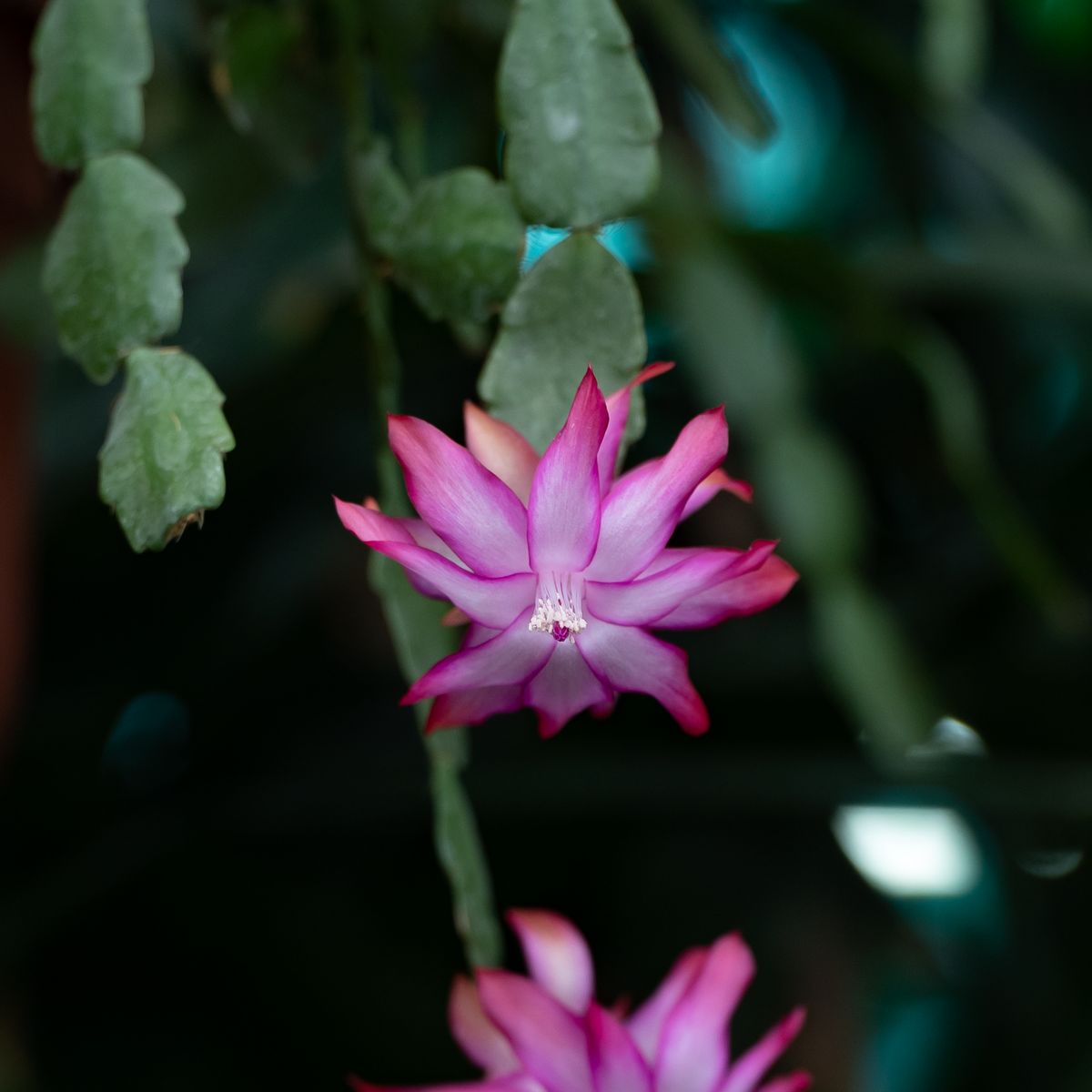
A pink Christmas cactus bloom opening at the segment tips
Bud Stage: the Even Moisture Rule
Once buds are set, the rule is even moisture, and Iowa State Extension states the stakes plainly: let a Christmas cactus dry out or sit stressed while buds are forming and opening, and the plant drops the buds. Keep the mix lightly and consistently moist through bud and bloom, never soggy, never bone dry, and change nothing else at the same time. Bud drop has accomplices beyond water: moving the plant to a new room mid bud, a hot dry blast from a heating vent, a cold draft from a door, and low light all trigger the same shedding. The classic disaster is buying a plant in full bud from a cool greenhouse, carrying it through cold air to a hot dry living room, and watching the buds fall in a week; the plant was not defective, it was relocated during its most conservative season. Settle the plant where it will bloom before the buds swell, water it evenly, and leave it alone to open.
After the Flowers: the Post Bloom Rest
When the last flowers fall, usually in January, the plant has spent its reserves and takes its second rest. For about 6 weeks, water sparingly, just enough to keep the segments from shriveling hard, and give no fertilizer. The plant looks unrewarding in this phase and owners tend to rescue it with water and food, which only pushes weak growth. Resist. The rest rebuilds the plant's readiness for the spring growth push, and a rested plant outgrows a fussed one by summer. When new segment growth starts in spring, return to the growth season rhythm, and consider the year's one repotting question: this plant blooms best slightly snug in its pot, so repot only when roots crowd the drainage holes, and never in fall.
The Real Killer: Rot in a Wet Pot
For all the worry about bud drop, the thing that actually kills Christmas cacti is rot from standing water, the failure the University of Minnesota Extension flags for this plant. The segments root in a shallow, fine root system that suffocates in a wet, airless mix, and the plant, being a cactus in name, is usually planted in whatever pot it was gifted in, often without drainage. The checks are cheap. The pot must have holes; if it sits in a decorative cachepot, empty the cachepot after every watering. Segments that yellow from the base, go mushy, or detach at a touch mean rot has started: unpot, cut away every soft segment and blackened root back to firm tissue, let the cuts dry a day, and repot in fresh, fast draining mix. Individual healthy segments root easily in mix or water, so a rescue that saves three segments saves the plant. A plant that is merely thirsty, by contrast, has wrinkled but firm segments and recovers within days of a proper soak.
Light and Temperature: the Other Two Bud Levers
Water is the lever this page owns, but bud set answers to three signals, and the other two explain most no bloom mysteries that watering cannot. The first is night length: Schlumbergera is a short day plant, and it needs roughly 6 to 8 weeks of long, uninterrupted nights, about 13 hours of darkness, to set buds. A plant living under a lamp that burns until midnight, or in a room lit all evening, may get the September dry rest perfectly and still not set buds, because its nights never lengthen. Move it in fall to a spot where evening light does not reach it, a spare room or a porch corner, and let the calendar do the work. The second is temperature: cool nights, ideally in the 50s to low 60s F, strengthen the signal, which is why a bright cool windowsill outperforms a warm shelf. None of this requires a greenhouse or a dark closet ritual; it requires the plant to experience the same fall your garden does, slightly drier, slightly cooler, and dark at night.
Segment Drop and Other Complaints, Read Correctly
A Christmas cactus files its complaints in segments. Segments dropping whole from the tips, firm and green, during bud stage is the bud drop mechanism extended: a stress response to a move, a draft, or a dry gap, answered by settling the plant and evening out the moisture. Segments going soft and translucent from the base upward is rot, covered above, and it is a cutting job, not a watering adjustment. Segments shriveling thin and wrinkled with dry mix is plain thirst. Red or purple tinting on the segments is a light report: the plant is getting more sun than it wants, often a summer windowsill that turned fierce, and it wants bright shade instead. A plant that grows long, flat, reaching segments with few branches is short on light in the growth season. Read which complaint you have before reaching for the can, because of the five, only one is fixed by water, and one is made worse by it. The plant is honest; it just reports in a language of segments rather than leaves.
One Plant, Three Holidays: a Naming Note That Affects Care
The plant sold as a Christmas cactus is often one of its two close relatives, and the calendar shifts slightly with the name. The true Christmas cactus, Schlumbergera bridgesii, blooms nearest Christmas. The Thanksgiving cactus, Schlumbergera truncata, the one with pointed, claw like segment edges, blooms a month earlier and is what most holiday sales actually stock. The Easter cactus is a different genus entirely, with spring bloom and its own rest timing. The watering system on this page, growth rhythm, fall dry rest, bud stage even moisture, post bloom rest, applies to all of them; only the months move, keyed to whenever your plant's bloom approaches. Read the segments to name yours: pointed claws for the Thanksgiving plant, rounded scalloped edges for the Christmas plant. Then run the calendar backward from its bloom rather than from the name on the tag, because the tag is the least reliable document in the pot. A plant that blooms in November is not early or confused; it is a Thanksgiving cactus keeping its own calendar correctly, and the owner who knows that stops trying to delay it and starts enjoying the longer season the two plants give a household that keeps both.
Frequently Asked Questions
How often should I water a Christmas cactus?
In the growth season, when the top inch of mix is dry, roughly every 1 to 3 weeks in most rooms, soaking fully and draining completely. From mid September, let it dry deeper to trigger bud set. Once buds form, keep the mix evenly and lightly moist until flowering ends, then rest it about 6 weeks on sparse water.
Why did my Christmas cactus drop its buds?
Bud drop is a stress report. The common causes are the mix drying out during bud stage, a move to a new room, hot dry air from a heating vent, a cold draft, or low light. Iowa State Extension's rule is the fix: keep the plant evenly moist and settled in one spot from bud set to bloom.
Is a Christmas cactus watered like a desert cactus?
No. It is a rainforest cactus from the coastal mountains of Brazil, where it grows in tree crotches and rock crevices in humid air. It wants more water and more humidity than a desert cactus, a deeper dry rest in fall than most houseplants, and it rots in standing water like everything else in a pot.
Why is my Christmas cactus limp and wrinkled?
Wrinkled, thin, limp segments mean thirst if the mix is dry: soak it fully and it should plump within days. If the mix is wet and the segments are soft or yellowing from the base, that is rot, not thirst, and more water is the worst response. Unpot, cut back to firm tissue, and repot in fresh mix.
When should I repot a Christmas cactus?
Rarely, and never in fall. These plants bloom best slightly snug in the pot. Repot in spring only when roots crowd the drainage holes, go up one size, and use a fast draining mix in a pot with holes. A gifted plant in a hole free decorative pot should be moved into a draining pot at the first spring.
Photo credits: Sergej ***** (Pexels); Dmitry Kharitonov (Pexels). Photos are served from this site; follow the credit to the library page for the original.