Dahlias are the rare flower where the correct watering answer for the first stage is none. A planted dahlia tuber sits underground for weeks before it sprouts, and a dormant tuber in wet soil rots, which is why this site's dahlia grow guide states the rule plainly: no regular watering until green shoots show. Tuber rot from kindness is this crop's main killer, ahead of every pest and disease, and it is committed by growers watering a bed that looks empty and feels neglected. Once the shoots are up, the regime flips completely: a growing dahlia is a thirsty plant heading for a flowering budget of about 1 inch a week, delivered at the base, 2 to 3 times a week in spring and fall and every other day in intense heat. Then late in the season the rhythm eases again as the tubers mature. Three regimes, one year, and the grower's job is knowing which one the plant is in. This page runs all three, plus the container case, where the published frequency sprawl gets the context that settles it. This site's care article owns the in season calendar; this page owns the water year by stage.
Home / Flowers and Houseplants
How Often to Water Dahlias: Three Regimes, One Rot Trap
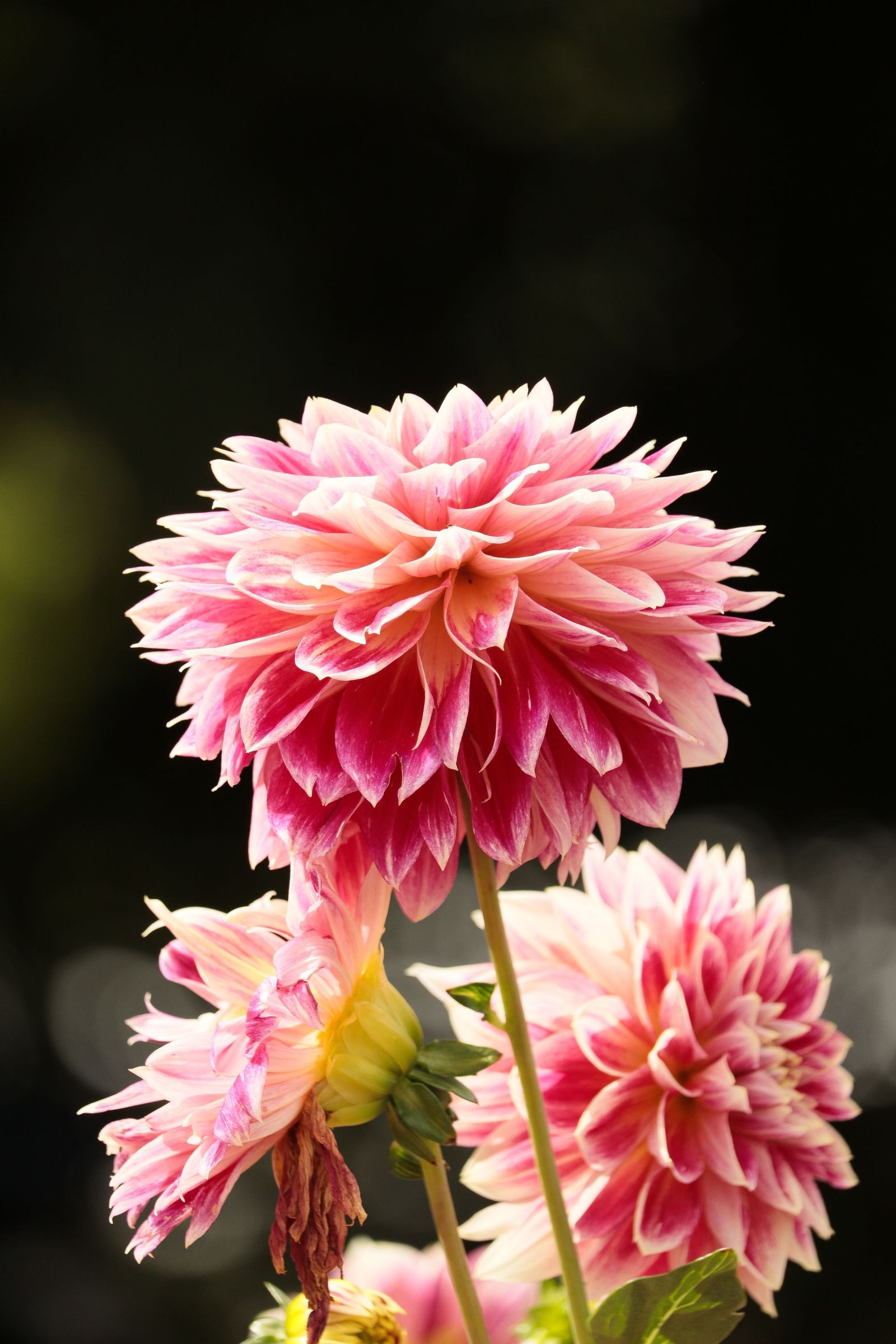
Photo: MAURO FOSSATI / Pexels
Watering Volume Calculator: The Dahlia Bed Audit
Dahlias run three water regimes in one year, and the flowering budget is about an inch a week at the base. Enter your bed length and width with a depth of 1 inch to size that soak.
19.9 gallons
For 32 square feet at 1 inch deep. That is about 76 liters, or 10 trips with a standard 2 gallon watering can.
A rain gauge or a straight sided can set in the bed tells you when a sprinkler or soaker hose has actually delivered this depth. Time alone is a guess, because hose pressure varies from house to house.
The conversion is arithmetic, not opinion: one inch over one square foot is 144 cubic inches of water, and a US gallon holds 231 cubic inches, so each square foot at one inch takes 0.62 gallons.
Stage One: The Dry Rule for the Unsprouted Tuber
From planting until you see green, water almost not at all. The soil the tuber was planted into should be barely moist, the moisture of a wrung sponge, and average spring rain is more than enough to hold it there. The tuber itself is the reservoir: it carries the water and food the sprout needs for its first weeks, which is the whole design of the organ. What it cannot survive is sitting in cold, wet soil with no roots drinking and no leaves transpiring, because the rot organisms work faster than the sprout does. If you planted into a dry spring bed, one light watering at planting settles the soil around the tuber, and then you wait. The waiting is the skill, and it feels wrong every year, especially with an expensive tuber. Mark the spot, water the rest of the garden, and leave it. Shoots in 2 to 4 weeks are the signal that the regime has changed, and not a day before.
Stage Two and Three: Establishment, Then the Flowering Budget
Once shoots show, begin watering as the top of the soil dries, modestly at first while the plant is small, and build with the plant. By the time a dahlia is knee high and budding, it is on the flowering budget: about 1 inch of water a week, delivered at the base in deep drinks, 2 to 3 times a week in spring and fall weather and every other day through intense heat. The calculator above sizes the 1 inch drink for your bed; run it and the soaker hose schedule writes itself. Delivery rules match the zinnia discipline on this site: at the base, in the morning, foliage dry, because dahlias mildew and spot on wet leaves too, and a mulch layer of 2 to 3 inches once plants are up holds the moisture even and stops the soil splash. Deep and less often beats shallow and daily at this stage, driving roots down where the moisture lasts. The wilt test from the pepper patch applies here as well: a dahlia that flags at noon and recovers by evening in a heat wave is managing heat, and the grower who waters it daily on that signal builds a shallow rooted, soft plant that needs the daily water it was trained to expect.
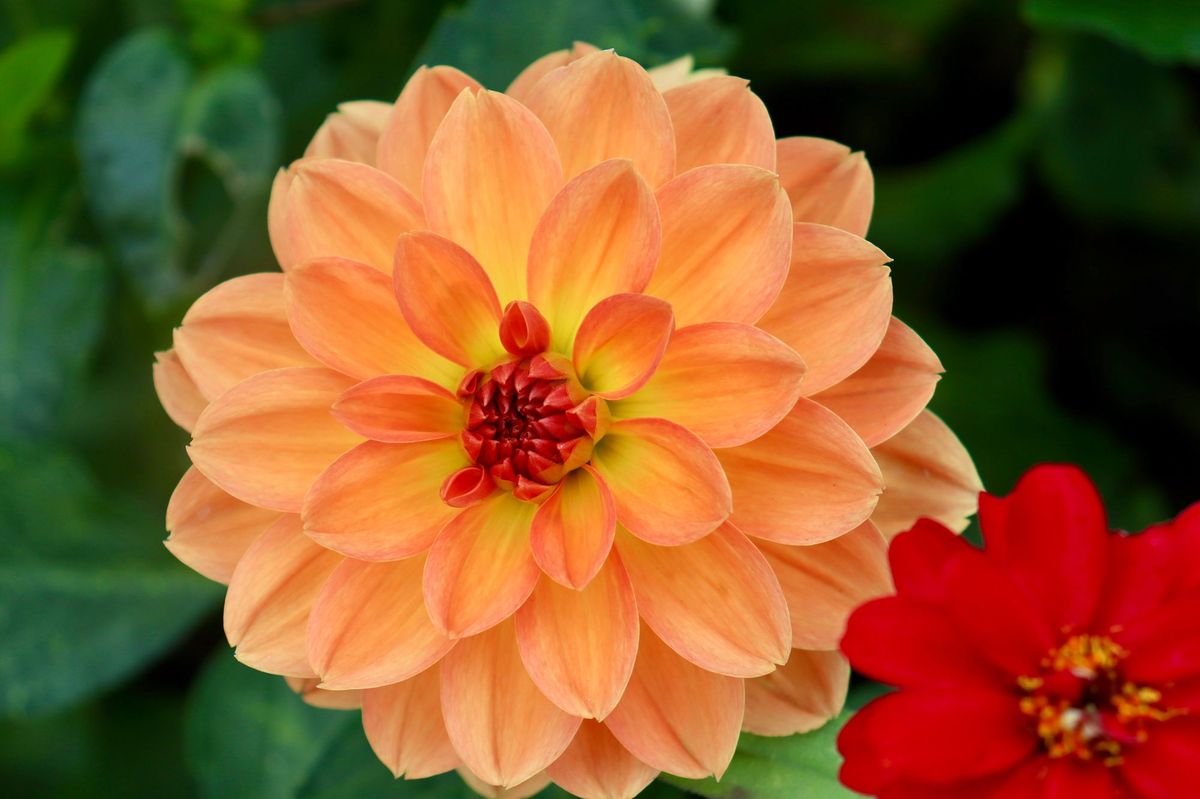
Containers: Daily, and What Twice Daily Really Means
Potted dahlias live on the fastest clock, and the guides sprawl from daily to twice daily in hot spells. Both are honest, for different pots. A dahlia in a 5 gallon pot on a hot patio in August can genuinely need water morning and evening; the same plant in a 15 gallon pot, mulched, in the same weather, runs comfortably on one deep drink a day or even every other day. The sprawl is pot volume and exposure wearing the mask of disagreement. The check settles it as always: water when the top inch or two of mix is dry, soak to drainage, and never let the pot stand in a filled saucer. Feed enters the container rhythm on schedule, a balanced liquid feed every 2 weeks through budding, because the watering frequency that keeps a pot dahlia alive leaches its pantry bare by midsummer. One container specific warning: the dry rule of stage one applies in pots too, and a tuber potted up early indoors wants its mix barely moist until it sprouts, in the brightest cool spot you have, not watered daily on the windowsill out of optimism.
Late Season: The Taper and the Lift
As days shorten and flowering peaks pass, the plant's work changes from growing to finishing its tubers, the underground savings account next year's plant lives on. Ease the watering gradually: keep the plant from drought stress while it still flowers, but let the soil run a little drier between drinks, and stop feeding entirely, because late nitrogen makes soft growth and soft tubers that store badly. After the first frost blackens the foliage, the watering question ends and the storage question begins: leave the tubers in the ground a week or two to cure if your climate lifts them, then dig, dry, and store them cool and barely moist. In warm climates where dahlias overwinter in the ground, the winter regime is the stage one rule returned: the resting tuber wants the soil on the dry side until spring growth calls the water back. Three regimes, and the calendar is written by the plant: nothing until it sprouts, an inch a week while it performs, a taper as it saves. That is the dahlia water year, and the bed audit above will size every drink in it.
Feeding Through the Water: The Liquid Feed Rhythm
Dahlias are fed most reliably through their watering, because a flowering plant drinking this deeply carries dissolved feed straight to the roots on a schedule you already keep. The rhythm the growers in the results converge on: once the plants are established and growing strongly, a balanced liquid feed at half strength every second or third watering through the bud and bloom months, always into soil that is already moist, never into a dry root zone, where concentrated feed burns the fine roots doing the drinking. Keep the nitrogen modest after midsummer; a high nitrogen feed at that stage buys leaves at the price of blooms and produces the soft, floppy growth that mildew colonizes first. In containers the feed matters more, not less, because the daily watering this page prescribes for pots leaches nutrients out of the drainage hole on a schedule the bed never sees, and a container dahlia watered faithfully but fed never is a plant slowly starving in a clean pot. The diagnostic pairing is simple: pale leaves with strong watering point at feed, dark leaves with wilting point at water, and the two problems are separated by one honest look before you reach for either can. Feed is the smaller half of this crop's water story, but it rides on the same hose.
Frequently Asked Questions
Should I water dahlias after planting the tubers?
Almost not at all, and this is the rule that saves the crop. A dormant dahlia tuber in wet soil rots before it sprouts, so this site's grow guide and this page both hold the same line: plant into barely moist soil, give one light watering to settle a dry bed, and then wait for green shoots, which take 2 to 4 weeks. The tuber carries the moisture its sprout needs. Regular watering of an unsprouted tuber is the main way dahlias are killed, ahead of any pest or disease.
How often do dahlias need water once they are growing?
On the flowering budget: about 1 inch of water a week, delivered at the base in deep drinks. In practice that is 2 to 3 waterings a week in spring and fall weather and every other day through intense heat, checked against the soil, watering when the top has dried. Build up to the budget as the plant grows; a small sprouted plant drinks modestly, a knee high budding plant drinks fully. Mulch 2 to 3 inches deep holds the moisture even and keeps soil splash off the foliage.
How often do potted dahlias need water?
Daily in hot weather for most pots, and the twice daily figure in some guides is real for a small pot, around 5 gallons, on a hot patio in a heat wave. A large pot of 15 gallons, mulched, runs on one deep drink a day or less. The check settles it: water when the top inch or two of mix is dry, soak to drainage, empty the saucer. The stage one rule applies in pots too, barely moist mix until the tuber sprouts, however optimistic the windowsill feels.
Why did my dahlia tuber rot?
Because it sat wet before it had roots and leaves to use the water. A planted tuber is a storage organ with no plumbing attached yet, and cold wet soil lets rot organisms work faster than the sprout can grow. The pattern is almost always a well watered bed with nothing showing, dug up in frustration to find a soft, sour tuber. Plant into barely moist soil, resist watering until shoots appear, and make sure the spot drains; in heavy clay, plant shallower with grit or compost worked in so the tuber never sits in a sump.
Do dahlias need less water at the end of the season?
Yes, a gradual taper. As flowering peaks pass, the plant shifts from growing to finishing its tubers for storage, and it wants the soil a little drier between drinks, though never drought stressed while it still blooms. Stop feeding entirely late in the season; nitrogen then makes soft tubers that store badly. After frost blackens the foliage, watering ends: tubers are lifted and stored in cold climates, and in warm climates the resting tuber wants the dry side of moist until spring, the same rule the year began with.
Photo credits: MAURO FOSSATI (Pexels); Ilkauri Scheer (Pexels). Photos are served from this site; follow the credit to the library page for the original.