The desert rose breaks the houseplant watering pattern because it is not really drinking from the pot. Adenium obesum grows a caudex, the swollen bottle shaped trunk base that stores water against drought in its native East African and Arabian drylands, and every watering decision should be read off that storage rather than off a calendar. The rule that follows is stark compared to most plants on this site: water only when the mix has dried fully, top to bottom, then water thoroughly until it drains, and empty the saucer without exception. In warm active growth that rhythm typically lands every 7 to 10 days for a plant in a correctly gritty mix, though the results sprawl from a daily watering guide that this page flags as wrong for the species to 10 to 14 day intervals in cooler or larger setups. In winter the plant shuts down and the rhythm collapses to every 3 to 4 weeks or less. This page teaches the caudex test that replaces guesswork, because this plant carries its own water gauge at the base of its trunk.
Home / Flowers and Houseplants
How Often to Water a Desert Rose: The Caudex Test, the Full Dry Rule, and the Winter Shutdown
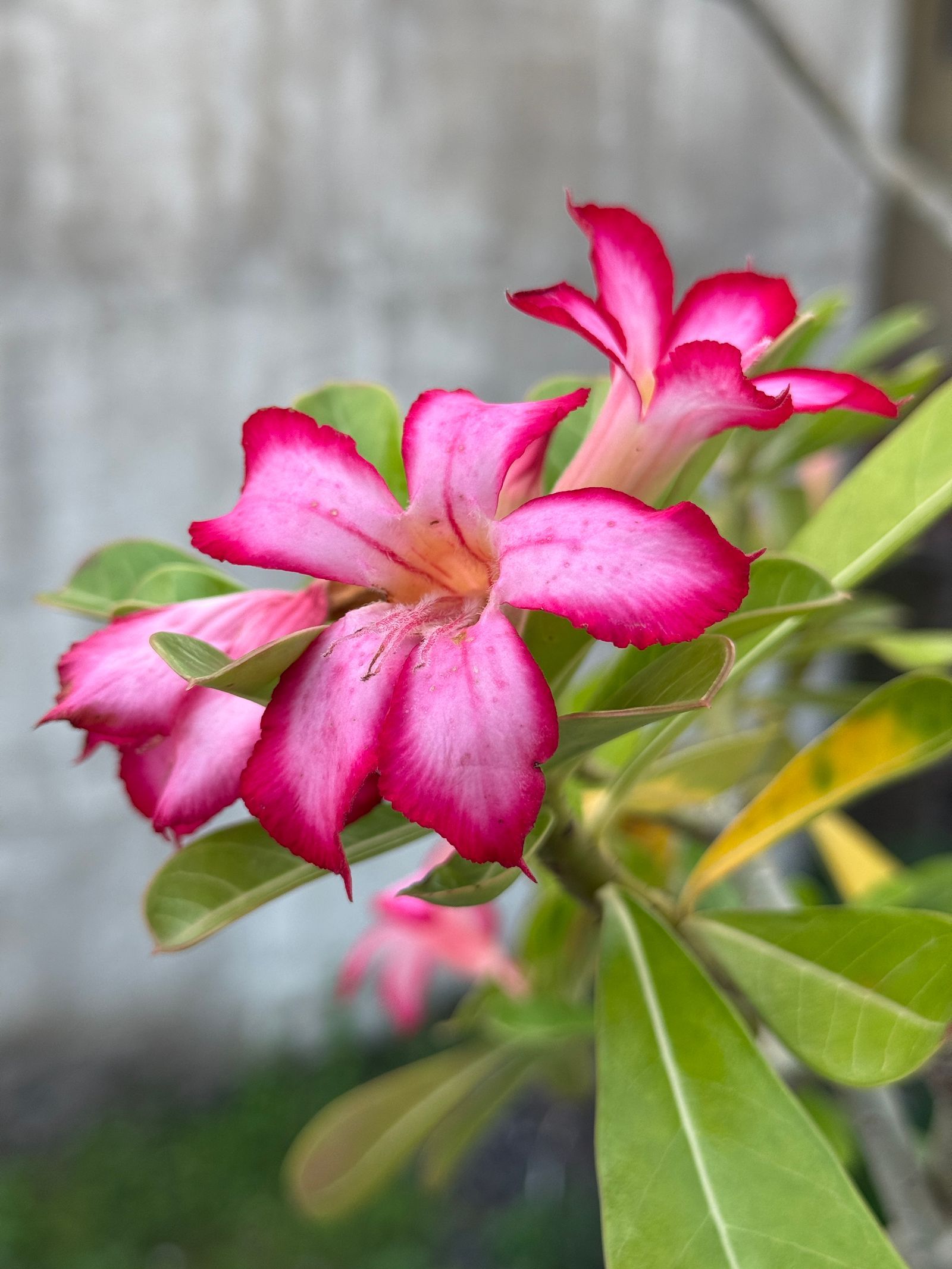
Photo: Satish Vasava / Pexels
Watering Volume Calculator: The Desert Rose Pot Audit
A desert rose stores its water in its caudex and drinks rarely but deeply, only when the mix is fully dry. Enter your pot diameter as both length and width with a depth of 1 inch to size that soak when it finally comes.
19.9 gallons
For 32 square feet at 1 inch deep. That is about 76 liters, or 10 trips with a standard 2 gallon watering can.
A rain gauge or a straight sided can set in the bed tells you when a sprinkler or soaker hose has actually delivered this depth. Time alone is a guess, because hose pressure varies from house to house.
The conversion is arithmetic, not opinion: one inch over one square foot is 144 cubic inches of water, and a US gallon holds 231 cubic inches, so each square foot at one inch takes 0.62 gallons.
The Caudex Test: The Plant's Own Water Gauge
Press the caudex gently between finger and thumb and the plant reports its reserves directly. A firm, hard caudex is a full reservoir: the plant is holding water and does not need yours, whatever the calendar or the mix surface suggests. A caudex with a slight give, still solid but no longer rock hard, is a plant spending its reserves and due a drink within the next few days, the ideal moment to water if the mix is also dry. A soft, spongy, or wrinkled caudex is an emergency with two opposite possible causes, and the mix check separates them. Soft with bone dry mix is a plant that has exhausted its storage and needs a thorough soak now. Soft with wet mix is rot, the caudex consuming itself, and watering it is the one move that finishes the plant; that case is unpotted, rotted tissue cut away to firm flesh, and the plant dried and repotted as described below. No other common houseplant gives you this instrument. Use it weekly in the growing season and the desert rose's watering stops being the guesswork that kills it in both directions.
The Full Dry Rule: Why Half Measures Rot This Plant
Between drinks, the mix must dry completely, and completely means the bottom of the pot, not the decorative dry surface. Adenium roots in a permanently damp lower zone rot silently while the top looks correct, which is why the plant's container system matters as much as its schedule. The mix should be sharply draining, half or more mineral: coarse sand, pumice, perlite, or fine gravel worked through a modest share of potting soil, in a pot with generous drainage holes, terracotta preferred because it breathes and its weight steadies a top heavy caudex. Watering day is a flood, not a sip: soak until water runs freely, wetting the whole root ball, then empty the saucer within minutes and let the long dry begin. The calculator above sizes that soak for your pot, and it will look like a lot of water for a desert plant; it is, deliberately, because the system is feast and famine, and the famine half only works if the feast half is real. Indoors in low light or cool rooms the dry down takes longer and intervals stretch toward two weeks; outdoors in summer heat and wind a small pot can honestly cycle in under a week. The rule is the dryness, the calendar is weather.
The Winter Shutdown: Dormancy Is a Watering Schedule
Desert rose reads shortening days and cool nights as a season change and rests, and the resting plant's water needs fall off a cliff. Below about 55 to 60 degrees F the plant stops growing, may drop some or all of its leaves, and should be watered at most every 3 to 4 weeks, just enough to keep the caudex from shriveling, with many growers in cool rooms giving essentially nothing for the coldest stretch. This is the season the species is killed by kindness: a dormant adenium in cold, wet mix rots from the roots up while showing nothing above ground but the leaf drop its owner misreads as thirst. Leaf drop in winter on a firm caudex is dormancy and is answered with less water and patience, not more. Keep the plant in the brightest spot you have, above 50 degrees F, and let it sit. When warmth and long days return, growth tips green up, and only then does the rhythm rebuild, a first modest drink, then the full dry and soak cycle as leaves expand. A plant that leafs out gets fed lightly in season, a low nitrogen or balanced feed at modest strength, because a fat caudex and flowers are built by sun and restraint more than by fertilizer.
Rot Rescue, Repotting, and the Honest Sprawl
When the caudex test finds softness in wet mix, act the same day. Unpot the plant, wash the roots, and cut away every soft, brown, or translucent part with a sterilized knife until only firm, white to pale tissue remains; rot in adenium travels inside the caudex and a timid trim leaves the infection its road. Let the cuts dry and callus in open air for several days, dust with a fungicide or cinnamon if that is your practice, then repot into fresh, dry, gritty mix and wait a further week before the first light watering. Healthy plants are repotted every 2 to 3 years in spring, often raised slightly so more of the caudex sits above the mix line, the display style that also keeps the storage organ drier and safer. And the honest note this page owes you on the guidance sprawl: one result for this query recommends watering a desert rose daily, and several recommend fixed 10 to 14 day calendars. Daily watering in any normal mix rots this species, and fixed calendars ignore the caudex entirely. The sources worth following all converge on the same system from different words: full dryness, a real soak, a drained pot, a winter shutdown. Trust the trunk between your fingers over any number printed anywhere, including the ranges on this page.
Frequently Asked Questions
How often should I water a desert rose?
Only when the mix has dried completely, then soak it thoroughly and drain it fully. In warm active growth in a gritty mix that is typically every 7 to 10 days; indoors in cool or low light it stretches toward two weeks, and a small pot in summer heat can cycle faster. In winter dormancy the rhythm falls to every 3 to 4 weeks at most, or near nothing in a cool room. The caudex test is the real trigger: firm means stored water remains, slight give means drink soon, soft in dry mix means soak now.
Why is my desert rose caudex soft?
Two opposite causes, separated by the mix. A soft caudex over bone dry mix is a plant that has spent its stored water; soak it thoroughly and it will firm up over the following days. A soft caudex over wet mix is rot, and watering makes it fatal. Unpot it, cut away all soft brown tissue to firm flesh with a sterilized knife, let the cuts callus for several days, and repot into fresh dry gritty mix, waiting a week before watering lightly.
Should I water desert rose in winter?
Barely, and often not at all. Below about 55 to 60 degrees F the plant rests, drops leaves, and stops drinking; watering a dormant adenium on its summer rhythm rots its roots in cold wet mix. Give at most a small drink every 3 to 4 weeks to keep the caudex from shriveling, keep the plant bright and above 50 degrees F, and do not read winter leaf drop on a firm caudex as thirst. Resume the full dry and soak cycle only when growth tips green up in spring.
What soil and pot does a desert rose need?
A sharply draining mix that is half or more mineral: coarse sand, pumice, perlite, or fine gravel through a modest share of potting soil. The pot needs generous drainage holes, and terracotta suits the plant best because it breathes, dries evenly, and its weight steadies a top heavy caudex. Never leave the pot standing in a saucer of water. Repot every 2 to 3 years in spring, raising the plant slightly so more caudex sits above the mix.
Can a desert rose be watered every day?
No. One guide in the search results suggests daily watering, and it is wrong for this species in any ordinary setup. Adenium stores water in its caudex precisely to live between drinks, and daily watering keeps the root zone permanently wet, which rots the roots and then the caudex itself. The plant's own system is feast and famine: full dryness, then a thorough soak. If your plant seems to need water daily, its pot is too small or its mix too lean to hold a reserve, and the fix is the container, not the can.
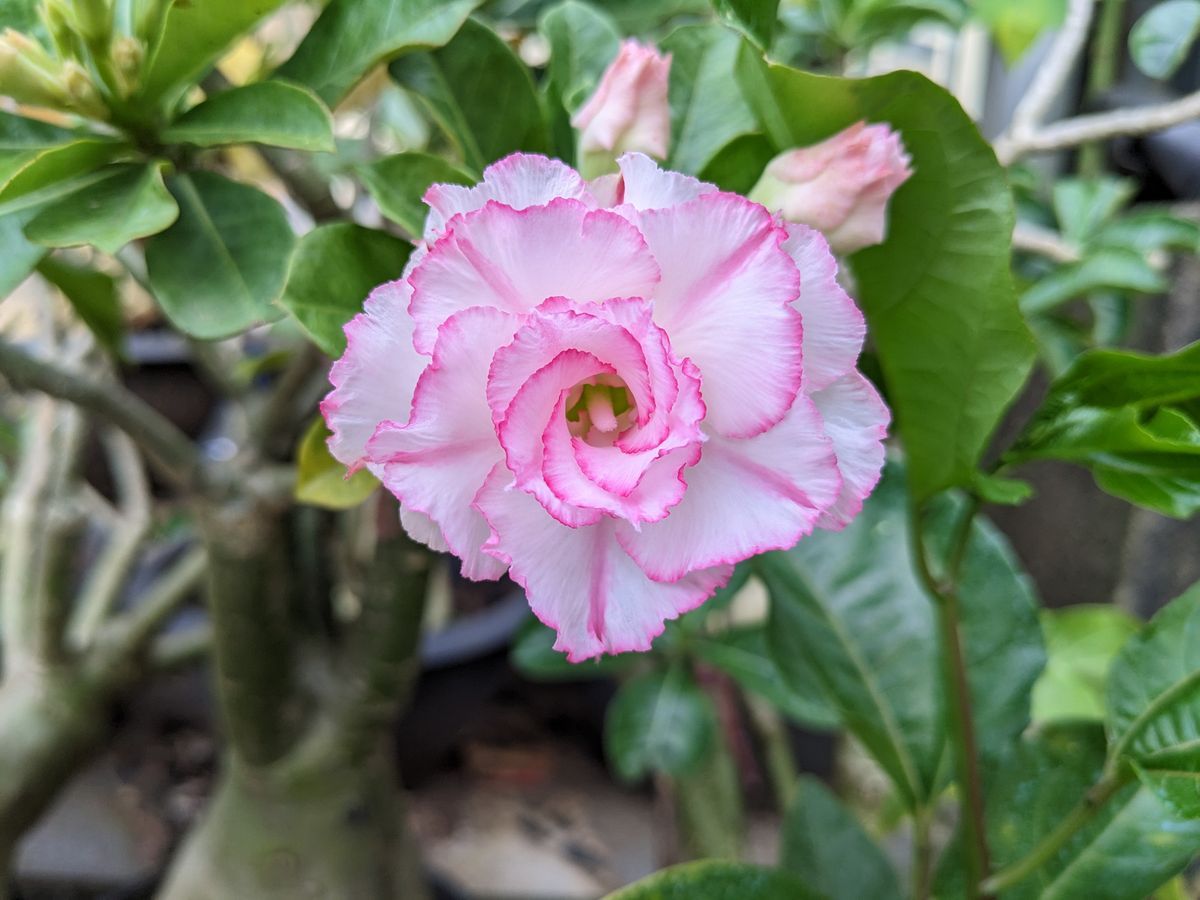
Photo credits: Satish Vasava (Pexels); VŨ NGỌC CƯỜNG (Pexels). Photos are served from this site; follow the credit to the library page for the original.