How often to water flowers is the most generic question in gardening, and it gets generic answers, an inch a week, water when dry, because the asker's garden is not generic at all: it is a specific mix of beds and pots, sand and clay, new transplants and established perennials. No single number survives that mix, but a sorting system does. This page is the sort. It takes the Almanac's anchor figure, about an inch of water a week for flower beds, and divides it the three ways a real garden divides: by the soil under the plants, by whether the plant lives in the ground or a pot, and by how long the plant has been in. Underneath all three sorts sits one check and one hour: the top 1 to 2 inches of soil tell you when, and the morning tells you how. The plant specific pages on this site own their species in depth; this page owns the general system they all plug into.
Home / Flowers and Houseplants
How Often to Water Flowers: The Inch a Week Sorted by Soil, Vessel, and Age
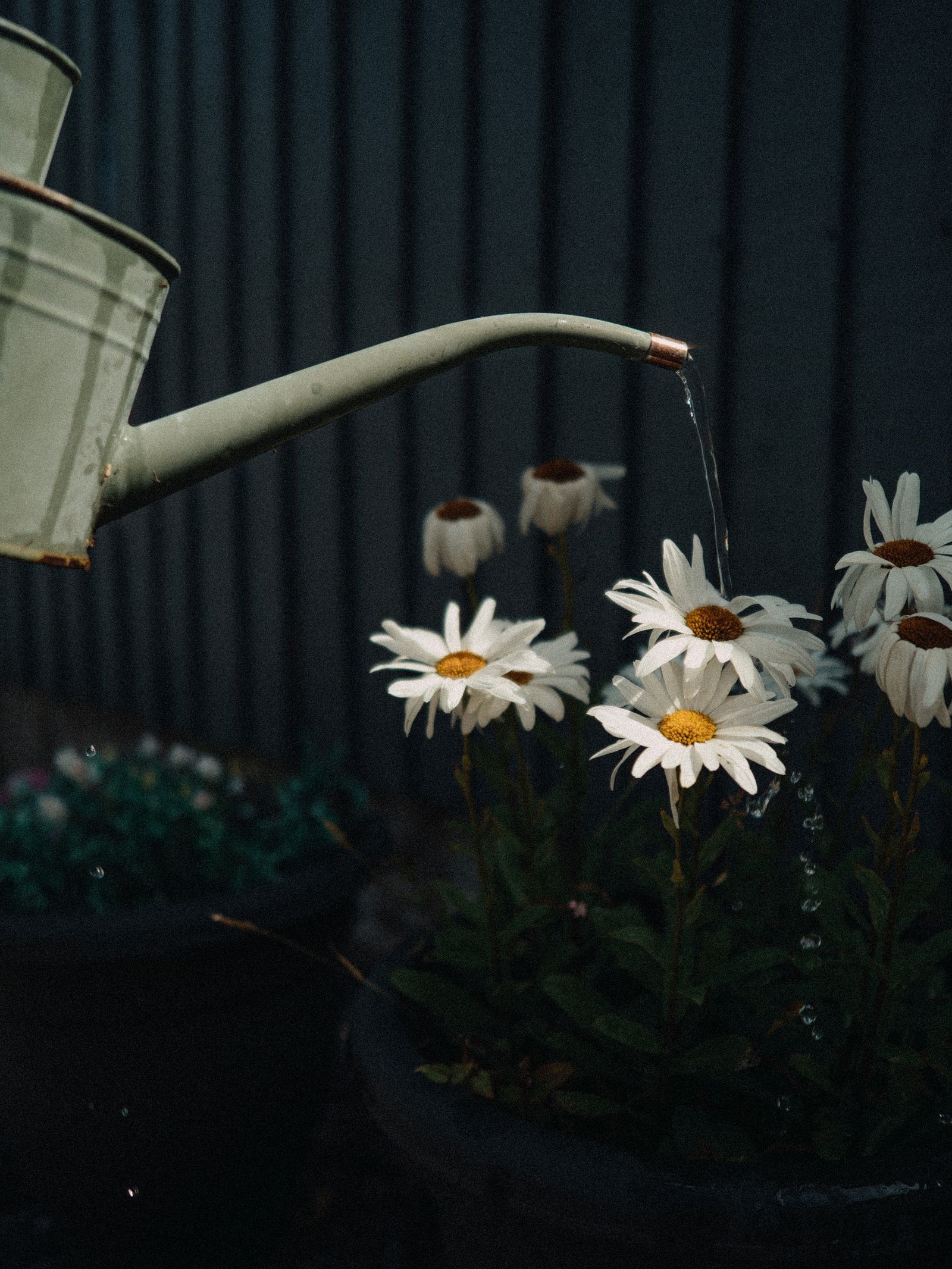
Photo: Lisa Fotios / Pexels
Watering Volume Calculator: The Flower Bed Audit
A flower bed runs on about an inch of water a week, split by soil: clay takes it at once, sand takes it in halves. Enter your bed length and width below and a depth of 1 inch to size that soak, or your pot diameter as both length and width for the container case.
19.9 gallons
For 32 square feet at 1 inch deep. That is about 76 liters, or 10 trips with a standard 2 gallon watering can.
A rain gauge or a straight sided can set in the bed tells you when a sprinkler or soaker hose has actually delivered this depth. Time alone is a guess, because hose pressure varies from house to house.
The conversion is arithmetic, not opinion: one inch over one square foot is 144 cubic inches of water, and a US gallon holds 231 cubic inches, so each square foot at one inch takes 0.62 gallons.
The First Sort: Soil Sets the Shape of the Inch
The inch a week is a volume, and soil decides how it can be delivered. Sandy soil drains fast and holds little: give it the inch as a half inch twice a week, because a full inch at once runs below the roots before they can drink it. Clay soil is the mirror: it absorbs slowly and holds long, so it takes the full inch in one weekly session, and a second watering in the same week mostly runs off or sits on top. Loam, the honest middle most gardeners are improving toward, takes an inch every 7 to 10 days and forgives either pattern. The calculator above turns the inch into gallons over your actual bed, which is where most flower watering quietly fails: an inch over a 4 by 8 foot bed is about 20 gallons, and the 2 gallon can waved at it twice a week is a quarter of the budget wearing the costume of a routine. Mulch shifts every figure in the grower's favor, holding the surface moisture that the check reads and stretching each interval by a day or more in summer.
The Second Sort: Pots Leave the Budget
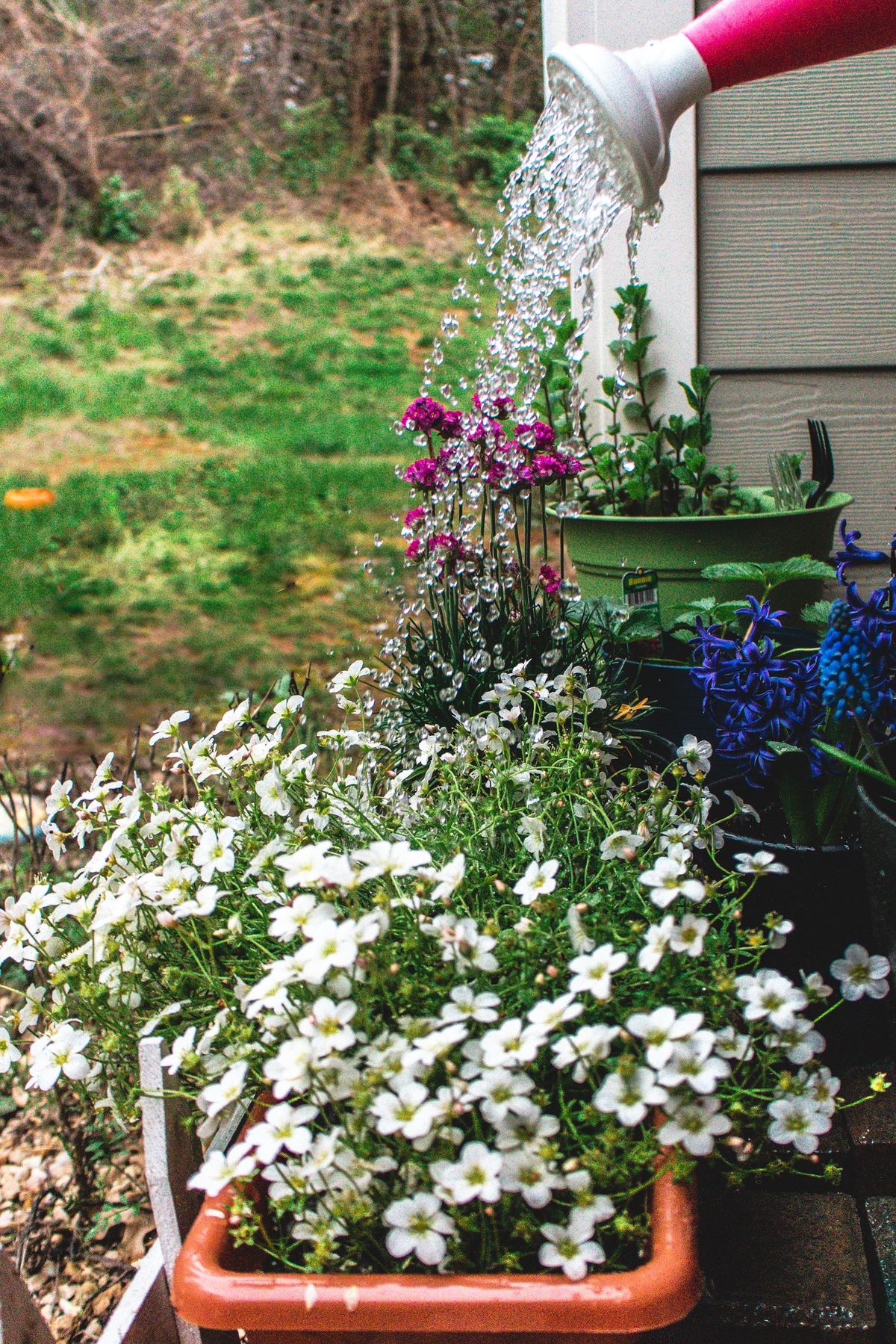
Containers are not small beds, and the inch a week does not apply to them. A pot holds a few days of water at most and loses it through sun heated walls, so potted flowers drink daily in hot weather, and in a heat wave above 90 degrees F the small pots drink twice, morning and late afternoon. The check is the same, top inch dry, but it comes due on a pot's rhythm, not a bed's. Hanging baskets are the extreme case, all surface and wind, and they are the first planting in any garden to flag. The soak rules carry over from every pot page on this site: water until it drains, in two passes if the mix has dried hard, and empty the saucer so the plant is not standing in its runoff an hour later. A flower in a pot is on the hydrangea schedule, not the border schedule, and grouping pots together so their walls shade each other is the cheapest way to buy back a day between drinks.
The Third Sort: New Plantings Drink on a Different Clock
A flower planted this week has a root ball the size of the pot it came in, sitting in soil its roots have not entered, and it lives entirely on that small volume. New plantings are therefore watered daily for their first week, a real drink at the base each morning, whatever the bed's budget says. Through the second and third weeks the rhythm tapers, every other day, then twice a week, as the roots run out into the bed and the plant graduates onto the soil's inch. Skipping the taper in either direction fails: a transplant kept on daily water for a month grows a lazy, shallow root system in the old ball, and a transplant put straight onto the weekly budget in a hot week is dead by Friday. Fall planted perennials are the gentle exception, needing the first week's care and then mostly rain, since their growth and the weather both slow together. The age sort also runs backward: a bed of established perennials in their third year, roots deep and canopy shading the soil, is the toughest planting in the garden and the last one to need the can in a dry spell.
The Hour and the Method
Water in the morning. The reasons are practical rather than ceremonial: foliage dries through the day instead of sitting wet overnight, which is when the fungal diseases of flowers do their work; the water goes into the soil before the day's heat takes its share; and the plant starts the day charged. Water at the base, not over the top, for the same disease reason and because water on petals in hot sun spots them. Water deeply rather than often, because the depth is what trains roots down to where a dry week cannot reach them in a day, and a daily sprinkle builds a planting that wilts the first afternoon it is missed. The soaker hose and the drip line are the honest tools for beds, delivering the inch slowly enough for clay to accept it; the overhead sprinkler is the wasteful one, losing water to wind and wetting every leaf it is supposed to keep dry, though it has its place on seedlings and new seedbeds where a gentle rain is exactly the requirement.
The Drought Week: Triage for Flower Water
When a dry spell stretches past the budget and the water or the hours run short, flower watering becomes triage, and the order is set by replacement cost. Pots and new plantings drink first, because they die first, in days. Annuals in mid bloom come next, since their season is the one in progress. Established perennials in beds go last and mostly forgive: a healthy third year perennial survives a skipped week on deep roots and comes back from its crown even if the top growth suffers. Within a bed, soak one section fully in rotation rather than sprinkling the whole bed thinly, because the full inch in one place does real work and a quarter inch everywhere does almost none. The drought also argues the long game: every bed that comes through a dry summer gets its mulch renewed in fall, since mulch is the cheapest stored water a flower garden can buy.
Frequently Asked Questions
How often should flowers be watered?
In beds, about an inch of water a week, shaped by the soil: a half inch twice a week on sand, a full inch once a week on clay, an inch every 7 to 10 days on loam. In pots, daily in hot weather and twice a day above 90 degrees F for small pots. New plantings break both rules for their first weeks: daily for the first week, then a taper onto the bed budget. The top 1 to 2 inches of soil, dry or moist, confirm every schedule.
How much is an inch of water over a flower bed?
About 0.6 gallons per square foot, so roughly 20 gallons over a 4 by 8 foot bed. That figure is where most flower watering fails quietly: two passes with a 2 gallon can deliver a fifth of the weekly inch. The calculator on this page converts your bed's dimensions into the volume directly. A rain gauge or a straight sided can set out during watering tells you what your sprinkler or hose actually delivers per hour.
Is it better to water flowers in the morning or evening?
Morning, decisively. Foliage wetted in the morning dries through the day; foliage wetted in the evening sits damp overnight, which is the fungal diseases' working hours, and powdery mildew and black spot are the tax on evening watering. Morning water also enters the soil before the day's heat evaporates its share. Evening is an acceptable second choice in a heat wave for pots that cannot wait, but the routine belongs to the morning.
Should I water flowers every day?
Beds, no: daily watering trains shallow roots and keeps the surface in the damp state diseases prefer, and an established bed on an inch a week outperforms a daily sprinkled one. Pots in summer heat, yes, daily is their honest rhythm, and new plantings get daily water for their first week only. The daily habit is the most common flower watering error in beds and the correct one in containers, which is why this page sorts by vessel before it answers.
Why do my flowers wilt in the afternoon even though I water?
Check the soil before concluding anything. Many flowers wilt at peak heat as a defense, transpiring faster than roots can supply even from moist soil, and recover by evening; that plant needs no water. If the top 2 inches are genuinely dry, the watering volume is the suspect: a light sprinkle that never reaches the root zone produces exactly this pattern, and the fix is a slower, deeper session, the full inch, at the base, in the morning.
Photo credits: Lisa Fotios (Pexels); Prathyusha Mettupalle (Pexels). Photos are served from this site; follow the credit to the library page for the original.