How Often to Water Houseplants Chart: Interval and Dryness Check, Plant by Plant
By the Windchime Walker editorial team
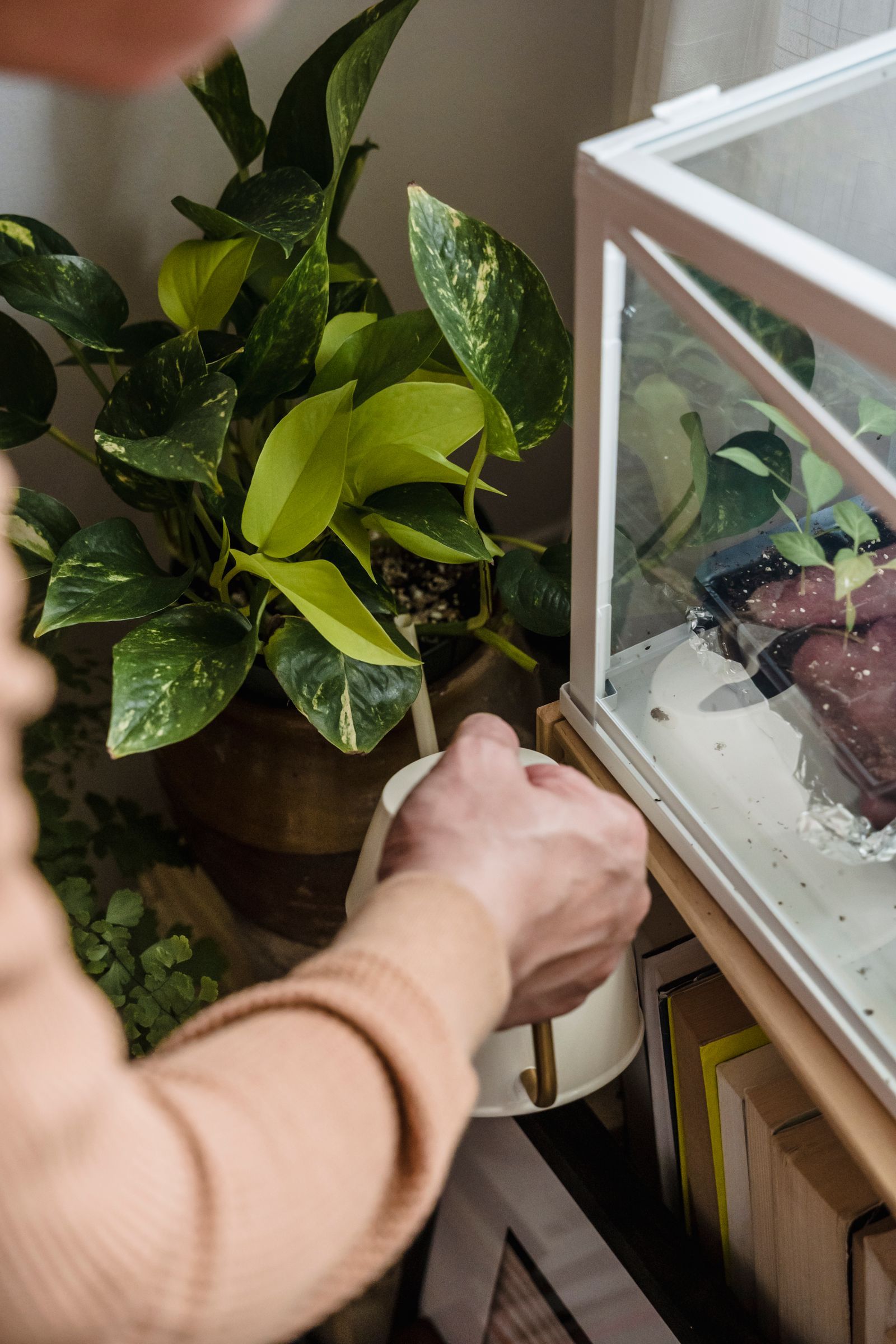
Photo: Annushka Ahuja / Pexels
Houseplant watering charts disagree with each other in print, and owners conclude the subject is chaos. It is not chaos; it is two variables wearing one number. The interval depends on the plant's thirst and on the pot, the room, and the season it sits in, so any single number is a local answer pretending to be universal. This page publishes the chart the honest way: each plant with its starting interval for summer and winter, and beside each interval the dryness check, how dry the soil should be and how deep, that confirms or overrules the number before water touches the pot.
Our houseplant watering guide owns the method in depth, the thorough soak, the drainage law, the signs of too much and too little. Our snake plant guide and succulent guide own those two groups' full care. This page owns the chart itself, consistent with both, and the adjustment rules that bend its rows to your pots.
Interactive tool
Watering Calculator: What a Thorough Watering Is
The chart on this page gives the interval; this calculator gives the amount. Enter your pot diameter as both length and width below and a depth of about 1 inch to see roughly how much water one full soak takes for a pot your size.
19.9 gallons
For 32 square feet at 1 inch deep. That is about 76 liters, or 10 trips with a standard 2 gallon watering can.
A rain gauge or a straight sided can set in the bed tells you when a sprinkler or soaker hose has actually delivered this depth. Time alone is a guess, because hose pressure varies from house to house.
The conversion is arithmetic, not opinion: one inch over one square foot is 144 cubic inches of water, and a US gallon holds 231 cubic inches, so each square foot at one inch takes 0.62 gallons.
The Chart
Intervals are starting points for a medium pot, about 6 inches, in ordinary indoor light, checked before use. Winter means the low light, slow growth months, when intervals stretch by roughly a third to a half across the whole chart.
Plant
Summer interval
Winter interval
The check that decides
Snake plant
Every 2 to 4 weeks
Every 4 to 8 weeks
Dry all the way through the pot, then wait a few more days
ZZ plant
Every 2 to 4 weeks
Every 4 to 8 weeks
Dry through; its rhizomes are a water bank, not a request
Succulents
Every 10 to 21 days
Monthly or less
Dry through, confirmed by pot weight or the leaves' slight softness
Pothos
Every 7 to 10 days
Every 10 to 14 days
Top 1 to 2 inches dry
Heartleaf philodendron
Every 7 to 10 days
Every 10 to 14 days
Top 1 to 2 inches dry
Monstera
Every 7 to 10 days
Every 10 to 14 days
Top 2 inches dry; big leaves drink more than they suggest
Spider plant
Every 7 to 10 days
Every 10 to 14 days
Top inch dry; forgiving of both directions
Peace lily
Every 5 to 7 days
Every 7 to 10 days
Top inch dry; it wilts as a late signal and recovers, at a cost
Chinese evergreen
Every 7 to 10 days
Every 10 to 14 days
Top 1 to 2 inches dry; hates wet feet in the cold
Ferns
Every 3 to 5 days
Every 5 to 7 days
Never fully dry; evenly moist, surface just losing its wet sheen
Orchids (phalaenopsis)
Every 7 to 10 days
Every 10 to 14 days
Bark dry through and roots turned silvery; green roots mean wait
Herbs on a sill
Every 2 to 4 days
Every 3 to 5 days
Top half inch dry; small pots in sun drink like athletes
Read a row as a rhythm, not a rule: when the interval arrives, perform the check, and water only if the check agrees. A chart used this way teaches your hands the actual intervals of your actual pots within a month, which is the chart succeeding at its real job and then being needed less and less.
The Adjustments That Move Every Row
Pot size. The chart assumes about a 6 inch pot. Halve the pot and the soil volume falls by far more than half, so small pots dry days sooner; double it and the interval stretches by half again or more. A plant freshly potted up into a much larger pot is the classic drowning case: the roots occupy a fraction of the wet soil, the chart's interval arrives, and the owner waters a swamp.
Pot material. Unglazed terracotta breathes through its walls and dries fastest, the forgiving choice for heavy handed waterers. Glazed ceramic and plastic hold moisture far longer; plants in them sit at the long end of their row's interval or beyond it. The same plant in the same room can honestly live on two different intervals in two different pots, which is the whole reason the check outranks the number.
Light and season. A plant in bright light grows and drinks; the same plant moved across the room slows both. Winter stretches every interval by a third to a half, the chart's winter column, and a plant near a heating vent can break the rule in the opposite direction by drying from the air side. When a plant moves, its row resets: check more often for the first month and relearn it.
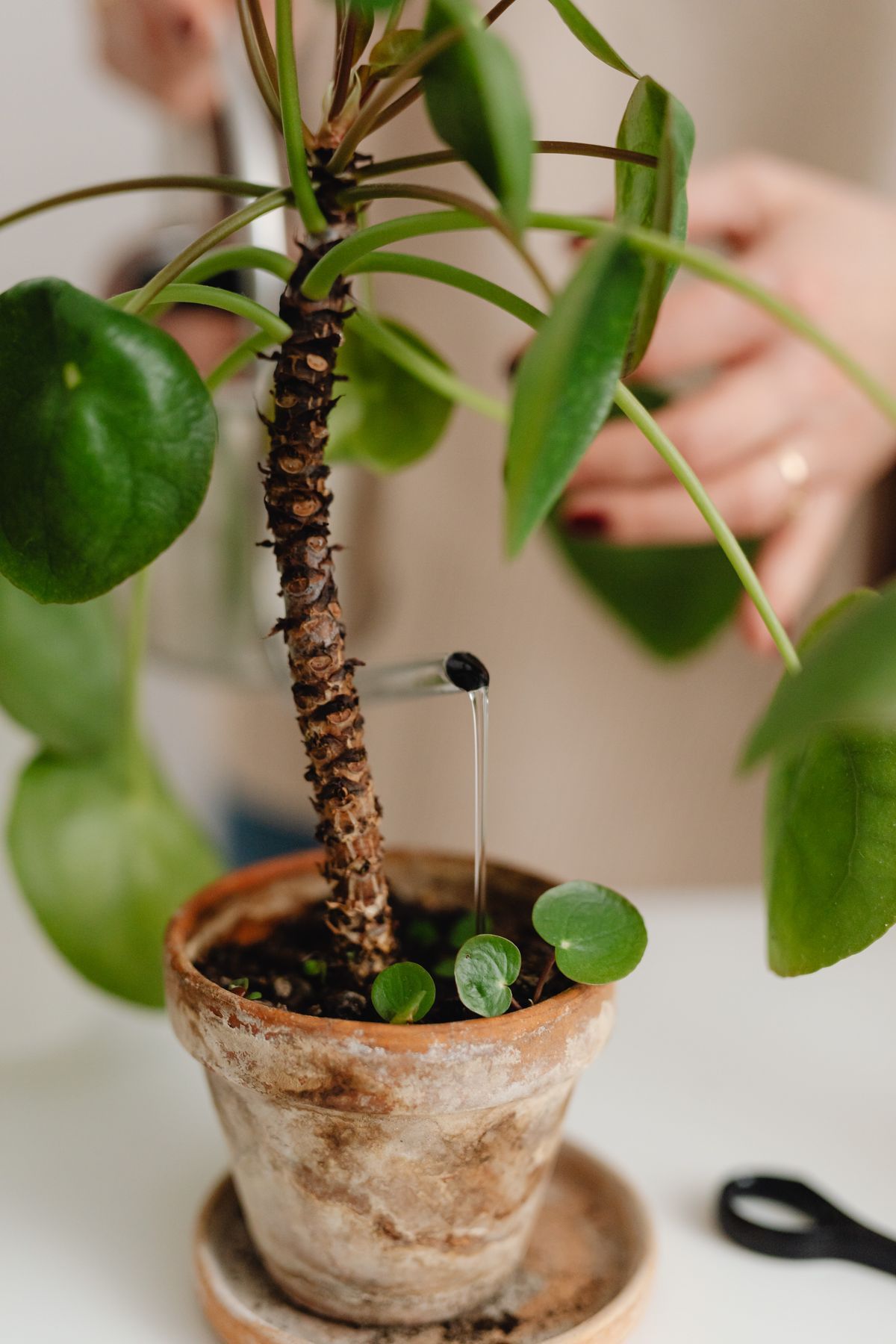
A pilea plant in a weathered terracotta pot on a saucer
How a Thorough Watering Works
The chart's intervals assume the watering itself is done properly, and the calculator on this page sizes it: a thorough watering wets the whole root ball, slowly, until water runs from the drainage hole, and then the saucer is emptied so the pot never stands in its own runoff. The failure pattern the chart cannot survive is the daily splash, a little water often, which wets the top inch, trains roots to the surface, leaves the bottom dry, and rots the crown, combining underwatering and overwatering in a single habit. Water deeply on the chart's rhythm, or not at all on a given day; there is no third setting.
The Two Ways the Chart Gets Misread
The first misreading is treating the interval as an appointment rather than a reminder to check, and it drowns more plants than any other error in indoor gardening, especially in winter, when the chart's longer column is ignored because the summer habit is in the owner's hands. The second is reading a plant's distress backwards: the wilting of underwatering and the collapse of root rot look alike from across the room, and watering a rotted plant on the theory that it is thirsty finishes it. The check distinguishes them in ten seconds. Dry soil plus wilt means water; wet soil plus wilt means stop, unpot, and inspect the roots. The chart, the check, and that one distinction will keep a collection alive for years, which is all any chart has ever honestly promised.
A Worked Shelf: Three Pots, Three Rhythms
Watch the chart run on one real shelf. The snake plant in the glazed 8 inch pot by the door was watered on the first of the month; its row says every 2 to 4 weeks in summer and its check says dry through, and at week three the skewer still finds moisture at the bottom, so it waits, and at week four it is dry and drinks. The pothos in the 6 inch terracotta on the sill is checked at day seven, its top 2 inches are dry as its row requires, and it waters on the chart's rhythm almost exactly, because the chart's assumptions were drawn from pots like this one. The fern in the 5 inch plastic pot in the bathroom is the shelf's sprinter: checked twice a week, watered whenever the surface loses its sheen, roughly every 4 days, exactly as its row warns. Three plants, three rhythms, one checking day, and a total watering time of minutes, because the chart's real product is not the numbers. It is the owner's calibrated hand, and after a season of checks the chart can go in a drawer, consulted for new plants and winter's reset, which is what every good chart is for.
Travel, Neglect, and the Recovery Watering
Plants on this chart tolerate absence better than owners fear, if the return is handled correctly. Before a trip of up to two weeks, water everything thoroughly on its check, move plants back from the fiercest windows, and group them so their leaves humidify one another; most of the chart's rows will simply run long that cycle, which they are built to do. The stored water plants, snake plant, ZZ, and the succulents, should not be watered early as a favor before a trip in winter; a dry month harms them less than a wet one. On return, resist the rescue flood: check each pot, water the genuinely dry ones thoroughly, and let a plant that went fully dry drink, then drain, then be left alone to show new growth before any feeding or fussing. The fern and the peace lily will look theatrical and recover; the rotted plant, if there is one, will be the one that was overwatered before departure, not the one that waited.
Frequently Asked Questions
How often should I water my houseplants?
Start with the chart's interval for your plant and season, then confirm with its dryness check before watering: most tropical foliage plants land at every 7 to 10 days in summer and 10 to 14 in winter, snake plants and ZZ plants at 2 to 4 weeks stretching to 4 to 8, ferns at 3 to 5 days. Your pot size, material, and light then bend the number, and the check always has the final word.
How do I know when a houseplant actually needs water?
By the check in its chart row: a finger or skewer pushed to the stated depth comes out dry, the pot feels light for the thirsty stored water plants, orchid roots have turned silvery, fern soil has just lost its surface sheen. Learn one plant's check well and the skill transfers to the whole shelf.
Should I water on a schedule?
Use the schedule as a reminder to check, never as an order to water. A fixed calendar ignores season, pot, and the plant's actual drinking, and it is the mechanism behind most overwatering deaths. Check on schedule; water on evidence.
Why does the same plant need different intervals in different pots?
Soil volume and pot material set the drying rate. A small terracotta pot can dry in three days where a large glazed pot holds moisture for two weeks, with the same plant in the same room. This is why charts publish starting intervals and checks rather than commandments, and why repotting resets a plant's rhythm.
How much water is a thorough watering?
Enough to wet the whole root ball until water runs freely from the drainage hole, then empty the saucer. The calculator on this page estimates the volume from your pot's size: enter the pot diameter as length and width and a depth of about 1 inch. The daily splash, by contrast, wets only the surface and is the habit this chart exists to replace.
What if my plant is wilting but the soil is wet?
Do not water. Wet soil plus wilt is the signature of root rot, not thirst: the roots are damaged and cannot drink, so the leaves wilt in a swamp. Unpot, inspect for brown mushy roots, trim them away, repot in fresh mix, and water lightly only when new growth shows the roots are working again.
Photo credits: Annushka Ahuja (Pexels); Kaboompics (Pexels). Photos are served from this site; follow the credit to the library page for the original.