How Often to Water Houseplants: The Finger Test, Not the Calendar
By the Windchime Walker editorial team
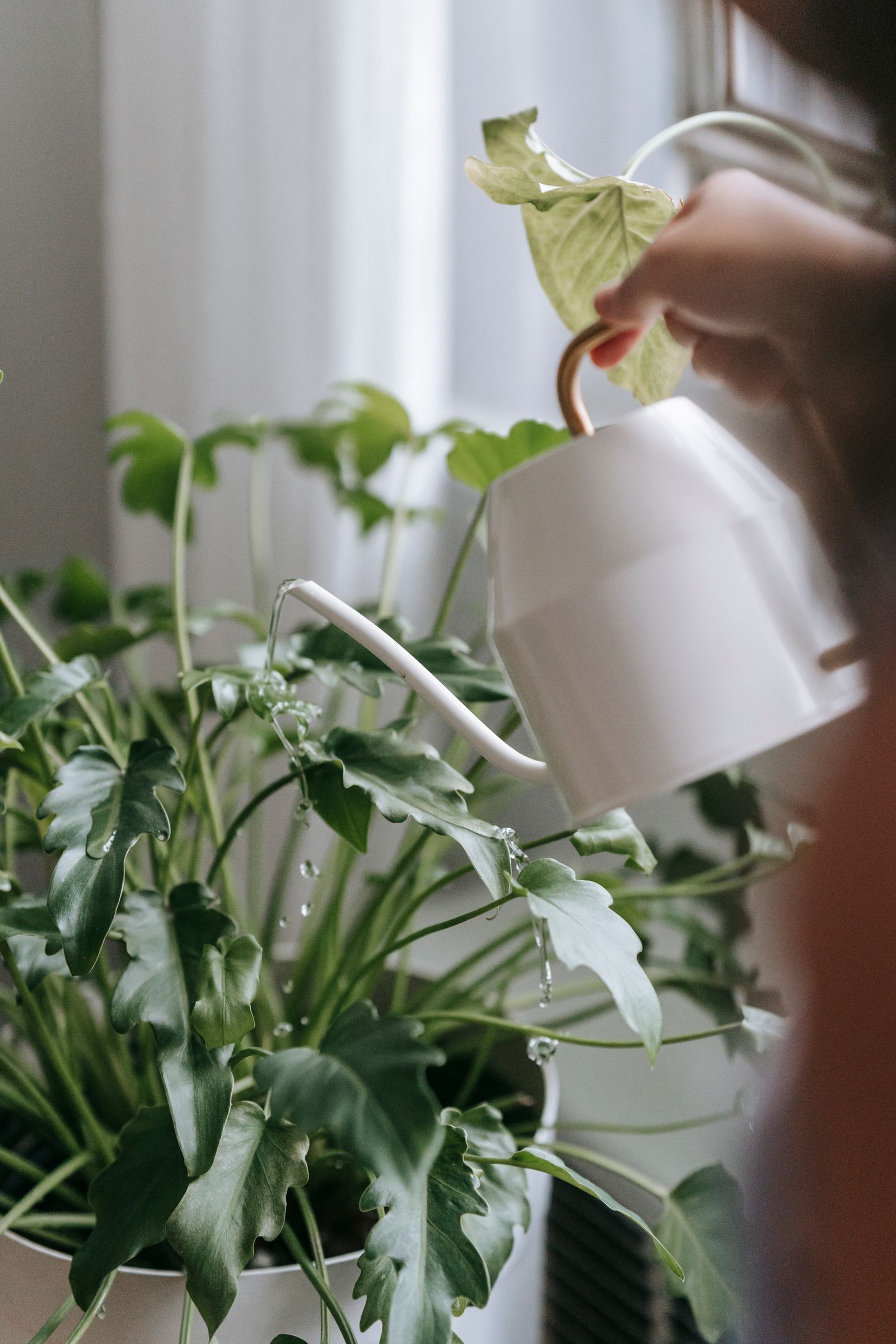
Photo: Teona Swift / Pexels
How often to water houseplants is the most asked question in indoor gardening, and it has no honest answer of the kind people want. There is no day of the week. A plant drinks according to its species, its pot, its soil, its light, and the season, and two identical plants in two rooms of the same house can run on rhythms a fortnight apart. What exists instead of a schedule is a test, a way of asking the soil, and a way of watering properly when the soil says yes. Learn those two things and the question dissolves: you will never again wonder when to water, because you will know how to find out.
The stakes are asymmetric, which is why this matters. Underwatered plants wilt, dramatically and reversibly; a thirsty plant watered in the morning usually stands by evening as if nothing happened. Overwatered plants rot, quietly and irreversibly; roots suffocate in soil that never dries, and by the time the leaves announce it, the damage is weeks old. Every experienced indoor gardener's rule leans the same way: when in doubt, wait a day. The plant forgives thirst on a schedule of days. It forgives drowning on a schedule of never.
The Watering Volume Calculator on this page has a job here too: it sizes a real soak for your pot. Enter the pot's diameter and it returns roughly how much water a thorough watering takes, which is usually more than the apologetic splash most houseplants receive. A proper soak, given at the right interval, is the whole technique.
Interactive tool
Watering Volume Calculator: How Much Is a Thorough Watering?
Watering thoroughly means wetting the whole root ball until a little runs from the drainage hole. Enter your pot diameter as both length and width below and a depth of about 1 inch to see roughly how much water that soak takes for a pot your size.
19.9 gallons
For 32 square feet at 1 inch deep. That is about 76 liters, or 10 trips with a standard 2 gallon watering can.
A rain gauge or a straight sided can set in the bed tells you when a sprinkler or soaker hose has actually delivered this depth. Time alone is a guess, because hose pressure varies from house to house.
The conversion is arithmetic, not opinion: one inch over one square foot is 144 cubic inches of water, and a US gallon holds 231 cubic inches, so each square foot at one inch takes 0.62 gallons.
The Finger Test, Calibrated by Plant Type
Push a clean finger into the soil to the second knuckle, about 2 inches. What you do with the reading depends on the plant's tribe. For most foliage houseplants, the pothos, philodendrons, spider plants, and ferns of the world, water when the top 1 to 2 inches of soil are dry and the soil below is still faintly cool. In a typical home that lands around every 7 to 10 days in summer light, stretching to every 2 to 3 weeks in winter, but treat those numbers as a sanity range, not an appointment: the finger decides.
For the dry tribe, succulents, snake plants, ZZ plants, and cacti, the rule is nearly total dryness. Let most or all of the soil dry before watering, which in practice means every 2 to 4 weeks or longer, and in winter sometimes a month and more. These plants store water in leaves, stems, and rhizomes precisely so that the soil can dry completely; keeping their soil moist defeats the adaptation and rots the storage organs themselves.
For the moisture lovers, ferns, calatheas, and peace lilies, water when just the surface has dried, keeping the soil evenly moist but never soggy, which often works out to every 4 to 7 days. Even here the finger rules: evenly moist means damp at depth, not wet at the top from yesterday's splash. A wooden skewer kept in the pot is a fine second opinion for deep pots where a finger cannot reach: pull it out, and soil clinging to it in damp crumbs means wait; coming out nearly clean and dry means water.
How to Water When the Answer Is Yes
Water thoroughly or not at all. Pour slowly over the whole soil surface until water runs freely from the drainage hole, which is the only evidence that the entire root ball drank. A light splash wets the top inch, convinces the gardener the job is done, and leaves the roots at the bottom of the pot in dust, which is where most of them live. Then, the step that saves more plants than any other in this article: empty the saucer or cache pot after 15 to 30 minutes. A plant standing in its own runoff is a plant whose roots are sitting in water, and roots sitting in water rot on a schedule of weeks, whatever the top of the soil feels like.
Use room temperature water when you can. Cold water shocks tropical roots, and these are tropical plants living in your climate controlled jungle. If your tap water is heavily chlorinated, a jug left standing overnight lets some chlorine dissipate, a refinement that matters most for the fussy leaves of calatheas and ferns and not at all for a pothos, which would grow in soup.
Water in the morning when possible, so wet leaves dry during the day. And water the soil, not the crown of the plant: water pooled in the crown of a snake plant or an African violet's leaves invites rot in exactly the tissue the plant cannot replace.
The Bottom Watering Rescue, and When to Use It
A pot allowed to go bone dry develops a specific problem: the soil shrinks from the pot's sides and turns water repellent, so a top watering runs straight down the gap and out the drainage hole while the root ball stays dry in the middle. The plant looks watered and is dying of thirst. The fix is bottom watering. Set the pot in a basin with a few inches of water and leave it for 30 to 60 minutes while the soil wicks moisture upward like a sponge. Lift it, let it drain completely, and the root ball is genuinely wet, often for the first time in months.
Bottom watering is also a fair everyday method for plants whose crowns hate water and for small pots that dry evenly. It is a poor sole method forever, because it never flushes the soil: salts from fertilizer and tap water accumulate at the surface over months. Every few months, give bottom watered plants one thorough top watering to rinse the soil through, and the two methods cover each other's weaknesses.
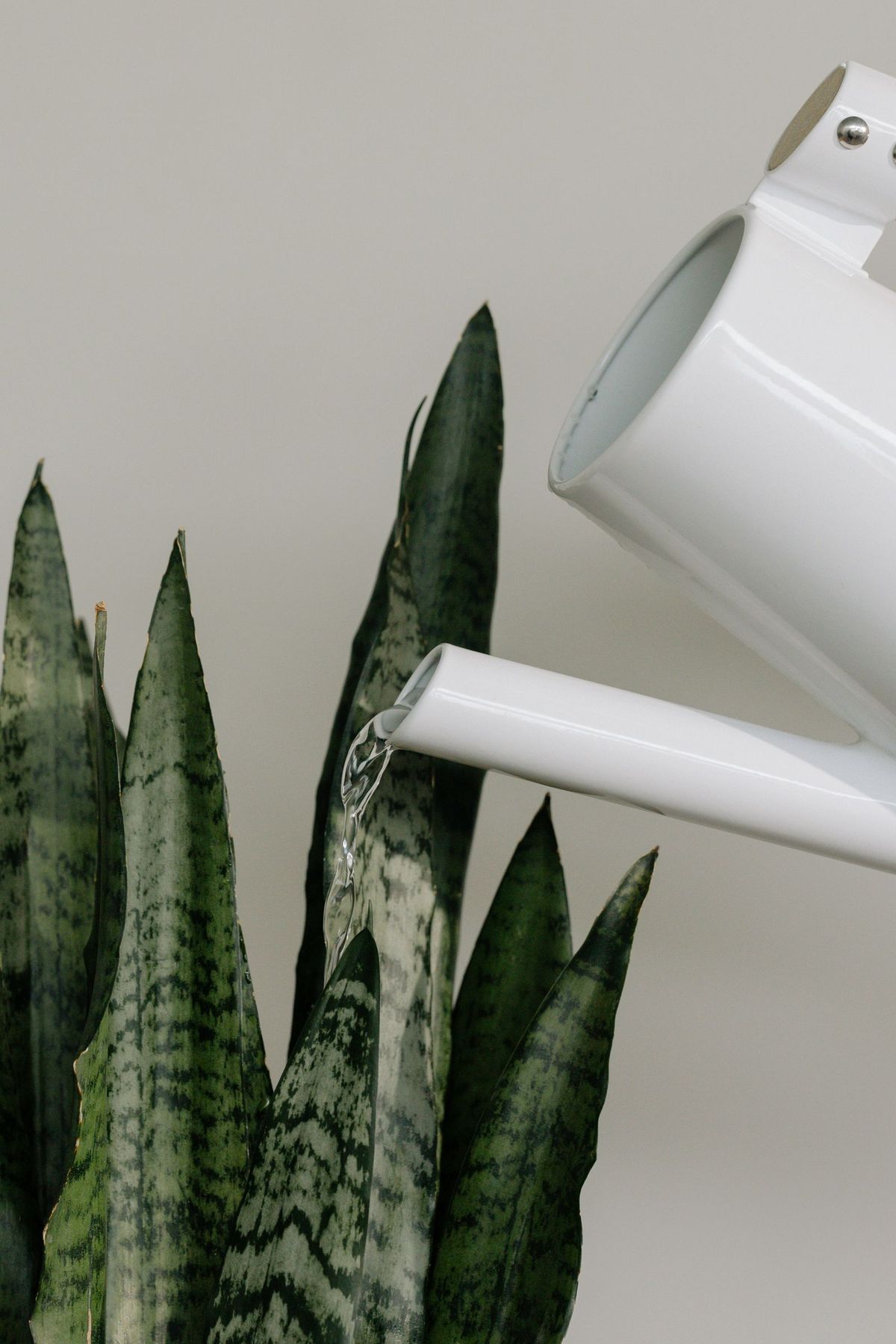
A snake plant being watered with a white watering can indoors
Pots, Soil, and Drainage: The Hidden Variables
When two identical plants in the same room need water at different rates, the difference is almost always below the soil line. Pot material changes everything: an unglazed terracotta pot breathes through its walls and dries soil days faster than a glazed ceramic or plastic pot of the same size, which is why terracotta suits succulents and the heavy handed, while plastic and glaze suit ferns and the forgetful. Pot size changes it too. A plant potted up into a much larger pot sits in a volume of soil its roots cannot yet reach, and that unreachable soil stays wet long after the root ball drinks, which is the classic setup for rot in a plant that was watered, by the calendar, correctly. Repot one size up at a time, and the water rhythm stays readable.
Soil mix is the third variable. A dense, peat heavy mix holds water like a sponge and suits moisture lovers; a gritty, bark rich mix drains freely and suits the dry tribe and the anxious waterer. When a plant's rhythm confuses you, the mix is often the confuser: a snake plant in moisture retentive soil is being watered correctly for a fern. And drainage is the foundation under all of it. A pot must have a hole, or a genuine gravel free inner pot that lifts out of its decorative shell for watering. Decorative pots without drainage are where careful people kill plants, because no finger test can save roots that are standing in a hidden puddle at the bottom of a pretty container.
None of this needs to be optimized in a weekend. It needs to be known, so that when a plant's thirst surprises you, you interrogate the pot and the soil before you interrogate yourself.
Reading the Plant: What It Says Between Waterings
Plants announce their water state constantly, once you know the vocabulary. Wilting with dry soil is thirst, and the recovery after watering is swift and complete. Wilting with wet soil is the emergency: roots in trouble, usually from overwatering, and the treatment is to stop watering, check that drainage holes are open, and let the soil dry further than feels comfortable before watering again. Yellowing lower leaves with soggy soil is overwatering's signature. Crispy brown leaf tips with dry soil are thirst or low humidity; the same tips with wet soil point at salt buildup, cured by the flushing top watering described above.
New growth is the plant's quarterly report. A houseplant pushing fresh leaves in its growing season is a plant whose water, light, and roots are in balance, and the correct response is to change nothing. Most houseplant care is the discipline of leaving a working system alone, which is why the finger test matters: it replaces anxiety with information, and information is what lets you walk past the watering can with a clear conscience.
When You Travel: Two Weeks Away, No Plant Sitter
Travel exposes the difference between plants that store water and plants that merely use it, and a little preparation the week before departure covers most collections for a fortnight. Water everything thoroughly the day before you leave, using the full soak and saucer emptying routine, so every pot starts the trip at capacity. Move plants out of direct sun into bright indirect light, which cuts their drinking dramatically, and group them together in one room, ideally a bathroom with a window, where their shared humidity slows drying further. The dry tribe, succulents, snake plants, ZZ plants, will not notice your absence at all; do nothing for them beyond the departure soak, and on no account set them up with a self watering gadget that keeps their soil wet, which converts their best trait into their cause of death.
For the thirsty end of the collection, a wick system buys the days: a jar of water beside the pot, a cotton cord running from the jar into the soil, delivering moisture by capillary action at roughly the rate the plant drinks. Test it on a weekend trip before trusting it with a long one. Plants in small pots are the real casualties of travel, since a 4 inch pot can dry in days; potting a small plant up a size the month before a long trip, or sinking its pot into a larger container of damp soil, is unglamorous and effective. What does not work is the departure flood, soaking a plant far beyond its normal soak in the hope of storing extra days. A pot holds what it holds; the surplus drains or rots, and the plant leaves on the same water budget either way.
Frequently Asked Questions
Is there a day of the week I should water my houseplants?
No, and schedules are how houseplants die. A plant's thirst depends on its species, pot size, soil, light, and the season, and two identical plants in different rooms can need water a fortnight apart. Use the finger test instead: for most foliage plants, water when the top 1 to 2 inches of soil are dry; for succulents, snake plants, and ZZ plants, let most or all of the soil dry first.
How much water should I give at each watering?
Enough that water runs freely from the drainage hole, which is the only proof the whole root ball drank. A light splash wets only the top inch and leaves the bottom roots dry. After watering, empty the saucer within 15 to 30 minutes, because a pot standing in runoff keeps its roots in water, and roots in standing water rot. The calculator on this page will size a soak for your pot's diameter.
Why is my plant wilting even though I water it?
If the soil is wet, the wilt is the problem, not the symptom of thirst: roots suffocating in constantly wet soil cannot take up water, so the plant wilts in a swamp. Stop watering, confirm the drainage holes are open, and let the soil dry properly before watering again. If the soil is bone dry and has pulled away from the pot's sides, bottom water it, setting the pot in a basin for 30 to 60 minutes so the root ball can actually absorb water.
How often do succulents and snake plants need water?
Far less than folklore says: when most or all of the soil has dried, which is typically every 2 to 4 weeks in the growing season and monthly or less in winter. These plants store water in their leaves and stems precisely so the soil can dry completely between waterings. Keeping their soil constantly moist rots the storage tissue and is the standard way they are killed.
What is bottom watering and when should I use it?
Setting the pot in a basin of water for 30 to 60 minutes so the soil wicks moisture up from below. Use it to rescue a pot that has gone bone dry, where top watering runs straight through the gap between shrunken soil and pot without wetting the root ball, and for plants whose crowns rot if wet. Give bottom watered plants an occasional thorough top watering to flush out accumulated salts.
Do houseplants need less water in winter?
Yes, considerably. Weak light and short days slow growth to a near stop for most houseplants, and a plant that is not growing is not drinking much. The same plant that wanted water every 7 to 10 days in summer may go 2 to 3 weeks in winter. The finger test handles the transition automatically, which is another reason it outranks any calendar: the soil reports the plant's actual drinking in every season.
Photo credits: Teona Swift (Pexels); cottonbro studio (Pexels). Photos are served from this site; follow the credit to the library page for the original.