Everything the in-ground hydrangea article on this site teaches, the inch a week, the deep soak, the patience, assumes a shrub rooted in the earth with a reservoir of soil moisture around it. A hydrangea in a pot has none of that. It has a root ball the size of a bucket, wrapped in sun heated plastic or clay, transpiring through some of the largest, thirstiest leaves in the garden. The result is a plant that can go from fine to flagging in a single hot afternoon and back again by evening, on a watering rhythm measured in days rather than weeks. This page owns the container case in full: the seasonal ladder for pots, the two pass soak, the saucer rule, and the wilt, the dramatic, theatrical wilt that recovers on its own and teaches more owners to rot a hydrangea than drought ever killed.
Home / Flowers and Houseplants
How Often to Water Hydrangeas in Pots: The Daily Summer Rhythm, the Two Pass Soak, and the Wilt That Lies
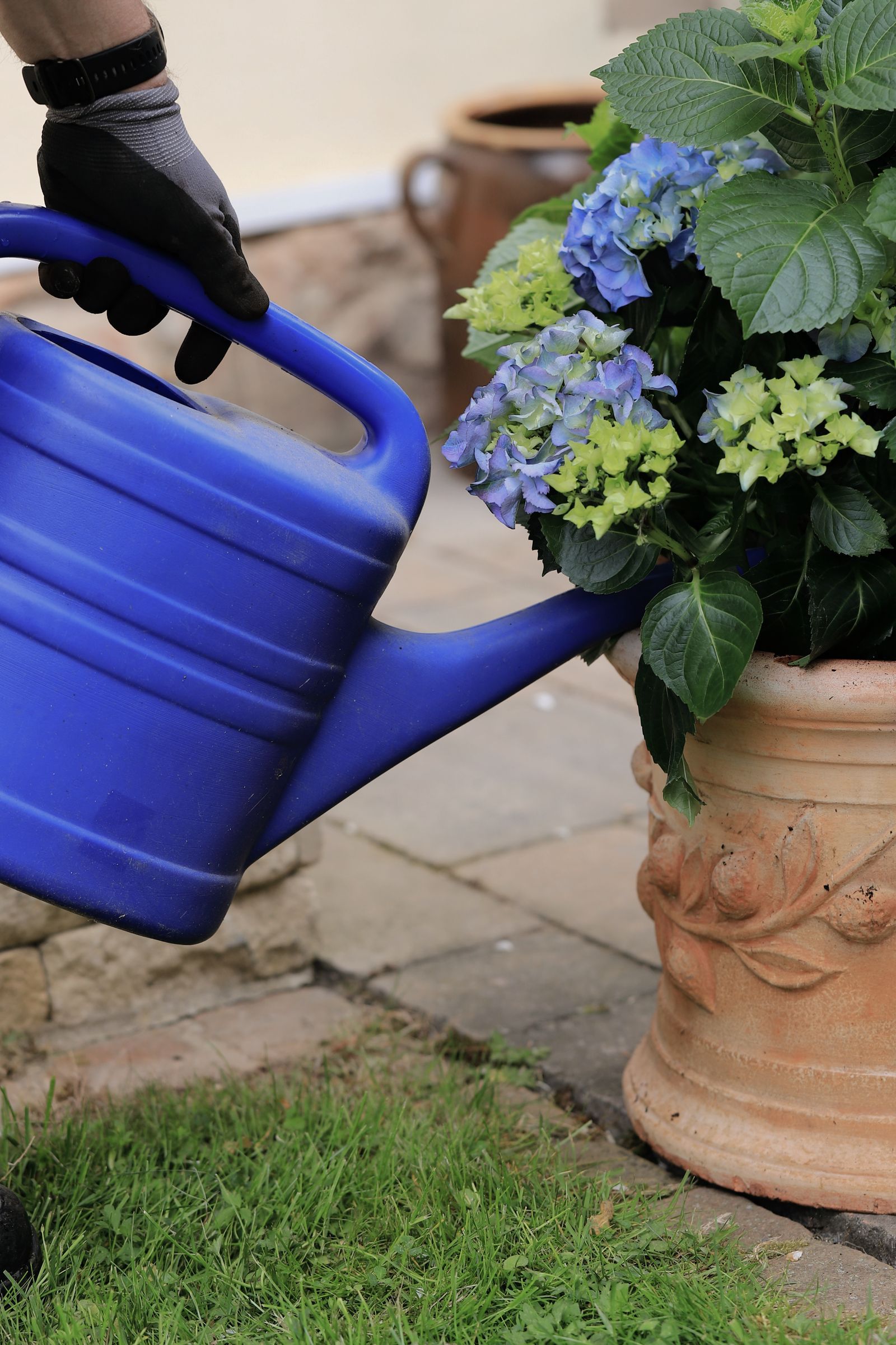
Photo: Christina & Peter / Pexels
Watering Volume Calculator: The Potted Hydrangea Audit
A potted hydrangea holds two days of water where the garden shrub holds a week. Enter your pot diameter as both length and width below and a depth of about 1 inch to size one two pass soak, then run the top inch check before you believe the wilt.
19.9 gallons
For 32 square feet at 1 inch deep. That is about 76 liters, or 10 trips with a standard 2 gallon watering can.
A rain gauge or a straight sided can set in the bed tells you when a sprinkler or soaker hose has actually delivered this depth. Time alone is a guess, because hose pressure varies from house to house.
The conversion is arithmetic, not opinion: one inch over one square foot is 144 cubic inches of water, and a US gallon holds 231 cubic inches, so each square foot at one inch takes 0.62 gallons.
The Seasonal Ladder for Pots
In summer heat, a potted hydrangea drinks daily to every 2 days, and the type and the pot set the exact step: bigleaf hydrangeas, the thirstiest of the family, in 14 to 18 inch pots drink daily at the peak of summer, and a smaller pot or a hotter exposure pushes any type to daily. Spring, with cool air and new growth, runs every 3 to 4 days; fall, as growth stops, every 4 to 5 days. The check underneath the ladder is the top 1 to 2 inches of mix: dry at that depth on a growing plant means water today, whatever the ladder's step says, because a week of wind can move a pot a full step. Winter is the ladder's quiet end and gets its own section below. The pattern to internalize is the compression: the in-ground shrub's week is the pot's day or two, and an owner who waters a potted hydrangea on the garden schedule will watch it flag every afternoon and conclude, wrongly, that the plant is dying rather than thirsty.
The Two Pass Soak and the Saucer Rule
When the check says water, the drink is a soak in two passes. Pour slowly over the whole surface until water runs from the drainage holes, wait 10 minutes while the mix absorbs, and pour again until it runs a second time. Dry container mix shrinks from the pot's walls and sheds the first pass down the gap, so the single pour that looks generous often wets a channel and leaves the core dry; the second pass is the one that recharges the root ball. The calculator above sizes the drink for your pot. Then the saucer rule, which is where potted hydrangeas quietly die: a pot may sit in its runoff for at most 30 minutes while it finishes absorbing, and then the saucer is emptied. A hydrangea standing in water day after day rots at the roots while its leaves wilt from the damage, presenting the cruellest misread in container gardening, a drowning plant that looks thirsty. If your plant flags despite daily watering, check the saucer and the root ball's smell before you add more water.
The Wilt That Lies
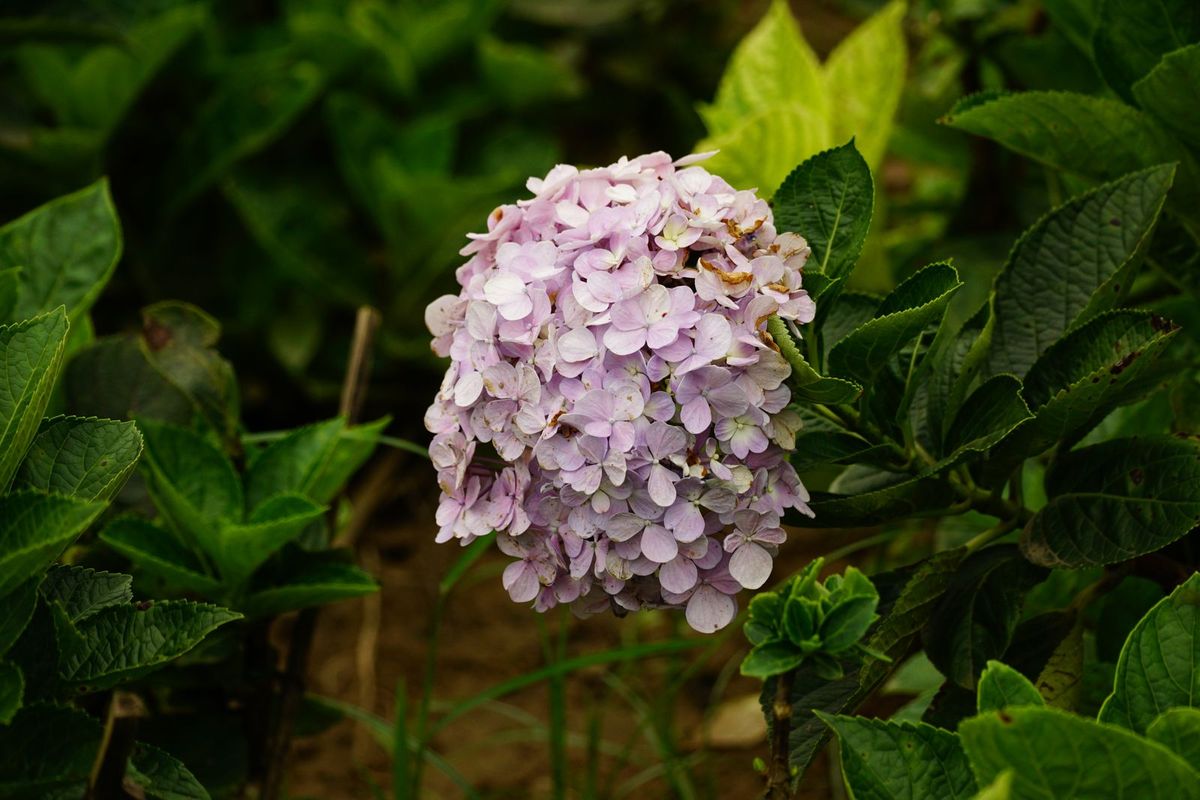
The bigleaf hydrangea's afternoon wilt is famous because it is theater: on a hot day the leaves and flower heads droop dramatically, sometimes to the point of looking dead, and by evening, untouched, the plant stands up again. The mechanism is simple transpiration arithmetic: at peak heat the leaves lose water faster than the roots can move it, even from moist mix, and the plant wilts as a defense, recovering when the heat breaks. The trap is the owner's response. Watering a wilted plant whose mix is still moist teaches the roots to rot and the owner to panic daily. The read is the mix, not the leaves: finger in the top 2 inches. Moist means leave it alone and let the evening do the work; dry means the wilt is honest thirst and the two pass soak is due. A plant that does not recover by morning has a real problem, thirst if the mix is dry, roots if it is wet, and the morning check is the one that never lies.
Dormant Winter: The Minimum Drink
A potted hydrangea in winter dormancy barely drinks, but its root ball must never dry out completely, because a desiccated root ball in a frozen pot does not recover in spring. For plants overwintered in a garage, shed, or against a sheltered wall, the rule is a check every 2 to 3 weeks and just enough water to keep the ball faintly moist, no soaking, no feeding. The pot's enemy in winter is the freeze and thaw cycle more than dry cold: a saturated ball freezes solid and splits roots, a bone dry ball kills them quietly, and the middle state, cool and barely moist, is the target. Plants left outdoors in mild regions mostly take what rain gives them and need only the drought check. Bring the rhythm back gradually in spring as buds swell: the ladder's spring step, every 3 to 4 days, resumes when growth does, and the first full soak of the year is the plant's starting gun.
Pot Size, Mix, and the Honest Fixes
If a potted hydrangea needs water twice a day in ordinary summer weather, the watering is not the problem; the pot is. Stepping up one size, from a 12 inch to a 14 or 16 inch pot, roughly doubles the reservoir and halves the rhythm, and it is the single most effective change an owner can make. Mix matters in the same direction: a container mix with compost or bark holds moisture in the root zone longer than a lean, sandy blend, and a mulch of bark over the surface slows the top drying that triggers false checks. Terracotta breathes and dries faster than plastic or glazed ceramic, which is a virtue for rot prone plants and a tax for this one; a thirsty hydrangea in a clay pot on a hot patio is the maximum difficulty setting, and grouping pots together so they shade each other's walls eases it. None of these fixes replaces the check and the ladder; they change which step of the ladder your plant lives on.
Repotting Resets the Rhythm
A potted hydrangea outgrows its reservoir before it outgrows its welcome. When roots circle the drainage holes and the two pass soak runs through a plant that wilts again by evening, the pot, not the schedule, is the limit. Step up one size in spring, about 2 inches wider, into fresh mix, and the rhythm relaxes immediately, because the new volume holds water the old one could not. Expect the first weeks after repotting to run wet: disturbed roots drink slowly, so hold the spring step of the ladder and let the check, not the calendar, call the drinks until growth surges. Repotting on roughly a two year rhythm keeps a container hydrangea on the manageable steps of the ladder for its whole life.
Frequently Asked Questions
How often should I water a hydrangea in a pot?
Daily to every 2 days in summer heat, with bigleaf types in 14 to 18 inch pots drinking daily at the peak. Spring runs every 3 to 4 days and fall every 4 to 5, always confirmed by the check: water when the top 1 to 2 inches of mix are dry. Dormant plants under cover in winter get only enough to keep the root ball from drying out, checked every 2 to 3 weeks.
Why does my potted hydrangea wilt every afternoon?
Usually theater, not thirst. At peak heat a bigleaf hydrangea loses water through its large leaves faster than its roots can replace it, even in moist mix, and wilts as a defense, recovering by evening. Check the mix before watering: if the top 2 inches are moist, leave the plant alone. A plant still wilted in the morning has a real problem, dry mix if it is thirsty, damaged roots if the mix is wet.
How much water does a potted hydrangea need at each watering?
A full two pass soak: pour until water runs from the drainage holes, wait 10 minutes, and pour again until it runs a second time. Dry mix shrinks from the pot walls and sheds a single pour down the gap, so the second pass is what recharges the core. The calculator on this page sizes the volume for your pot. Afterward, empty the saucer within 30 minutes; a pot standing in runoff rots.
How is watering a potted hydrangea different from one in the ground?
The reservoir. An in-ground shrub draws on weeks of soil moisture and runs on about an inch a week, the system the site's in-ground hydrangea article teaches. A pot holds a few days of water at most and loses it through heated walls, so the rhythm compresses to daily or every 2 days in summer, the checks are shallower, and the saucer becomes a rot risk the ground never presents. Same plant, different physics.
How do I keep a potted hydrangea alive over winter?
Keep the root ball barely moist and otherwise leave it alone. For plants sheltered in a garage or against a wall, check every 2 to 3 weeks and give just enough water to stop the ball drying out completely, never a soak. The twin winter killers are a saturated ball that freezes solid and a desiccated ball that never wakes; the safe state is cool and faintly moist. Resume the spring rhythm, every 3 to 4 days, as the buds swell.
Photo credits: Christina & Peter (Pexels); Duy Le Duc (Pexels). Photos are served from this site; follow the credit to the library page for the original.