How Often to Water Hydrangeas: Deep Soaks, and Why Afternoon Wilt Lies
By the Windchime Walker editorial team
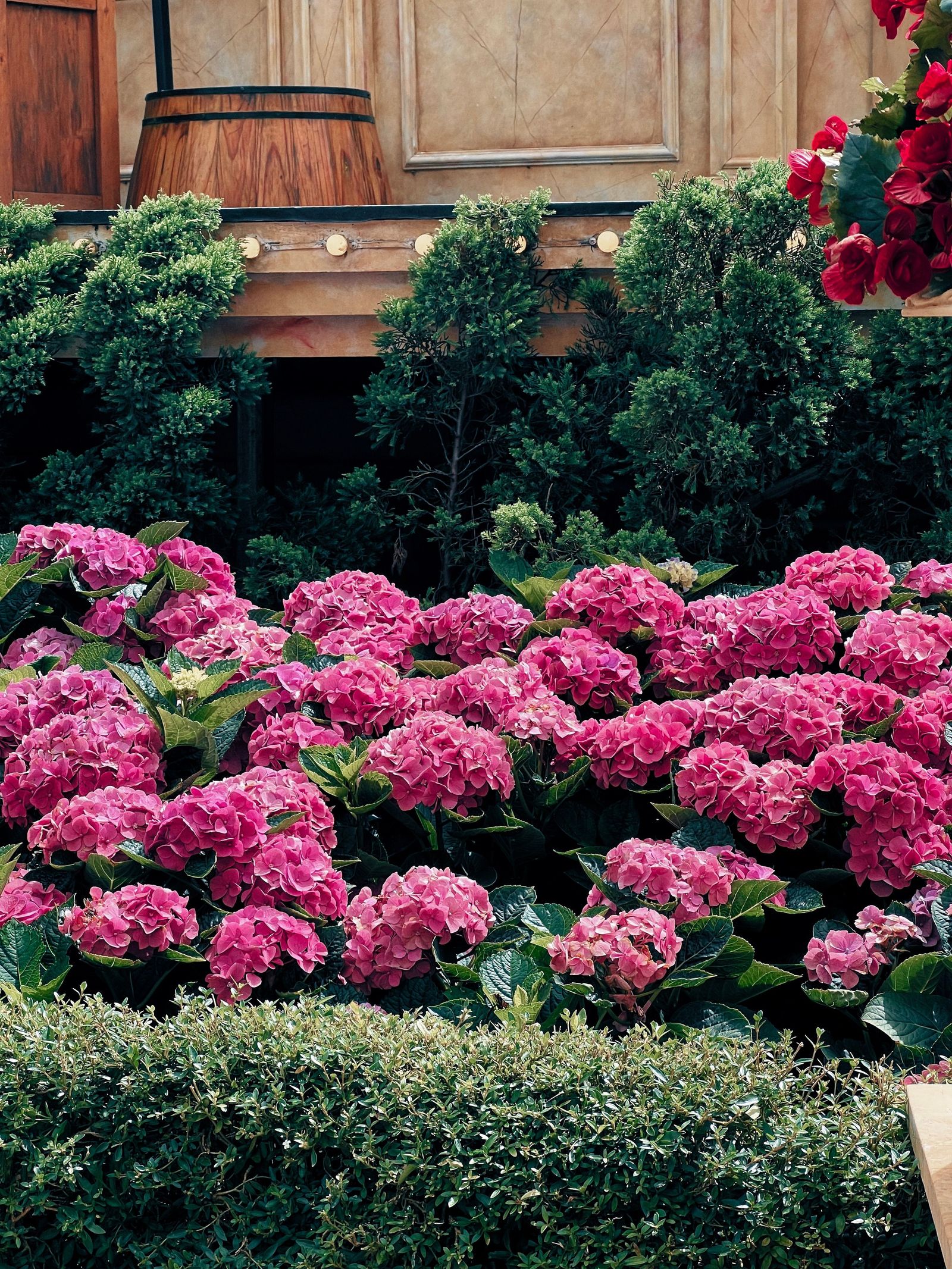
Photo: Jayce Q / Pexels
The hydrangea is the garden's most convincing liar. On a hot afternoon it collapses, leaves hanging, flower heads nodding, looking for all the world like a plant dying of thirst, and the gardener runs for the hose. Sometimes the gardener is right. Often the soil under that theatrical wreck is perfectly moist, the plant is simply wilting in heat as hydrangeas do, and it will be standing upright again by evening without a drop. Watering this shrub well means learning to tell those two afternoons apart, because the cures differ and the wrong one, daily shallow watering of a plant that was never thirsty, builds the shallow roots and fungal problems that plague the species. This page is the whole decision system.
Our lawn and houseplant watering guides own their cases. This page owns the shrub.
Interactive tool
Watering Calculator: The Hydrangea Soak
An inch of water over the root zone is the target, and it is a volume. Enter your shrub's root zone length and width below and a depth of 1 inch to see what one deep soaking actually delivers, then check the soil before you believe the wilt.
19.9 gallons
For 32 square feet at 1 inch deep. That is about 76 liters, or 10 trips with a standard 2 gallon watering can.
A rain gauge or a straight sided can set in the bed tells you when a sprinkler or soaker hose has actually delivered this depth. Time alone is a guess, because hose pressure varies from house to house.
The conversion is arithmetic, not opinion: one inch over one square foot is 144 cubic inches of water, and a US gallon holds 231 cubic inches, so each square foot at one inch takes 0.62 gallons.
The Short Answer, Then the Decision
An established hydrangea in the ground wants about 1 to 1.5 inches of water per week, delivered in one or two deep soakings rather than daily sprinkles, and adjusted upward in heat waves and full sun, where NC State Extension notes these shrubs need additional water. A newly planted hydrangea is a different case: up to about 2 inches a week, with the soil checked daily through its first season, because its roots still live in the original root ball and that ball dries faster than the surrounding soil. A hydrangea in a container is a third case: in summer heat it may need water every day, sometimes twice, because a pot is a small reservoir under a large, thirsty canopy. The rest of this page is how to know which case you are looking at on any given day, and the wilt test that decides.
The Wilt Test: Soil First, Evening Recheck
When the plant collapses in the afternoon, do not water yet. Do this instead. Push a finger or a trowel 3 to 4 inches into the soil at the shrub's base, inside the drip line. If the soil at that depth is moist, the plant is heat wilting, not thirsting: leave the hose, and check the plant again in the evening. A heat wilted hydrangea recovers as the temperature falls, standing back up by dusk or the following morning, and that recovery is the confirmation. If the soil at depth is dry, water deeply, that day, at the base. If the plant is still wilted in the cool of the morning, water regardless of what the soil check seemed to say, because morning wilt is the plant's honest signal and it overrules the test. This two step, soil first and evening recheck, is the whole craft of hydrangea watering, and gardeners who learn it stop drowning their shrubs in August, which is when the overwatering damage, root rot in warm wet soil and fungus on constantly wet foliage, does its worst work.
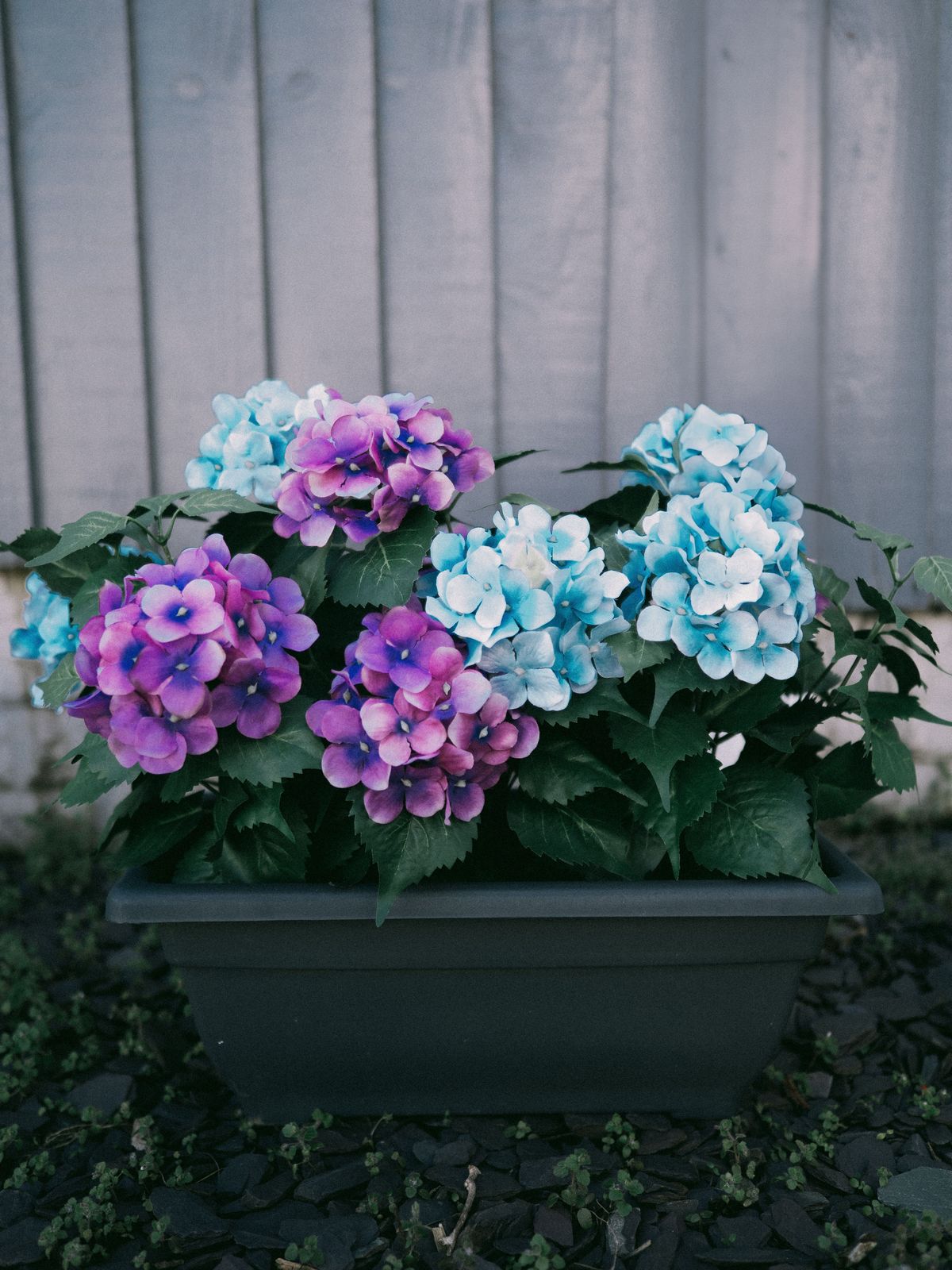
A potted blue hydrangea against a wooden fence
Delivering the Inch: Technique
Deep soaking is a technique, not a volume on a timer you guess at. Water at the base of the plant, slowly, so the water enters the soil instead of running off it: a soaker hose spiraled under the mulch, a drip line, or a hose on a trickle moved around the root zone all beat a sprinkler, which wets the foliage, loses water to the air, and feeds the leaf spot fungi that disfigure hydrangeas by late summer. Water in the morning when you can, so any foliage that does get wet dries fast in the day's first sun. Measure your delivery once with a rain gauge or a straight sided can placed under the shrub: an inch of water over the root zone is the target, and knowing that your soaker delivers it in 90 minutes converts every future watering from a guess into a setting. Mulch is the technique's partner: 2 to 3 inches of shredded bark or leaf mulch over the root zone, kept a few inches from the stems, slows evaporation so effectively that it can stretch the interval between soakings by days in a hot week, and it keeps the soil temperature steadier, which this shallow rooted shrub visibly prefers.
The First Season Schedule
A hydrangea planted this spring does not yet have a root system in your soil; it has a root ball, shaped like the pot, that dries as a unit and can be bone dry inside a ring of moist garden soil. Water new plants accordingly: a deep soak at planting, then checks every day or two for the first month, watering whenever the root ball itself, probed with a finger at the plant's base, feels dry at depth. Through the first summer, hold roughly the 2 inches a week rhythm in one or two soakings, more in heat, and taper in the fall as growth stops. The second season is the transition, and by the third the shrub is on the established schedule, its roots spread well beyond the original ball. The commonest new plant failure is not neglect but a category error: watering the soil around a new plant faithfully while the ball at its center dries untouched. Aim the water at the base, where the ball is, for the whole first season.
Containers: the Daily Case
Potted hydrangeas, the florist plants and the patio shrubs, live by container rules, not shrub rules. The canopy is full sized and the reservoir is a pot, so in heat the plant can drink the pot dry in a day, and afternoon wilt in a container is thirst far more often than it is theater. Check daily in summer, water until it drains from the holes, and expect twice daily watering in heat waves for pots in full sun. The wilt test still applies but resolves faster: if a potted plant wilts and the mix is dry 2 inches down, water immediately and thoroughly; if it wilts every afternoon despite moist mix, the pot is too small or the sun too strong, and the fix is a bigger pot or afternoon shade, not more water into an already wet pot. Winter care for potted plants in cold climates means keeping the mix barely moist while the plant is dormant and the pot sheltered from freeze and thaw cycles; a dormant hydrangea forgotten bone dry in a frozen garage dies of the dry as surely as a summer one dies of thirst.
The Problems Water Causes, and the Ones It Cures
Most hydrangea complaints that reach a watering page are water complaints wearing costumes. Leaf spot and mildew by late summer trace to wet foliage and crowded, still air: water at the base, in the morning, and thin the shrub's center rather than reaching for a spray. Flower heads browning early in a heat wave usually mean the plant could not move water fast enough at midday even from moist soil; mulch and a deep soak before the heat, not during it, is the prevention. A shrub that wilts daily and never quite recovers despite watering is telling you about roots, not water: check for a root ball that never integrated, soil that drains so fast the soak runs through, or root damage, and fix the cause. No flowers is rarely a water question at all, belonging instead to pruning timing and winter bud damage, and it is named here only so the watering can is not blamed for it. The hydrangea, read correctly, is an honest plant: it wilts loudly, recovers visibly, and keeps its real troubles written in the soil at 3 inches deep, where the test on this page reads them.
Flower Color: the Question Every Hydrangea Owner Asks Next
Watering pages get asked about color, so here is the honest connection. The blue to pink color of bigleaf hydrangea flowers is set by soil chemistry, specifically by whether aluminum is available to the plant, which happens in acidic soil and stops in alkaline soil: acid soil, blue flowers; alkaline soil, pink; and the shift is made with soil amendments over a season, not with the watering can. Watering's role is supporting rather than causal: consistent moisture keeps the plant healthy enough to respond to the chemistry, and a drought stressed shrub in the year its buds form carries the cost into next year's bloom, because bigleaf hydrangeas flower on the previous year's wood and buds. That bud fact is also why the watering discipline in a dry fall matters more than owners expect: the shrub is not only finishing this season, it is building next year's flowers inside buds that winter will test, and a plant that goes into winter well watered, mulched, and unstressed is the one that blooms on schedule. Color is chemistry, bloom is last year's care, and water is the delivery system for both.
Frequently Asked Questions
How often should I water my hydrangea?
Established shrubs: about 1 to 1.5 inches of water a week in one or two deep soakings. Newly planted: up to 2 inches a week with daily checks through the first season. Containers: as often as daily in summer heat. The soil check at 3 to 4 inches deep decides on any given day; the inches are the rhythm, not a calendar order.
Why does my hydrangea wilt every afternoon and recover by evening?
Heat wilt. Hydrangeas wilt dramatically in afternoon heat even in moist soil and recover as temperatures fall. Confirm with the soil check: moist soil at depth plus evening recovery means the plant was never thirsty, and watering it daily anyway builds shallow roots and disease. Morning wilt is the real alarm; water then.
Should I water hydrangeas every day?
In the ground, no: daily light watering trains shallow roots and keeps foliage wet for fungi. Deep and less often is the rule. The exceptions are newly planted shrubs in their first weeks, which get daily checks and water when the root ball dries, and containers in heat, which can genuinely need daily water.
When is the best time of day to water hydrangeas?
Morning. Water at the base, slowly, so it soaks rather than runs off, and morning delivery lets any splashed foliage dry quickly, which starves the leaf spot fungi. A soaker hose or drip line under mulch is the ideal setup; overhead sprinklers are the worst.
How do I water a newly planted hydrangea?
Aim at the root ball, not the surrounding soil, for the whole first season: soak deeply at planting, then check the ball itself every day or two and water when it feels dry at depth, holding roughly 2 inches a week through the first summer. The classic new plant failure is moist soil around a bone dry root ball.
Why are my hydrangea's leaves spotted and browning?
Most often wet foliage and still air feeding leaf spot fungi, worsened by overhead watering and evening watering. Switch to base watering in the morning, mulch the root zone, and improve air flow through the shrub's center. Browning flower heads in a heat wave are usually a water transport limit; mulch and a deep soak ahead of the heat help more than daily hosing.
Photo credits: Jayce Q (Pexels); Lisa Fotios (Pexels). Photos are served from this site; follow the credit to the library page for the original.