Every juniper bonsai guide repeats the same rule, and it is correct: water thoroughly until drainage flows from the holes, then wait until the soil is nearly dry, but never completely dry, and check every day. What the guides rarely explain is why the rule is so unforgiving with this tree in this pot. A bonsai pot holds a teacup of soil. A juniper in the ground is famously drought tolerant because its roots run deep and wide; a juniper in 4 inches of gritty mix has none of that reserve, and a day of summer wind can take the pot from soaked to bone dry. Bone dry is the line this tree does not forgive: juniper roots that fully dry out die back, and the foliage can stay green for weeks afterward, so owners keep watering a tree that is already lost. This page builds the watering system on that physics: the daily check, the soak to drainage, the seasonal interval ladder, the pot weight gauge, and the placement rule that outranks all of them.
Home / Gardening Basics for Beginners
How Often to Water Juniper Bonsai: Shallow Pot Physics and the Never Bone Dry Line
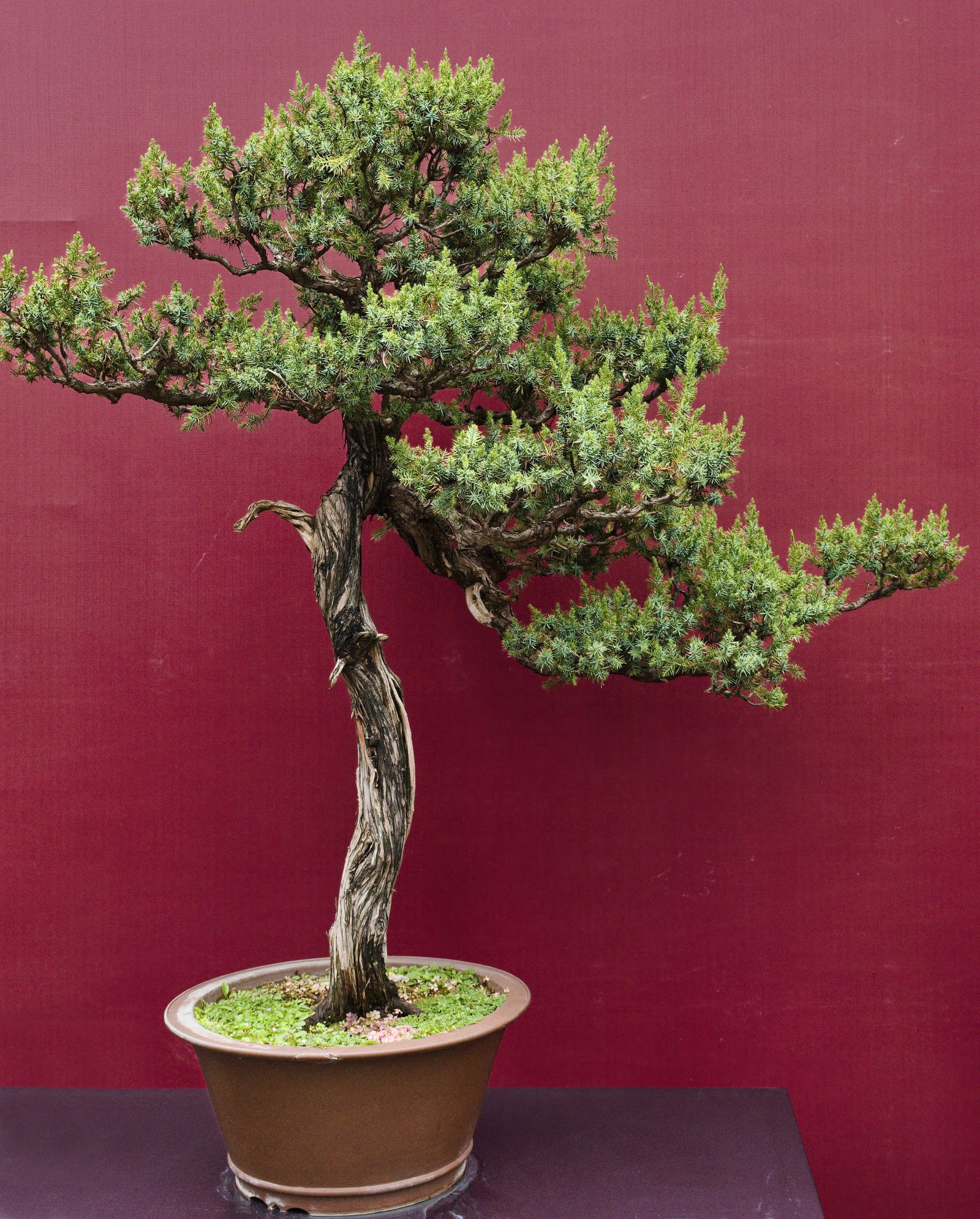
Photo: Eric Prouzet / Pexels
Watering Volume Calculator: The Juniper Bonsai Pot Audit
A bonsai pot holds a teacup of soil and swings from wet to dry in a day of summer wind. Enter your pot diameter as both length and width with a depth of 1 inch to size the soak that runs to drainage.
19.9 gallons
For 32 square feet at 1 inch deep. That is about 76 liters, or 10 trips with a standard 2 gallon watering can.
A rain gauge or a straight sided can set in the bed tells you when a sprinkler or soaker hose has actually delivered this depth. Time alone is a guess, because hose pressure varies from house to house.
The conversion is arithmetic, not opinion: one inch over one square foot is 144 cubic inches of water, and a US gallon holds 231 cubic inches, so each square foot at one inch takes 0.62 gallons.
The Outdoor Rule Comes First
No watering schedule saves an indoor juniper. Junipers are outdoor trees that need full sun, moving air, and a real winter dormancy; the gift shop juniper on a windowsill is slowly starving for light and seasonal cues no matter how perfectly it is watered. If your tree lives indoors, the first fix is a move outside to the sunniest spot you have, in all seasons, with the winter watering notes below. This is stated first because it is the most common cause of the browning that sends owners searching for a watering answer: the tree was not thirsty, it was indoors. Watering is the second variable. Placement is the first.
The Check, the Soak, and the Weight Gauge
Check daily, with a finger or a wooden chopstick pushed into the mix: water when the top layer has dried and the mix below is just barely moist, never when it is still wet and never after it has gone fully dry. The watering itself is a soak, not a sprinkle: pour slowly over the whole surface until water runs freely from the drainage holes, wait a minute, and repeat once, because gritty bonsai mix sheds a fast first pour down the sides. Between checks, the pot's weight is your gauge. Lift the pot right after a soak and memorize the heft; lift it each morning after, and the day it feels dramatically lighter is the day the check will confirm. Experienced growers water by weight more than by eye, because the surface of a gritty mix looks dry hours after watering while the core is still wet, and looks are the trap.
The Seasonal Interval Ladder
The ladder describes what your daily check will find. In summer heat, a small juniper pot in full sun and wind typically needs water daily, and in a heat wave or a very shallow pot, twice daily, morning and late afternoon. Spring and autumn run every 2 to 3 days in most climates. Winter dormancy stretches the interval to every 7 to 14 days, and winter water is given on above freezing days, late morning, so the pot is not sitting frozen and soaked through the night. Rain counts: a day of real rain is a watering, and the check after it decides the next one. The calculator above sizes the soak for your pot's footprint; in bonsai the volume matters less than the completeness, since you pour until drainage regardless, but it shows beginners how little water a small pot actually holds, which is the whole lesson.
The Mix Decides How Fast the Clock Runs
The interval ladder assumes a proper bonsai mix: mostly mineral, gritty, and free draining, the kind that lets a soak run through in seconds. A juniper still sitting in the dense, peaty nursery soil it was sold in runs on a completely different and more dangerous clock. That soil holds water at the core long after the surface looks dry, so the check reads dry, the owner waters, and the core never actually dries at all, until the roots rot in a pot that seemed correctly watered. This is the hidden variable behind most contradictory juniper advice: two owners following the same rule get opposite results because their soils are different instruments. If your tree is in nursery soil, the fix is a repot into gritty mix at the proper season for your climate, late winter to early spring in most regions, and until then, trust the chopstick pulled from deep in the pot over the surface every time. The chopstick comes out with soil clinging and dark when the core is wet, clean and pale when it is dry, and it reads the layer that matters. Pot size runs the same lever in miniature: a deeper or wider pot buys a day of margin, a shallow show pot spends it. Choose the pot knowing you are also choosing how often you will stand there with the can.
The First Month With a New Tree
Most juniper bonsai deaths happen in the first month, in a new home, under a new hand. Spend that month calibrating instead of following anyone's printed interval, including this page's ladder. Water the tree thoroughly the day it arrives, lift the pot and learn its soaked weight, then check every morning and note the day the mix reaches near dry and how the weight feels that day. By the third cycle you know your pot, your mix, and your exposure as a unit, which no guide can know for you. Keep a simple log for the first season: date watered, and a word for the weather. Patterns jump out of even a rough log, like the west wind day that costs a full day of interval, or the heat threshold where the tree starts wanting the second drink. That log is the difference between a schedule, which is a guess repeated, and a system, which is a check performed. The growers whose junipers live for decades are not using a secret interval. They are running the check, on their own tree, in its own pot, and the tree tells them the rest.
Browning From the Inside Out
A juniper dying of water stress usually browns from the interior foliage outward, and the timing deceives: the roots failed weeks before the color changed. If you see interior browning, run the history, not just today's check. Has the tree been indoors? Has the pot gone bone dry even once this summer? Has it been watered on a schedule that kept it constantly wet, which rots roots in a mix that then reads dry at the surface? Scratch a twig: green under the bark means living wood and a tree worth saving with corrected placement and watering; brown and dry all through means that section is gone. What you cannot do is rescue by flooding. A stressed juniper gets the same rule as a healthy one, soak at the near dry check, with shade for a week or two while it stabilizes. The tree's toughness is real, but it lives in its roots' access to a landscape, and the pot removed the landscape. Your daily check replaces it.
Frequently Asked Questions
How often should I water a juniper bonsai in summer?
Expect daily in most summer conditions, and twice daily in heat waves, shallow pots, or windy exposures. The rule behind the number: check every morning, and water thoroughly until drainage flows whenever the mix is nearly dry but not bone dry. A small pot in full sun can cross from moist to fully dry in a single hot day, which is why the daily check, not a fixed interval, is the system. The pot weight test, lifting the pot and feeling for the dramatic lightening, is the fastest reliable check.
Can a juniper bonsai live indoors if I water it correctly?
No. Watering cannot substitute for what indoors lacks: full sun, moving air, and a cold winter dormancy the tree is built to require. Indoor junipers decline slowly and often look acceptable for months while starving, which is why the gift tree's death gets blamed on water. Move the tree outdoors year round, to the sunniest spot available, and protect the pot only in extreme cold snaps by setting it on the ground and mulching around it. Watering then follows the outdoor ladder on this page.
How do I know when my juniper bonsai needs water?
Push a finger or a wooden chopstick into the mix. Water when the top has dried and the mix just below is barely moist; wait if it is still clearly wet; you are late if it is dry all the way through. Cross check with weight: a freshly soaked pot feels heavy, a pot at the watering point feels strikingly light. The surface alone misleads, because gritty bonsai mix looks dry within hours while the core still holds water.
Why is my juniper bonsai turning brown?
The common causes are a tree kept indoors, a pot allowed to go completely dry, and roots rotted by constant wetness, roughly in that order. Juniper foliage stays green for weeks after the roots fail, so the browning you see today usually reports an event from earlier in the season. Check placement first, then your watering history, then scratch a twig for green living wood. A tree with green under the bark can recover under the outdoor rule and the near dry watering rhythm; fully brown, dry wood does not come back.
How often should I water a juniper bonsai in winter?
Every 7 to 14 days is typical during dormancy, decided by the same check: water when the mix is nearly dry. Give winter water late in the morning on an above freezing day so the pot drains before night, and remember that a dormant tree in cold wind still loses moisture even though it is not growing. Snow and rain count as watering. The winter error is not usually thirst; it is a pot kept soaked and frozen, which is why the check matters more than the calendar in this season too.
Photo credits: Eric Prouzet (Pexels); Scott Webb (Pexels). Photos are served from this site; follow the credit to the library page for the original.