How Often to Water Kalanchoe: Watering for Blooms, Not Just Leaves
By the Windchime Walker editorial team
Photo: Du Tử Mộng / Pexels
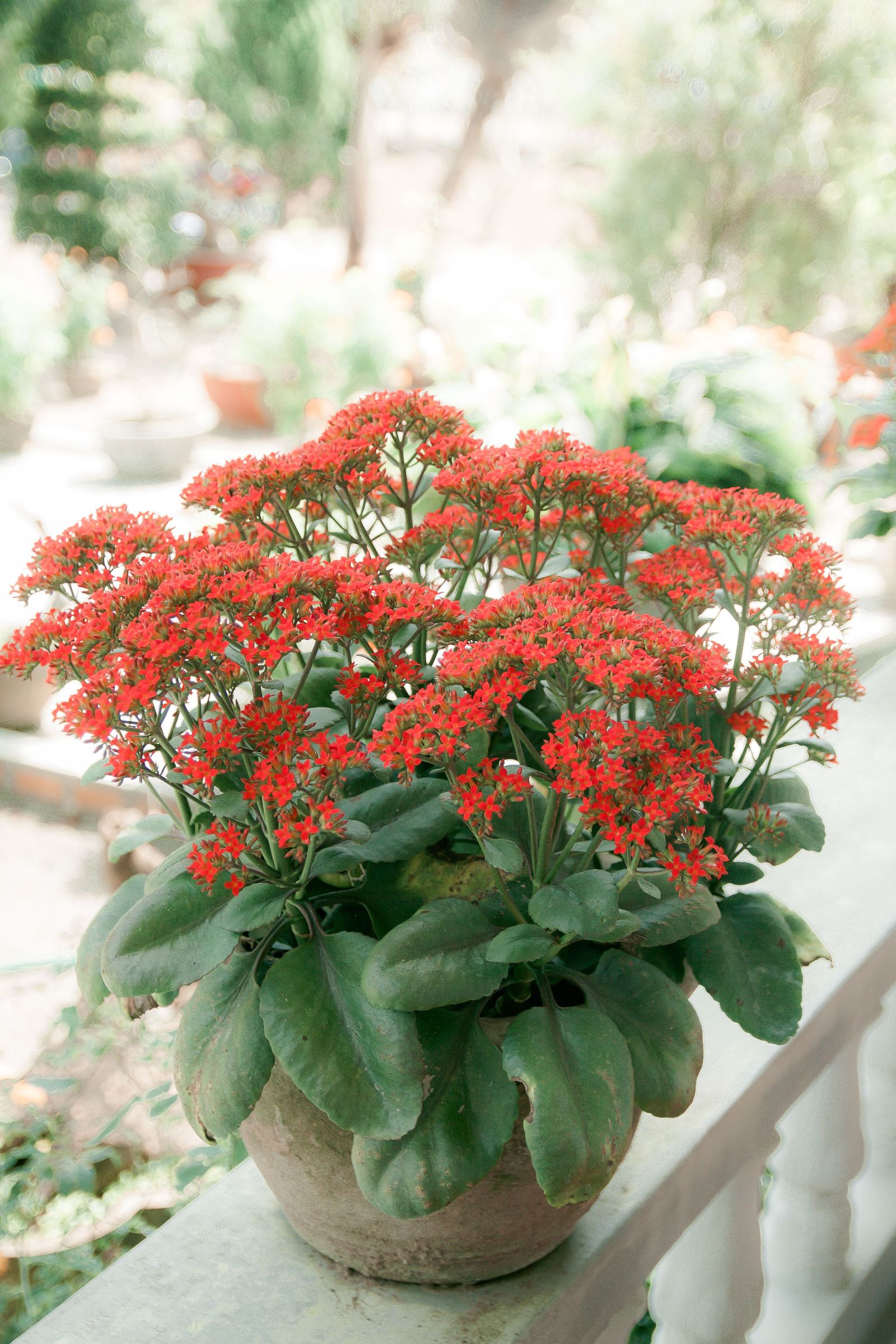
A florist kalanchoe arrives as a mound of flowers over a small succulent, and most of them are dead or discarded within a season, not because the plant is fragile but because it gets watered like a fern. Kalanchoe is a leaf succulent from Madagascar: it stores water in thick, scalloped leaves and wants its mix to dry between drinks. The working rule is to water when the top 1 to 2 inches of mix are dry, which lands at about every 1 to 2 weeks in a bright room during active growth, stretches in winter rest to monthly or less, and shortens for small pots in hot sun. The calendar sprawl in the guides, weekly here, every 3 weeks there, is mostly pot size and light wearing different clothes. What makes this plant different from the other succulents on your shelf is that watering is only half the job. The other half is bloom: kalanchoe flowers on a short day trigger, and the watering regime changes around bud set, which is where this page spends its effort.
Our houseplant watering chart owns intervals across many plants. This page owns the kalanchoe alone.
Interactive tool
Watering Volume Calculator: The Kalanchoe Pot Audit
A kalanchoe in bloom drinks on a different rhythm than one building buds. Enter your pot diameter as both length and width with a depth of 1 inch to size one drink, taken at the soil line, never over the flowers.
19.9 gallons
For 32 square feet at 1 inch deep. That is about 76 liters, or 10 trips with a standard 2 gallon watering can.
A rain gauge or a straight sided can set in the bed tells you when a sprinkler or soaker hose has actually delivered this depth. Time alone is a guess, because hose pressure varies from house to house.
The conversion is arithmetic, not opinion: one inch over one square foot is 144 cubic inches of water, and a US gallon holds 231 cubic inches, so each square foot at one inch takes 0.62 gallons.
The Leaf Check and the Soil Check
Run two checks together. The soil check is the standard one for a shallow rooted succulent: a fingertip or a skewer to 1 to 2 inches deep, dry at that depth before you water. The leaf check is the plant's own report: a charged kalanchoe leaf is thick and firm, and as reserves fall the lower leaves soften slightly and lose their snap. Water when the soil check says dry and the leaves have just begun to soften, and you will stay ahead of stress without ever keeping the mix wet. One warning belongs to this plant specifically: kalanchoe roots rot fast in a mix that stays soggy, and the first sign is often a stem going soft at the base while the top still looks cheerful. A pot with drainage is not optional equipment, and a cachepot that hides standing water is how these plants die in gift baskets.
The Drink: At the Soil Line, Never Over the Flowers
Water at the base, slowly, until it runs from the drainage holes, then empty the saucer. The calculator above sizes one drink: enter the pot diameter as both length and width with a depth of 1 inch. The placement of the water matters more for this plant than for most. Water poured over the top wets the dense flower clusters and sits in the leaf joints, and kalanchoe blooms spot, mold, and collapse early when they stay wet; the powdery mildew this plant is prone to starts exactly there. Use a narrow spout, part the foliage, and keep the flowers dry. Feed lightly during active growth, a dilute balanced fertilizer once a month in spring and summer, and stop feeding entirely when you begin the bud set routine below, because a kalanchoe pushed with nitrogen grows leaves at the expense of the flower buds you are trying to trigger.
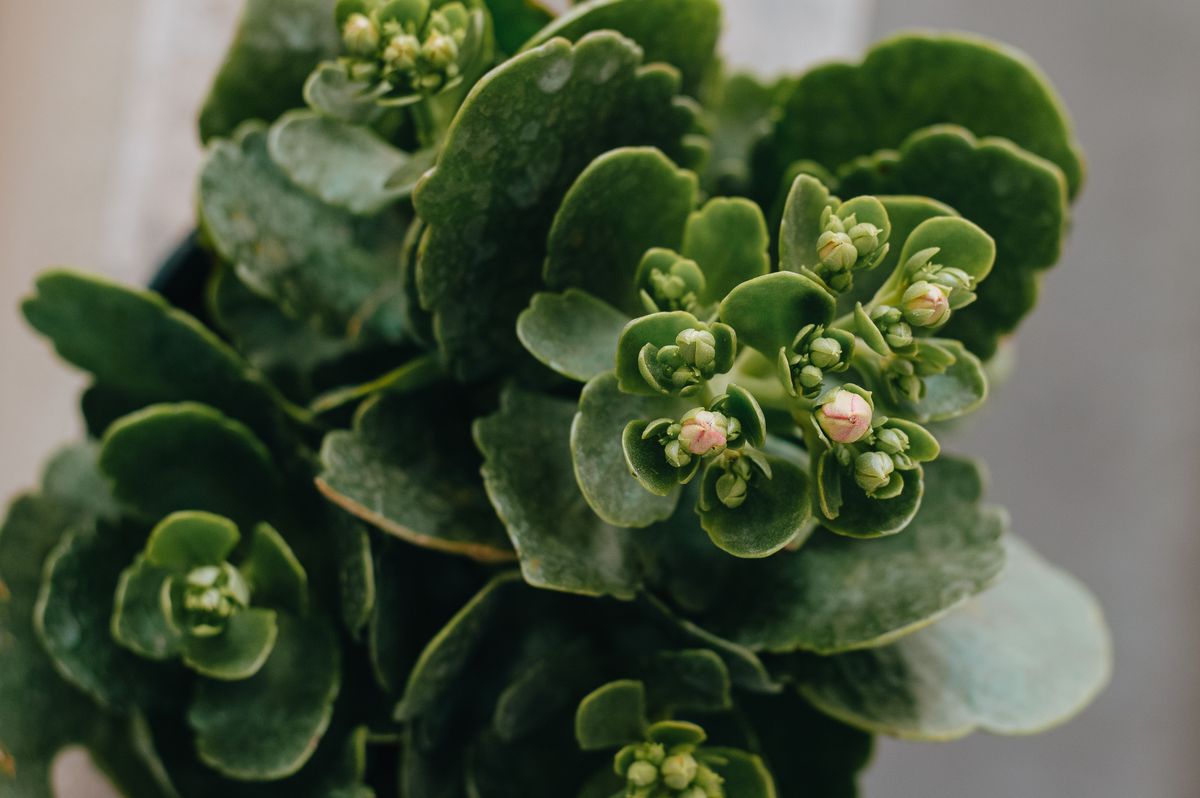
Kalanchoe leaves with budding pink blooms in close-up
Watering in Bloom: The Regime That Keeps Flowers Open
A kalanchoe in full flower drinks a little more steadily than the same plant in leaf, because open blooms and the stems carrying them transpire. The rule does not change, dry top 1 to 2 inches, then a full soak, but the check interval shortens: look every 4 to 5 days rather than weekly, and do not let the plant run to leaf softening while it is flowering, because drought stress in bloom drops buds and shortens the display. Deadhead spent clusters by snipping the flower stem back to the leaf pair below it, which keeps the plant tidy and sometimes coaxes a side flush. When the last flowers fade, cut the whole flower stalk out at its base. What happens next decides whether this plant is a one season decoration or a perennial: the reblooming routine.
The Rebloom Routine: Short Days, Cool Nights, Less Water
Kalanchoe sets flower buds when nights are long, roughly 14 hours of uninterrupted darkness daily for about 6 weeks, the same trigger poinsettias use. In autumn, give the plant its long nights: a closet, a spare room where the lights stay off, or a box over the plant from evening to morning, every night without a break, because a single light interrupted night can reset the clock. During bud set, water sparingly, at the dry end of the plant's range, and keep the plant cool, in the 50s and low 60s Fahrenheit if you can. Sparing water is part of the trigger, not a hardship: the plant reads the season in light and temperature and a leaner drink. When pea sized buds show color at the stem tips, the routine ends: back to normal light, normal watering, no feeding until the flowers open. A plant run through this cycle each fall will bloom every winter, and a plant that never gets long nights will grow into a leggy green shrub that never flowers again, which is the fate of most gift kalanchoes and the reason they get thrown away.
Legginess, Mildew, and the Other Reports
Read the plant's complaints in order. Leggy, stretched growth with long gaps between leaf pairs is a light report, not a water report: kalanchoe wants the brightest window you have, and a stretched plant should be moved into stronger light gradually and pruned back to a compact shape in spring, with the pruned tips rooted as cuttings. Powdery mildew, a white dusting on leaves, is an air and wet foliage report: water at the base only, space the plant for airflow, and remove the worst leaves. Soft black stem bases are rot, and the rescue is the succulent standard: cut above the damage into firm tissue, callus the cutting for a few days, and root it in dry mix. Mealybugs favor the leaf joints of this plant; a cotton swab with rubbing alcohol, repeated weekly, handles a small colony without drenching the foliage you are trying to keep dry.
Placement and Pets
Two placement facts close the routine. First, light: the brightest sill in the house, with some direct sun, is what keeps the plant compact and funds the bloom cycle; a kalanchoe in a dim corner survives but stretches and skips flowering. Second, safety: kalanchoe is toxic to dogs and cats, listed by the ASPCA, and the flowering plants sit exactly at browsing height on coffee tables and gift displays. Put it on a shelf or stand that pets cannot reach, especially while it is in bloom and most attractive. Run the dry check, water at the soil line, keep the flowers dry, and give it long autumn nights, and a kalanchoe stops being a disposable gift and becomes the most reliable winter bloomer in the house.
Frequently Asked Questions
How often should I water a kalanchoe in winter?
About monthly or less for a plant at rest in a cool room, and only when the top 1 to 2 inches of mix are dry and the lower leaves have just begun to soften. Winter is the plant's lean season, and it is also bloom season for a plant that went through the short day routine: a flowering kalanchoe in a heated room may drink every 10 days or so, because warm dry air pulls water through the blooms. Let the checks decide, and keep every drink at the soil line so the flowers stay dry.
Why did my kalanchoe stop blooming?
Almost always because it never got long nights. Kalanchoe buds form only after about 6 weeks of roughly 14 hour nights, uninterrupted by lamps or room light. A plant living under evening lights all autumn reads the season as permanent summer and grows leaves instead. Give it the darkness routine in fall, cool nights if you can manage them, and sparing water during bud set, and buds should show color within weeks of the routine ending. A plant that is also leggy needs more daytime light at the same time; darkness alone cannot fund flowers on a starved plant.
Can I water kalanchoe from the bottom?
Yes, and it is a good fit for this plant because it keeps the flowers and leaf joints completely dry. Set the pot in a shallow basin for 15 to 20 minutes, let it drain thoroughly, and return it to its saucer. Bottom watering works best on the small pots florist kalanchoes come in. On a large specimen, wicking may not reach the top of the root ball evenly, so alternate with a careful top watering at the soil line.
Should I repot a kalanchoe after it blooms?
Yes, the post bloom tidy is the right moment: cut out the spent flower stalks, prune any stretched stems back to a compact shape, and move the plant up one pot size if roots circle the drainage holes, using a gritty, fast draining succulent mix. Do not repot while the plant is in full flower unless the pot is failing, because the disturbance shortens the display. The pruned tips are not waste: callused for a few days and set in dry mix, they root into new plants, which is how one gift kalanchoe becomes next year's row of them.
Is kalanchoe safe around cats and dogs?
No. Kalanchoe is listed by the ASPCA as toxic to dogs and cats, and chewing the leaves or flowers can cause vomiting, diarrhea, and in larger amounts more serious effects. Keep the plant where pets cannot browse it, on a shelf or a high stand rather than a low table, and sweep up fallen leaves and petals, since a dropped leaf on the floor is the piece a pet is most likely to eat. If a pet does chew the plant and shows symptoms, call your veterinarian rather than waiting to see.
Photo credits: Du Tử Mộng (Pexels); Ravi Kant (Pexels). Photos are served from this site; follow the credit to the library page for the original.