A kentia palm asks for water less often than almost any plant in the room, and it is killed by kindness more than neglect. The pattern across the guides is consistent: water when the top 1 to 2 inches of mix are dry, which for most indoor kentias means every 7 to 10 days in spring and summer and every 14 to 21 days in winter, with some guides stretching winter to a month. The reason the interval runs long is the plant itself. A kentia is one of the slowest growing palms sold, and it usually sits in a large pot, so a modest root system drinks slowly from a big reservoir that dries from the top down over weeks. Owners who water it like a fern keep the bottom of that pot permanently wet, and the roots, which live down there, rot in a plant whose surface looked dry every time. This page builds the system for a slow plant in a big pot: the depth check read where the roots actually are, the interval by pot size and season, the flush that clears tap water salts, and the brown tip diagnosis that separates salt burn from thirst.
Home / Gardening Basics for Beginners
How Often to Water a Kentia Palm: The Big Pot, Slow Plant System
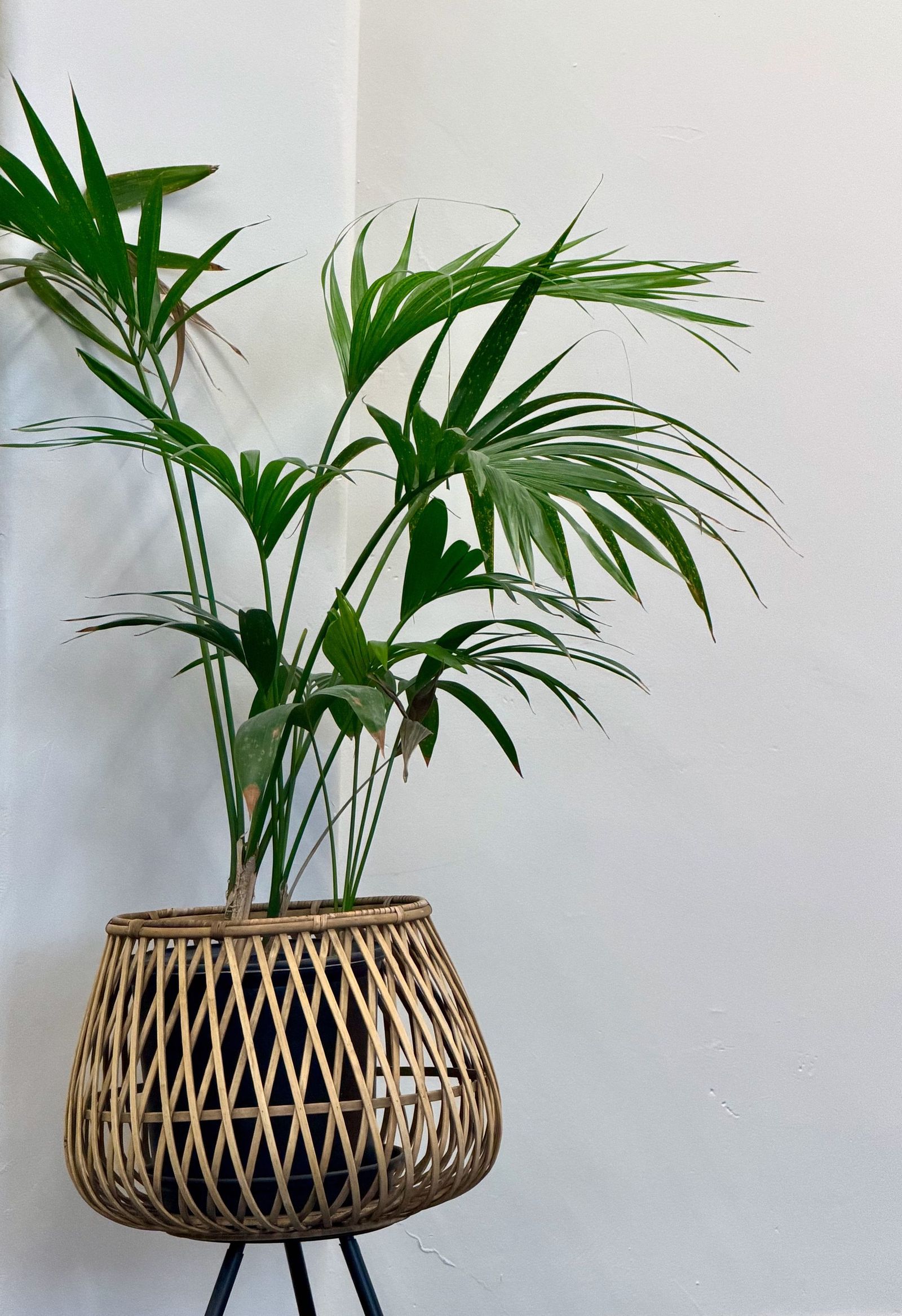
Photo: Somar D / Pexels
Watering Volume Calculator: The Kentia Palm Pot Audit
A kentia is a slow plant in a big pot, and its roots sit in the bottom moisture for weeks. Enter your pot diameter as both length and width with a depth of 1 inch to size one drink.
19.9 gallons
For 32 square feet at 1 inch deep. That is about 76 liters, or 10 trips with a standard 2 gallon watering can.
A rain gauge or a straight sided can set in the bed tells you when a sprinkler or soaker hose has actually delivered this depth. Time alone is a guess, because hose pressure varies from house to house.
The conversion is arithmetic, not opinion: one inch over one square foot is 144 cubic inches of water, and a US gallon holds 231 cubic inches, so each square foot at one inch takes 0.62 gallons.
Read the Check at the Root Zone, Not the Surface
The top 1 to 2 inches rule needs one adjustment for a kentia: in a deep pot, the surface can be dry while the bottom third, where most roots sit, is still wet from the last watering. Push the check deeper, a finger or a wooden dowel to 3 or 4 inches, or better, learn the pot's weight. A large kentia in a nursery pot is liftable by its rim with two hands, and the difference between just watered and ready is obvious once you have felt both. A moisture meter pushed to mid depth is a fair tool here too, one of the few houseplants where the pot is deep enough for the reading to mean something. Water when the mid depth reads dry-ish, then water thoroughly until a little runs out, and empty the saucer or cachepot afterward. A kentia standing in its own runoff in a decorative outer pot is the standard setup for the standard death.
The Interval by Pot Size and Season
Guides quote one interval because they assume one pot. Scale it. A young kentia in a 6 to 8 inch pot in bright light may reach the check point in 5 to 7 days in summer. The common case, a mature plant in a 10 to 14 inch pot in medium indoor light, runs the textbook 7 to 10 days in the growing season. A specimen in a very large container, in a cool room, can honestly go 3 weeks. Winter halves the plant's drinking: growth nearly stops, light is low, and evaporation slows, so 14 to 21 days is normal and a month is not neglect in a cool, dim spot. The calculator above sizes one drink for your pot's footprint; with a kentia the number that matters is how much of the pot's depth that drink rewets, which is why you pour slowly and let it run through rather than splashing the surface daily. Small frequent sips are the worst pattern for this plant: they wet the top, never reach the bottom roots evenly, and concentrate salts exactly where the feeder roots are.
Brown Tips: Salt Burn or Thirst?
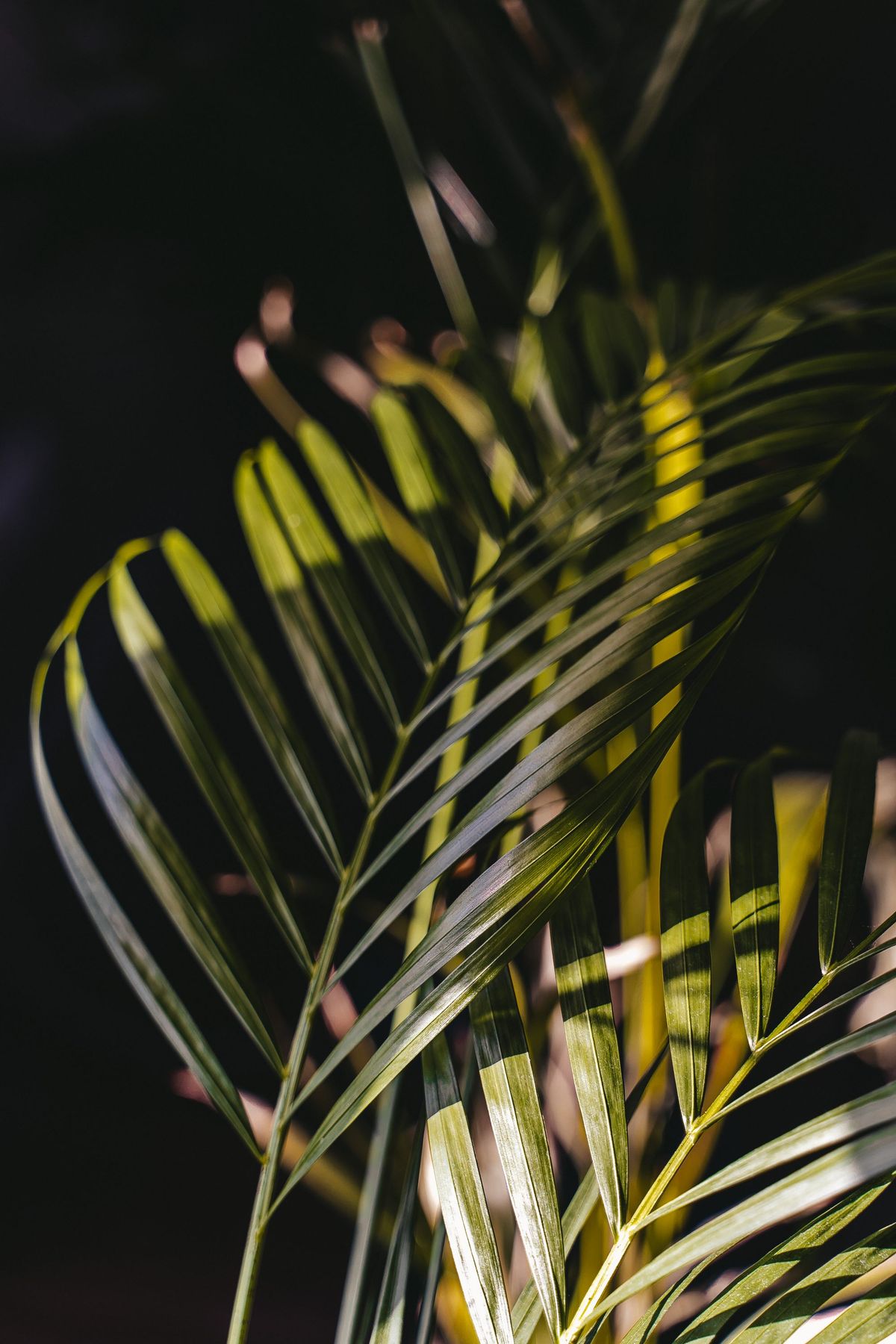
Brown leaf tips are the kentia's most reported symptom, and they have two opposite causes that the guides do name but rarely help you separate. Salt burn, the common one, comes from tap water: fluoride and dissolved salts accumulate in a long lived pot and scorch the oldest fronds first, producing a crisp brown tip edged with a thin yellow halo, on a plant whose mix moisture is fine and whose new growth is clean. The fix is not more water on schedule; it is a flush. Every few months, take the plant to a tub or outside and run water slowly through the pot for several minutes, letting the excess carry the accumulated salts out the drainage holes, then resume the normal interval. Rainwater or distilled water for routine watering slows the buildup if your tap water is hard or fluoridated. Thirst tips look different: the whole frond pales and droops, tips and margins dry together, the pot is light, and the check reads dry deep down. That plant wants a thorough drink, not a flush regime. A third pattern, a lower frond yellowing evenly and dying while the rest of the plant looks well, is often just age: kentias retire their oldest fronds one at a time, and a single yellow frond a season on an otherwise healthy plant is housekeeping, not a symptom. Cut it off at the base once it has fully yellowed and stop worrying.
One Plant, Four Intervals: A Worked Example
Watch a single kentia move through a year and the ladder stops looking vague. In April, in a bright room at comfortable temperatures, the plant is pushing a new spear and the 12 inch pot reaches the deep check in about 8 days. In July, with longer days and a warm room, the same pot checks dry at 6 to 7 days, and this is the fastest it will ever drink. In October the interval slides back through 10 days as growth slows. In January, in a cooler room under short days, the pot takes 18 to 21 days, and watering it on the July rhythm would keep the root zone wet for two straight months. Nothing about the plant changed except light and temperature, and the interval moved by a factor of three. This is why every fixed schedule printed on a plant tag is wrong for at least half the year, and why the growers who keep kentias for decades all describe the same habit: they check, they lift, they look at the newest spear to see whether the plant is growing or resting, and the plant sets its own calendar. Your kentia will draw its own version of this curve. The first year of checking is how you learn its shape; after that, the interval feels obvious, because it was never a number. It was a rhythm you were meant to read.
The Slow Plant's Other Rules
Everything about a kentia is slow, including its recovery, so the discipline is to change one thing and wait. It wants bright indirect light; direct sun through glass scorches fronds that then get blamed on water. It dislikes repotting and should only move up when roots circle the drainage holes, which is another reason the big pot logic dominates its care: many kentias are overpotted by their sellers on purpose, trading slower drying for years without disturbance. Feed lightly, once or twice in the growing season at most, because unused fertilizer is just more salt in a pot you are trying to keep clean. And the reassurance that closes many of the guides is worth repeating here: the kentia is listed as non toxic to cats and dogs in the ASPCA listings those guides cite, so it is one of the safe large plants for a pet household. Give it the deep check, the long interval, the quarterly flush, and dry feet between drinks, and a kentia will outlive the furniture around it. That patience, not any product, is the whole system.
Frequently Asked Questions
How often should I water a kentia palm indoors?
When the top 1 to 2 inches of mix are dry, checked deeper in a large pot, which typically means every 7 to 10 days in spring and summer and every 14 to 21 days in winter. A small pot in bright light shortens the interval toward 5 to 7 days; a large specimen in a cool room can stretch to 3 weeks or more. Water thoroughly until a little runs from the drainage holes, then empty the saucer so the roots never stand in runoff.
Why does my kentia palm have brown tips?
Most often it is salt burn from tap water, not thirst. Fluoride and dissolved salts build up in a long lived pot and scorch the oldest fronds, leaving a crisp brown tip with a thin yellow edge. Flush the pot every few months by running water slowly through it for several minutes to carry salts out, and consider rainwater if your tap supply is hard. Thirst looks different: the whole frond pales and droops and the pot feels light and dry deep down.
Can you overwater a kentia palm?
Yes, and it is the usual way they die indoors. A kentia grows slowly and often sits in a large pot, so frequent watering keeps the bottom of the pot, where the roots live, permanently wet even when the surface looks dry. The result is root rot in a plant that appeared correctly watered. Check moisture at depth or by pot weight, water thoroughly but infrequently, and never let the pot stand in its own runoff inside a decorative outer pot.
Is the kentia palm safe for cats and dogs?
Yes. The kentia is listed as non toxic to cats and dogs in the ASPCA listings cited across the care guides, which is one reason it is recommended so often as a large indoor plant for pet households. Non toxic does not mean salad; a determined cat chewing fronds can still upset its own stomach mechanically, but the plant carries no poisoning risk of the kind lilies pose to cats. It is among the safest statement plants you can keep.
How do I know if my kentia needs repotting?
Only when roots are circling out of the drainage holes or the pot dries implausibly fast for its size, which for this slow grower can be years. Kentias resent disturbance and are often deliberately kept in generous pots, so a plant that looks underfilled is usually fine. When you do repot, go one size up, keep the same soil line on the trunk, and expect a sulk of a few months. Never repot to fix a watering problem; fix the check and the interval first.
Photo credits: Somar D (Pexels); Vova Kras (Pexels). Photos are served from this site; follow the credit to the library page for the original.