The Knock Out rose's reputation for toughness is earned by established plants, and it makes owners careless with new ones, which is the exact reverse of what the plant needs. The watering system forks on establishment, and both sides of the fork are stated plainly in the results. New plants need deep, frequent watering while their roots are still the size of the nursery pot: two to three times a week through the first season as a working rule, with some grower guidance running tighter, every 2 days for the first 2 to 3 weeks, a conflict flagged below rather than averaged away. Established plants settle onto the classic rose budget, about an inch of water a week, delivered in one or two deep sessions in normal weather and two to three in a heat wave. This page runs the ladder, the budget, the pot case, and the dry foliage method that this disease resistant family still depends on, because resistant is not immune and wet leaves are still an invitation.
Home / Flowers and Houseplants
How Often to Water Knock Out Roses: The Establishment Ladder, the Inch a Week Budget, and the Dry Foliage Method
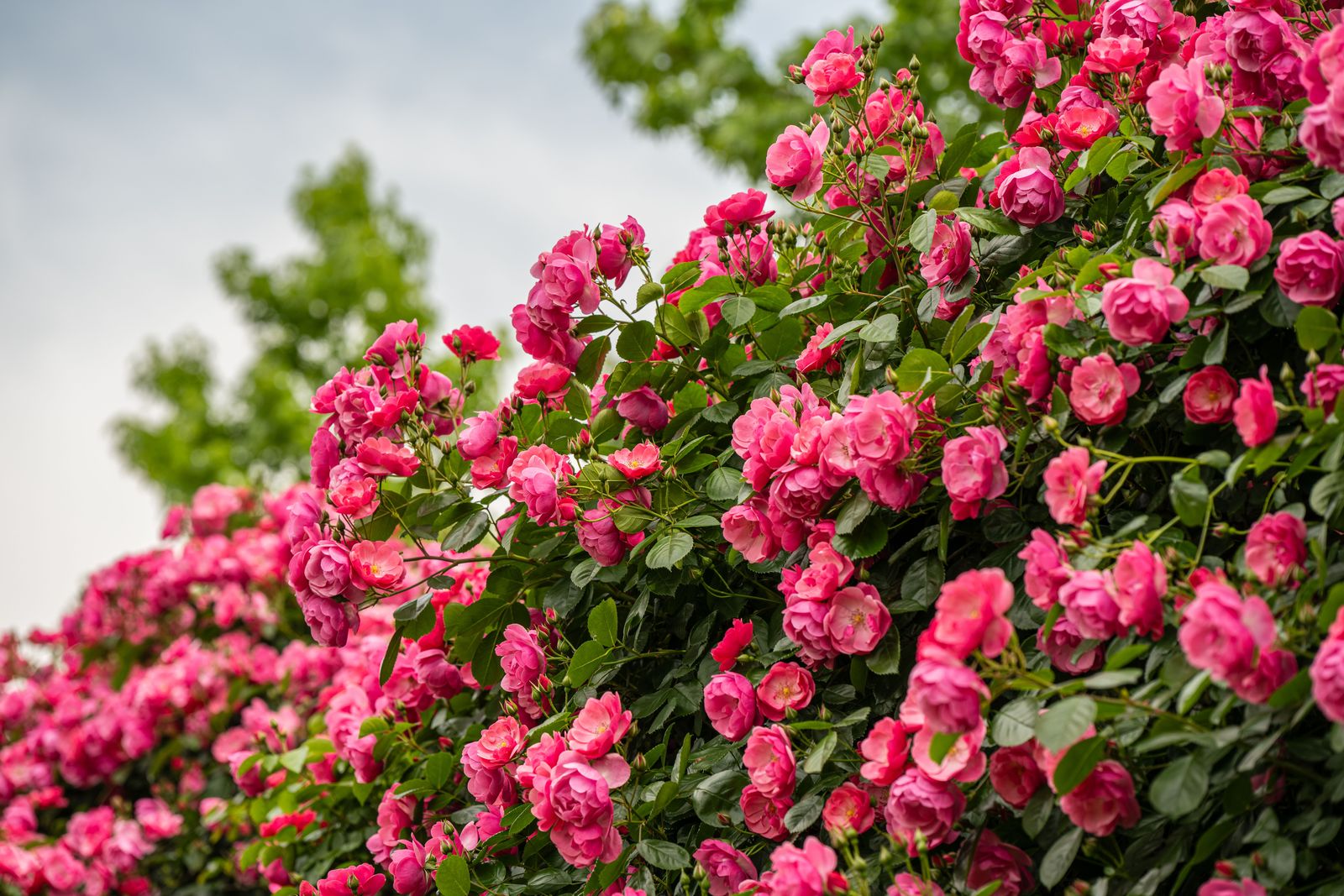
Photo: Qing Luo / Pexels
Watering Volume Calculator: The Knock Out Rose Bed Audit
An established Knock Out runs on about an inch of water a week; a new one is still earning that label. Enter your bed length and width with a depth of 1 inch to size one deep session.
19.9 gallons
For 32 square feet at 1 inch deep. That is about 76 liters, or 10 trips with a standard 2 gallon watering can.
A rain gauge or a straight sided can set in the bed tells you when a sprinkler or soaker hose has actually delivered this depth. Time alone is a guess, because hose pressure varies from house to house.
The conversion is arithmetic, not opinion: one inch over one square foot is 144 cubic inches of water, and a US gallon holds 231 cubic inches, so each square foot at one inch takes 0.62 gallons.
The Establishment Ladder: The First Season Is Not Drought Tolerant
A Knock Out in its first season is a pot shaped root system sitting in bed soil, and it drinks like one. The working rhythm is a deep soak two to three times a week in dry weather, checked against the soil at the root ball rather than the bed surface, because the ball and the bed dry at different rates and the ball is where the roots still live. Some grower guidance runs the first 2 to 3 weeks tighter still, a deep drink every 2 days, and the honest reading of the conflict is that both are describing the same anxiety at different soil speeds: in sand and heat, every 2 days is right; in loam and mild weather, twice a week suffices. The check arbitrates: water when the root ball zone is dry 2 inches down, and in the first month that check will come up dry often. By the second season the roots have run into the bed, the plant steps down to the established budget, and the famous toughness switches on. Owners who water a new Knock Out on the established budget lose it in its first dry spell and conclude the variety was oversold; owners who keep a five year plant on the establishment rhythm keep its crown wet and invite the root problems of kindness. The ladder has a direction, and it only goes down.
The Established Budget: An Inch a Week, Deeply
An established Knock Out runs on about an inch of water a week in dry weather, and the delivery matters as much as the amount. One deep session that wets the soil 8 to 10 inches down, or two half inch sessions in a hot week, builds the deep root system the plant's reputation rests on. Daily sprinkles build the opposite: roots at the surface, a plant that wilts in every dry spell, and foliage wetted constantly, which even this family's disease resistance should not be asked to absorb. The budget flexes with weather rather than calendar: a week of rain is a week of budget unspent, a heat wave with wind can double the draw, and the soil check at 2 inches is the meter that reads both. Mulch is the budget's best friend, 2 to 3 inches of shredded bark over the root zone, kept clear of the canes, holding moisture evenly and stretching each interval by days. Use the calculator above to turn the inch into gallons for your bed's footprint once, and the weekly budget becomes a number you can set a timer by instead of a mood. Winter watering is a non event in cold climates once the ground freezes, and in mild ones a deep drink ahead of a hard freeze is the only entry on the calendar.
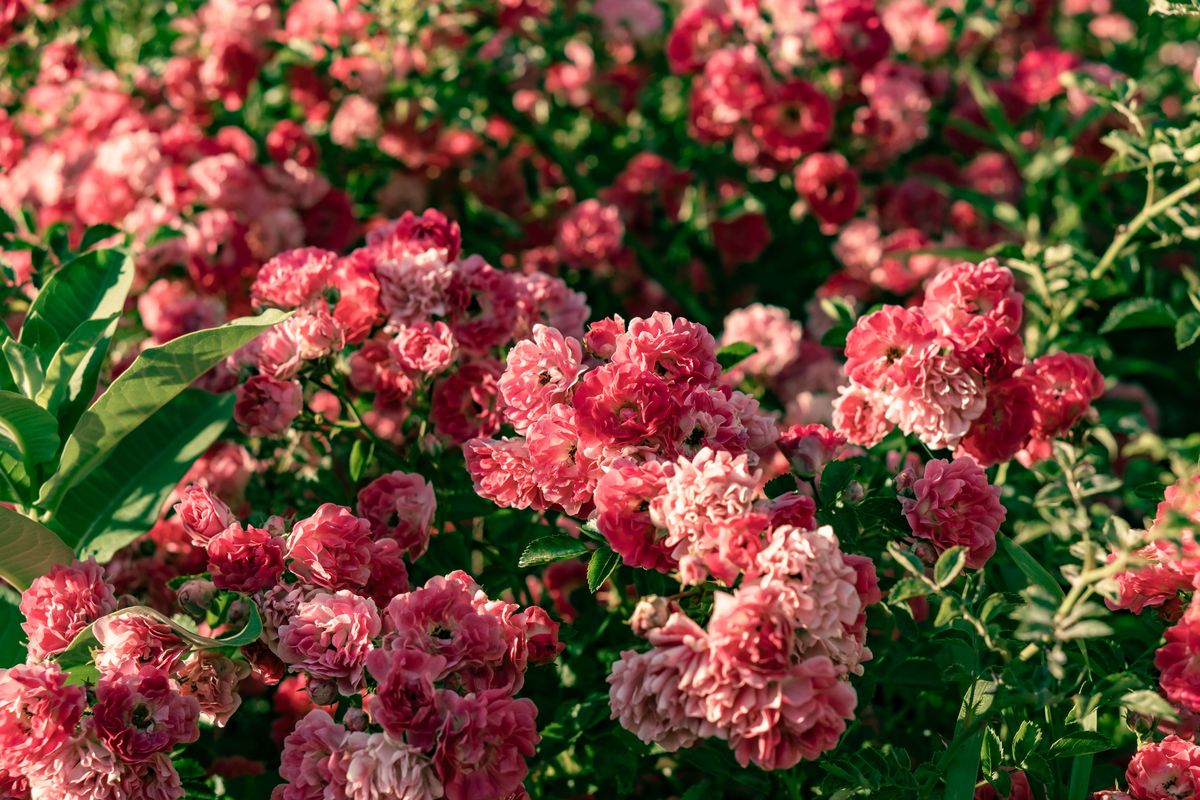
The Pot Case: Every 1 to 2 Days in Summer Heat
A Knock Out in a container is a different water world, and the in pots case folds into this section because it is where the family's toughness is most often misread. The pot holds a fraction of the bed's soil, the plant is bred to grow vigorously, and in summer heat a container Knock Out can need water every 1 to 2 days, daily in a heat wave or a dark pot in full sun. The check is the same, dry at 2 inches, but it comes up dry at pot speed. Water until it runs from the drainage holes, in the morning, and never let the pot stand in a saucer of runoff. A pot that needs water twice a day is reporting its size, not its schedule; move it up a pot size or give it afternoon shade rather than doubling the labor forever. Container plants also eat their soil's fertility by midsummer and want a feed the bed plants may not, but that is a fertilizer conversation; the water verdict is simply that the pot rhythm runs days ahead of the bed, always, and an owner watering both on the bed's calendar is slowly droughting the pot while soaking the bed.
The Dry Foliage Method: Morning, at the Base, Never Overhead
Knock Outs are bred for disease resistance, and the breeding is a margin, not a force field. Black spot and the other leaf diseases still take hold where foliage stays wet for hours, and the watering method decides how many hours that is. Water in the morning, so any splashed leaves dry in the day's first sun. Water at the base, with a soaker hose, a drip line, or a can run under the canopy, so the leaves are never wetted at all on an ordinary day. Space and prune for air, an open center and the family's natural arching form left mostly alone, so the canopy dries fast after rain. And water deeply and rarely rather than shallowly and often, because the shallow pattern is the one that keeps the surface and the lower leaves in the damp zone permanently. The method costs nothing and buys the resistance the plant was sold on; the resistant varieties that disappoint are usually the ones being overhead watered every evening by a sprinkler set for the lawn, which is a method verdict, not a variety verdict, and it is entirely within the owner's power to change.
Feeding and the Seasonal Edges
Water carries the rest of the Knock Out calendar. Feed in spring as growth starts and again after the first big flush, with a rose or general garden fertilizer at label strength, always watered in; a third light feed in early summer suits long season gardens, and feeding stops by late summer so no soft growth meets the first frosts unprepared. Spring is also when the year's one real pruning happens, cutting the plant back by about a third to a half in late winter or early spring in most climates, removing dead and crossing canes, after which the watering steps up briefly as the plant pushes its new frame. Deadheading is optional with this self cleaning family, though a quick pass after a flush tidies the plant and can hurry the next one. In the first fall, hold the establishment rhythm until the leaves drop; a new plant enters its first winter better hydrated at the roots than droughted, and one deep drink before the ground freezes is cheap insurance in a dry autumn. The plant's whole reputation, in the end, is a watering system: frequent and deep while young, an inch a week and dry leaves when grown, and almost nothing at all once it is established and the weather is kind. Keep the fork straight and the toughness is real.
Frequently Asked Questions
How often should I water Knock Out roses?
By establishment. New plants: deeply two to three times a week through the first season, checked at the root ball, with some grower guidance running every 2 days for the first 2 to 3 weeks in fast draining soil and heat. Established plants: about an inch of water a week, in one or two deep sessions in normal weather, two to three sessions in a heat wave. In pots: every 1 to 2 days in summer heat. The soil check at 2 inches arbitrates every one of these figures.
How much water do Knock Out roses need per week?
About an inch of water over the root zone per week once established, in dry weather. Delivered as one deep soak, that inch wets the soil 8 to 10 inches down and encourages the deep roots the plant's drought reputation is built on. Rain counts against the budget, and a heat wave can raise the draw to two or three sessions. New plants in their first season are not on this budget at all; they are on the establishment ladder of two to three deep drinks a week.
Why are my Knock Out rose leaves turning yellow?
Work the water first. Yellowing with wet soil and a plant that never dries out points to overwatering and root trouble; ease the interval and check drainage. Yellowing with dry soil in a heat wave is thirst. Yellowing lower leaves with dark spots is black spot, a foliage disease of wet leaves, answered by base watering in the morning and better air, not by more water. A new plant yellowing in its first month is usually a root ball drying faster than the surrounding bed, which is why the establishment check is read at the ball, not the bed.
Can Knock Out roses be overwatered?
Yes. The family is tough, not amphibious. Soil that stays wet suffocates the roots, and the plant shows it as yellowing, sparse growth, and decline that looks deceptively like drought, because failing roots cannot drink. The budget exists to prevent it: an inch a week for established plants, delivered deeply and then left alone until the top 2 inches dry. In heavy clay, plant on a slight mound and mulch the surface; in a pot, drainage and an emptied saucer are the whole defense.
Do Knock Out roses need water in winter?
In cold climates, no, once the ground is frozen and the plant is dormant; the watering calendar is closed. In a dry fall, one deep drink before the ground freezes is worthwhile insurance, especially for first year plants entering their first winter. In mild climates where the ground never freezes, an established plant on winter rainfall usually needs nothing, and a long dry winter spell is answered with a single deep soak on a mild day, not a return to the summer rhythm.
Photo credits: Qing Luo (Pexels); Ahnaf Piash (Pexels). Photos are served from this site; follow the credit to the library page for the original.