Ask how often to water a kokedama and the honest answer is that the question has no pot to attach to. There is no soil surface to check and no drainage hole to watch. The method is the soak: set the moss ball in a bowl of room temperature water, let it drink for 10 to 20 minutes depending on size, until the bubbles stop rising and the ball feels heavy in your hand, then lift it out, let it drain, and hang it back up. The interval between soaks is decided by the weight test, not the calendar. A freshly soaked ball is heavy; a ball ready for water has lost roughly half that weight and its moss feels dry and papery. Published guidance sprawls from every couple of days to weekly, and both ends are honest, because the ball is not the plant. This page gives you the soak by ball size, the weight gauge, the interval by the plant living inside the ball, and the explanation of that sprawl, so you can run any kokedama you own.
Home / Gardening Basics for Beginners
How Often to Water Kokedama: The Soak, the Weight Test, and No Pot at All
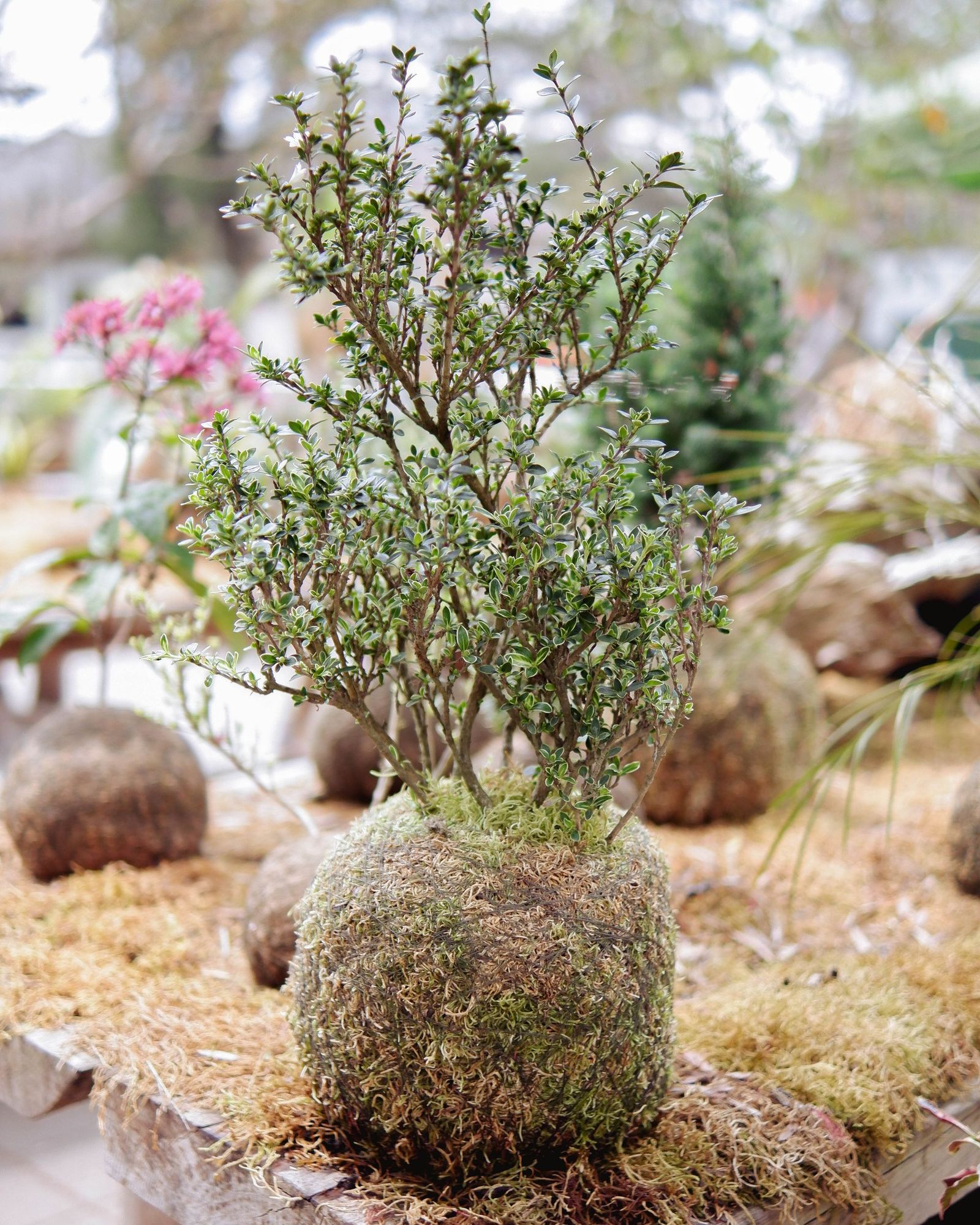
Photo: Raf Enriquez / Pexels
Watering Volume Calculator: The Kokedama Soak Audit
A kokedama has no pot to measure, so size the soak instead: enter the ball diameter as both length and width with a depth of 1 inch to estimate the water a full soak delivers, then let the weight test call the day.
19.9 gallons
For 32 square feet at 1 inch deep. That is about 76 liters, or 10 trips with a standard 2 gallon watering can.
A rain gauge or a straight sided can set in the bed tells you when a sprinkler or soaker hose has actually delivered this depth. Time alone is a guess, because hose pressure varies from house to house.
The conversion is arithmetic, not opinion: one inch over one square foot is 144 cubic inches of water, and a US gallon holds 231 cubic inches, so each square foot at one inch takes 0.62 gallons.
The Soak, Sized to the Ball
Size the soak to the ball, because a moss ball drinks from the outside in. A small ball, 3 to 4 inches across, saturates in about 10 minutes. A medium ball of 5 inches wants about 15. A large ball, 6 inches or more, needs 15 to 20 minutes, and a gentle squeeze under the water at the start helps push trapped air out so the core actually wets. The end signal is physical: bubbles stop rising, and the ball feels dense and heavy when you lift it. Let it drain in the sink for a few minutes before rehanging, because a ball hung dripping soaks the wall and floor, not the plant. Use room temperature water; cold water shocks tropical roots, and the plants inside most kokedama are tropical. The calculator above estimates the water a full soak delivers for your ball's diameter, which is worth seeing once: a 5 inch ball takes up a surprising amount, and that reservoir is what the interval below spends.
The Weight Test Is the Instrument
Every other plant on this site is watered by a soil check. The kokedama is watered by a scale you carry in your hand. Right after a soak and drain, lift the ball and register the weight honestly; that is full. Check the ball every day or two with the same lift. At roughly half that weight, with the moss surface dry and papery and the ball feeling light and slightly hollow, it is time. Growers who weigh the ball on a kitchen scale for the first few cycles learn their plant's rhythm in numbers and never guess again: a fern ball might lose its half weight in 5 days in a bright room, the same ball in a cool dim hallway in 10. Misting, it must be said plainly, is not watering. A misted ball has wet moss over a dry core, and plants die of thirst inside green, damp looking balls. Mist for humidity if your plant likes it, but the soak is the drink, and only the soak counts.
The Interval Belongs to the Plant Inside
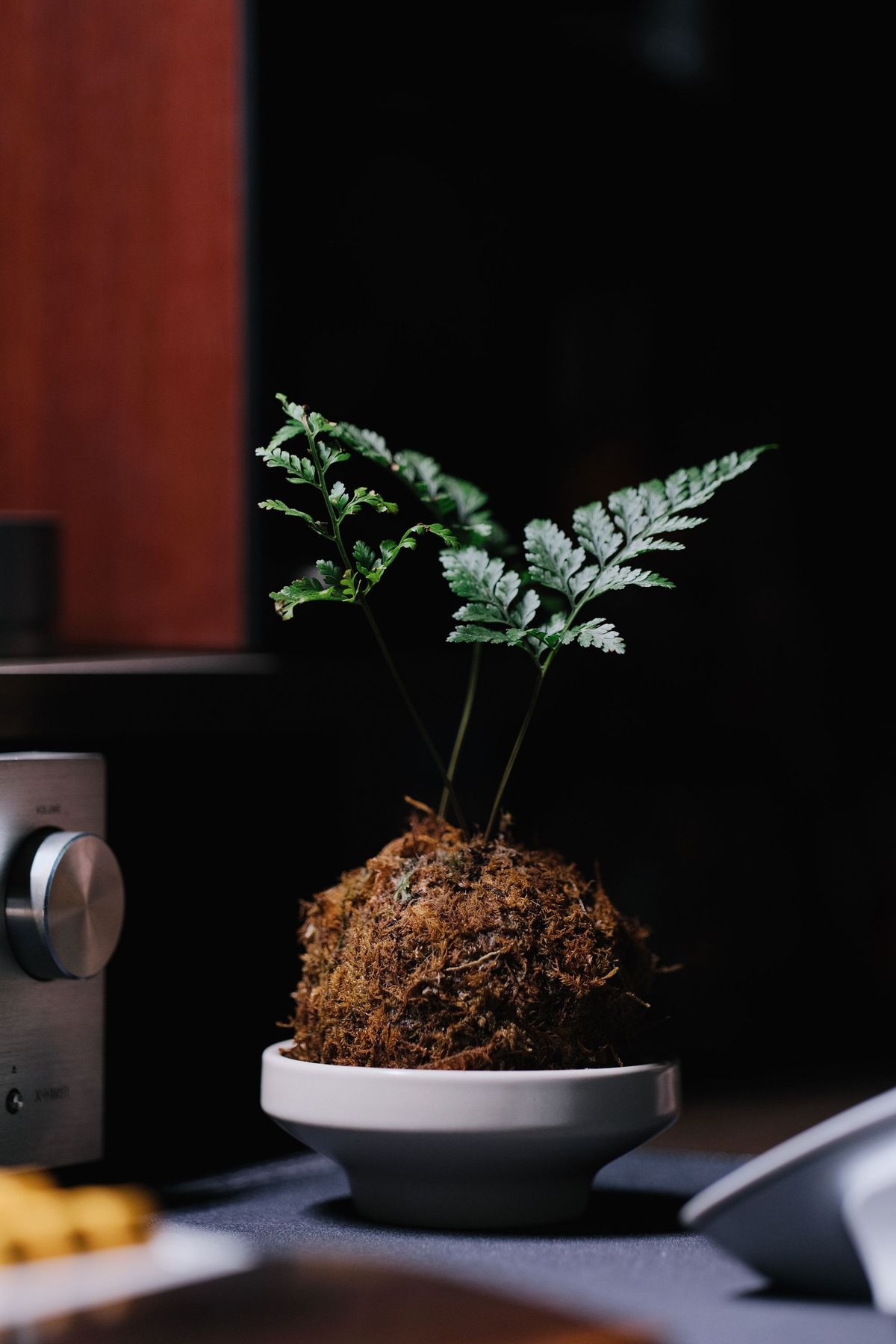
The ball is packaging; the thirst belongs to the plant, and the published sprawl resolves once you sort by species. Ferns and calathea, the thirstiest common kokedama plants, typically want a soak every 5 to 7 days and complain visibly, by crisping, when stretched. Pothos and philodendron, the forgiving middle, run every 10 to 14 days. Succulents and other dry loving plants in balls run every 2 to 3 weeks and are the ones killed by the weekly habit. Now the sprawl: Missouri Botanical Garden guidance in the results suggests watering as often as every couple of days, while Kew and Brooklyn Botanic Garden pattern sits nearer weekly. These are not contradictions. They are different plants, in different rooms, described by institutions writing for their own glasshouse conditions. A small fern ball in warm moving air can honestly need water every 3 days. A pothos ball in a cool apartment honestly goes 2 weeks. Your weight test arbitrates, which is why this page teaches the test before any number.
Air, Light, and Height: Why Two Identical Balls Differ
Two kokedama made on the same day, from the same plant, can run intervals days apart, and the difference is placement. A hanging ball lives in the warmest, driest air in the room, because heat rises and a ball at ceiling height sits in it all day; the same ball on a shaded shelf at waist height keeps its moisture noticeably longer. Moving air is the second lever: a ball near a heating vent, a fan, or an open window dries from the outside in at double the rate of one in still air, and the moss surface crisps while the core is still damp, which is the one case where the surface lies in the dry direction and the weight test saves you from an unnecessary soak. Light is the third: a plant in bright light photosynthesizes and drinks; the same plant in a dim corner sips. None of this is a problem once you know the weight test, because the test reads the ball itself rather than the room's reputation. It is, however, the reason a kokedama moved to a new spot deserves a week of daily lifts before you trust your old interval. The ball did not change. Its weather did, and the interval is just the weather, expressed in days.
Feeding, and the Ball's Own Lifespan
A kokedama has almost no soil reserve, so feeding happens in the soak water: a quarter to half strength balanced liquid fertilizer in the bowl, once a month or so during the growing season, and plain water the rest of the time. Skip feeding in winter, and never soak a ball in full strength solution, because the ball holds whatever you give it against the roots. The ball itself is consumable. Moss breaks down, string loosens, and roots eventually circle the outside; expect to rewrap or pot the plant up within a few years, sooner for a fast growing fern. Signs the ball is done: it will not hold its shape, it dries within a day of soaking because the core is all root and no reservoir, or roots mat the surface. At that point the plant graduates to a pot or a fresh, larger ball, and the watering system it learned, soak by weight, transfers to neither, which is fine. It was the right instrument for the vessel it had. Run the soak by size, judge by weight, sort the interval by the plant, and a kokedama stops being a mystery object and becomes the simplest watering job in the house.
Frequently Asked Questions
How often should I water my kokedama?
By weight, not by calendar. Soak the ball when it has lost about half its freshly soaked weight and the moss feels dry and papery. In practice that runs every 5 to 7 days for ferns and calathea, every 10 to 14 days for pothos and philodendron, and every 2 to 3 weeks for succulents. Room heat, light, and moving air shift every one of those numbers, which is why the weight test, lifting the ball and feeling for the lightening, is the instrument to trust.
How long should I soak a kokedama?
About 10 minutes for a small ball of 3 to 4 inches, around 15 minutes for a 5 inch ball, and 15 to 20 minutes for a ball 6 inches or larger, in room temperature water. The ball is done when bubbles stop rising and it feels heavy and dense in your hand. A gentle squeeze under water at the start expels trapped air so the core wets through. Let it drain for a few minutes before hanging it back up.
Is misting enough to water a kokedama?
No. Misting wets the moss surface while the core of the ball stays dry, and plants die of thirst inside green, damp looking balls. Mist if your plant enjoys humid air, but never count it as a drink. The soak is the only watering a kokedama recognizes, because the ball takes up water by immersion and stores it in the soil core. If the ball feels light, it needs the bowl, however green and misted the moss looks.
Why do sources disagree about kokedama watering frequency?
Because they are describing different plants in different rooms. Guidance in the results runs from every couple of days, in Missouri Botanical Garden material, to roughly weekly in Kew and Brooklyn Botanic Garden patterns. A small fern ball in warm moving air can need water every 3 days; a pothos ball in a cool apartment can go 2 weeks. The ball size, the species inside, and the room set the interval, and the weight test settles it for your specific plant.
How do I feed a kokedama?
In the soak water. Add a balanced liquid fertilizer at quarter to half strength to the soaking bowl about once a month during the growing season, and use plain water for the other soaks. The ball has almost no soil reserve, so it needs the feed, but it also holds solution directly against the roots, so full strength fertilizer burns. Skip feeding entirely in winter when the plant is resting, and resume with the spring growth.
Photo credits: Raf Enriquez (Pexels); Pew Nguyen (Pexels). Photos are served from this site; follow the credit to the library page for the original.