Most kumquat watering advice is lemon advice with the name swapped, and the swap hides the three ways this tree actually differs. A kumquat usually grows in a smaller pot than a lemon, so it dries faster. It is the hardiest of the common potted citrus, so it winters cooler and drinks less in the cold months. And its fruit is eaten whole, skin and all, off the tree, which makes the flowering and fruit set window the whole crop: a dry swing then does not just stress the plant, it drops the harvest you were going to eat standing in the garden. The shared citrus pattern still holds at the base: check the top 1 to 2 inches of mix, with Epic Gardening's deeper finger check of 3 to 4 inches for larger pots, then soak thoroughly and let the pot drain. What this page adds is the kumquat calibration: the interval by pot size, placement, and season, the consistency window, the cooler winter rest, and leaf curl read as the water report it is.
Home / Gardening Basics for Beginners
How Often to Water a Kumquat Tree: The Small Pot Citrus System
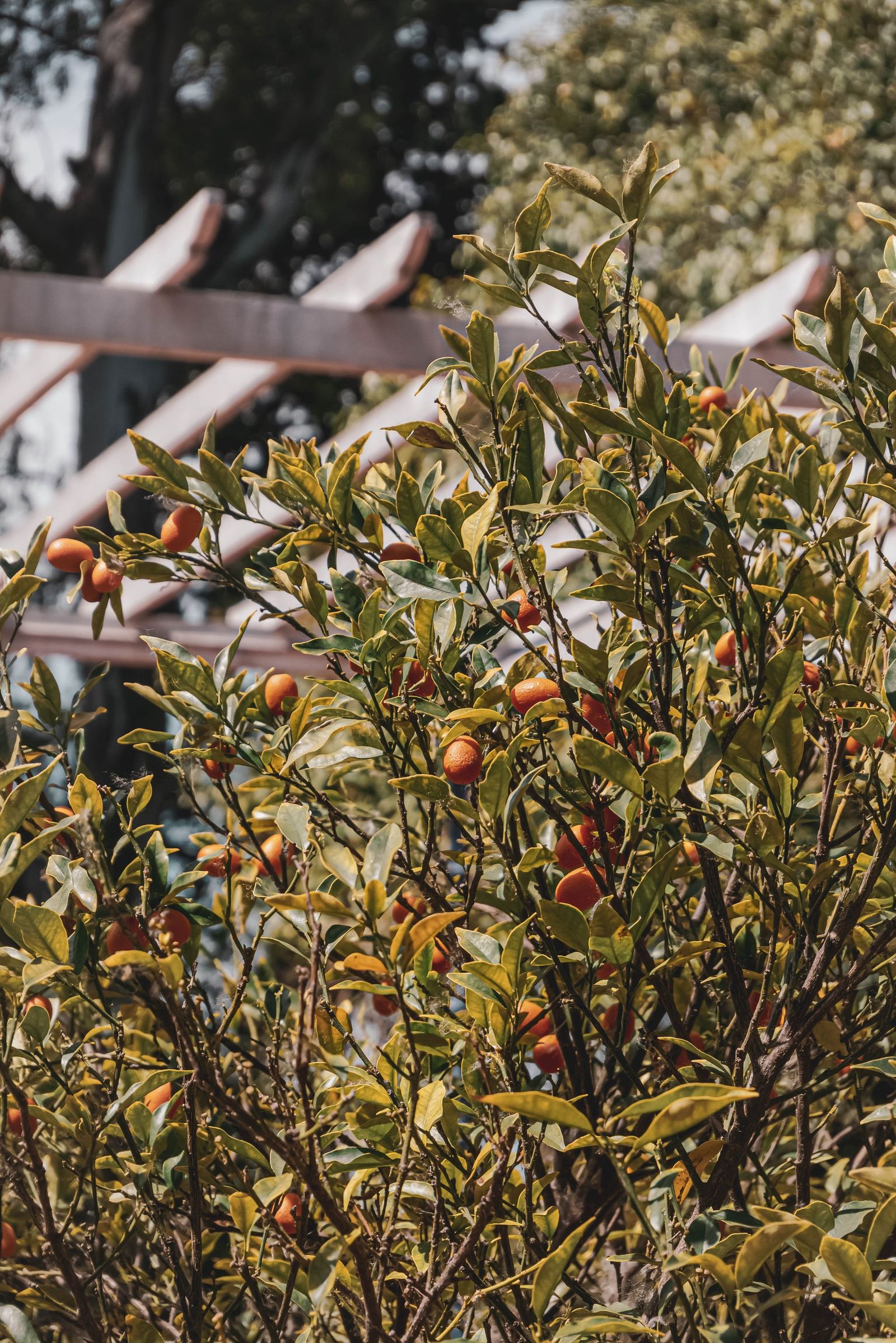
Photo: Kristina Gain / Pexels
Watering Volume Calculator: The Kumquat Tree Pot Audit
A potted kumquat dries faster than the lemon tree it is usually copied from, and even moisture at flowering holds the crop. Enter your pot diameter as both length and width with a depth of 1 inch to size one soak.
19.9 gallons
For 32 square feet at 1 inch deep. That is about 76 liters, or 10 trips with a standard 2 gallon watering can.
A rain gauge or a straight sided can set in the bed tells you when a sprinkler or soaker hose has actually delivered this depth. Time alone is a guess, because hose pressure varies from house to house.
The conversion is arithmetic, not opinion: one inch over one square foot is 144 cubic inches of water, and a US gallon holds 231 cubic inches, so each square foot at one inch takes 0.62 gallons.
The Interval Ladder for a Small Pot
In warm weather, a potted kumquat in active growth typically reaches the dry check every 3 to 5 days indoors or in shelter, and every 2 to 3 days outdoors in full sun and wind, where a small pot is a small reservoir in a big sky. In cool weather the same pot stretches to weekly or less. A young tree in its first year in the pot is the exception that drinks more: guides in the results run young trees at 2 to 3 waterings a week through the first season while the root system fills its container, and that is establishment watering, not the adult rhythm. The calculator above sizes one soak for your pot; notice how little a 10 or 12 inch pot holds compared to the lemon tree pots in this site's lemon article, and you have the whole reason the kumquat interval runs shorter. Two habits protect the small pot: mulch the surface with an inch of bark or straw to slow the top drying, and never let the pot sit in a filled saucer, because a kumquat wants its moisture arriving in drinks, not stored under its feet.
The Flowering and Fruit Set Window
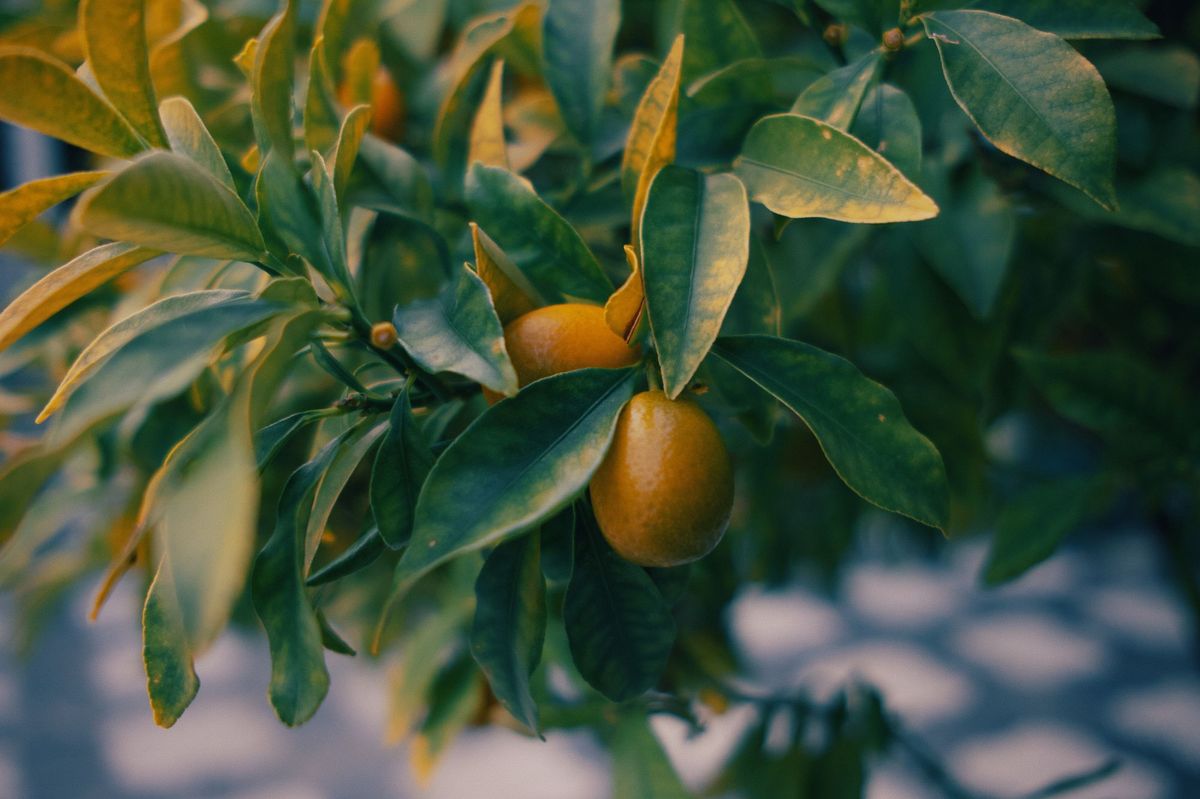
Kumquats flower in summer, later than most citrus, and the weeks from bloom through fruit set are where watering decides the crop. The rule for the window is even moisture: no dry swings, no flooding, the mix kept in the middle band the whole time. A tree that dries hard at bloom sheds flowers; a tree that dries as the tiny fruit set sheds fruit, and both losses look mysterious to an owner whose average watering was fine. Averages do not set fruit; consistency does. Once the fruit is sized up and coloring, the tree tolerates the normal check and soak rhythm again, and slight easing late in ripening does it no harm. Leaf curl is your daily report through all of this. Leaves that curl lengthwise, rolling inward along the midrib on a hot afternoon and relaxing by morning, are managing heat and are normal. Leaves that stay curled with the mix dry at the check are thirsty. Leaves that curl and yellow with the mix wet are reporting roots in trouble, and the answer is drainage and patience, not water.
The Cooler Winter Rest
The kumquat's hardiness is a care advantage owners underuse. Where a lemon wants winter protection at temperatures a kumquat shrugs off, a potted kumquat can winter in a cool bright space, an unheated sunroom or a bright garage window, and it is better for the rest. In that cool rest the tree barely grows and barely drinks: check weekly, water only when the mix is dry well past the usual depth, and expect intervals of 2 weeks or more. The failure mode is the opposite setup, a kumquat kept in a warm dry living room all winter and watered on the summer rhythm, which produces soft growth, dropping leaves, and a tree too exhausted to flower well in summer. Cool and bright and a little dry beats warm and wet at every point in this plant's winter. Bring the pot back out in spring as nights moderate, resume the check and soak rhythm as new growth shows, and give it one deep soak and a half strength feed to open the season.
Fruit Drop, Leaf Drop, and the Honest Diagnosis
Kumquats talk in drops, and each drop has a short list of causes worth running in order. Fruit drop in the weeks after set: a dry swing during the window, most likely, then a tree carrying more fruit than its roots can fund, which thins itself and is not a watering failure at all. Fruit drop near ripeness with split skins: a hard drink after a dry spell, the classic citrus split, prevented by the even rhythm rather than any rescue. Leaf drop in winter: warm dry indoor air or a cold root zone in a pot left against freezing glass, both placement, not schedule. Leaf drop in summer with wet mix: root trouble, and the tree comes out of the pot for a look before any more water is poured. Notice what is not on any of these lists: a need for a new fixed schedule. Every kumquat symptom resolves to the check, the window, or the placement, and the grower who runs those three in order will diagnose this tree correctly for years. That, plus a pot one size kinder than you first chose, is the complete kumquat watering system.
The Root Bound Year: When the Pot Changes the Answer
There comes a season, usually the third or fourth in the same pot, when the interval ladder on this page stops working and the tree dries out a day after every watering no matter how faithfully you climb it. That is not a watering problem; it is a volume problem wearing one. A root bound kumquat has replaced most of its mix with roots, so the pot's water reservoir has shrunk to the films of moisture between them, and a drink that once lasted five days now lasts two. Diagnose it with the runoff test: water slowly and watch the drainage hole. If water appears within seconds and the pot feels light again by the next afternoon, the mix is no longer holding a reserve, and no interval adjustment fixes a reservoir that is not there. The fix is a repot one size up, 2 inches wider, in early spring before the flush, teasing the circling roots loose and refreshing the mix, after which the ladder works again at its printed intervals. Until the repot, bridge honestly: water at the short end of the ladder, stand the pot out of afternoon wind, and mulch the surface. Growers who keep shortening the interval instead of repotting end up watering daily and blaming the tree, when the tree has been reporting a housing shortage all along.
Frequently Asked Questions
How often should I water a potted kumquat tree?
Check the top 1 to 2 inches of mix, or 3 to 4 inches deep in a larger pot, and soak when dry. In warm weather that is typically every 3 to 5 days in shelter and every 2 to 3 days for a pot outdoors in full sun. In cool weather it stretches to weekly or less, and a young tree in its first year may need 2 to 3 waterings a week while its roots fill the pot. The check decides; the numbers describe what the check usually finds.
Why is my kumquat dropping fruit?
The common cause is a dry swing during flowering and fruit set, the window when even moisture decides the crop. A tree that dries hard at bloom sheds flowers, and one that dries as fruit sets sheds fruit, even if its average watering looks fine. Some drop is also self thinning, a tree shedding fruit its roots cannot fund, which needs no fix. Near ripeness, split and dropped fruit usually follows a heavy drink after a dry spell. Keep the middle band of moisture through the window and most drop stops.
Why are my kumquat leaves curling?
Read the curl with the mix check. Leaves that roll lengthwise on a hot afternoon and relax by morning are managing heat, which is normal. Leaves that stay curled while the mix is dry at depth are thirsty and want a thorough soak. Leaves that curl, yellow, and drop while the mix is wet are reporting root trouble, and more water is the worst response; check drainage and let the pot dry toward the check point before watering again.
How much water does a kumquat need in winter?
Very little, and cooler than most citrus advice assumes. The kumquat is the hardiest of the common potted citrus and rests best in a cool bright space, where it barely drinks: check weekly and water only when the mix is dry well beyond the usual depth, often every 2 weeks or more. A warm room with summer rhythm watering produces soft growth and leaf drop. Cool, bright, and slightly dry is the winter system, and it sets up a stronger flowering in summer.
How is kumquat watering different from lemon tree watering?
Three ways. The kumquat usually grows in a smaller pot, so it reaches the dry check faster, every 2 to 3 days in outdoor summer sun against the lemon's longer rhythm. It is hardier, so it winters cooler and drinks far less in the cold months. And its fruit is eaten whole off the tree, which makes even moisture through flowering and fruit set the whole crop rather than a nicety. This site's lemon tree article owns the lemon case in full; the shared base rule, check then soak, is where the resemblance ends.
Photo credits: Kristina Gain (Pexels); Kaiya Inouye (Pexels). Photos are served from this site; follow the credit to the library page for the original.