How Often to Water Lavender: Three Plants in One Question
By the Windchime Walker editorial team
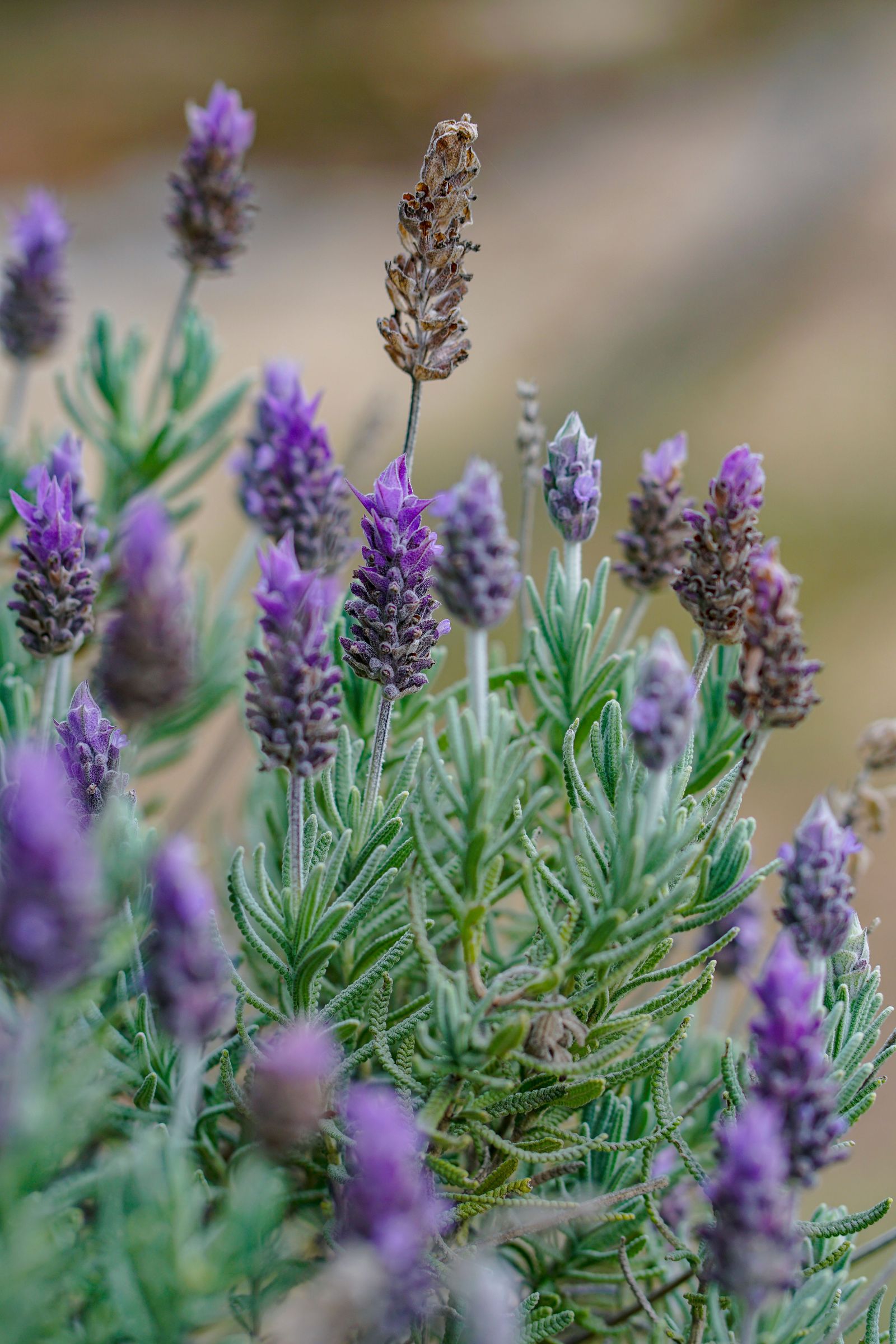
Photo: Sergio Arteaga / Pexels
Lavender is a Mediterranean hillside plant, and its watering question has three different correct answers, because the word lavender covers a new transplant, an established shrub, and a pot on a hot patio, and those are three different plants at the watering can. Utah State University Extension states the foundation plainly: full sun, dry sandy well drained soil, and established plants that rarely need supplemental water except in extended drought. The numbers behind that are an establishment schedule of about 1 gallon per plant per week after transplanting until the plant is established, then about half a gallon every 2 weeks for a mature plant, and often nothing at all in a climate with regular rain. Illinois guidance runs on the check rather than the calendar: water only when the soil has dried out, with established intervals of 2 weeks or more. The pot case is the exception that burns people, because a lavender in a container in July heat can need water every 5 to 10 days, and the grower who read that lavender hates water lets it cook.
Our houseplant and herb watering pages own their plants one at a time. This page owns lavender in all three of its forms, bed and pot alike; the in-pots variant of this question folds into this article.
Interactive tool
Watering Volume Calculator: The Lavender Pot Audit
Potted lavender dries far faster than a bed plant and dies of kindness more often than thirst. Enter your pot diameter as both length and width with a depth of 1 inch to size one drink for the pot case.
19.9 gallons
For 32 square feet at 1 inch deep. That is about 76 liters, or 10 trips with a standard 2 gallon watering can.
A rain gauge or a straight sided can set in the bed tells you when a sprinkler or soaker hose has actually delivered this depth. Time alone is a guess, because hose pressure varies from house to house.
The conversion is arithmetic, not opinion: one inch over one square foot is 144 cubic inches of water, and a US gallon holds 231 cubic inches, so each square foot at one inch takes 0.62 gallons.
The Check: Read at 3 Inches, Where the Roots Drink
Lavender's feeder roots sit a few inches down, and the surface of a sunny lavender bed dries to dust within a day of any watering, so a surface check will have you watering a plant that is perfectly supplied. Check at about 3 inches deep, with a finger or a skewer, at the edge of the plant's canopy. For an established plant, water only when the soil at that depth is dry and the plant is heading into a dry forecast; a single dry reading before a rainy week is not a watering signal. For new transplants, check more often and keep the root ball supplied through the first season, because a plant whose roots have not yet left the potting mix lives and dies by that small volume. In pots, the same 3 inch check applies, and the pot's weight after a soak becomes your reference: a lavender pot that still feels heavy does not get watered, whatever the surface looks like.
Year One: The Establishment Schedule
A new lavender plant is the only lavender that needs regular water. Water it in at planting with a deep soak, then hold the Utah State pattern of about a gallon per plant per week through the first growing season, split into one or two drinks depending on heat, always checking that the root zone is drying between them. RHS guidance for newly planted lavender lands in the same place from the other direction: water once or twice a week through the first season. The goal of the schedule is roots: a plant watered deeply and then left to dry at the surface sends roots downward, and by the second season those roots reach moisture you never supplied. Shallow daily sprinkles build the opposite plant, all its roots in the top inch, dependent on you forever and still somehow at risk of rot. Taper at the end of the first season, and by the second spring the plant graduates to the established regime.
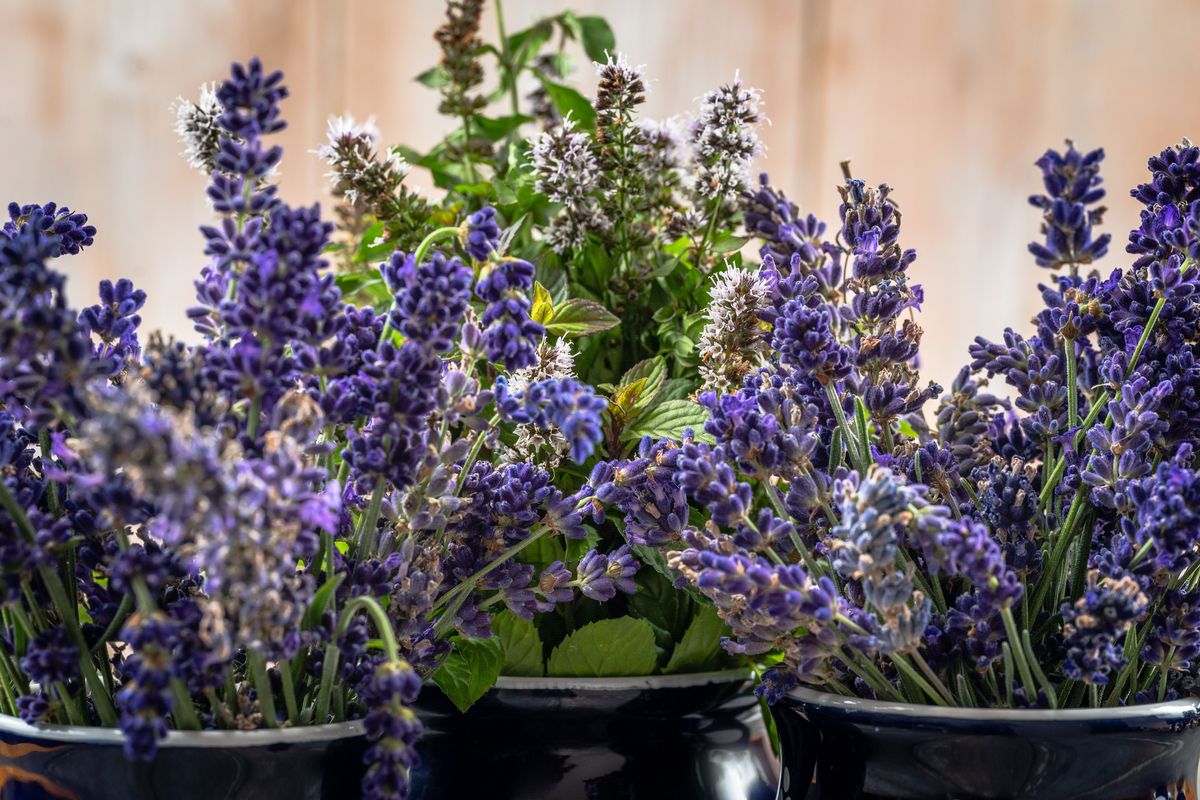
Lavender and mint blooming in pots
Established Plants: The Drought Rhythm
An established lavender in the ground is a drought plant with a watering emergency plan, not a watering schedule. In most temperate gardens it needs no supplemental water at all in a normal year. The trigger for intervention is an extended drought, weeks without rain in summer heat, and the intervention is the Utah State mature rate: about half a gallon per plant every 2 weeks, delivered slowly at the base so it sinks to the root zone instead of running off baked soil. Watch the plant as well as the calendar: lavender under genuine drought stress curls its foliage tighter and dulls in color, and it recovers within a day of a deep drink. What established lavender cannot survive is the opposite error. Wet soil, especially wet winter soil and heavy clay that holds water around the crown, rots the roots and the woody base, and it is the leading cause of death in garden lavender, ahead of cold. If your soil is heavy, the fix is drainage at planting, a raised bed, a slope, or a gravel mulch, not a more careful watering hand, because rain will do the damage without your help.
Lavender in Pots: The Exception That Cooks
Everything above reverses in a container, and this is where most lavender watering advice fails its readers. A pot holds a few gallons of mix in full sun, the mix is deliberately fast draining, and the plant's roots fill all of it by midsummer. In summer heat, a potted lavender can pass the 3 inch dry check every 5 to 10 days, and a small pot on a south facing wall can dry faster than that. Run pots on the check and the weight, water deeply when both say dry, and let the pot drain completely; a saucer of standing water under a lavender pot is the one arrangement that combines both failure modes, drought at the top of the root ball and rot at the bottom. Terracotta suits this plant: it breathes, it dries evenly, and its weight makes the check honest. In winter, potted lavender in cold climates needs the opposite protection, shelter from wet more than from cold, moved under an eave or into a cold frame so winter rain cannot keep the mix saturated for months.
The Overwatering Autopsy
Because it decides so many cases, the overwatered lavender deserves a direct description. The plant yellows from the base upward, the stems go soft and dark at the crown, the foliage wilts even though the soil is wet, and a plant pulled up shows black, stringy roots instead of firm white ones. By the time the top wilts from rot, the roots are largely gone, and watering more, the instinctive rescue, finishes it. The salvage, when any firm root and healthy wood remain, is to lift the plant, cut away rotten roots and stems back to healthy tissue, and replant into sharply drained dry mix or a gravelly bed, then withhold water while it re-roots. Most cases are not salvageable, which is why this page has spent more words on drainage and restraint than on any schedule. Lavender forgives drought in a week. It does not forgive a wet winter.
Pruning, Feeding, and the Rest of the Water Story
Watering interacts with the two other jobs lavender asks for. Prune after the main flush of bloom, cutting the flower stems and about an inch of the current year's growth, and never cut back into bare old wood, which does not regrow reliably; a plant pruned on time stays compact and sheds rain, while a woody, splayed plant holds water in its center and rots there. Feed almost not at all: lavender blooms best on lean soil, and fertilizer pushes soft leafy growth that drinks more, flops more, and flowers less. A gravel or stone mulch around bed plants serves the whole system at once, reflecting heat the plant loves, keeping the crown dry, and discouraging the splash of wet soil onto the foliage. Sun, drainage, the establishment gallon, the drought rhythm, and a dry crown: that is the entire water doctrine of this plant.
Frequently Asked Questions
How often should I water lavender in pots in summer?
On the check, not the calendar: in summer heat a potted lavender commonly needs a deep drink every 5 to 10 days, and small pots in full sun on heat reflecting surfaces can dry faster. Check at about 3 inches deep and lift the pot; water when the mix is dry at that depth and the pot feels light, then soak it fully and let it drain completely. Never leave the pot standing in a saucer of water, and never water a pot that still feels heavy because its surface looks dry.
Why is my lavender wilting when the soil is wet?
That combination is the signature of root rot, not thirst. Lavender roots in saturated soil suffocate and die, and a plant with dead roots wilts in wet ground because it can no longer drink. Tip the plant out and look: firm white roots are healthy, black stringy roots are rotted. Cut back to healthy tissue, replant into sharply drained mix, and withhold water while it recovers. If the crown itself is soft and dark, the plant is usually lost, and the lesson is drainage: lavender dies of wet feet far more often than of drought.
Does lavender need water in winter?
An established plant in the ground needs none in most climates; winter rain is more than enough, and wet winter soil is this plant's main killer. Potted lavender needs protection from saturation rather than water: shelter it under an eave or in a cold frame so the mix can dry between rains, and water only if the mix goes fully dry for weeks in a sheltered spot, which is rare. A lavender that survives winter dry will outgrow one that sat wet, even in a colder garden.
How much water does a new lavender plant need?
About a gallon per plant per week through its first growing season, on the Utah State University Extension establishment pattern, delivered as one or two deep drinks with drying time between them. RHS guidance for newly planted lavender agrees in shape, once or twice weekly for the first season. The point is root depth: deep, spaced drinks send roots down, and by the second season the plant moves to the established regime of supplemental water only in extended drought, at roughly half a gallon every 2 weeks.
Can lavender recover from underwatering?
Usually, yes, and quickly. A drought stressed lavender curls its foliage and dulls in color, and a deep slow drink at the base restores it within a day or two, because the plant is built for exactly this cycle. The exception is a new transplant or a pot plant left dry so long that the root ball shrinks and sheds water; in that case, soak the pot in a basin until the mix rehydrates, or water a bed plant slowly in several passes so the water sinks in instead of running off.
Photo credits: Sergio Arteaga (Pexels); Jana Ohajdova (Pexels). Photos are served from this site; follow the credit to the library page for the original.