How Often to Water a Lemon Tree: The Potted Tree System
By the Windchime Walker editorial team
Photo: Anastasiya Vragova / Pexels
The lemon tree question is really a container question. Almost everyone asking it is growing the tree in a pot, on a balcony, a patio, or a sunny floor indoors, and a potted citrus lives by rules its in ground cousins never meet. The benchmark from the ground is still worth knowing: UC IPM puts an established outdoor citrus tree at about 4 to 6 inches of water per month in hot summer weather, irrigated every 7 to 10 days. A pot cannot bank a month of water, so the container version of the same doctrine is a check: water when the upper 2 to 3 inches of mix are dry, then soak the whole root ball until water runs from the drainage holes. Translated to calendars, the interval sprawls honestly: every 2 to 3 days for a small pot on a hot balcony in midsummer, every 4 to 7 days for a mid sized pot in a bright room, and every 1 to 2 weeks for a large pot indoors in winter. The sprawl is not confusion; it is pot volume, heat, and light doing arithmetic. This page exists to give you the arithmetic instead of a single number that fits nobody.
Our fruit and houseplant watering pages own their plants one at a time. This page owns the potted lemon tree; the in-pot variant of this question is this article.
Interactive tool
Watering Volume Calculator: The Lemon Tree Pot Audit
A potted lemon tree wants a deep, even soak, above all while it flowers and sets fruit. Enter your pot diameter as both length and width with a depth of 1 inch to size that soak.
19.9 gallons
For 32 square feet at 1 inch deep. That is about 76 liters, or 10 trips with a standard 2 gallon watering can.
A rain gauge or a straight sided can set in the bed tells you when a sprinkler or soaker hose has actually delivered this depth. Time alone is a guess, because hose pressure varies from house to house.
The conversion is arithmetic, not opinion: one inch over one square foot is 144 cubic inches of water, and a US gallon holds 231 cubic inches, so each square foot at one inch takes 0.62 gallons.
The Check and the Soak
Citrus roots occupy the whole pot, and the tree tells you its state at the top of the root ball. Push a finger or a skewer 2 to 3 inches into the mix: dry at that depth means water today; cool and damp means wait. Pair it with the weight check, because a lemon tree pot at drinking weight is dramatically heavier than the same pot dry, and your arms learn the difference in two cycles. When you water, soak: pour slowly over the whole surface in two or three passes until a steady stream leaves the drainage holes, then empty the saucer after half an hour. The calculator above sizes the drink: enter the pot diameter as both length and width with a depth of 1 inch for a working volume, and expect a mature tree in a 14 inch pot to take several quarts. Shallow sips are the enemy twice over: they wet only the top roots, and they let fertilizer salts accumulate in the dry lower root zone, which burns root tips and shows up as scorched leaf edges that get blamed on everything else.
The Interval by Pot, Place, and Season
Use this table as the starting rhythm, then let the check correct it. A 6 to 8 inch pot on a hot, windy balcony in summer: every 2 to 3 days. A 10 to 12 inch pot on a sunny patio: every 3 to 5 days in summer, weekly in spring and fall. A 14 inch or larger pot indoors by a bright window: every 5 to 7 days in summer, stretching to every 10 to 14 days in winter when growth stops and the tree rests. Two forces move any of these numbers. Heat and wind multiply evaporation from the mix surface and the canopy, and a tree carrying fruit transpires more than the same tree in leaf alone. The check absorbs all of it, which is why the table is a starting rhythm and the 2 to 3 inch check is the law. What does not change with any of these variables is the shape of the drink: full soak, full drain, every time.
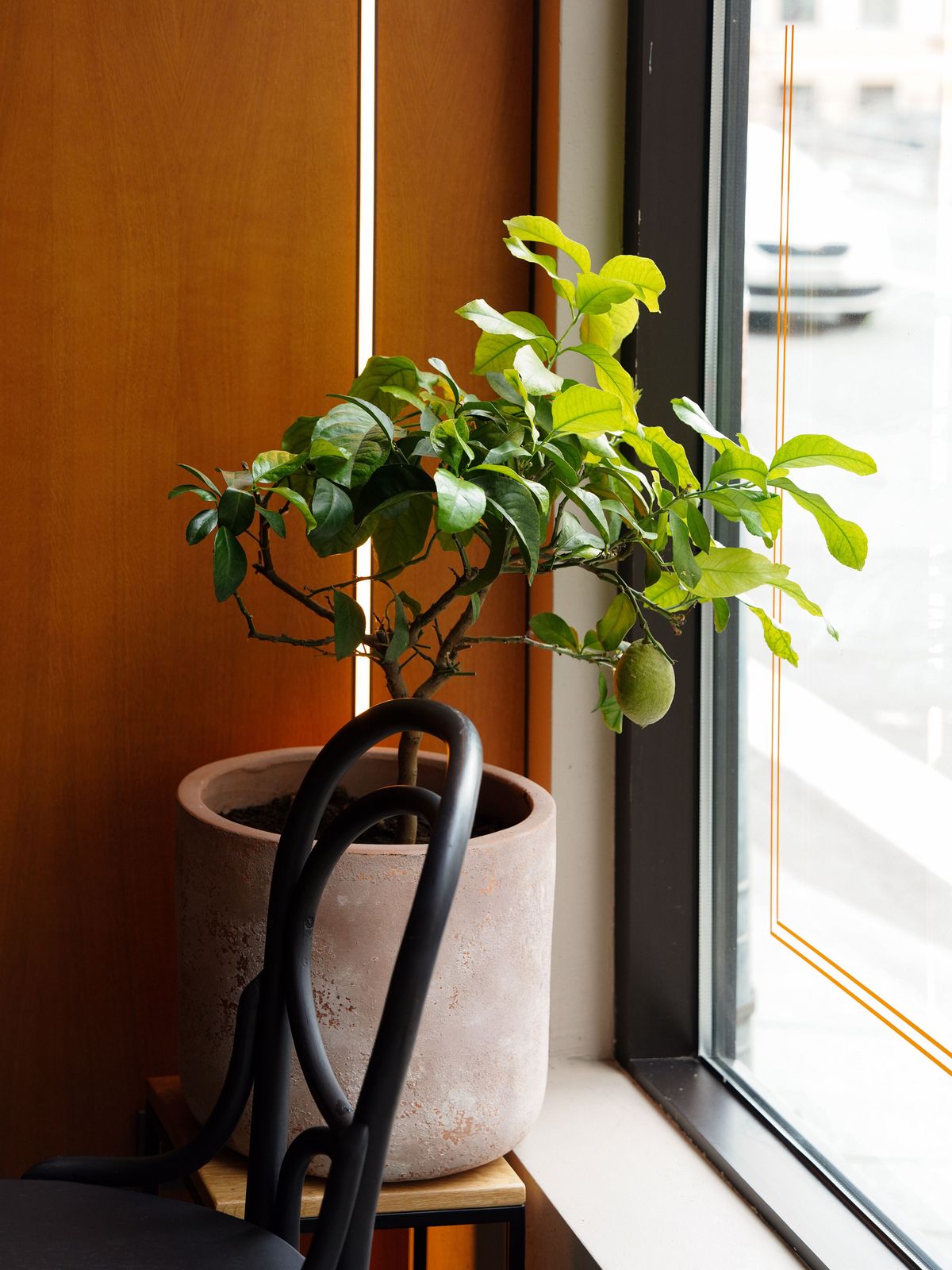
A potted lemon plant on a windowsill
Flowering and Fruit Set: The Window Where Consistency Pays
If this page has one section worth memorizing, it is this one. A lemon tree in flower and in the weeks just after, while fruitlets are pea sized, is exquisitely sensitive to water stress, and its response to a missed watering is to drop fruit. Growers water faithfully for months, let the pot dry hard once during a hot week in bloom, and then search for a disease to explain the fruitlets on the floor. There is no disease; the tree triaged its crop to match its water supply, which is what citrus evolved to do. Through flowering and fruit set, tighten the rhythm: check every 2 days in warm weather, water at the first sign of dryness at 2 inches rather than waiting for 3, and never let the pot reach the light, fully dry state. Once the fruit is an inch across and holding, the tree's grip strengthens and you can return to the normal check. Some fruit drop in June is natural thinning and no watering regime prevents it, but stress drop on top of it is the part you control.
The Winter Indoor Stretch
A lemon tree wintered indoors lives in the strangest conditions of its year: low light, still air, and central heating that dries the room while the plant barely grows. Growth nearly stops, so water use collapses, and the interval stretches to the long end of the table, often 10 to 14 days. The traps are paired. Overwatering a resting tree in a cool room rots roots quietly, and the damage announces itself in spring as leaf drop and dead twigs. Underwatering in heated air shows as leaf curl and drop of a different kind, dry and crisp rather than yellow. The check separates them, as always: at 2 to 3 inches, dry means drink, damp means hands off. Keep the tree in the brightest window you have, away from direct radiator blast, and resist feeding until growth resumes in spring; fertilizer into a resting tree in winter is salt into a slow drinking root zone.
Leaf Reports: Reading the Tree
The lemon tree files its water reports on its leaves, and they are legible. Leaves that curl inward along their length, like a taco, during a hot afternoon and relax by morning are managing heat normally. Leaves that stay curled, dull, and dry at the edges are thirsty, and the pot will confirm it at the check. Yellowing leaves with green veins on a tree in a pot that stays wet point away from water toward nutrition and root health; yellowing that drops whole leaves after a move indoors is the light change, and it settles. Fruit that splits on the tree is a water rhythm report: a dry spell followed by a heavy soak swells the fruit faster than the rind can stretch, which is one more reason the flowering section's steady rhythm matters from bloom to harvest. Salt burn, browned leaf tips and edges on an otherwise watered tree, calls for a flushing soak at the sink, a long slow pour that runs freely out the bottom, two or three times a year.
Repotting and the Mix Question
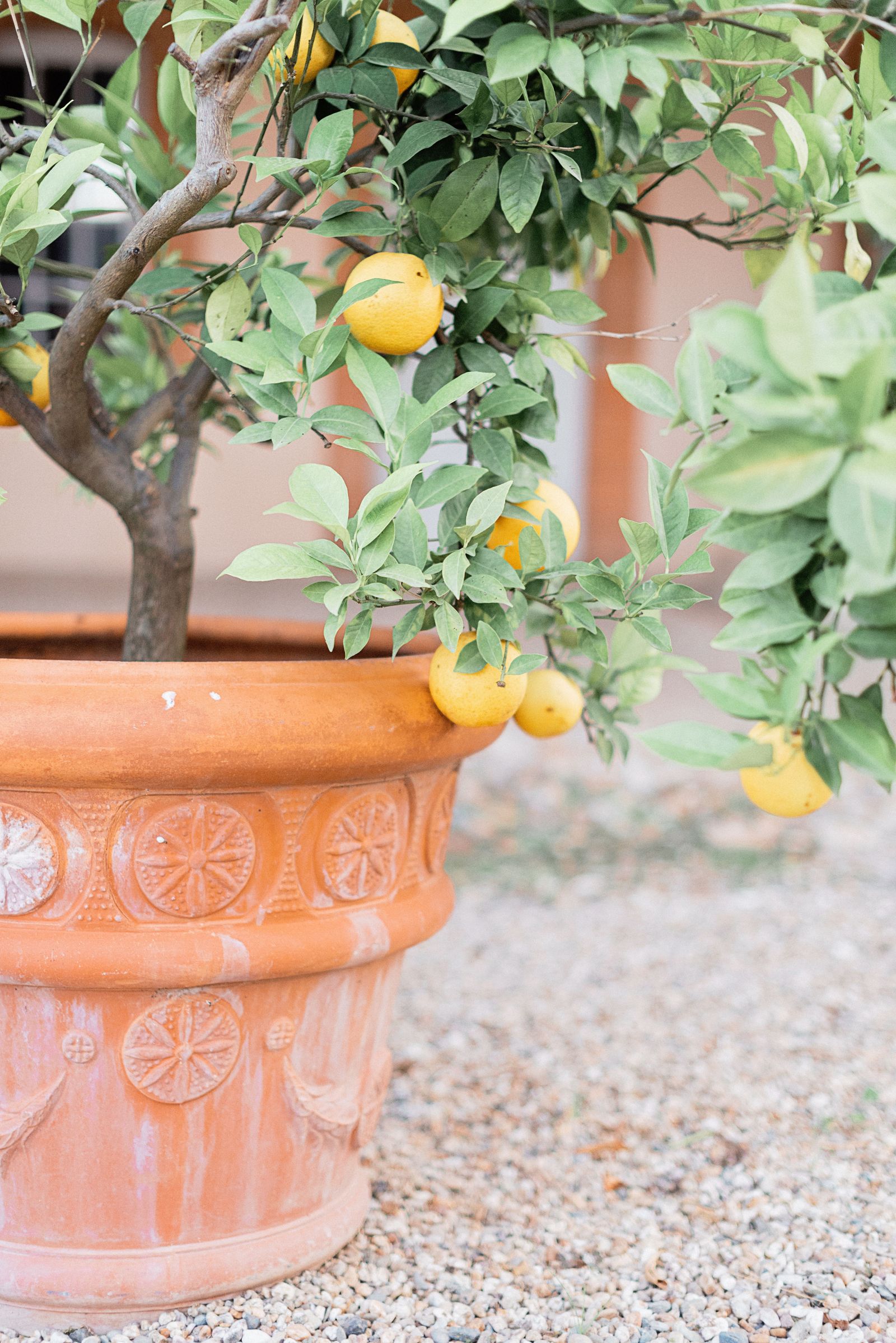
Watering behavior is set at potting time. Citrus in containers wants a mix that drains freely and holds some moisture: a bark based citrus or cactus mix, or a quality potting mix with extra perlite, in a pot with generous drainage holes, one size up every 2 to 3 years in spring. A tree in a dense, peat heavy mix stays wet at the bottom and dry at the top, the worst profile for the check this page teaches, because the top 3 inches lie about the bottom half. If your check says dry and the pot still feels heavy, that mismatch is the mix confessing. Terracotta dries faster and more evenly than glazed or plastic pots and suits citrus well, at the cost of the shortest summer intervals in the table above. Whichever pot you choose, the doctrine does not move: check at 2 to 3 inches, soak to drainage, hold steady through bloom, and stretch with confidence in winter.
Frequently Asked Questions
How often should I water a potted lemon tree in summer?
By pot size: every 2 to 3 days for a small pot on a hot balcony, every 3 to 5 days for a mid sized pot on a patio, and about weekly for a large pot in a bright indoor spot. These are starting rhythms only; the deciding check is dryness at 2 to 3 inches deep. In a heat wave, check daily regardless of the rhythm, and during flowering and early fruit set, water at the first dry reading rather than letting the pot dry fully, because a single hard dry spell in that window drops fruit.
Why is my lemon tree dropping fruit?
The most common cause is water stress during flowering and the weeks just after, when fruitlets are small. A tree that dries hard in that window sheds fruit to match its water supply. Rule out the rhythm first: steady checks every 2 days in warm weather, water at dryness at 2 inches, and no full dry downs until the fruit is an inch across and holding. Some drop is natural June thinning and happens on well watered trees too. If fruit drops while the mix stays wet, suspect root trouble from overwatering and check that the pot drains freely.
Can I use a self watering pot or a watering spike for a lemon tree?
With caution, and not as a set and forget system. Citrus wants a wet to dry cycle, not constant moisture, and reservoirs and spikes that keep the mix permanently damp invite root rot and fungus gnats. A spike or a bottle dripper is reasonable insurance for a 1 week vacation in summer, set up a few days before you leave so you can see the rate it delivers. For daily care, the finger check and a watering can beat every gadget, because the tree's needs move with weather, bloom, and fruit load in ways a fixed drip cannot follow.
Should I mist my lemon tree indoors?
Misting does little for the tree and nothing for its watering needs; the humidity bump lasts minutes. What indoor citrus actually suffers from in winter is dry heated air combined with low light, and the fixes are placement, the brightest window away from direct heat blast, and correct soil watering on the long winter interval. If leaves drop after the move indoors, that is the light change, and it settles as the tree adjusts. Wipe leaves clean of dust now and then so the limited winter light gets in; that helps more than any misting.
How do I know if I am overwatering my lemon tree?
The mix stays damp at 3 inches deep for more than a week, the pot never gets light, leaves yellow and drop while the soil is wet, and the surface grows algae or fungus gnats move in. Tip the tree out if you suspect real trouble: healthy citrus roots are pale and firm, rotted roots are dark and mushy. The correction is to let the pot dry to the check depth before the next drink, confirm the drainage holes are open, and empty the saucer after every watering. A tree caught early recovers on the corrected rhythm alone; no repot is needed unless the mix itself has gone dense and sour.
Photo credits: Anastasiya Vragova (Pexels); Nadin Sh (Pexels). Photos are served from this site; follow the credit to the library page for the original.