Lucky bamboo breaks the usual watering pattern on this site, because the plant is usually not growing in soil at all. It is Dracaena sanderiana, a dracaena from the Cameroon understory sold as spiraled stalks in a vase of water and pebbles, and for that plant the watering question is really a water changing question. In water culture the rule is a full change every 1 to 2 weeks, weekly in warm bright rooms, with the roots kept under 1 to 3 inches of water and the vase and pebbles rinsed at every change. In soil the rule looks familiar: water when the top inch of the mix is dry, which indoors runs every 5 to 10 days. Under both systems sits the fact that decides most outcomes, water quality. Lucky bamboo is sensitive to chlorine and fluoride, and the brown leaf tips owners blame on watering frequency are usually the tap water itself. This page runs both systems and the quality rules under them. One safety note: the plant is toxic to cats and dogs if eaten, per ASPCA listings, so keep arrangements where pets cannot chew the leaves.
Home / Gardening Basics for Beginners
How Often to Water Lucky Bamboo: The Water Change, the Soil Case, and the Water Itself
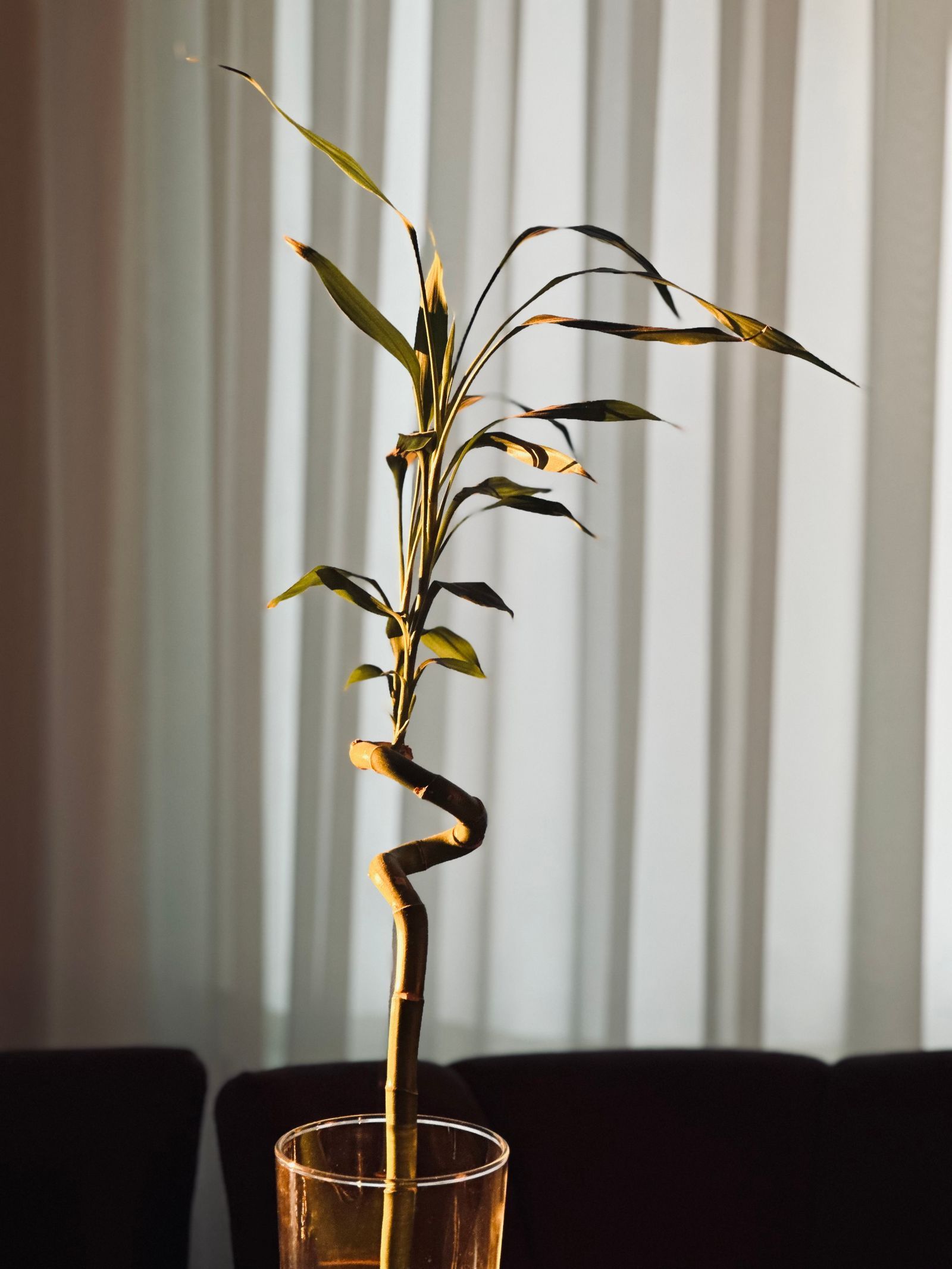
Photo: Hafize Balcı / Pexels
Watering Volume Calculator: The Lucky Bamboo Change Audit
A water grown lucky bamboo drinks by the change, not the top up: the whole vase is replaced every 1 to 2 weeks. Enter your vase or pot diameter as both length and width with a depth of 1 inch to see the volume one full change handles.
19.9 gallons
For 32 square feet at 1 inch deep. That is about 76 liters, or 10 trips with a standard 2 gallon watering can.
A rain gauge or a straight sided can set in the bed tells you when a sprinkler or soaker hose has actually delivered this depth. Time alone is a guess, because hose pressure varies from house to house.
The conversion is arithmetic, not opinion: one inch over one square foot is 144 cubic inches of water, and a US gallon holds 231 cubic inches, so each square foot at one inch takes 0.62 gallons.
The Water Culture System: Change It, Do Not Top It Off
A lucky bamboo in a vase is not watered, it is refreshed, and the difference matters. Topping off a vase replaces only what evaporated and leaves everything the plant and the water have produced behind: salts concentrate, bacteria build, algae film the glass, and the roots sit in an increasingly stale bath. The working routine is a complete change every 1 to 2 weeks. Pour the old water out entirely, rinse the vase and the pebbles under clean water to strip the slime film, check the roots (healthy roots are pale orange to white and firm; black or mushy roots get trimmed back to firm tissue with clean scissors), set the stalks back, and refill so the roots sit under 1 to 3 inches of water, no more. Submerging bare stalk above the root zone invites rot at the nodes. Warm, bright rooms cloud water faster and want the weekly end of the range; a cool, dim corner can honestly run the full two weeks. Cloudiness, odor, or a slime feel at any point overrides the calendar: change the water that day, whatever the schedule says. The calculator above sizes the volume a full change handles for your vase, which is worth knowing once, because it is also the volume of stale water the plant sits in when changes are skipped.
The Water Itself: Why Tips Brown in Perfect Schedules
More lucky bamboo is damaged by what is in the water than by when it is given. The species is notably sensitive to chlorine and, more stubbornly, to fluoride, which many municipal supplies carry and which does not evaporate from a standing jug the way chlorine does. The signature is tip burn: leaf tips and margins browning and crisping on an otherwise healthy plant that is being changed on schedule. The fixes, in order of reliability: use distilled, filtered, or rain water for changes and top ups; or rest tap water uncovered for 24 hours before use, which clears chlorine though not fluoride; and flush the pebbles and vase at every change so salts from earlier tap water do not linger. Fertilizer belongs in the same conversation, because a water grown plant has no soil reserve and still needs feeding, but at a fraction of label strength: a drop or two of balanced liquid feed, or a tenth strength solution, at one change in four during the growing season is plenty, and full strength feed in a vase burns roots and tips exactly like bad water. When tips brown, audit the water before you touch the schedule.
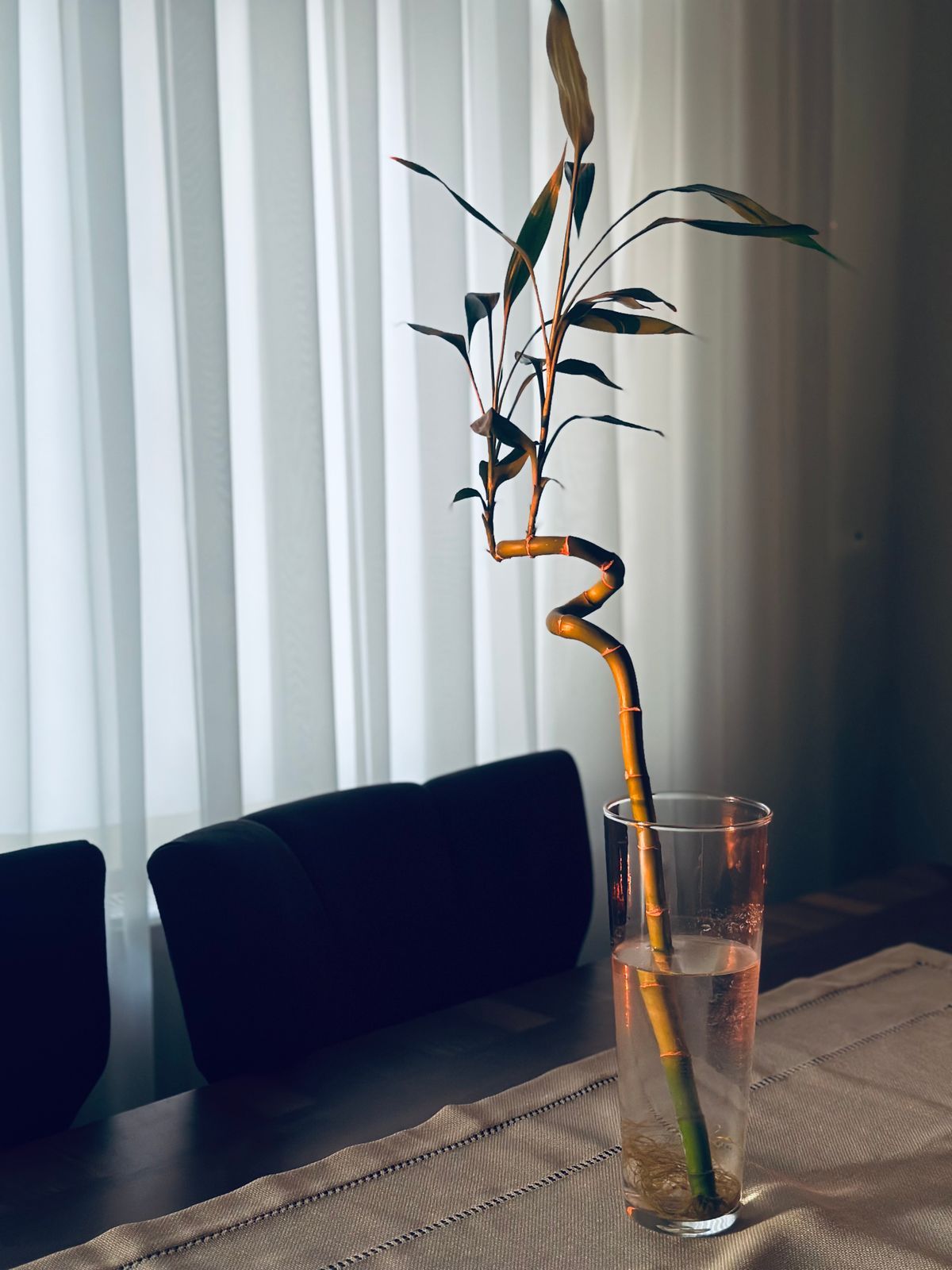
The Soil Case: The Top Inch Rule, Dracaena Style
Planted in a pot of mix, lucky bamboo follows the dracaena pattern its relatives on this site, the dragon tree and the corn plant, would recognize. Water thoroughly when the top inch of mix feels dry, until drainage runs, then empty the saucer; indoors that lands every 5 to 10 days depending on pot size, light, and room heat, stretching longer in winter and in low light. The mix should be a free draining houseplant mix, and the pot must have drainage holes, because the soil case's characteristic failure is the decorative cachepot with no hole, quietly holding a reservoir against the roots. In soil the plant wants even moisture rather than the wet dry swing a succulent takes: let the top inch dry, never the whole pot, and never leave the bottom third permanently soggy. Yellowing that starts on lower leaves with a soft stalk base means the roots have been wet too long; a soil plant showing it should be unpotted, rotted roots trimmed, and repotted into fresh mix in a pot that drains. The same plant in a vase would be showing you the problem in the water itself, which is the one diagnostic advantage water culture honestly has.
Yellow Leaves and Yellow Stalks: Reading the Plant
Yellowing is the symptom behind most lucky bamboo questions, and it pays to separate the two kinds. Yellow leaves on firm green stalks are usually a water or light report: tip and margin burn points to water quality, a general pale yellow on the oldest leaves points to a hungry plant that needs its weak feed, and yellowing after a move often traces to a jump in light or a cold draft. A yellow stalk is a different and grimmer diagnosis. Stalks yellow from the base upward when the root and stem tissue is rotting, usually after long standing in stale water or soggy soil, and a yellowed, soft stalk does not recover. The salvage is propagation, not watering changes: cut the healthy green growth above the yellow with clean pruners, and root the cutting in fresh water, where this plant roots readily from the nodes. Prevention is the routine this page teaches: full changes on schedule, clean water, rinsed pebbles, drainage in the soil case. Lucky bamboo is a genuinely tough plant inside its two rules, and nearly every decline traces to one of them being quietly broken for a month.
Light, Warmth, and the Rest of the Routine
Watering does not happen in a vacuum, and two placements rewrite the intervals above. Bright indirect light is the plant's home setting: it drinks steadily, grows slowly, and holds its color. A dark corner slows everything, stretching change intervals toward the two week end and soil watering toward the long end, while a hot sunny sill accelerates water use, clouds vase water faster, and can scorch leaves that evolved for forest shade. Warmth matters the same way: the plant is comfortable at ordinary room temperatures, roughly 65 to 90 degrees F in the guidance, and sulks in cold rooms and against cold glass in winter, when intervals lengthen and cold tap water straight from the faucet becomes a small shock worth avoiding by using room temperature water. Run the change routine for vases, the top inch rule for pots, clean water under both, and a weak feed in season, and lucky bamboo stops being a novelty that yellows and becomes what it actually is: one of the most durable houseplants you can own.
Frequently Asked Questions
How often should I change the water for lucky bamboo?
Every 1 to 2 weeks, completely. Pour out all the old water, rinse the vase and pebbles to remove the slime film, inspect the roots, and refill with clean water covering the roots by 1 to 3 inches. Warm, bright rooms cloud water faster and belong on the weekly end; cool, dim rooms can run the full two weeks. Cloudy, smelly, or slimy water gets changed immediately regardless of the calendar. Topping off is not a change and does not count.
How often do you water lucky bamboo in soil?
When the top inch of mix feels dry, which indoors is typically every 5 to 10 days. Water thoroughly until it drains, and empty the saucer so the roots never stand in runoff. The pot must have drainage holes; a holeless cachepot is the soil case's most common killer. Intervals stretch in winter and low light and shorten in warm, bright rooms. Keep the moisture even rather than swinging the pot from bone dry to soaked.
Why are my lucky bamboo leaf tips turning brown?
Usually the water, not the schedule. Lucky bamboo is sensitive to chlorine and fluoride in tap water, and both scorch leaf tips and margins on an otherwise healthy plant. Switch to distilled, filtered, or rain water, or rest tap water uncovered for 24 hours before use, which clears chlorine but not fluoride. Rinse the vase and pebbles at every change so accumulated salts do not keep burning tips after the water improves. Overfeeding at full strength produces the same burn.
Should lucky bamboo be grown in water or soil?
Both work, and they are different commitments. Water culture is the classic arrangement and makes root health visible, but it demands the full change routine every 1 to 2 weeks and weak, careful feeding. Soil is more forgiving of a missed week and feeds more conventionally, but hides root rot until the stalk softens. Choose by your habits: reliable about routines, take the vase; likely to forget, take the pot with drainage.
Can a yellow lucky bamboo stalk recover?
A yellow stalk generally cannot. Stalks yellow from the base up when tissue is rotting, and the damage does not reverse with better watering. What you can save is the green growth above the yellow: cut it cleanly with sterilized pruners and root the cutting in fresh water, where lucky bamboo roots readily from its nodes. Yellow leaves on firm green stalks are a different case and usually do respond to corrected water quality, light, or feeding.
Photo credits: Hafize Balcı (Pexels); Hafize Balcı (Pexels). Photos are served from this site; follow the credit to the library page for the original.