How Often to Water a Majesty Palm: Even Moisture for a Riverbank Plant
By the Windchime Walker editorial team
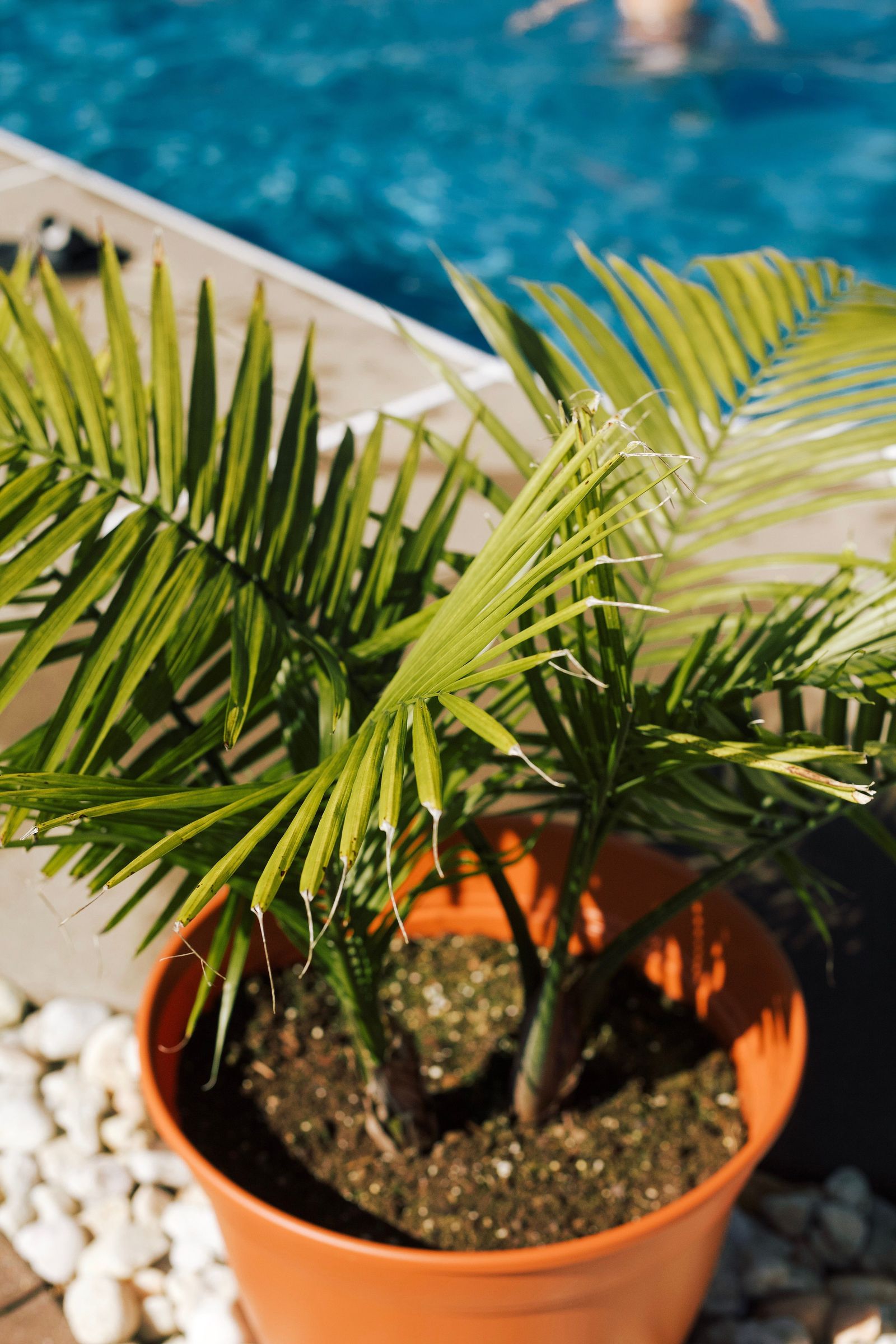
Photo: Jonathon Burton / Pexels
Every other palm care rule you have heard assumes a plant that tolerates drought. The majesty palm is not that plant. Ravenea rivularis grows on riverbanks in Madagascar, with its roots in ground that never fully dries, and indoors it wants the closest thing you can give it to that bank: a mix that stays evenly moist, never soggy and never bone dry. The working rule is to water when the top 1 to 2 inches of mix have dried, which in a warm, bright room lands at about every 5 to 10 days, and stretches in winter as light falls; the guides sprawl from 10 days to nearly a month for the winter interval, and the check, not the calendar, is how you resolve them. The signature complaint of this species, brown frond tips, is usually filed as a watering problem, and sometimes it is. Just as often it is a water quality problem, because this palm burns at the tips when the water carries fluoride, chlorine, and fertilizer salts, and no interval adjustment fixes water that is itself the irritant.
Our houseplant watering chart owns intervals across many plants. This page owns the majesty palm alone, the one common houseplant that punishes the drought side of the dial.
Interactive tool
Watering Volume Calculator: The Majesty Palm Pot Audit
A majesty palm is a riverbank plant: evenly moist, never soggy, never bone dry. Enter your pot diameter as both length and width with a depth of 1 inch to size one even drink.
19.9 gallons
For 32 square feet at 1 inch deep. That is about 76 liters, or 10 trips with a standard 2 gallon watering can.
A rain gauge or a straight sided can set in the bed tells you when a sprinkler or soaker hose has actually delivered this depth. Time alone is a guess, because hose pressure varies from house to house.
The conversion is arithmetic, not opinion: one inch over one square foot is 144 cubic inches of water, and a US gallon holds 231 cubic inches, so each square foot at one inch takes 0.62 gallons.
The Even Moisture Rule, and the Check That Runs It
Evenly moist is a narrow band and worth defining precisely. It means the mix at root depth feels like a wrung out sponge: damp to the touch, holding together, with no water squeezing out and no dustiness anywhere in the profile. The check is a finger or skewer to 1 to 2 inches: when that layer has dried while the mix below is still damp, water. Do not wait for the full pot to dry; a majesty palm that dries to the bottom wilts, drops its oldest fronds, and files the damage as brown tips that never green again. Do not water on a fixed short cycle either, because a pot that never dries at the surface suffocates roots in the bottom third. The weight check is this plant's best friend: heft the pot after a thorough watering, learn that number in your arms, and water when the pot has clearly lightened but long before it feels dry light. In practice the rhythm settles at every 5 to 7 days in bright summer conditions, every 7 to 10 in average rooms, and every 10 to 14 or more in dim winter corners, always subject to the check.
The Drink: Full Soak, Full Drain, No Exceptions
When the check says water, soak the whole root ball until water runs from the drainage holes, let it drain completely, and empty the saucer. The calculator above sizes the drink: enter the pot diameter as both length and width with a depth of 1 inch. Two habits protect this plant. First, water the whole surface evenly, in a slow spiral, because a palm's roots fill the pot and a pour in one spot leaves a dry quadrant that shows up weeks later as one sided decline. Second, flush the pot monthly with a long, slow pour of plain water, two or three pot volumes through the mix, to carry out the salts that accumulate between feedings; for a salt sensitive plant, the flush is not maintenance, it is treatment. If your tap water is fluoridated or heavily chlorinated, the next section is the one that will save your fronds.
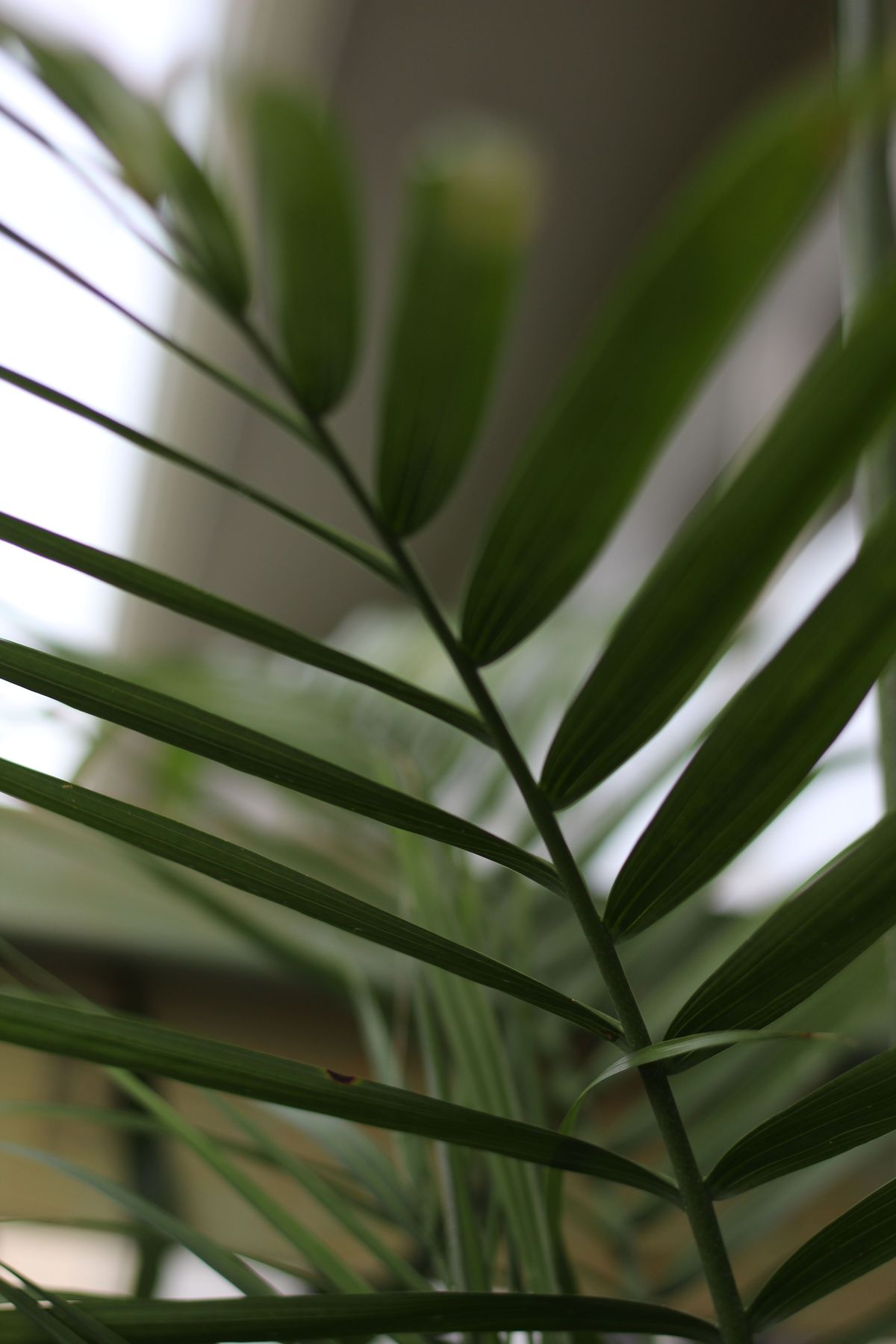
Majesty palm fronds indoors in close up
The Water Quality Fix: Fluoride, Chlorine, and Salts
Majesty palm tip burn from water chemistry is so common it is nearly a species trait. Fluoride, added to many municipal supplies, accumulates in the leaf tissue of sensitive palms until the tips and margins die back in a clean brown edge. Chlorine irritates less but adds to the load, and dissolved fertilizer salts do the rest. The fixes, in order of reliability: water with rainwater or distilled water for a plant that keeps burning despite a correct interval; or let tap water stand uncovered for 24 hours before use, which vents chlorine though it does nothing for fluoride; or commit to the monthly flush and accept slower accumulation. Feeding discipline is part of the same fix: feed at half strength, a few times in the growing season only, because every feeding is a salt deposit the roots must live with. If the tips keep browning on a plant whose interval is right, change the water before you change anything else. It is the diagnosis the nurseries give last and the one that works first.
The Brown Tip Diagnosis: Three Causes, Three Tests
Brown tips on this palm have three common authors, and they need different cures, so test before treating. Salt burn, from water chemistry and fertilizer: the browning is a crisp, uniform edge on the oldest fronds first, the mix may show a white crust, and the interval checks out as correct. The cure is the water quality fix above plus a flush. Dry air: the browning comes with crispy, papery texture and often affects a plant near a heat vent or in a winter heated room; humidity in heated homes can fall below what a riverbank plant tolerates, and the cure is placement away from vents, grouping with other plants, or a humidifier, not more soil water. Thirst: the browning follows a known dry spell, the pot was light for days, and newer fronds may wilt or fold; the cure is the interval, tightened, with a soak today. What you cannot do is green a brown tip back: dead tissue stays dead. Trim the brown with scissors, following the frond's natural point and leaving a thin line of brown so you never cut into living tissue, which would just start a new edge.
Light, Size, and the Honest Limits of This Palm
A majesty palm is a fast, large plant sold small, and its watering demand scales with it: a tabletop palm in a 6 inch pot may need the check every 3 to 4 days in bright light, while a floor specimen in a 14 inch pot runs the long end of the intervals above. Light drives everything: the brighter the spot, the more the plant grows and drinks, and the better it looks; in a dim corner it survives on the long interval but thins, stretches, and browns at the tips from the combined insult of low light and indoor air. Give it the brightest indirect light you have, rotate it monthly so all sides get their turn, and plan for its size: a healthy majesty palm wants to be 5 feet and more, and crowding it into a small pot to slow it down just makes the watering check twitchier. This is also the palm most likely to pick up spider mites indoors, and dry air is the accomplice: wipe the fronds down monthly, which removes mites, dust, and gives you the inspection that catches an infestation while it is still a chore and not a war.
Frequently Asked Questions
How often should I water a majesty palm in winter?
On the check, and expect it to stretch: every 10 to 14 days is common in an average room, and dim corners can run longer, which is why published winter intervals sprawl from 10 days to nearly a month. The plant grows slowly in low light and drinks accordingly. Water when the top 1 to 2 inches are dry, soak fully, and drain. The winter danger for this palm is less the interval than the air: heated rooms dry the fronds and invite both tip burn and spider mites, so keep it away from vents and wipe the fronds down monthly.
Why are my majesty palm's tips brown even though I water on schedule?
If the interval is genuinely right, suspect the water itself. Majesty palms are sensitive to fluoride and accumulated salts, which burn the frond tips in a clean brown edge, oldest fronds first. Flush the pot thoroughly with plain water, then switch to rainwater or distilled water, or at minimum let tap water stand a day before use, and feed at half strength only a few times a year. Existing brown tips will not recover; judge the fix by new fronds, which should open clean and stay clean.
Can a majesty palm recover from drying out completely?
Often, yes, if the crown is alive. Soak the pot until the mix rehydrates fully, trim fronds that have collapsed entirely, and return to the even moisture rhythm, checking every few days while it recovers. Expect the oldest fronds to yellow and be shed; that is the plant triaging. New spears emerging from the center are the true verdict. Repeated full dry downs, though, cost the plant fronds every time, and the palm gets scraggly fast; this species forgives a single accident far better than a habit.
Should I mist my majesty palm?
Misting raises humidity for minutes and is not a watering method, but this is one plant where leaf care genuinely helps: a monthly wipe down with a damp cloth removes dust and spider mites, and a real humidifier near the plant in winter does more for tip burn from dry air than any spraying routine. Do not confuse the two jobs. The roots still need the even moisture check and the full soak; the fronds need clean surfaces and air that is not desert dry.
Is a majesty palm safe for pets?
Yes. Majesty palm is not listed as toxic to dogs or cats, which is one of its advantages over several other common houseplants, and it is a standard recommendation for pet owning households that want a large palm. Pets may still chew fronds out of curiosity, which damages the plant rather than the pet, so a stand or a corner placement that discourages browsing keeps both sides of the arrangement happier.
Photo credits: Jonathon Burton (Pexels); Chandra Wenke (Pexels). Photos are served from this site; follow the credit to the library page for the original.