How Often to Water Marigolds: Seedling, Established, and Container Are Three Different Plants
By the Windchime Walker editorial team
Photo: Davis Arenas / Pexels
Marigolds are sold as the flower that cannot be killed, and then beginners kill them with the watering can. The confusion is that a marigold is three different plants across its life, with three different water needs, and advice written for one stage gets applied to another. The seedling wants constant light moisture. The established plant wants a deep drink and then to be left alone. The plant in a pot in July wants water every day and means it. This page assembles the stages in order, so the rule you use is the one your plant is currently living.
Our how to grow marigolds guide owns the full season, sowing, deadheading, and seed saving. This page owns the water, stage by stage.
Interactive tool
Watering Volume Calculator: The Marigold Bed or Pot
Established marigolds want about an inch of water a week, deep and at the base. Enter your bed size, or your pot diameter as both length and width, below with a depth of 1 inch to see what a proper drink is in gallons.
19.9 gallons
For 32 square feet at 1 inch deep. That is about 76 liters, or 10 trips with a standard 2 gallon watering can.
A rain gauge or a straight sided can set in the bed tells you when a sprinkler or soaker hose has actually delivered this depth. Time alone is a guess, because hose pressure varies from house to house.
The conversion is arithmetic, not opinion: one inch over one square foot is 144 cubic inches of water, and a US gallon holds 231 cubic inches, so each square foot at one inch takes 0.62 gallons.
Stage One: Seedlings and New Transplants
From sowing until the plant is established, roughly the first 2 to 3 weeks in the ground or the pot, the rule is light and frequent: keep the mix or soil surface evenly moist, watering lightly every 1 to 2 days, and daily in warm windy weather. Marigold seed germinates fast, in about a week in warm soil, but the seedlings' roots are a few threads in the top inch, and a single afternoon of dried out surface can end them. The watering tool matters at this stage: a gentle shower or a watering can with a rose, never a hard jet, which washes seed out of the row and flattens seedlings into the mud. Transplants from the garden center get the same treatment as seedlings for their first week or two regardless of their size, because a transplant's roots still live in the small ball of mix they arrived in, and that ball dries faster than the soil around it. The signal to graduate to stage two is new growth: when the plant is visibly pushing new leaves and stands up through a hot afternoon without wilting, its roots have moved into the surrounding soil and the rhythm changes.
Stage Two: the Established Plant, an Inch a Week
An established marigold in the ground is one of the most drought tolerant annuals you can grow, and its rule is the classic deep and infrequent: about an inch of water a week in the absence of rain, given in one or two deep waterings, with the top inch of soil allowed to dry between drinks. The fingertip check runs this stage: dry at an inch down, water; still moist, wait. The plant tells you the same story in its posture, and marigolds are honest: a plant that wilts in the afternoon heat and recovers by morning is coping, while one still limp at sunrise is thirsty and gets water that day. What the established plant does not forgive is the opposite treatment, the daily splash that keeps the surface wet and the roots shallow and invites the rot described below. If you take one sentence from this page, take this one: the beginner kills marigolds with kindness, on a schedule meant for seedlings, continued all summer.
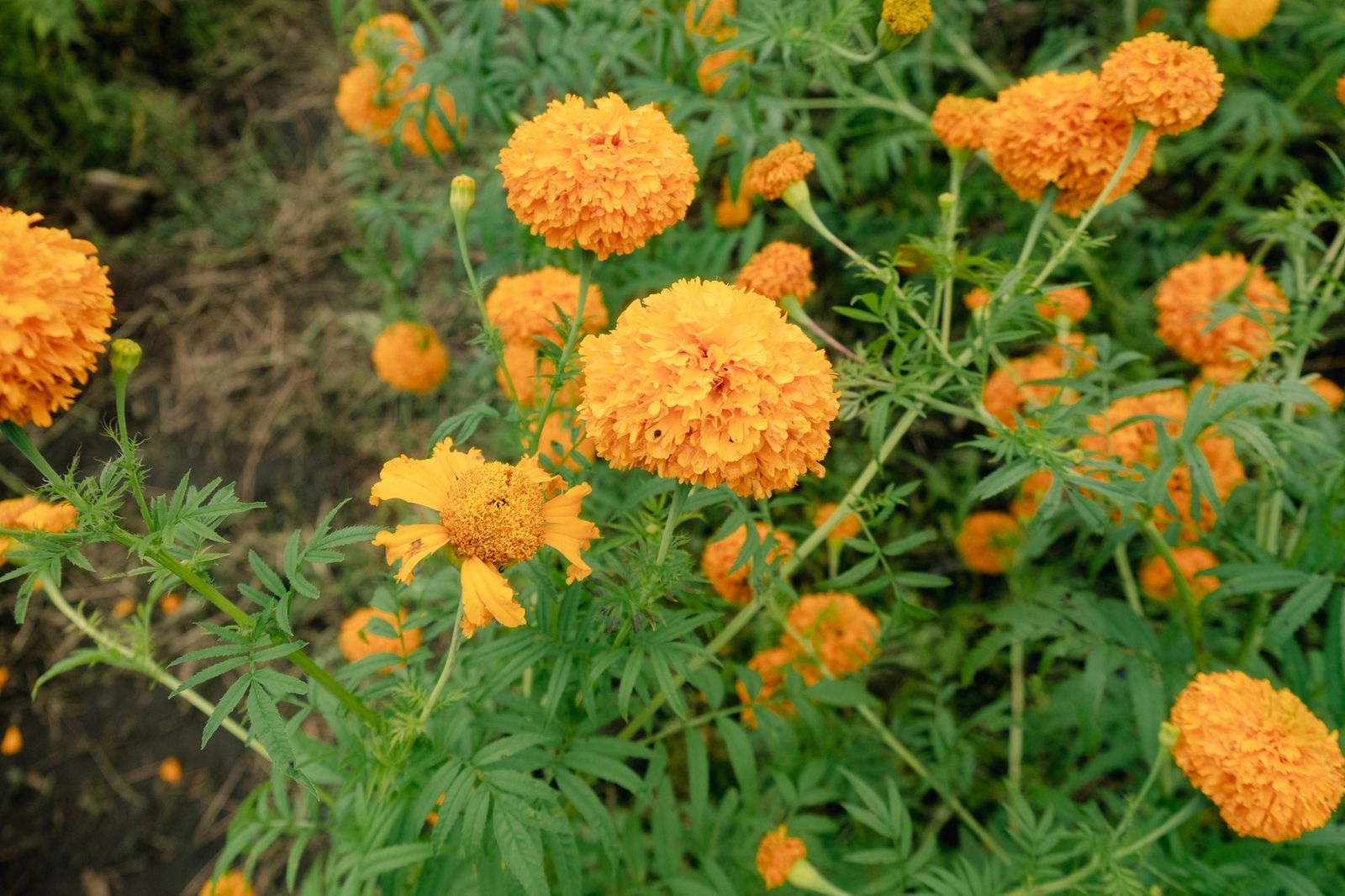
Marigolds flowering in a sunny garden bed
Stage Three: Containers in Heat
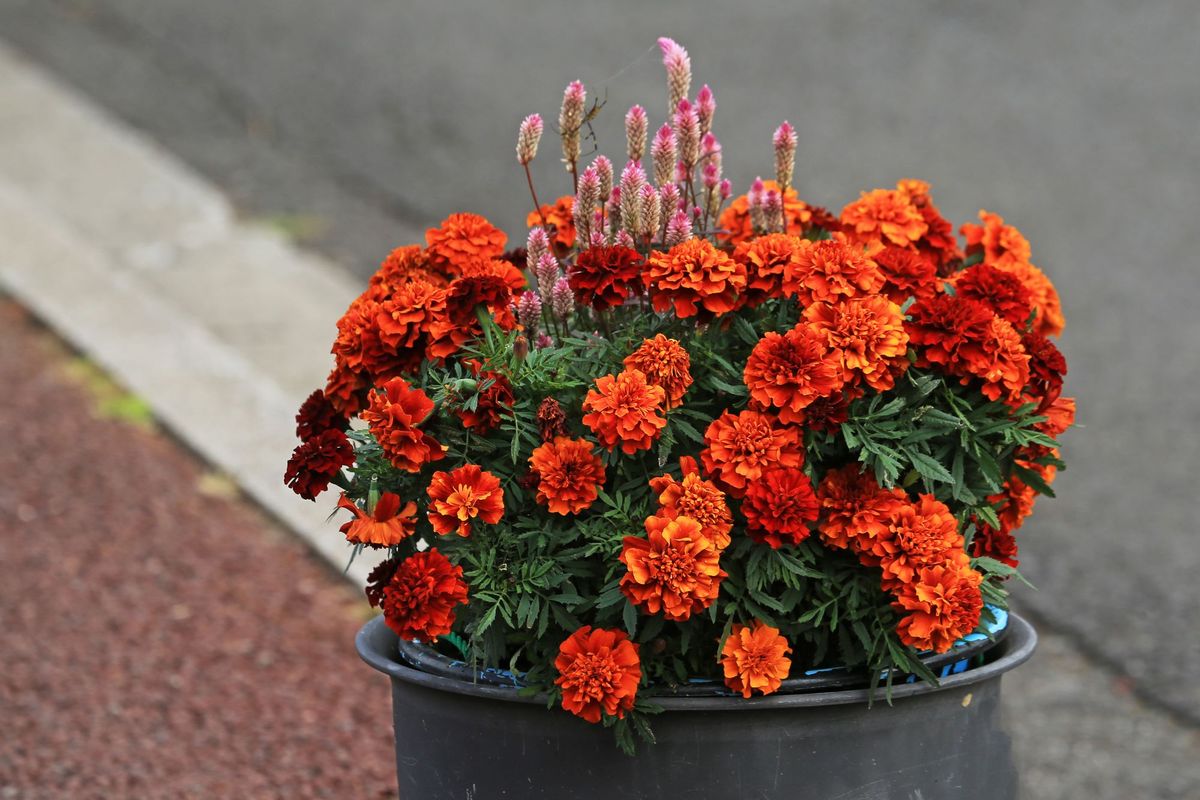
A marigold in a pot is a plant on a reservoir, and in summer heat the reservoir is small. A 10 or 12 inch pot in full sun can need water daily in July, and a small pot or a hanging arrangement can need it twice in a heat wave. The check is the same fingertip at an inch down, but in containers the answer changes fast, so in hot weather the check becomes a morning habit rather than a weekly one. Water pots in the morning until water runs from the drainage holes, and let them drain; a pot standing in a saucer of its own runoff in the heat is a rot risk wearing a disguise. Mulching the pot surface with a light layer of straw or shredded bark stretches the interval measurably, and grouping pots together shades each other's sides and slows the drying. The calculator above is framed for this math: enter the bed or the pot footprint and a depth of about an inch to see what a proper drink actually is in gallons, because the splash that wets the surface of a pot delivers a fraction of it.
Water at the Base, in the Morning: the Disease Logic
Marigold foliage kept wet overnight is an invitation to the fungal problems that spot and gray the leaves in humid weather, botrytis among them, and the defense is placement and timing rather than spray. Water at the base of the plants, under the foliage, with a soaker, a drip line, or a can spout tucked under the leaves. Water in the morning, so any splashed foliage dries in the day's first hours. Space and deadhead for air flow, because a crowded, wet, still planting is where the trouble starts. These habits cost nothing and they are the entire disease program most marigold plantings ever need; a marigold grown dry leafed in moving air is a notably healthy plant.
The Overwatering Autopsy, and Fitting Marigolds Into the Vegetable Bed
When a marigold dies in midsummer, the autopsy usually reads the same: yellowing lower leaves, a plant that wilts despite wet soil, stems soft or blackened at the base, roots brown instead of white. That is root rot from soil that never dried, and the rescue is limited: pull the worst plants, let the bed dry to the full check depth before watering again, and rebuild the rhythm at stage two. The other place marigolds live deserves a note, because most marigolds are not in flower beds at all; they are planted as companions in the vegetable garden, ringing the tomatoes. There, they drink on the vegetables' schedule, and the fit is good: tomatoes also want about an inch a week, deeply, at the base, so the marigolds at the bed's edge thrive on the same soaker line. The one adjustment is position: set the marigolds where the line's water reaches them but the tomato canopy does not shade them out, at the bed's sunny edge, where they get their inch and their sun together.
French, African, and Signet: the Size Differences in Water Terms
The three marigold tribes share the stage rules but not the volumes, and the differences matter most in containers. French marigolds, the compact 6 to 12 inch edging plants, are the most forgiving of the three in pots, with modest roots and modest thirst; they are the right choice for small containers and window boxes. African marigolds, the tall 2 to 3 foot plants with the huge pompon blooms, drink like the large plants they are, flop if their water swings wildly, and want the deep end of the inch a week rule in the ground and a genuinely large pot, 5 gallons or more, if they are container grown at all. Signet marigolds, the fine leaved, small flowered, edible ones, sit between: airy plants that resent wet feet most of the three and reward the gardener who lets their mix dry a touch deeper between drinks. Deadheading interacts with watering in one way worth knowing: a plant carrying a full load of setting seed slows its flowering and its drinking together, so the faded heads you remove for looks also keep the plant in its productive, thirstier rhythm. And a final drought note, because it is the fact that makes marigolds famous: an established in ground plant that has been grown on the deep and infrequent rhythm will survive a two week vacation in summer that kills the petunias, drawing on roots you trained downward all season. The stages at the top of this page are how that toughness is built; it is grown, not bought.
Frequently Asked Questions
How often should I water marigolds?
By stage. Seedlings and new transplants: lightly every 1 to 2 days, keeping the surface evenly moist. Established plants in the ground: about an inch a week in one or two deep waterings, when the top inch of soil is dry. Containers in summer heat: as often as daily. The stage decides the schedule.
Can you overwater marigolds?
Yes, and it is the common beginner killer. Constantly wet soil rots the roots; the signs are yellowing lower leaves, wilting despite wet soil, and stems soft at the base. Established marigolds are drought tolerant and want the top inch dry between drinks. If in doubt with an established plant, wait a day.
Do marigolds in pots need daily water?
In summer heat, often yes. A 10 or 12 inch pot in full sun can dry to the check depth in a day, and smaller pots faster. Check with a fingertip each morning in hot weather, water thoroughly until it drains, and mulch the pot surface to stretch the interval.
Should I water marigold leaves or the base?
The base, in the morning. Wet foliage overnight invites the fungal diseases that spot marigold leaves, so water under the foliage with a soaker, drip line, or a can spout tucked low, and let any splashed leaves dry in the morning sun.
How much water do marigolds need with tomatoes?
The same program, which is why the companion planting works: about an inch a week, deeply, at the base. Plant marigolds at the sunny edge of the tomato bed where the soaker line reaches them and the tomato canopy does not shade them out.
Photo credits: Davis Arenas (Pexels); Jeffry Surianto (Pexels). Photos are served from this site; follow the credit to the library page for the original.