How Often to Water a Monstera: Watering a Climbing Plant, Pole and All
By the Windchime Walker editorial team
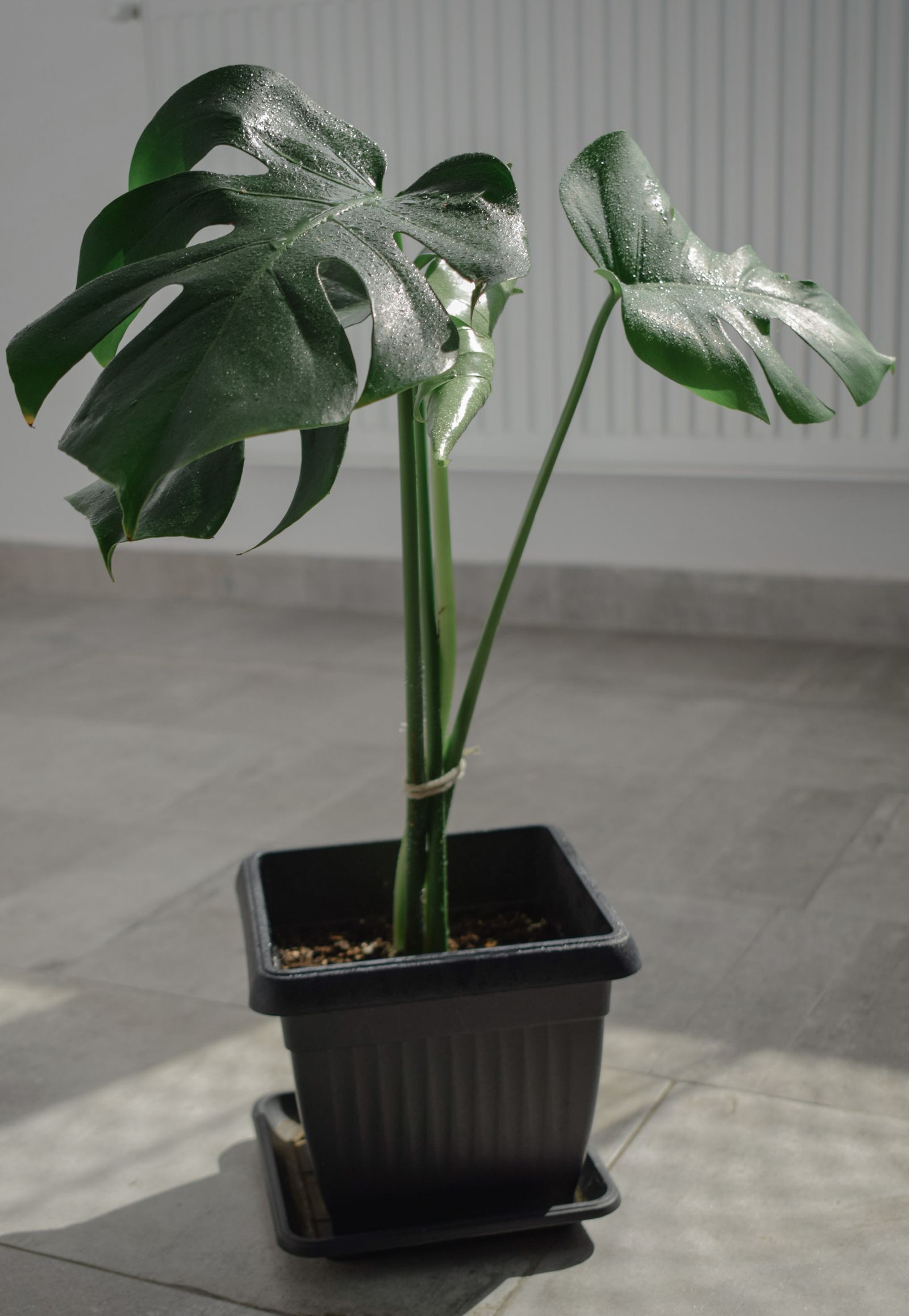
Photo: Anca / Pexels
A monstera is not a pot plant that happens to get big. It is a climbing hemiepiphyte, a plant that in the wild starts on the forest floor and climbs a tree, rooting into bark as it goes, and its watering only makes sense once you run it as a climber. The base rule is the familiar one: water when the top 2 inches of mix are dry, about every 7 to 14 days in spring and summer and every 14 to 21 days or more in winter. What this page adds is everything the climbing habit changes: the pole that needs its own water, the aerial roots that are not a problem to solve, and a chunky mix that dries on a faster clock than the calendar advice assumes.
Our houseplant watering chart owns intervals across many plants. This page owns the monstera alone.
Interactive tool
Watering Volume Calculator: The Monstera Pot Audit
Monstera in a chunky aroid mix dries faster than the calendar rules assume. Enter your pot diameter as both length and width with a depth of 1 inch to size one full soak, and water when the top 2 inches are dry.
19.9 gallons
For 32 square feet at 1 inch deep. That is about 76 liters, or 10 trips with a standard 2 gallon watering can.
A rain gauge or a straight sided can set in the bed tells you when a sprinkler or soaker hose has actually delivered this depth. Time alone is a guess, because hose pressure varies from house to house.
The conversion is arithmetic, not opinion: one inch over one square foot is 144 cubic inches of water, and a US gallon holds 231 cubic inches, so each square foot at one inch takes 0.62 gallons.
The Mix Sets the Clock: Chunky Aroid Mix Dries Fast
Monstera is planted, correctly, in a chunky aroid mix: potting mix cut with orchid bark, perlite, and often coco coir chunks, so water runs through and air stays in the root zone. That mix is the right home for the roots and the reason generic intervals under water this plant. A dense peat based mix at the same pot size might hold moisture for two weeks; a chunky mix in a bright room can reach the check depth in 5 to 7 days during active growth. So the interval is not a property of the plant alone; it is a property of the plant in its mix, in its light. Run the check with a finger or chopstick at 2 inches, water fully when it is dry there, and let your own plant's rhythm emerge over a month rather than borrowing a number from a page written for a different mix. The calculator above sizes the drink: enter the pot diameter as both length and width with a depth of 1 inch, because a chunky mix needs a full volume soak to wet evenly instead of channeling down one bark lined path.
The Pole Is a Second Plant to Water
A moss pole is not furniture. A monstera climbs by pushing aerial roots into the pole, and those roots only grow into a pole that is kept moist; a bone dry pole is a stick the plant politely ignores, and the leaves stay small and unfenestrated because the plant reads itself as still crawling on the ground. Water the pole on the same day you water the pot: pour slowly down the top of the pole, or set a slow drip bottle on it, until the moss is damp through. A coir pole holds less water than sphagnum and needs the drink more often, sometimes twice between pot waterings in a dry room. This is the single most skipped half of monstera watering, and it explains the common puzzle of a plant that is watered correctly by every pot rule and still produces small, plain, juvenile leaves: the pot was watered and the climb was not.
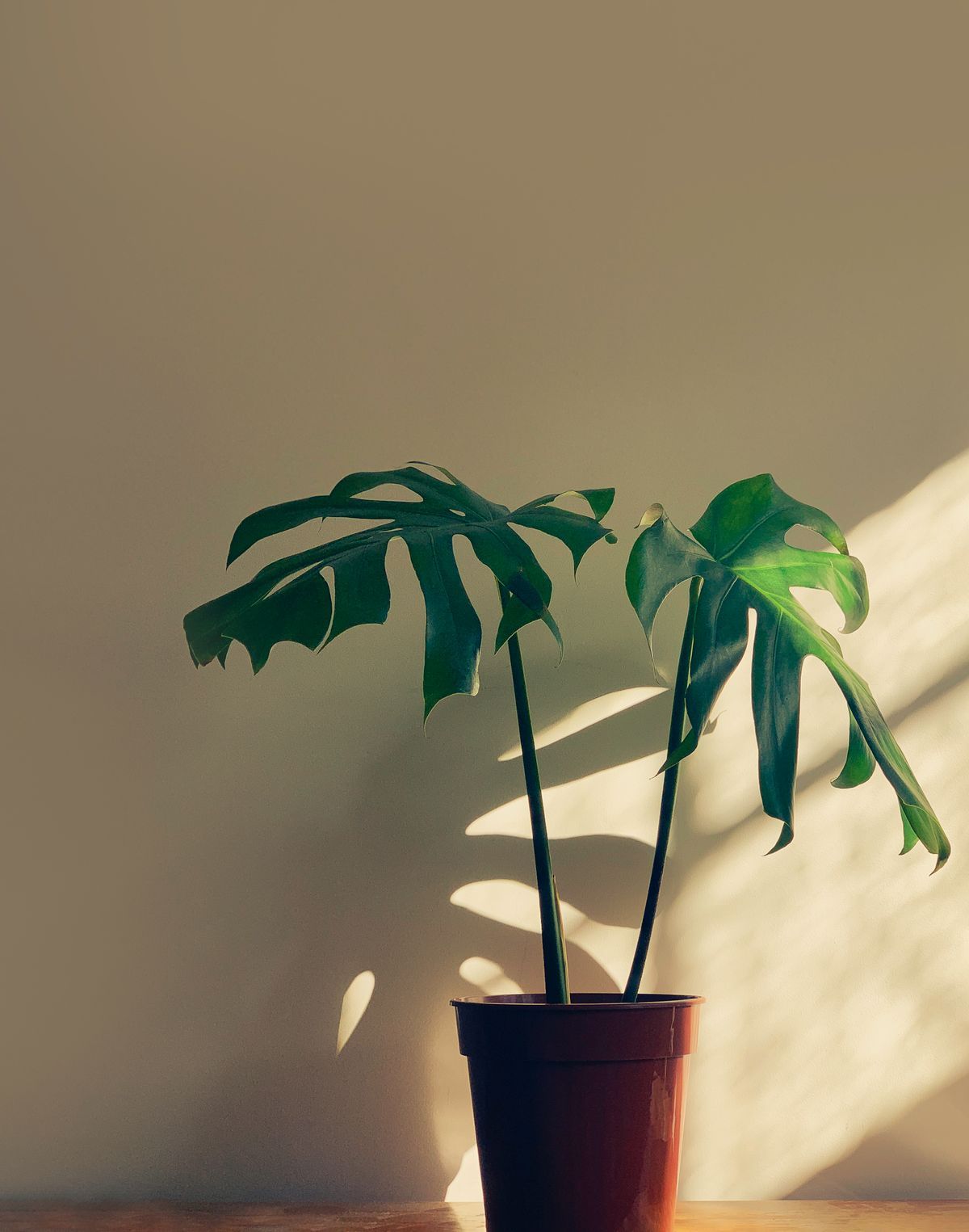
A monstera in a pot with sunlight casting shadows across its leaves
Aerial Roots: What They Drink and What They Do Not
Aerial roots, the thick brown roots that leave the stem and reach for the pole, the wall, or the air, worry new owners into two mistakes: cutting them off, and trying to water the plant through them. Leave them. They are the climbing system. A root that reaches the mix can be tucked into the surface, where it will root and add to the plant's uptake, and a root in the pole drinks the pole's moisture, which is the point of keeping the pole damp. A root waving in dry room air mostly waits; misting it does nothing measurable. What aerial roots do tell you is humidity in a rough way: in very dry air their tips can dry and stop, while the plant itself carries on if the pot and pole are watered. Judge the plant's water by the mix check, never by the aerial roots' appearance.
Fenestration Is a Report Card
The splits and holes that make a monstera a monstera are produced by a plant that has light, support, and steady water together, and they vanish in the order those inputs fail. New leaves arriving smaller and plainer than the last is the plant reporting a deficit, most often light, second most often a dry pole, third a root bound pot. Water's part in the report is steadiness: a monstera swung between drought and flood puts its energy into survival leaves, not architecture. Keep the check rhythm steady through the growing season and the leaf size holds; let the plant wilt hard between drinks and the next leaf tells on you. Yellowing lower leaves, by contrast, usually report the opposite: mix staying wet too long in a pot that has outgrown its drainage, or a plant sitting in its own runoff. Read the newest leaf for progress and the oldest leaves for water errors, and you have the whole dashboard.
Winter, Repotting, and the Big Plant Problem
In winter the interval stretches to 14 to 21 days or beyond, driven by light: a monstera in a dim corner in January may drink half what it drank in July. Repotting resets the rhythm temporarily; a freshly potted plant in new mix dries unevenly for the first few waterings, so check more often and water more gently until the mix settles. The big plant problem is the same one the fiddle leaf fig has: a mature monstera in a 12 or 14 inch pot is heavy, its surface dries long before its base, and the honest checks are pot weight and a dowel to the bottom. One more habit worth building: water in the morning and let the plant drain fully before it goes back on its saucer or stand, because a climber in a chunky mix in a deep pot is precisely the setup where a hidden saucer of standing water rots the lowest roots while the top of the plant still looks fine.
Three Monstera Watering Failures, Diagnosed
Most struggling monsteras are living one of three patterns, and each has a distinct signature. The root bound drinker: the plant wilts days after every watering, the interval keeps shrinking, and roots circle the drainage holes. The pot has become a root ball with a garnish of mix, and it cannot hold a week's water; the fix is a pot 2 inches wider with fresh chunky mix, after which the interval resets to normal within two waterings. The swamp bottom: the top of the mix dries on schedule and the plant still yellows from the base, because a deep pot with fine mix at the bottom, or a saucer habit, keeps the lowest roots permanently wet. The dowel check to the bottom exposes it; the fix is drainage, a chunkier mix at repot, and emptying the saucer like a religion. The pole only illusion: an owner waters the pole faithfully and the pot casually, and the plant climbs happily while its base roots cycle through drought. The pole is the supplement, never the source; the pot check governs. Read your plant against the three patterns before changing anything, because each fix is wrong for the other two, and the monstera that gets repotted for a drainage problem, or drained for a root bound problem, declines on a schedule that looks mysterious and is not.
Repotting Resets the Clock
A repotted monstera drinks on a new rhythm for its first month, and owners misread it every time. Fresh chunky mix holds water unevenly until it settles and the roots rethread it, so the surface can read dry while pockets below are wet, or the reverse. Check more often, water a little more gently, and do not fertilize for the first month, because the fresh mix carries a charge and the roots are healing cut ends. Size up 2 inches at a time, as with the fig: a monstera root ball in a pot 6 inches wider is surrounded by mix that stays wet far longer than the roots can dry it, which manufactures the swamp bottom pattern in a plant that was healthy in April. The repot is also the moment to renew the pole, because a pole added to a settled plant is ignored, while a pole present as the new growth emerges gets rooted into from the start.
Frequently Asked Questions
How often should I water a monstera?
When the top 2 inches of mix are dry: about every 7 to 14 days in spring and summer, every 14 to 21 days or more in winter. In a chunky aroid mix in bright light the interval can run as short as 5 to 7 days in active growth, so run the check rather than the calendar.
Do I need to water the moss pole too?
Yes. A monstera only roots into a pole that stays moist, and rooting into the pole is what triggers large, fenestrated leaves. Pour water slowly down the pole on pot watering day, and more often for coir poles in dry rooms.
Why are my monstera's new leaves small and without holes?
Read it as a report: most often not enough light, then a dry pole the plant cannot climb, then a root bound pot. Water steadiness matters too; hard drought between drinks pushes the plant into small survival leaves. Fix light first, then the pole, then check the roots.
Should I cut off aerial roots?
No. They are the climbing system. Tuck a root that reaches the pot into the mix surface, guide the rest to the pole, and leave airborne ones alone. Misting them is not watering; the plant drinks from the mix and the pole.
Why are the lower leaves of my monstera turning yellow?
Usually water staying too long: mix that never dries to the check depth, a pot sitting in runoff, or drainage that has clogged. Let the mix dry properly between drinks, empty the saucer, and confirm water actually exits the bottom when you water.
Photo credits: Anca (Pexels); Kulbir (Pexels). Photos are served from this site; follow the credit to the library page for the original.