The olive tree confuses its owners because it arrives with a drought proof reputation and then drops leaves in a pot. Both halves are true. In the ground in a Mediterranean climate, an established olive is one of the toughest dry land trees grown. In a pot on a patio or in a bright room, the same tree lives on the soil volume you gave it, and its watering is a depth discipline: let the top 2 to 3 inches of mix dry out, then water thoroughly until it runs from the drainage holes, empty the saucer, and wait for the depth check to call again. The calendar translations of that rule sprawl more than for any other plant this batch, from every 2 to 3 days for a small pot in a hot summer to every 7 to 10 days for a large one, and this page explains the sprawl instead of hiding it, because pot size and mix grittiness, not disagreement, produce it. The in-pot variant of this question folds into this article; the potted tree is the case most askers own.
Home / Gardening Basics for Beginners
How Often to Water an Olive Tree: The Deep Check, the Summer Sprawl, and the Barely Moist Winter
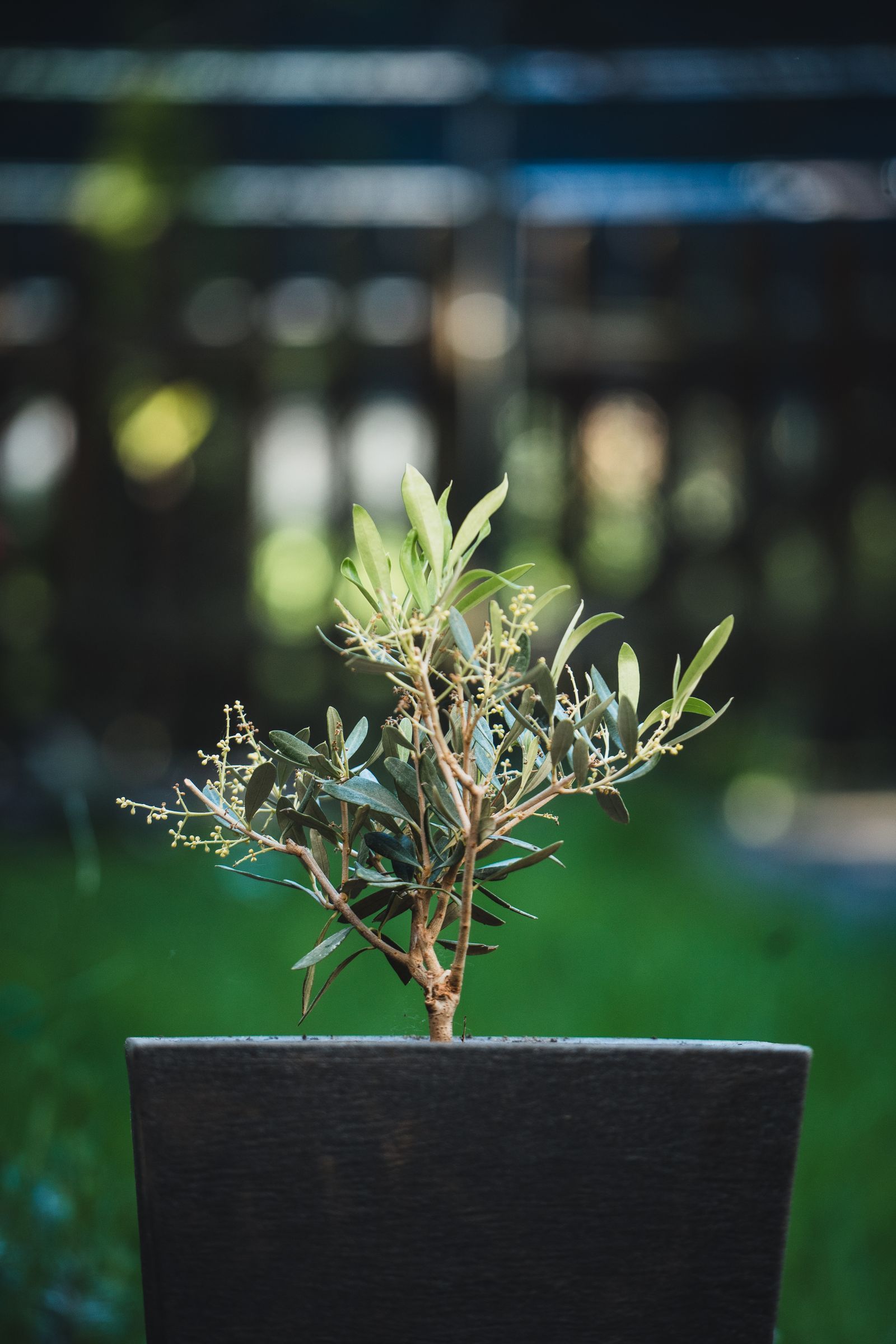
Photo: Oliver Schröder / Pexels
Watering Volume Calculator: The Olive Tree Pot Audit
A potted olive is watered deep and rarely: the top 2 to 3 inches dry, then a soak to drainage. Enter your pot diameter as both length and width with a depth of 1 inch to size that soak.
19.9 gallons
For 32 square feet at 1 inch deep. That is about 76 liters, or 10 trips with a standard 2 gallon watering can.
A rain gauge or a straight sided can set in the bed tells you when a sprinkler or soaker hose has actually delivered this depth. Time alone is a guess, because hose pressure varies from house to house.
The conversion is arithmetic, not opinion: one inch over one square foot is 144 cubic inches of water, and a US gallon holds 231 cubic inches, so each square foot at one inch takes 0.62 gallons.
The Depth Check: Two to Three Inches, Then a Real Soak
Every reliable source in the results converges on the same trigger, whatever their calendars say: water when the top 2 to 3 inches of mix are dry. That depth is deeper than the houseplant inch used for most plants on this site, and it is deliberate. An olive wants its surface dry and its lower root zone charged, the pattern of a climate with long dry summers and deep winter rains. Push a finger or a wooden skewer to that depth before watering; if it comes out with mix clinging and cool, wait, whatever the week has looked like. When you do water, water like weather: slowly, thoroughly, until it runs freely from the base, wetting the whole root ball rather than the channel it prefers. Then empty the saucer within the half hour, every time, because the one arrangement this tree cannot abide is standing water against its roots. The calculator above sizes that soak for your pot's diameter, and it is worth seeing the number once: a large patio olive takes a genuinely large drink, and the little and often watering most indoor trees receive is precisely the pattern that keeps an olive's surface wet, its depths dry, and its roots rotting at the line between.
The Summer Sprawl: Why Sources Say 2 Days and 10 Days
Line the summer guidance up and it looks like an argument: every 2 to 3 days here, twice a week there, every 7 to 10 days in several careful guides, all for the same plant. It is not an argument; it is three variables nobody prints in the headline. Pot size is the first: a young olive in a 10 inch pot holds a day or two of summer water, while a specimen in a 20 inch tub holds a week or more, and both guides are describing their own tree honestly. Mix is the second: the gritty, soil based mix the RHS pattern recommends, with roughly a fifth of its volume as horticultural grit, drains and dries fast and shortens every interval, while a peat heavy houseplant mix holds water far longer and stretches them. Placement is the third: a pot on a hot terrace in full sun and wind is a different climate from the same pot in a bright room. So the working method is to start at the check, not the calendar: in summer, run the depth check every 2 to 3 days for small pots and twice a week for large ones, water only when it says dry at depth, and let your own tree's rhythm emerge over a fortnight. Within a month you will know your pot's number, and it will be yours, not a guide's.
The Winter Rest: Barely Moist Is a Deliberate State
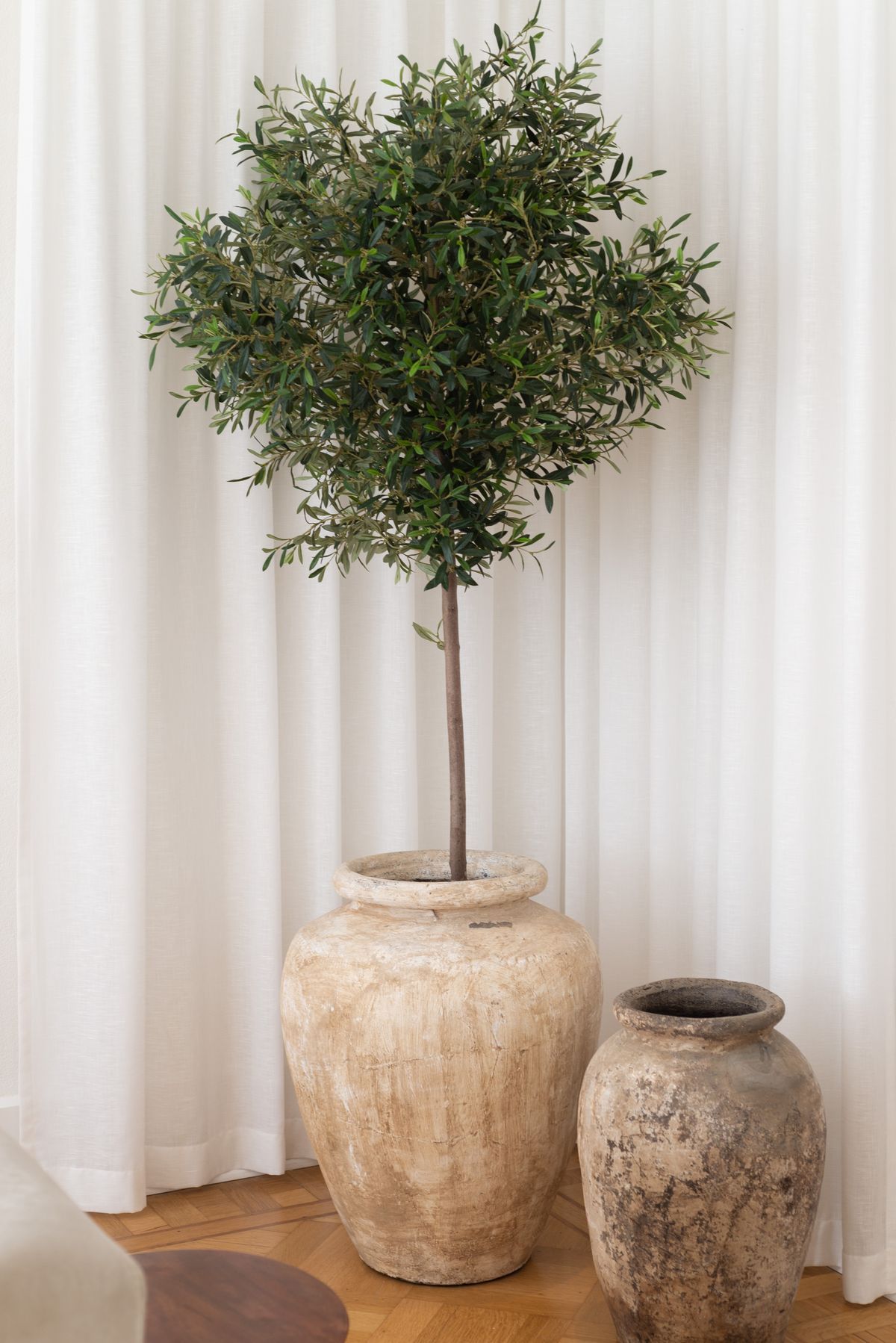
Winter is the season that kills potted olives in northern homes, and it kills them with kindness in cold, wet soil. As light falls and growth stops, the tree's water use collapses, and the summer rhythm becomes a rot schedule. The winter rule is barely moist: water only when the mix has dried well down, enough to keep the root ball from desiccating entirely, which in a cool bright room can mean every 2 to 3 weeks or less, and always with the saucer emptied. The placement that matches this watering is the coolest bright spot you have, an unheated sunroom, a bright garage window, a cool conservatory, because a cold tolerant tree resting in cool air drinks slowly and evenly, while the same tree in a hot, dry, centrally heated room loses leaf moisture it cannot replace and drops leaves by the handful. Leaf drop in winter is most often this mismatch, warm dry air above and cold wet roots below, rather than a simple shortage of water. Resist the urge to answer it with the watering can until the depth check has spoken: dry at 3 inches in winter earns a modest drink, wet at 3 inches earns nothing but patience and a cooler spot.
Leaf Drop Diagnosis: One Symptom, Two Opposite Causes
An olive drops leaves when it is too dry, and it drops leaves when it is too wet, and treating one as the other finishes the tree. The separation is quick if you read the whole report instead of the leaves alone. Drought drop follows a pot that is light, mix pulled slightly from the edges, and a depth check that is dry all the way down; the dropped leaves are dry and crisp, and a thorough soak stops the drop within days. Drowning drop follows a pot that stays heavy, a saucer habitually wet, and mix that is damp at depth week after week; the leaves yellow before they fall, and the fix is the opposite prescription, a long dry down, a drainage audit, and in bad cases unpotting to inspect roots that will be brown and soft rather than pale and firm. Moves cause a third, harmless drop: olives resent changes of light and temperature and shed a portion of their leaves after any relocation, then regrow. A tree that drops after a move, with a correct depth check and firm roots, needs consistency, not intervention. Read the pot before the plant, and the leaf stops being a riddle.
Feeding, Mix, and the Repotting Rhythm
The watering system sits inside a soil system, and the olive's is specific. Plant in a soil based, gritty mix, roughly a fifth grit or coarse perlite by volume in the RHS pattern, in a pot with generous drainage, terracotta being the traditional choice because it breathes and adds weight against wind. Feed lightly in the growing season only, a balanced liquid feed every couple of weeks at modest strength or a slow release in spring, and nothing in winter. Repot every 2 to 3 years, or refresh the top third of the mix in the years between, because an old, compacted mix holds water unevenly and makes the depth check lie, dry at the top over a sour, wet base. Run the depth check, soak to drainage, empty the saucer, keep winter barely moist and cool, and read leaf drop through the pot first: a potted olive on that system is not a fussy tree at all, just a Mediterranean one being watered like it still lives there.
Frequently Asked Questions
How often should I water a potted olive tree?
By depth, not by calendar. Let the top 2 to 3 inches of mix dry, then water thoroughly until it drains from the base and empty the saucer. In summer that translates to every 2 to 3 days for a small pot in hot sun, twice a week for mid size pots, and every 7 to 10 days for large tubs in gritty mix, which is why published guidance sprawls: pot size and mix set the number. Check small pots every 2 to 3 days in summer and large ones twice a week, and water only when the check says dry.
How much water does an olive tree need in winter?
Very little. In winter rest the tree should be kept barely moist: water only when the mix has dried well down, which in a cool bright room can be every 2 to 3 weeks or less. Cold, wet soil is the classic winter killer of potted olives, so err dry, empty every saucer, and place the tree in the coolest bright spot available rather than a hot room. Resume normal watering when new growth shows in spring.
Why is my olive tree dropping leaves?
Either drought or drowning, and the pot tells you which. A light pot, mix dry at depth, and crisp dropped leaves mean thirst: soak it thoroughly. A heavy pot, mix still damp at 3 inches, and leaves yellowing before they fall mean the roots are too wet: stop watering, audit drainage, and let it dry well down. A modest drop after any move to a new spot is normal adjustment and needs no treatment beyond consistent care.
Can an olive tree recover from overwatering?
Often, if the roots are caught in time. Stop watering, move the tree to bright air, and let the mix dry well down. If the decline continues, unpot it: healthy olive roots are pale and firm, rotted ones brown and soft. Trim rotted roots with clean tools, repot into fresh gritty mix in a pot that drains, and water sparingly until new growth proves the roots are working again. A tree whose trunk base has gone soft has usually rotted past saving.
What soil and pot suit a potted olive tree?
A soil based mix cut with about 20 percent horticultural grit or coarse perlite, so it drains freely and dries evenly, in a pot with real drainage holes. Terracotta is the traditional choice: it breathes, dries faster than plastic, and its weight steadies a top heavy tree outdoors. Size up gradually, one pot size at a time, and repot or refresh the top third of mix every 2 to 3 years so the depth check stays honest.
Photo credits: Oliver Schröder (Pexels); Mary-Jo Post (Pexels). Photos are served from this site; follow the credit to the library page for the original.