How Often to Water Pothos: The Trailing Plant Watering System
By the Windchime Walker editorial team
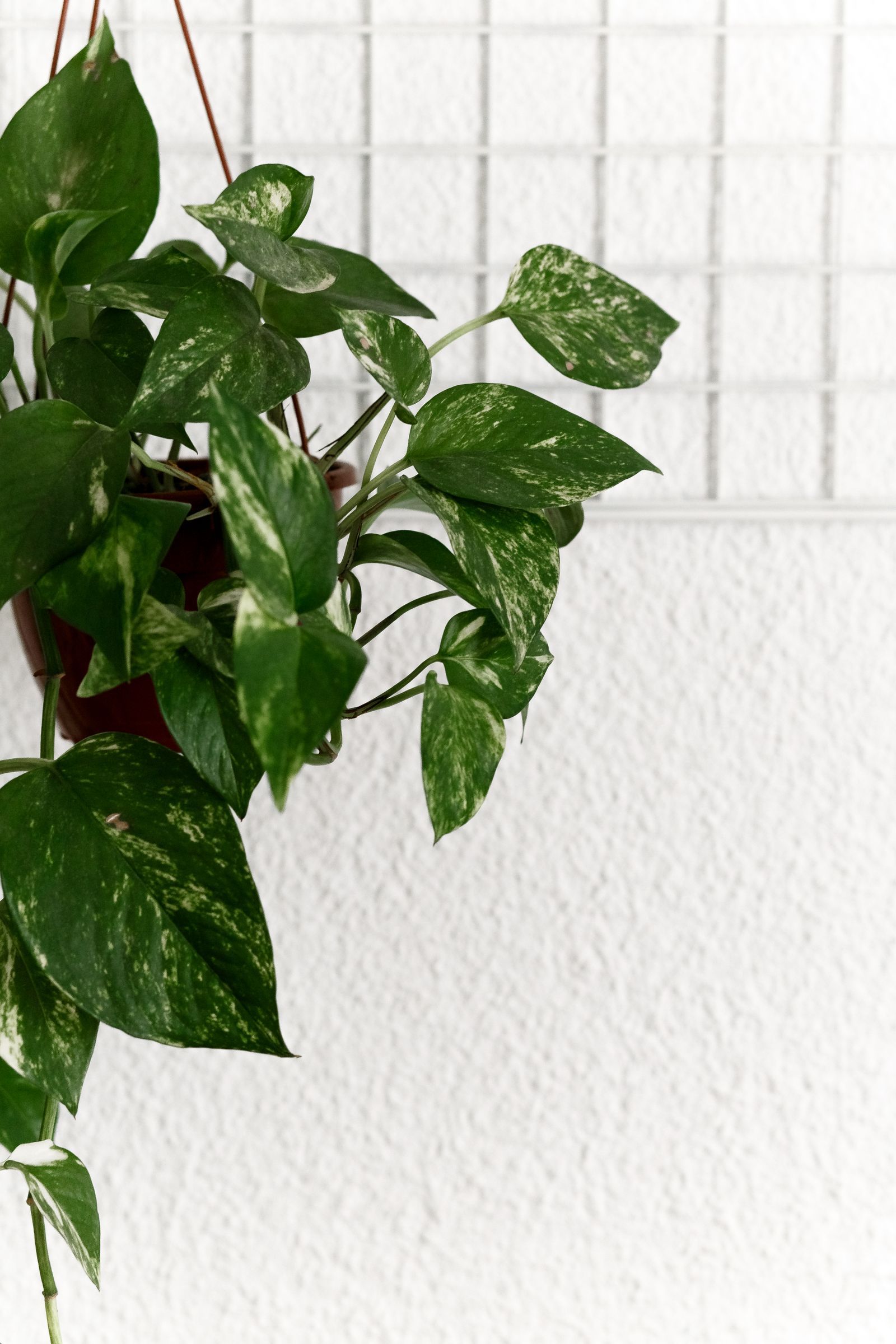
Photo: Nataliya Vaitkevich / Pexels
Pothos has a reputation for being unkillable, and the reputation survives because the plant forgives. It does not follow that any watering works. A pothos watered on a rhythm matched to how it actually grows, trailing from a basket or shelf with vines running feet beyond the pot, grows full and fast; the same plant watered by a generic houseplant calendar goes thin at the crown and yellow at the edges. The base rule, anchored by Clemson Cooperative Extension's HGIC guidance, is to water when the top 2 inches of mix are dry. In a bright warm room that is about every 7 to 10 days; in winter or dim light it stretches to every 14 to 21 days or more; in a hanging basket, the fastest drying seat in the house, it can be every 5 to 8 days. This page runs the rule for a trailing plant, vines and all.
Our houseplant watering chart owns intervals across many plants. This page owns pothos alone, in all its forms: the golden, marble queen, and plain green plants sold under a dozen names are one species, Epipremnum aureum, and they drink alike.
Interactive tool
Watering Volume Calculator: The Pothos Pot Audit
Water a pothos when the top 2 inches are dry, and soak it fully. Enter your pot diameter as both length and width with a depth of 1 inch to size the drink; hanging baskets dry days ahead of shelf pots.
19.9 gallons
For 32 square feet at 1 inch deep. That is about 76 liters, or 10 trips with a standard 2 gallon watering can.
A rain gauge or a straight sided can set in the bed tells you when a sprinkler or soaker hose has actually delivered this depth. Time alone is a guess, because hose pressure varies from house to house.
The conversion is arithmetic, not opinion: one inch over one square foot is 144 cubic inches of water, and a US gallon holds 231 cubic inches, so each square foot at one inch takes 0.62 gallons.
The Crown Check, and Why Wilting Is a Late Signal
Check at the crown, where the vines leave the mix, not at the pot's edge: push a finger 2 inches into the mix at the center of the plant. Dry there, water fully until it drains; moist there, wait, whatever the calendar says. Beginners often wait for the visible wilt because pothos wilts theatrically and recovers within hours of a drink, which makes wilting feel like a working signal. It is a late one. A plant that wilts before every watering is a plant spending its reserves on recovery instead of growth, and repeated hard wilts are what thin the crown out over a season, leaving long bare vines with leaves only at the ends. Water at the check, one step before the wilt, and the crown stays clothed. The other end of the error is Clemson's named killer: overwatering, which shows as yellow leaves on a plant whose mix never dries. Yellow leaves plus wet mix is never a request for more water.
Baskets Dry First: Placement Sets the Interval
The same plant in three seats lives on three schedules. A hanging basket dries fastest: air moves around the whole pot, the mix volume is small, and the plant sits high in the room's warmest air. Expect the 5 to 8 day end of the range in summer. A shelf pot in bright indirect light runs the standard 7 to 10 days. A plant in a dim corner or a large self watering pot stretches toward 2 to 3 weeks, and the risk flips from drought to rot. This is why copying a friend's pothos schedule fails: the interval belongs to the seat, not the species. When you move a plant, recheck its rhythm for the first month in the new seat rather than carrying the old interval with it. The calculator above sizes the drink for any of the seats: enter the pot diameter as both length and width with a depth of 1 inch, then soak to that volume and drain fully.
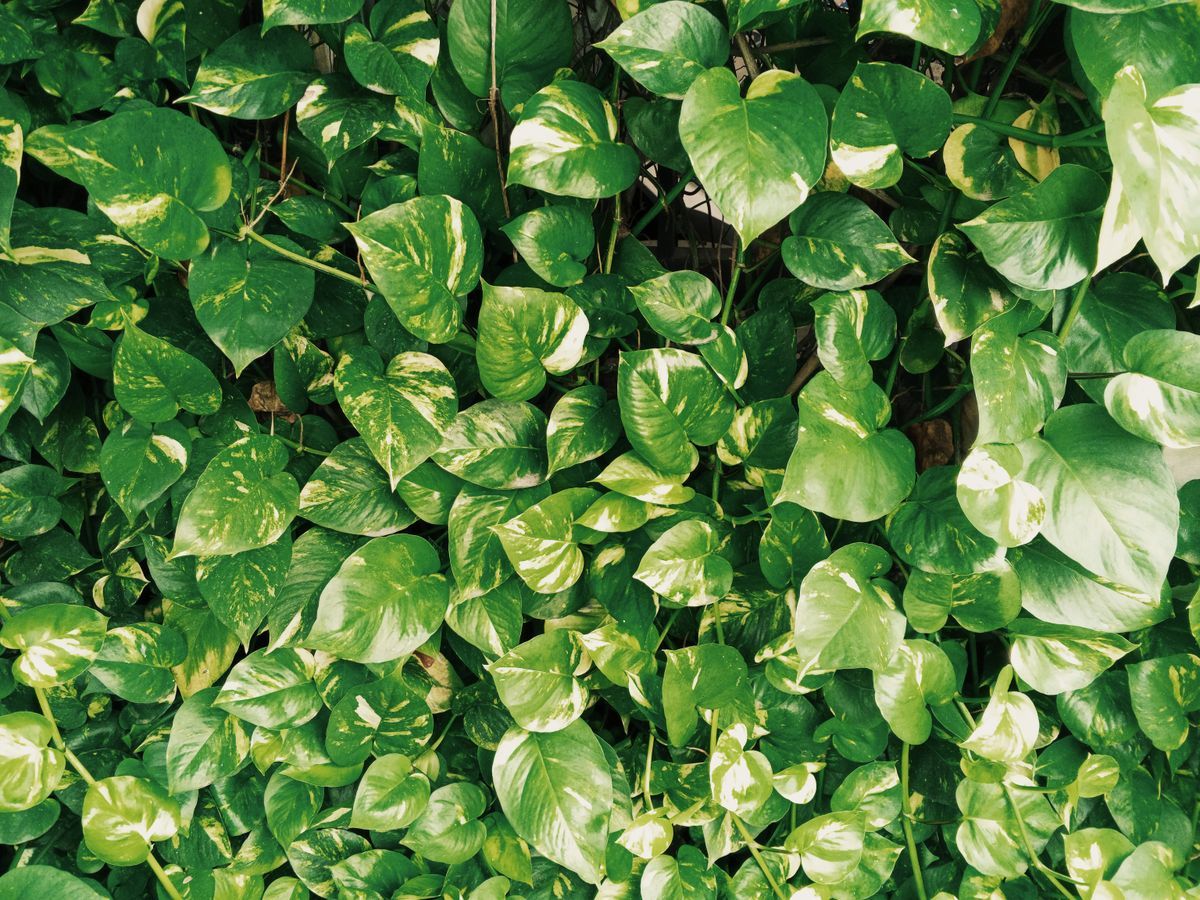
A dense cluster of golden pothos leaves
The Vines Drink Too: Length, Trimming, and Fullness
A pothos is a pot of roots supporting yards of vine, and the vine length is a water expense the pot size does not show. A plant with 6 foot vines transpires far more than the same pot with trimmed 1 foot vines, and it will reach the check depth sooner. Two working consequences follow. First, long vined plants need the check more often in summer, even though the pot has not changed. Second, trimming is a water decision as well as a looks decision: cutting vines back reduces the plant's thirst and pushes growth back into the crown, which is the fix for the bare crown problem when it is caught early. When you trim, the cuttings are the propagation system, and they run on their own watering rules, covered next.
Cuttings: Water Roots Are Not Soil Roots
A pothos cutting in a jar of water is the classic propagation, and it works because the plant roots readily. What the jar hides is that water grown roots are built for water: soft, with few root hairs, and they must convert when the cutting moves to mix. Pot a water rooted cutting into mix that stays evenly moist, not wet, for the first 2 to 3 weeks, watering lightly every few days, then graduate it to the standard check as new leaf growth shows the roots have converted. The reverse error is common too: a cutting stuck straight into dry mix and watered on the parent plant's weekly rhythm often dries out and fails, because it has no roots at all yet. Soil stuck cuttings want the same moist apprenticeship. Either way, a cutting is a seedling for its first month, and seedlings of every kind drink little and often.
Variegation Is a Light and Water Report
The golden splashes and marble queen whites are not paint; they are leaf area that does not photosynthesize, and the plant balances its books in ways you can read. In low light, a variegated pothos reverts: new leaves come in plainer and greener, because the plant needs the working area. That reversion travels with the watering stretch, since the dim seat that causes it is also the seat where the mix dries slowest, so plain new leaves plus a long interval is one diagnosis, not two: move the plant brighter, and both the color and the rhythm recover. The white portions also brown first when watering swings wildly, dry tips on the cream parts of a marble queen are the plant's most sensitive gauge of irregular drinks. Steady checks, a bright seat, and vines trimmed to keep the crown full: that is the whole variegation program, and it is a watering program as much as a light program.
Pothos in Water, and Pothos at the Office
Two special cases round out the plant. A pothos grown permanently in water, the jar on the windowsill that never graduated, is not being watered at all in the pot sense, but it is being fed or starved: plain water carries almost no nutrition, and a long term water grown plant yellows slowly unless the water is refreshed weekly and a drop of liquid feed is added monthly. It also grows the water roots described above, so the longer it lives in the jar, the longer its apprenticeship when it finally moves to mix. The office pothos is the other special case, the plant on the filing cabinet under fluorescent light that someone waters every Monday because Monday is watering day. Office light runs dim and constant, so the mix dries slowly and the Monday rhythm usually over waters it gently for years, producing the classic specimen: alive, thin, yellow edged, immortal. The fix costs nothing: check before watering, water only when the crown is dry at 2 inches, and let the interval float to two or three weeks if that is what the seat dictates. The plant will not reward the change quickly, pothos does nothing quickly in dim light, but the yellowing stops, which is the whole diagnosis confirmed.
Repotting: The Two Year Rhythm
Pothos tells you it wants a new pot in watering language before it shows you roots: the interval collapses, the pot dries in half its usual time, and water runs straight through and out the holes because there is more root than mix to hold it. Repot in spring, one size up, 2 inches wider, with fresh mix, and expect the interval to lengthen back to its normal range immediately, which is the confirmation the diagnosis was right. A plant that is happy in its pot and its seat can go two years between repottings, and a pothos that has trailed for years can be renewed instead: trim the vines hard, root the cuttings, and pot three or four rooted cuttings back into the same pot of fresh mix for a plant that looks new by midsummer. Renewal beats repotting for old plants because the crown, not the roots, is what aged.
Frequently Asked Questions
How often should I water pothos?
When the top 2 inches of mix at the crown are dry: about every 7 to 10 days in a bright warm room, every 5 to 8 days for a hanging basket in summer, and every 14 to 21 days or more in winter or dim light. Placement moves the interval more than anything else.
Is yellow leaves on a pothos overwatering or underwatering?
Check the mix. Yellow leaves with mix that stays wet are overwatering, the cause Clemson Extension names as this plant's main killer. Yellow or crisp leaves with a bone dry, lightweight pot are thirst. The mix at the crown answers the question in seconds.
Should I water pothos when it wilts?
Water it, but do not use wilting as your schedule. Pothos wilts late and recovers fast, which tempts owners into a wilt and rescue cycle that thins the crown over a season. Water at the dryness check, one step before the wilt, and the plant stays full.
Do golden pothos and marble queen pothos need different watering?
No. They are the same species as plain green pothos and follow the same rule. The difference is light: variegated forms need a brighter seat to hold their color, and a brighter seat dries the mix faster, so their interval often runs a little shorter in practice.
How do I water pothos cuttings?
In water, keep the nodes submerged and refresh the jar weekly. In mix, keep the mix evenly moist, not wet, for the first 2 to 3 weeks with light drinks every few days, because new roots are converting or forming. Once new leaves grow, graduate the cutting to the standard dryness check.
Photo credits: Nataliya Vaitkevich (Pexels); Nda Arsa (Pexels). Photos are served from this site; follow the credit to the library page for the original.