How Often to Water Pumpkin Plants: The Inch Rule, Split by Growth Stage
By the Windchime Walker editorial team
Photo: Vlada Karpovich / Pexels
Every pumpkin guide gives the same sentence: give the plants 1 to 1.5 inches of water a week. The sentence is true and nearly useless, because a pumpkin patch in June and a pumpkin patch in September are different organisms with different thirst, and because an inch of water means nothing until you know what it is in gallons over your ground. This page splits the flat rule by growth stage, explains the watering habits that double as disease control, and turns the inch into a number you can actually deliver.
Our plant spacing pumpkin page owns the layout of this crop and the University of Georgia chart row behind it. This page owns the water: the same vines, followed from seedling to ripe fruit.
Interactive tool
Watering Volume Calculator: Gallons for the Pumpkin Patch
Pumpkins want 1 to 1.5 inches of water a week, deep and at the base. Enter your patch length and width below and a depth of 1 inch to turn that rule into gallons per watering for the patch you actually planted, then scale to 1.5 inches at flowering and fruit set.
19.9 gallons
For 32 square feet at 1 inch deep. That is about 76 liters, or 10 trips with a standard 2 gallon watering can.
A rain gauge or a straight sided can set in the bed tells you when a sprinkler or soaker hose has actually delivered this depth. Time alone is a guess, because hose pressure varies from house to house.
The conversion is arithmetic, not opinion: one inch over one square foot is 144 cubic inches of water, and a US gallon holds 231 cubic inches, so each square foot at one inch takes 0.62 gallons.
The Short Answer by Stage
Seedlings and fresh transplants need small, frequent drinks: the top inch of soil kept moist while roots are shallow, which usually means a light watering every day or two in warm weather. Once the vines start to run, switch to the adult rhythm: 1 to 1.5 inches of water per week, delivered in one or two deep soakings rather than daily sprinkles. At flowering and fruit set, hold the top of that range and do not let the patch dry out between waterings, because this is the stage where stress costs fruit. While fruit is filling, keep the rhythm steady. As fruit colors and ripens, taper: cut back toward the low end of the range and let the soil surface dry between waterings, which concentrates the fruit and reduces rot where pumpkins rest on damp ground.
Why Deep and Rare Beats Shallow and Daily
A pumpkin root system is built to forage. Vines root at the leaf nodes as they run, and the main root mass pushes deep when the water is deep. Watering a little every day trains the opposite plant: roots stay in the top two inches, where the soil heats up and dries out by noon, and the plant wilts every afternoon even though you watered that morning. One deep soaking that wets the soil 6 to 8 inches down, followed by a pause while the surface dries, produces roots that can ride out a hot week. It also keeps the foliage dry for more of the day, which matters more for pumpkins than for almost any other vegetable, as the mildew section below explains.
What an Inch of Water Means in Gallons
An inch of water over one square foot is about 0.62 gallons. Over a single pumpkin hill with room to run, say a circle 6 feet across, that is roughly 17 gallons for one inch. Over a modest patch of 100 square feet, one inch is about 62 gallons, and the weekly 1.5 inch target in a dry spell is over 90 gallons. This is why patch watering by hand with a can is a losing game by July, and why the delivery method matters: a soaker hose or drip line laid along the rows delivers the deep soaking at the soil line over an hour or two, which is exactly the slow, deep application the roots want and the foliage hates to miss. Run the calculator above with your patch dimensions to get your own gallons per inch before you set a timer.
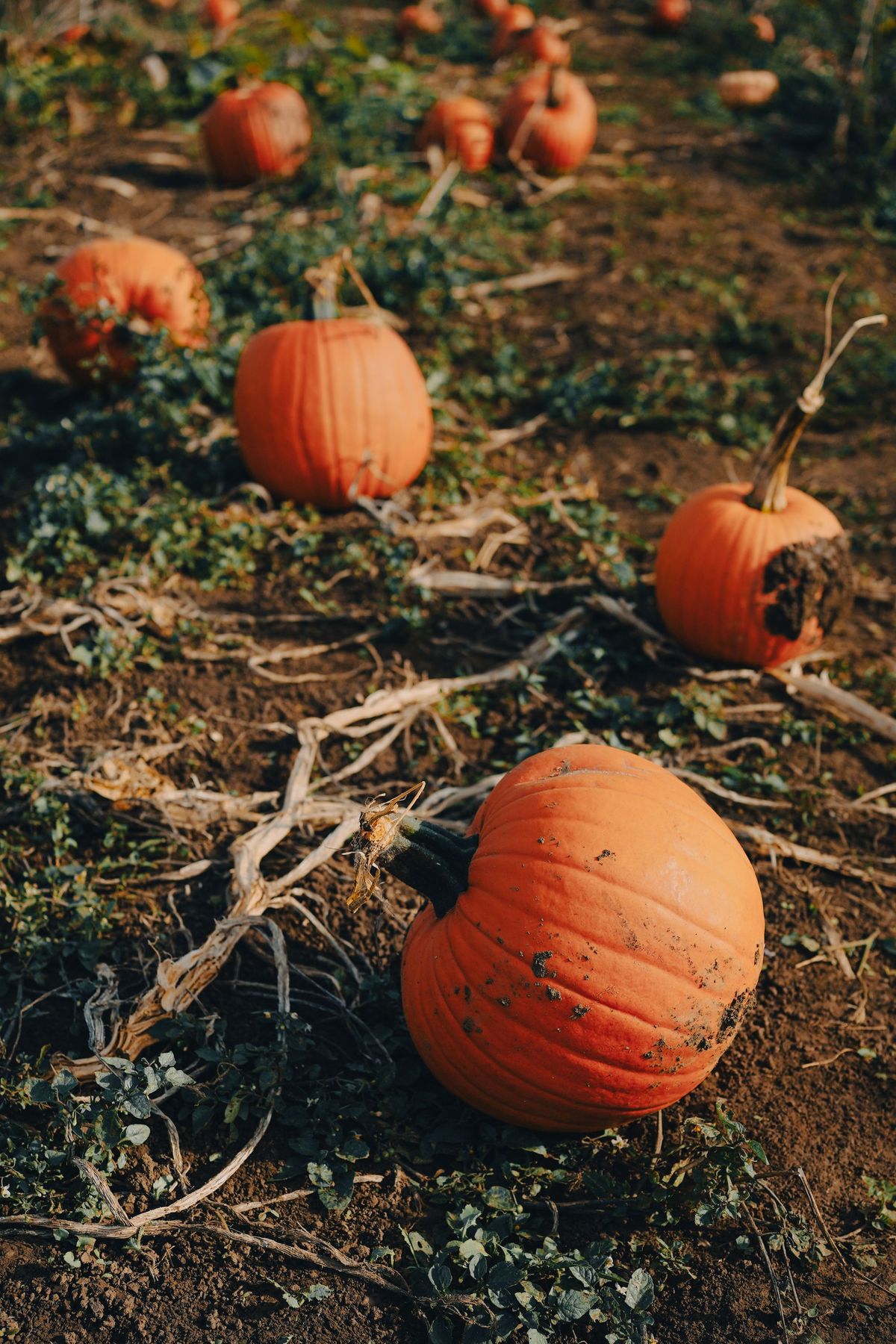
Pumpkins ripening in the field on drying vines
Water at the Base: the Mildew Rule
Powdery mildew is the near certain disease of pumpkin foliage by late summer, and overhead watering is its delivery service. Wet leaves, especially leaves wetted in the evening that stay wet all night, let the fungus establish early and spread fast. Water at the base of the plants, in the morning, so the soil takes the water and the leaves stay dry. If you must use a sprinkler, run it early enough that foliage dries fully before midday heat, and never in the evening. Mulch under the vines, 3 to 4 inches of straw once the soil is warm, does three watering jobs at once: it slows evaporation so the weekly inch lasts longer, it keeps soil from splashing onto leaves during heavy watering or rain, and it gives ripening fruit a dry bed to rest on instead of damp soil.
The Afternoon Wilt False Alarm
Pumpkin leaves wilt dramatically on hot afternoons even in well watered soil. The leaves lose water to the air faster than the roots can replace it at peak heat, the plant closes down to protect itself, and by evening the same leaves stand back up. Wilting that recovers by morning is weather, not thirst, and watering in response to it trains the shallow root problem above. The real thirst test is the morning check: leaves still limp at sunrise, or soil dry 3 to 4 inches down when you push a finger or a trowel in, means water now. Check before 9 in the morning, decide, and water deeply if the answer is yes.
Flowering, Fruit Set, and the Expensive Dry Week
The one stage where the patch cannot shrug off a dry week is flowering and early fruit set. Blossoms abort and young fruit stalls or drops when the plant is stressed for water at this point, and the loss does not come back later in the season. When the first female flowers open, the ones with a small round swelling behind the blossom, hold the watering at the full 1.5 inches a week and keep it even. Uneven watering at fruit fill, dry then flooded, is also the pattern behind fruit that grows lopsided and behind blossom end problems in the smaller pie types. Steady beats generous: the same amount every week outperforms a heroic soak after a drought.
Ripening: the Taper and the Dry Bed
As fruit reaches full size and the skin starts to color, the plant's job changes from growing to ripening, and the water should change with it. Taper toward 1 inch a week or less, let the surface dry between waterings, and keep water off the fruit itself. Pumpkins resting on wet soil in a wet week rot at the contact point; a piece of cardboard, a wood shingle, or the straw mulch bed under each fruit is cheap insurance. In the final week or two before harvest, many growers stop watering entirely in dry weather and let the vines decline, which hardens the rind. Rain at this stage is out of your control; drainage and the fruit bed are the parts that are not.
Rain, Heat Waves, and Soil: Adjusting the Inch
The weekly inch is a target for the soil, not a command for the hose, and three conditions adjust it. Rain counts: an inch of rain in a week is the week's watering, delivered better than you could, and a rain gauge in the patch turns guessing into arithmetic. Heat waves raise the target: in a week of days above 90 degrees F with wind, hold the 1.5 inch end of the range and check the soil at 4 inches down mid week, because a patch that was fine on the standard rhythm can fall behind in three hot days at fruit fill. Soil type shifts the delivery more than the total. Sand drains fast and holds little, so the same weekly water does better split into two soakings; clay holds water and releases it slowly, so one deep soaking lasts, but puddling on the surface means you are applying faster than the soil can take it, and the fix is a slower soaker run, not more water. The stage table at the top of this page is the plan; the gauge, the forecast, and a trowel are how you run it.
Setting Up Delivery Once, in June
The patch watering system that survives the season gets installed while the vines are small. Lay soaker hoses or drip lines along the rows in June, before the vines cover the ground, because dragging hoses through a July patch breaks stems and spreads the mildew you are trying to avoid. Mulch over the lines once the soil is warm. Put the whole patch on one valve and one timer if you can, set for an early morning run long enough to deliver your calculated gallons, and then manage the season by adjusting that one run time up at flowering and down at ripening. Hand watering still has one job it does best: seedlings and fresh transplants in their first two weeks, where a can puts a small drink exactly on a small root zone without flooding the empty ground between hills. After the vines run, the system waters, and you go back to the more interesting work of watching fruit set.
Frequently Asked Questions
How often should I water pumpkin plants?
By stage. Seedlings get light water every day or two to keep the top inch moist. Running vines get 1 to 1.5 inches of water a week in one or two deep soakings. Flowering and fruit set hold the top of that range without a dry gap. Ripening fruit tapers back toward 1 inch or less. The stage decides; the calendar just reports it.
How many gallons is an inch of water on my patch?
About 0.62 gallons per square foot per inch. A 100 square foot patch needs roughly 62 gallons for one inch, and over 90 gallons for the 1.5 inch weekly target in a dry spell. Measure your patch, run the calculator, and set your hose or soaker time from the gallon number instead of guessing.
Why do my pumpkin leaves wilt every afternoon?
Usually heat, not thirst. Leaves lose water faster than roots can replace it at peak temperature and recover by evening. Wilt that is gone by morning needs no water. Wilt still present at sunrise, with soil dry 3 to 4 inches down, is real thirst and earns a deep soaking.
Should I water pumpkin leaves or the ground?
The ground, always. Water at the base in the morning and keep foliage dry, because wet leaves are how powdery mildew establishes and spreads. Soaker hoses and drip lines are the right tools. If a sprinkler is all you have, run it early in the morning so leaves dry fast.
When do I stop watering pumpkins before harvest?
Taper as fruit colors, and in dry weather you can stop entirely in the last week or two so the rind hardens and the vines decline. Keep fruit off wet soil the whole ripening period with mulch, cardboard, or a shingle under each pumpkin.
Photo credits: Vlada Karpovich (Pexels); Boys In Bristol SmokZ (Pexels). Photos are served from this site; follow the credit to the library page for the original.