How Often to Water a Queen Fern: The Kimberley Queen System, and How It Differs From a Boston Fern
By the Windchime Walker editorial team
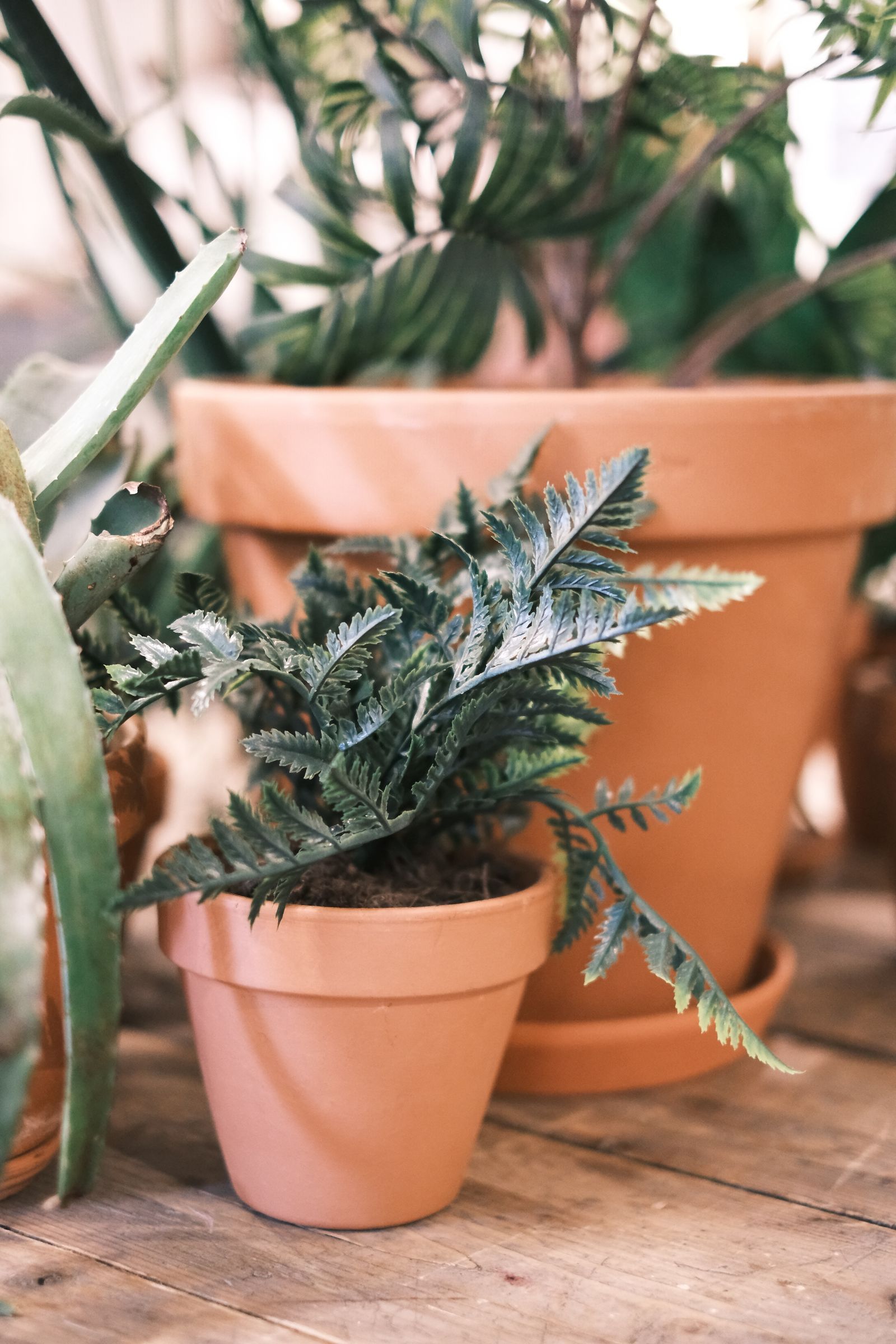
Photo: Cup of Honey Lemon / Pexels
The queen fern on most porches and in most hanging baskets is the Kimberley queen, Nephrolepis obliterata, and it spends its life being watered by Boston fern advice. The two are both sword ferns and look like cousins, but they are different plants with different tolerances, and the difference is worth money and fronds: the queen fern stands upright instead of arching, tolerates ordinary room humidity better, and forgives a short dry spell that starts a Boston fern shedding. The base rule is to keep the mix consistently moist but never soggy. Translated into intervals, guides sprawl from every 2 to 4 days to every 7 to 14 days, and the sprawl is honest: pot size, basket exposure, and placement move this plant's interval more than the calendar does. This page gives you the rule, the comparison, and the checks that pick your number.
Our fern houseplant care guide owns the fern family system, and our Boston fern watering page owns that plant's stricter rules. This page owns the queen fern alone.
Interactive tool
Watering Volume Calculator: The Queen Fern Pot Audit
The Kimberley queen fern wants its mix moist, never soggy, and forgives a brief dry down its Boston cousin does not. Enter your pot diameter as both length and width with a depth of 1 inch to size one even drink.
19.9 gallons
For 32 square feet at 1 inch deep. That is about 76 liters, or 10 trips with a standard 2 gallon watering can.
A rain gauge or a straight sided can set in the bed tells you when a sprinkler or soaker hose has actually delivered this depth. Time alone is a guess, because hose pressure varies from house to house.
The conversion is arithmetic, not opinion: one inch over one square foot is 144 cubic inches of water, and a US gallon holds 231 cubic inches, so each square foot at one inch takes 0.62 gallons.
Queen Fern Versus Boston Fern: The Differences That Change Watering
Three differences drive everything. First, structure: the queen fern's fronds grow upright and stiff, so the crown sits exposed and the mix surface dries evenly; the Boston arches, shades its own crown, and hides dry or wet spots under the canopy. Second, humidity: the queen fern holds its fronds at 40 to 50 percent humidity, ordinary heated room territory with a little help, where a Boston fern wants 50 to 60 percent or more and browns at the edges below it. Third, and most useful, drought tolerance: a queen fern survives a brief dry down of 2 to 4 days with fronds intact, wilting and recovering, while a Boston fern answers the same lapse with a shower of shed leaflets and brown fronds that do not come back. None of this makes the queen fern a dry plant. It makes it a moist plant with a margin, and the margin is what you manage.
The Rule: Moist, Never Soggy, Checked at the Crown
Water when the surface of the mix has just dried and the mix an inch down is still barely moist; do not wait for the full dry down you would give a pothos, and do not keep the pot standing in water to prevent one. In practice: a porch pot in summer heat may need water every 2 to 4 days, a basket indoors every 4 to 7, and a large pot in a cool bright room every 7 to 14 in winter. The check is a fingertip at the crown, run every couple of days until your plant's rhythm in its seat is familiar, then on the rhythm with the check as confirmation. When you water, soak evenly across the whole surface until it drains, because a fern's rhizomes spread through the whole pot and a drink poured in one spot leaves half the plant dry. The calculator above sizes that drink: enter the pot diameter as both length and width with a depth of 1 inch.
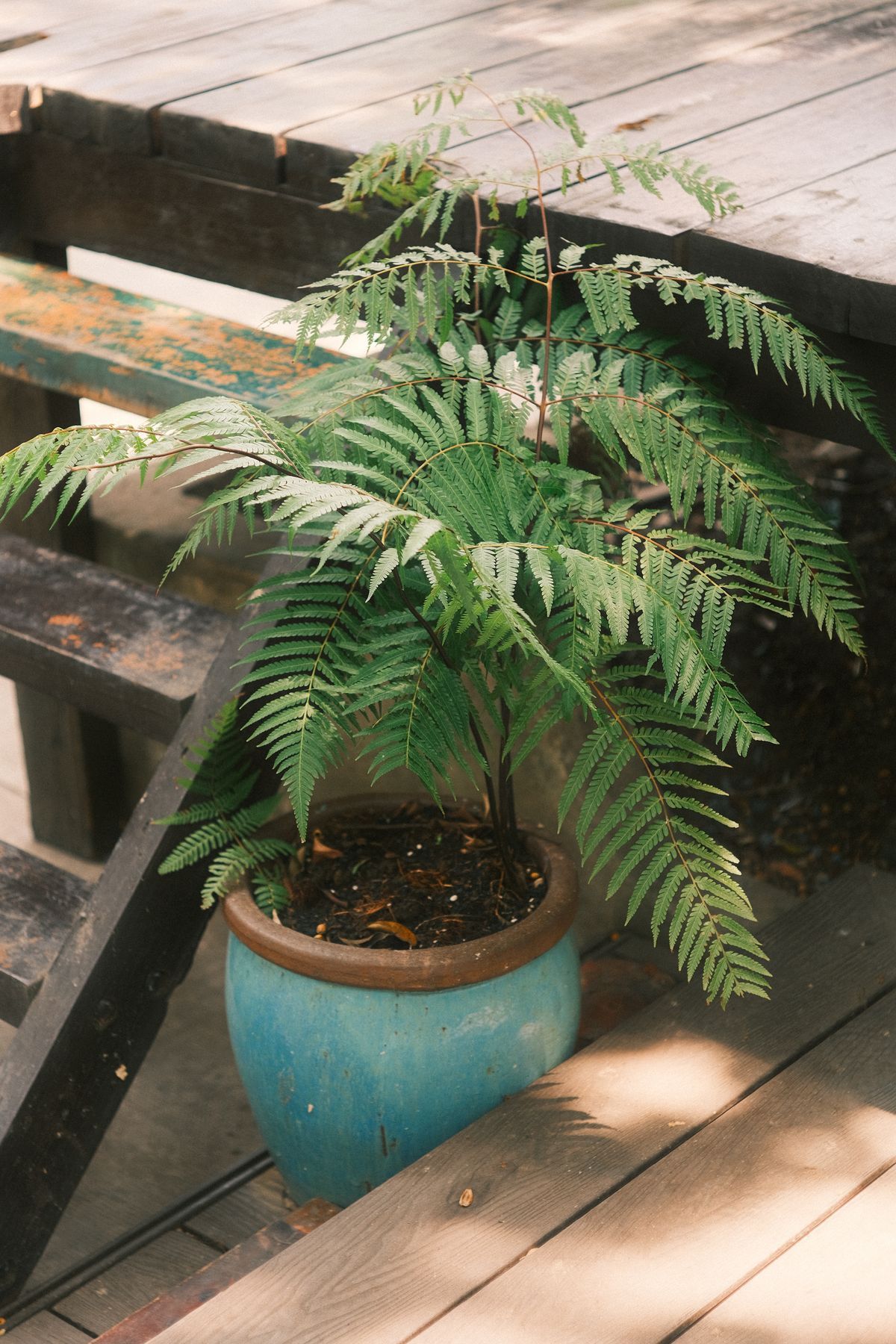
A potted fern in a blue pot on a rustic wooden deck
The Dry Down Window: How Dry Is Safe
The queen fern's signature tolerance deserves a working definition. A safe dry down is 2 to 4 days past the point where you would normally water, ending when the fronds just begin to lose their spring and look matte. Watered at that point, the plant recovers fully, usually within a day. Past it, the oldest fronds yellow and the plant starts spending fronds to save the crown, and recovery takes weeks of new growth. Use the window deliberately, for a long weekend away, not as a routine: routine watering still happens at the moist check. What the window buys you is forgiveness, the thing the Boston fern does not offer. It also buys a diagnostic: if your fern collapses dramatically after two dry days, it is probably not a queen fern, or its pot is so small and root filled that there is no moisture reserve left, which is a repotting signal.
Rhizome Rot: The Killer on the Other Side
Everything forgiving about this plant ends at standing water. The rhizomes that carry the crown rot in mix that stays saturated, and the signs mimic drought closely enough to trap people: fronds wilt and yellow, the crown feels soft at the base, and the mix smells sour. The test is the same fingertip, read honestly: if the mix is wet and the plant is wilting, the problem is too much water, and the fix is to stop, let the pot drain fully and dry to the moist check, and remove any saucer habit that keeps the base wet. Ferns in baskets hung over sinks and tubs get an accidental advantage here, because they always drain. Ferns in decorative pots on saucers are the rot cases. Water deeply, drain completely, and never let the pot sit in its own runoff: that sentence is the whole disease program for this plant.
Humidity, Placement, and the Porch Pot
The queen fern's lower humidity floor, 40 to 50 percent, is reachable without equipment in most homes for most of the year: group it with other plants, keep it out of heating vent blast, and the transpiration of the group does the rest. Winter heating can drag a room below 40 percent, and the fern will tell you with brown frond tips; a pebble tray or a small humidifier nearby answers it. Placement writes the interval more than any other choice. The classic queen fern seat, a porch pot in bright shade, is also its thirstiest: heat, moving air, and a pot that is often undersized for the plant's crown. That is the seat behind the every 2 to 4 day guides. Indoors in a large pot, the same plant is the every 7 to 14 day plant of the other guides. Both are right, for their seats, which is why this page teaches the check instead of a number: your fern's seat picks the number, and the check confirms it.
Feeding, Division, and the Spring Reset
Water is most of this plant's care, but not all of it. Feeding is light: a balanced liquid feed at half strength once a month in spring and summer is plenty for a plant whose growth is fronds, not flowers, and overfeeding shows as brown frond edges that get blamed on humidity. The spring reset is the annual maintenance the watering system depends on: lift the plant, check whether the rhizomes have filled the pot wall to wall, and if they have, divide. A queen fern divides kindly in spring, the clump teased or cut into sections each carrying rhizome and fronds, potted into fresh mix and kept evenly moist while they reestablish, which is also how the one porch plant becomes three. Repotting without division follows the fern rule of one size up, because a fern in an oversized pot sits in mix that stays wet beyond its roots' reach, the rot setup again. Old fronds that have yellowed at the base are cut out at the crown through the year, which keeps air moving through the plant and makes the watering check at the crown possible to perform. A queen fern given the moist rhythm, the spring reset, and the light feed is not a plant being maintained; it is a plant compounding, and by its third year it is usually the largest green thing on the porch.
Frequently Asked Questions
How often should I water a queen fern?
Keep the mix consistently moist and water when the surface has just dried and the mix an inch down is still barely moist. That is every 2 to 4 days for a porch pot in summer, every 4 to 7 days for an indoor basket, and every 7 to 14 days for a large pot in a cool bright room in winter.
What is the difference between a queen fern and a Boston fern for watering?
The queen fern grows upright, holds its fronds at 40 to 50 percent humidity where a Boston wants 50 to 60 or more, and tolerates a brief 2 to 4 day dry down without shedding. A Boston fern must never fully dry and answers a lapse with shed leaflets. Both rot in standing water.
Can a queen fern recover from drying out?
Within its window, yes. If the fronds have just lost their spring after 2 to 4 dry days, a full soak restores it within about a day. Past the window, expect yellowed older fronds and a slower recovery through new growth. A dramatic collapse after two days usually means a tiny root filled pot or a different fern.
Why is my queen fern wilting when the soil is wet?
That is the rot pattern, not thirst. Rhizomes sitting in saturated mix fail, and the fronds wilt because the roots can no longer supply them. Stop watering, drain the pot fully, let it dry to the moist check, and end any habit of the pot standing in runoff.
Does a queen fern need misting?
Not as a watering method. Misting does not wet the mix, and this plant's humidity floor of 40 to 50 percent is met in most rooms by grouping plants and keeping it away from heating vents. Save the effort for the soak and drain routine, which is where its health is decided.
Photo credits: Cup of Honey Lemon (Pexels); Việt Anh Nguyễn (Pexels). Photos are served from this site; follow the credit to the library page for the original.