Rosemary is a Mediterranean hillside in a pot, and its watering rule is written by that landscape: lean soil, sharp drainage, long dry spells between real drinks. The interval forks on the plant's age, and confusing the two sides of the fork is the standard way to kill it. A first season plant, still building the root system that will make it drought proof, wants water weekly in dry weather. An established plant runs every 1 to 2 weeks, the figure Texas A&M AgriLife guidance carried in the results gives for this drought shrub, and in a pot the working check is that the top 1 to 2 inches of mix dry between drinks. This page runs the fork, the dry between rule for pots and ground, the rot diagnosis and rescue for the plant already drowning, and the indoor protocol, because a rosemary on a winter windowsill lives under different law than one in a summer bed and fails for the opposite reason.
Home / Flowers and Houseplants
How Often to Water Rosemary: The Age Fork, the Dry Between Rule, and the Rot Diagnosis
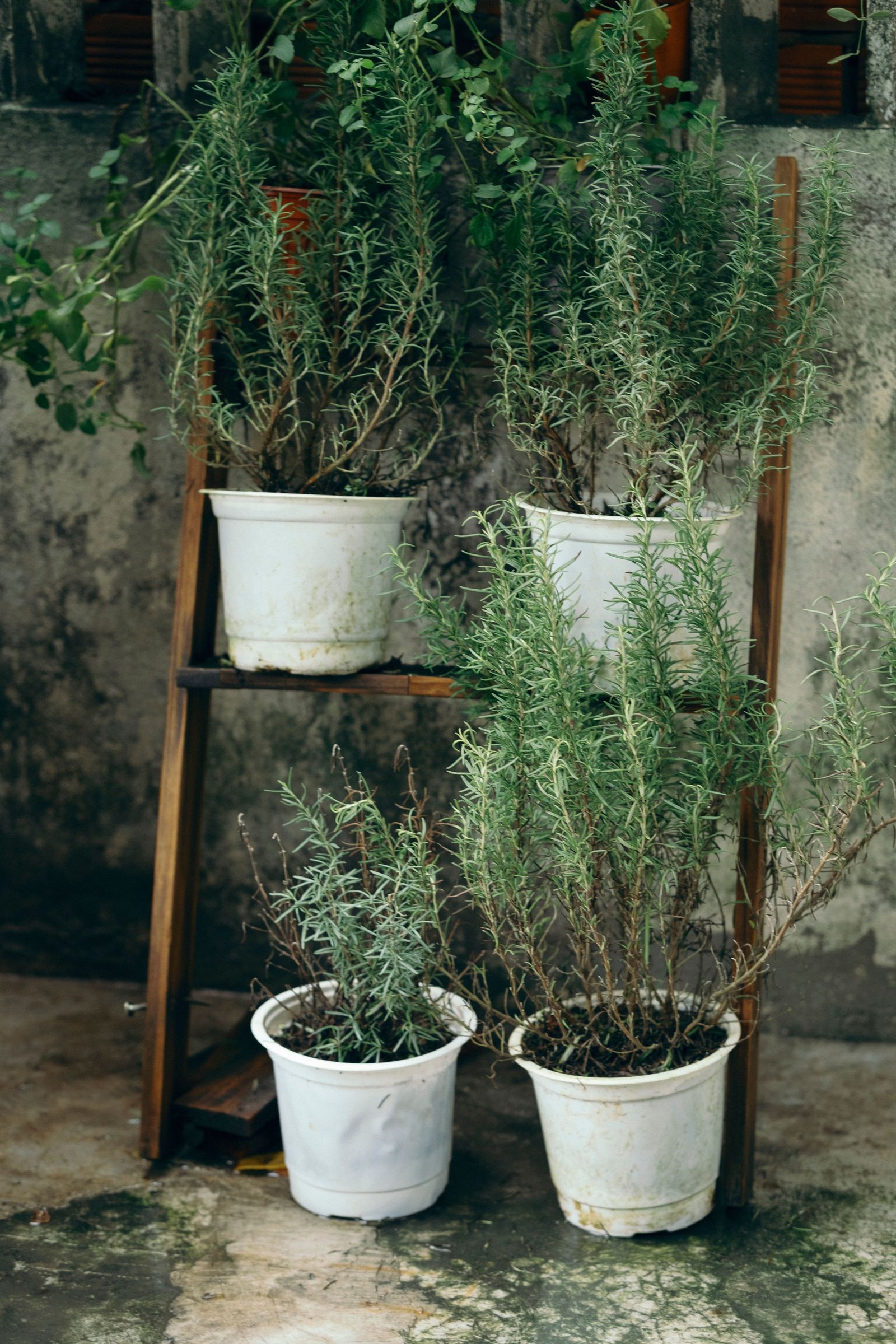
Photo: Kha Ruxury / Pexels
Watering Volume Calculator: The Rosemary Pot Audit
Rosemary is watered on evidence, not habit: dry between drinks, then one thorough soak. Enter your pot diameter as both length and width with a depth of 1 inch to size that soak.
19.9 gallons
For 32 square feet at 1 inch deep. That is about 76 liters, or 10 trips with a standard 2 gallon watering can.
A rain gauge or a straight sided can set in the bed tells you when a sprinkler or soaker hose has actually delivered this depth. Time alone is a guess, because hose pressure varies from house to house.
The conversion is arithmetic, not opinion: one inch over one square foot is 144 cubic inches of water, and a US gallon holds 231 cubic inches, so each square foot at one inch takes 0.62 gallons.
The Age Fork: Weekly for the First Season, Then Almost Never
A nursery rosemary arrives with a root ball the size of its pot and no roots at all in your soil. For its first season in the ground, water it weekly in dry weather, deeply, so the establishing roots chase moisture downward and outward. The plant is not drought tolerant yet; it is drought tolerant in training, and the training is the gradual stretch. By its second season, with roots run wide and deep, the same plant in a bed may need water only in genuine drought, every 1 to 2 weeks at the generous end and often less in average rainfall. In pots the fork compresses but does not vanish: a newly potted plant checks weekly, an established pot in summer heat runs every 1 to 2 weeks by the dry check below. The error that kills is applying the established interval to the new plant, or worse, the reverse, watering a five year shrub on a new plant's rhythm and keeping its roots wet for years until the rot that was always coming arrives. Name the plant's age before you name its interval.
The Dry Between Rule: Pots, Ground, and the Drainage Law
Between drinks, rosemary must dry. In a pot, the check is the top 1 to 2 inches of mix dry to the touch, and in a large pot the dowel test at depth is the honest version, because the surface of a big pot lies about its center. When you water, water completely, until it runs from the drainage holes, then empty the saucer without exception; a rosemary standing in a saucer of runoff is a rosemary being murdered politely. The mix is the other half of the law: sharp, gritty, and lean, a container mix cut with perlite or coarse sand, in a pot with open holes, terracotta preferred because its walls breathe and dry the mix from the sides. In the ground the same law reads as site selection: a slope, a raised bed, a gravelly patch, anywhere water does not stand after rain. Heavy clay that stays wet is the one soil verdict rosemary will not negotiate, and the fix is a mound or a pot, not a watering schedule. Use the calculator above to size the deep drink; the volume matters less than the interval for this plant, but a shallow sprinkle that never reaches the lower roots teaches the wrong root shape entirely.
The Rot Diagnosis and the Rescue Protocol
Rosemary rot announces itself quietly: needles yellowing from the base upward, stems going brown and brittle at the bottom while the tips still look green, a plant that wilts in wet mix, which is the signature that separates rot from thirst, since a thirsty rosemary wilts in dry mix and recovers by evening after a drink. Confirm by unpotting or by a finger at the base: black, soft roots and a sour smell are the verdict. The rescue is surgery and a new regime. Shake off the wet mix, cut away every black or mushy root and every brown stem back to clean, green wood, and repot into fresh gritty mix in a clean pot, one size smaller than your instinct suggests, because a convalescing plant cannot patrol a large volume of wet mix. Water once, lightly, and then hold the dry between rule strictly while it rebuilds. A plant caught early, with a third of its roots still white and firm, usually returns. A plant brown to the tips is a cutting opportunity: take healthy tip cuttings from whatever green remains, root them in grit, and let the next plant inherit a stricter owner.
Indoors for Winter: The Opposite Failure
The rosemary brought inside for winter dies of the opposite problem from the summer bed plant: dry air, low light, and a well meaning owner watering on the summer rhythm into a pot that now dries in weeks. Indoors, the interval stretches to the dry check wherever it lands, often every 2 to 3 weeks in a cool bright room, and the plant wants the brightest window in the house and air that moves. The needles drop in a heated room largely from the air, not the soil, and the remedies are a cooler spot, a pebble tray for local humidity, and the discipline to leave the watering can alone. Powdery mildew, the grey dusting on indoor plants, is an air verdict too, answered with spacing and a fan rather than more or less water. Resume the outdoor rhythm only when the plant goes back out in spring, hardened off over a week, after the last frost. A rosemary that winters successfully is mostly a rosemary that was left alone in bright, cool, dryish air, which is the Mediterranean winter it evolved for, recreated by accident in a spare room.
Feeding and Harvest: The Lean Plant's Terms
Rosemary wants almost no fertilizer, and overfeeding produces soft, sappy growth with diluted flavor and a plant more attractive to every problem in this article. A light feed once in spring for a pot plant, nothing at all for a bed plant in decent soil, is the whole program. Harvest is the plant's pruning and follows the watering logic: take sprigs from the tips, never more than a third of the plant at once, never cut back into bare old wood that carries no needles, because rosemary does not reliably sprout from old wood and a hard cut can take the whole branch. Harvest in the morning after the dew dries, when the aromatic oils peak, and harvest before flowering for the strongest flavor, though the flowers themselves are edible and beloved by bees. A plant harvested little and often stays bushy and young; a plant ignored for years goes woody and hollow in the center, and the remedy there is replacement or layering, not a heroic prune. Lean water, lean food, regular small harvests: the terms are consistent, and the plant rewards them with a decade of service.
Frequently Asked Questions
How often should I water rosemary?
It forks on age. A first season plant establishing its roots drinks weekly in dry weather. An established plant runs every 1 to 2 weeks, per Texas A&M AgriLife guidance, and often less in the ground with average rain. In a pot, replace the calendar with the check: water when the top 1 to 2 inches of mix are dry, thoroughly, and empty the saucer. Indoors in winter the same check may not come up dry for 2 to 3 weeks, and the plant is healthier for the wait.
Can rosemary be overwatered?
It is the plant's commonest cause of death. Rosemary rots at the roots in mix that stays wet, showing yellowing needles from the base, brown brittle lower stems, and wilting in soil that is still moist. The defenses are a gritty, free draining mix, a pot with open drainage, an emptied saucer, and a real dry interval between drinks. A plant in heavy wet clay in the ground should be moved to a mound, a raised bed, or a pot; no watering schedule fixes a site that never dries.
Why is my rosemary wilting even though I water it?
If the mix is wet and the plant wilts, the roots are failing, not the water supply: root rot has taken enough of the root system that the plant cannot drink what is around it. Unpot it and read the roots. White and firm means healthy; black and mushy means rot, answered by cutting back to clean tissue and repotting in gritty mix on a strict dry between rhythm. If the mix is dry and the plant wilts at midday but recovers by evening, that is heat, not emergency; check again in the morning before watering.
How do I keep a potted rosemary alive indoors over winter?
Bright light, cool air, and restraint. Give it the sunniest window you have, keep it away from heating vents, and water only when the top 1 to 2 inches of mix are dry, which in a winter room can mean every 2 to 3 weeks. Needle drop indoors is usually dry air and low light rather than thirst. Air movement helps against the powdery mildew that still indoor air invites. Move it back out after the last frost, hardened off gradually, and resume the outdoor rhythm as growth restarts.
Should rosemary be watered from the top or the bottom?
Either delivers the drink; the interval and the drainage decide the plant's fate, not the direction. Top watering that soaks the whole pot and drains freely is the standard, and it has the advantage of flushing salts. If you bottom water, let the pot drink for twenty minutes and then drain it fully, and never leave it standing in the saucer. What rosemary cannot forgive is frequency without dryness: a small daily sip from any direction keeps the crown zone wet and invites the rot this page is built to prevent.
Photo credits: Kha Ruxury (Pexels); Vatsal Patni (Pexels). Photos are served from this site; follow the credit to the library page for the original.