How Often to Water a Snake Plant: The Interval Your Pot Actually Sets
By the Windchime Walker editorial team
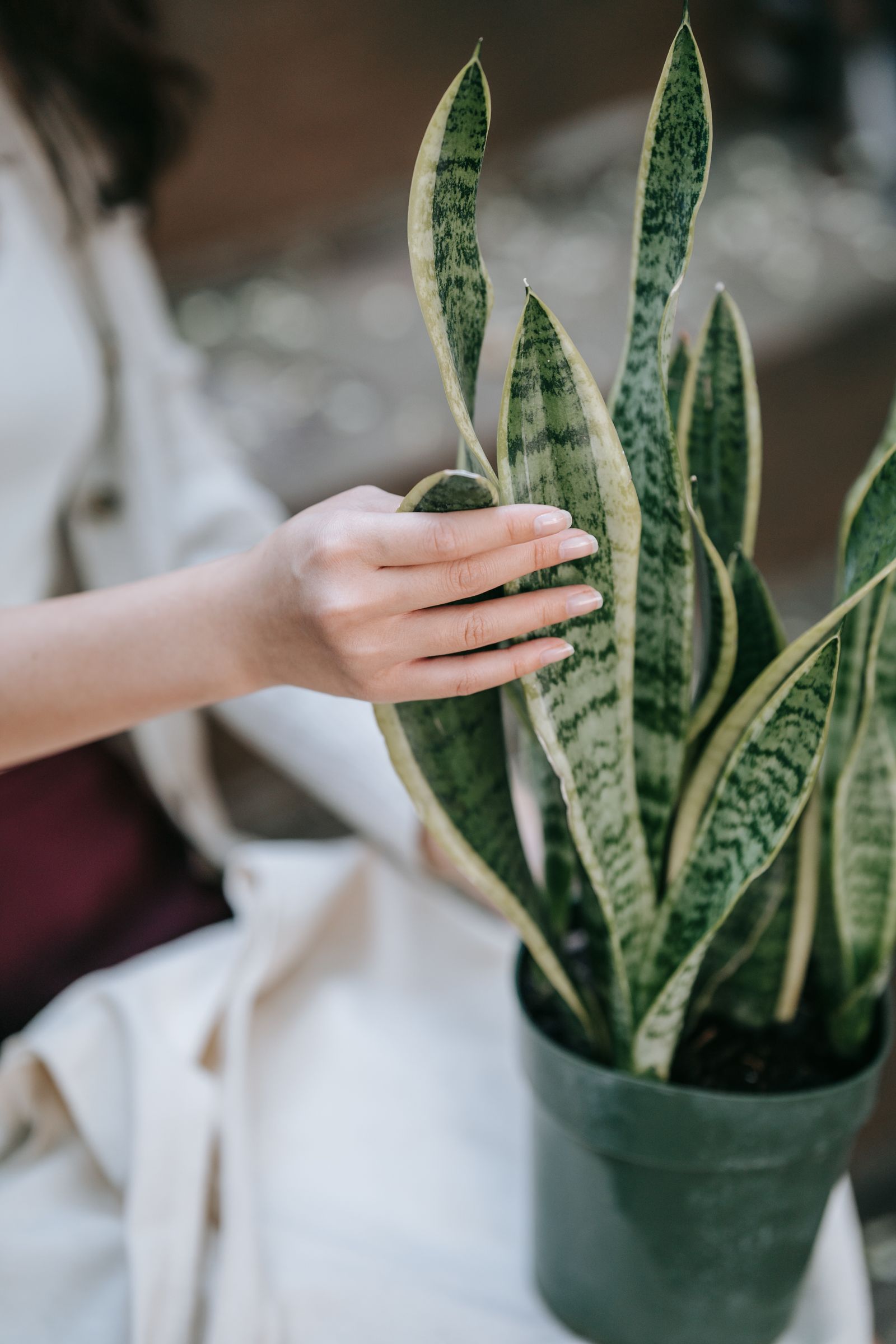
Photo: Sasha Kim / Pexels
Ask the internet how often to water a snake plant and you get a number. The number is not exactly wrong, but it is not yours: it belongs to an average plant in an average pot in average light, and your plant lives in a specific pot by a specific window. Snake plants die of one thing overwhelmingly, too much water, given lovingly on a schedule. This page gives you the published ranges, then teaches the method that replaces the schedule, so your interval comes from your plant's actual conditions instead of a stranger's average.
The extension ranges first, because they frame everything. Clemson Extension guidance puts watering at every 2 to 4 weeks during the growing season, stretching to every 4 to 6 weeks in fall and winter. NC State Extension quotes an even leaner winter interval, up to every 1 to 2 months. Those two sources differ, and this page will not pretend otherwise or average them into a fake compromise. They differ because their assumed conditions differ, pot size, mix, light, and indoor heating all move the number. The method below is how you find where your plant sits inside that range.
Interactive tool
Watering Calculator: The Snake Plant Pot Audit
Your interval comes from your pot, not a calendar. Enter your pot diameter as both length and width below and a depth of about 1 inch to see what one thorough soak actually is for a pot that size, then water only when the skewer test says the mix is dry all the way through.
19.9 gallons
For 32 square feet at 1 inch deep. That is about 76 liters, or 10 trips with a standard 2 gallon watering can.
A rain gauge or a straight sided can set in the bed tells you when a sprinkler or soaker hose has actually delivered this depth. Time alone is a guess, because hose pressure varies from house to house.
The conversion is arithmetic, not opinion: one inch over one square foot is 144 cubic inches of water, and a US gallon holds 231 cubic inches, so each square foot at one inch takes 0.62 gallons.
The Rule Underneath Every Number
Water a snake plant only when the soil is dry all the way through, top to bottom, not merely dry at the surface. This plant is a succulent from dry country; its thick leaves and rhizomes are water storage, and its roots are built to go looking between drinks, not to sit in moisture. Wet soil held around those roots invites rot, and rot in a snake plant moves quietly: the first visible sign is often a leaf going soft and yellow at the base and toppling, by which time the damage below is well advanced. Every technique on this page exists to answer one question reliably: is it dry all the way down yet?
Check First: Three Ways to Know
The finger test, done deep. Push a finger into the mix as far as it reaches, two to three inches. For most houseplants that is enough; for a snake plant it is only the beginning of the answer, because the bottom of the pot can stay wet long after the top is dust. Use it as a first screen: moist at finger depth means definitely wait.
The wooden skewer or chopstick. Push a plain wooden skewer gently to the bottom of the pot, leave it a minute, and pull it out. Soil clinging and a darkened, damp skewer mean moisture remains down where the roots live; a skewer that comes out nearly clean and dry means the pot is ready. This is the most reliable check a beginner owns, and it costs nothing.
The lift test. Right after a thorough watering, lift the pot and learn its heavy weight. Check days later and lift again; a dry pot is dramatically lighter, and after a few cycles your hands know the difference before your eyes do. The lift test is fastest for small and medium pots and turns watering into a ten second habit instead of an excavation. The calculator on this page helps you audit what a full watering for your pot size actually amounts to, so the soak itself is thorough rather than a splash.
Your Interval, Built From Your Conditions
Your conditions
Where you land in the range
Small pot, bright light, warm room, growing season
The short end: check at about 2 weeks (Clemson range)
Medium pot, medium light, growing season
The middle: expect 3 to 4 weeks between waterings
Large pot, low light, cool room
The long end: 4 to 6 weeks is normal
Winter, low light, plant resting
The NC State end: up to 1 to 2 months between waterings
Terra cotta pot (dries fast)
Check a few days sooner than the same plant in plastic or glazed
Read the table as a checking schedule, not a watering schedule: these are the days to run the skewer test, and the test decides. A plant watered by check first can go longer than any row here without harm; a plant watered by calendar in a big pot in a dim corner is being drowned politely.
How to Water When the Test Says Yes
Water thoroughly and rarely. Take the plant to a sink or tub, pour water slowly over the whole surface until it runs freely from the drainage hole, let it drain completely, and return it to its saucer empty. A thorough soak wets the full root ball and flushes accumulated salts; a timid splash wets the top inch and teaches roots to live at the surface. Never let the pot stand in the drained water. If your snake plant lives in a decorative pot without a hole, it should be in a plain holed nursery pot inside it, lifted out for watering, because a plant whose bottom sits in hidden water is a rot case on a timer.
Season bends the rhythm. Spring and summer growth uses water; fall and winter rest barely sips, and heated indoor air confuses the picture by drying the surface while the depths stay wet, which is exactly why the skewer goes to the bottom. When in doubt in winter, wait another week. This plant's native talent is surviving drought; it has no talent at all for surviving swamp.
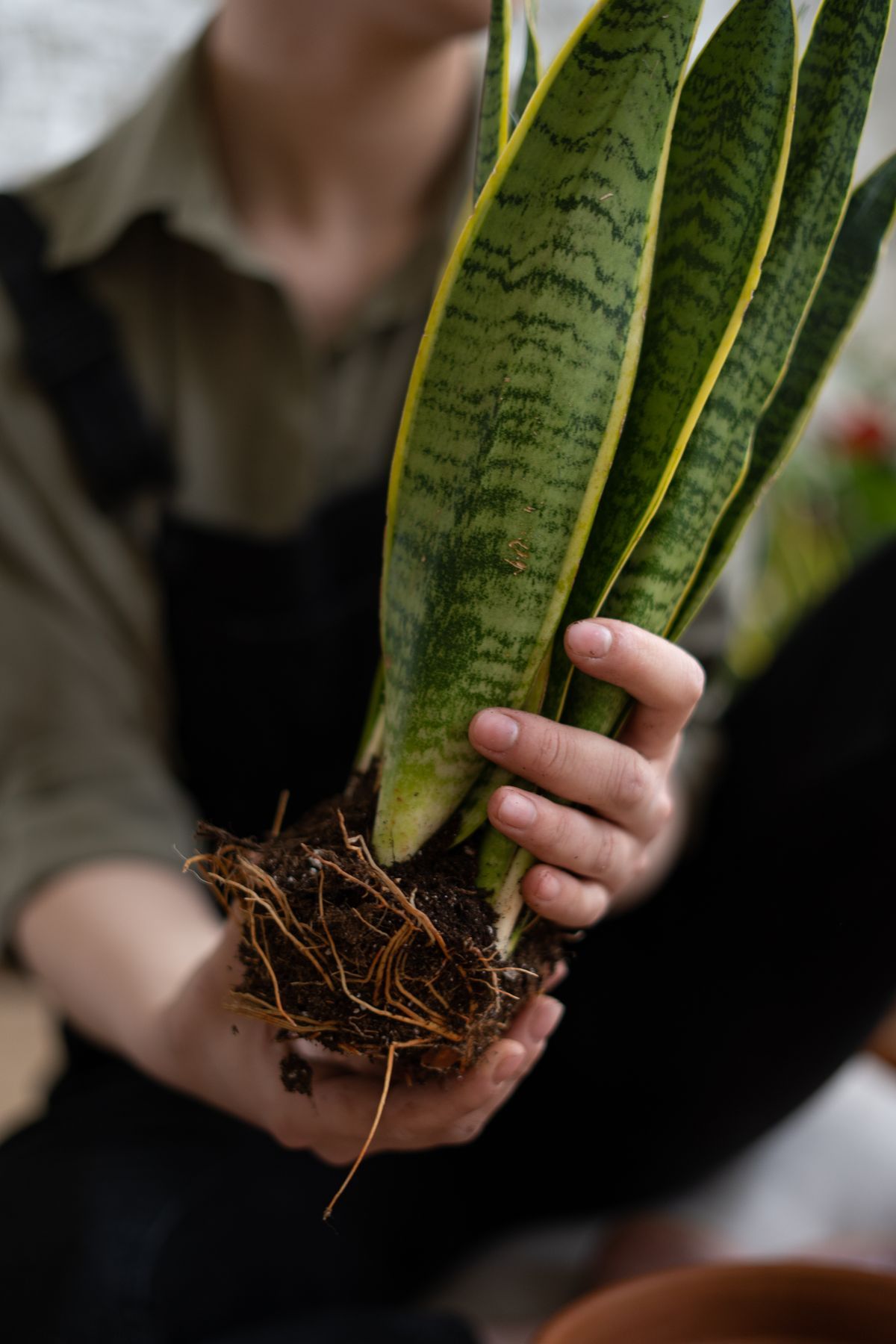
A snake plant in a pot being held up to the light
The Overwatering Rescue, In Order
If a leaf has gone soft and yellow at the base, act the same day; rot does not improve with observation.
Slide the plant out of its pot and look at the roots and rhizomes. Healthy roots are firm and pale; rotted sections are brown or black, soft, and may smell sour.
Cut away every soft, discolored root and any mushy rhizome tissue with a clean knife, cutting back to firm, healthy tissue. Remove leaves that are soft at the base; they will not recover and they harbor the rot.
Let the trimmed plant sit out of soil for a day so the cuts dry and callus.
Repot into fresh, fast draining mix (a cactus and succulent blend, or potting mix with extra perlite) in a pot with a drainage hole, and do not water for several days after repotting, so the wounds seal before moisture arrives.
Resume watering by the check first method, at the lean end of the range, and expect the plant to sit still for a while. A rescued snake plant that simply survives the season is a success; new leaves are next year's news.
Prevention is cheaper than surgery: the pot with a hole, the gritty mix, the skewer, and the discipline to walk past the plant with the watering can are the whole prescription.
Signs You Are Getting It Right, and Wrong
Right looks boring: firm, upright leaves with clean color, slow new growth from the center in the growing season, soil that cycles from moist to genuinely dry between waterings. Wrong has two faces. Too much water: leaves yellowing and softening at the base, a sour smell from the mix, fungus gnats hovering. Too little, much rarer and much slower: leaves curling inward, wrinkling, tips browning and crisping, growth stopped entirely. The asymmetry is the lesson. Underwatering a snake plant takes months of total neglect and is fixed with one good soak; overwatering can kill in a single enthusiastic month. Aim your errors at the dry side.
Set the Pot Up So the Interval Takes Care of Itself
Half of every watering problem is decided before the plant is ever watered. Start with the mix: a cactus and succulent blend, or standard potting mix opened up with extra perlite, drains fast enough that a thorough soak cannot linger. Then the pot: a drainage hole is mandatory, and terra cotta quietly helps a chronic overwaterer because it breathes moisture out through its walls, while plastic and glazed pots suit the forgetful because they hold what they are given longer. Size matters in the direction beginners do not expect: a small plant in an oversized pot sits in a volume of mix its roots cannot dry, and the bottom stays wet for weeks. Pot a snake plant snugly, one size up from snug only when the rhizomes are deforming the nursery pot or cracking it, which this plant will eventually do and which is your sign that it is thriving, not suffering.
Pups, Dividing, and What New Growth Tells You
A content snake plant makes pups, offsets that rise beside the mother rosette, and their appearance in spring is the clearest report card the plant issues: the watering rhythm is right. Pups can be left to thicken the pot into a cluster, which most growers prefer, or divided at repotting by cutting the connecting rhizome with a clean knife and potting each division in its own holed pot with gritty mix. Water a fresh division sparingly until it roots in; a pup has the family talent for drought and none of the tolerance for wet feet while its cut rhizome heals. If years pass with no pups and no new leaves, the plant is not dying, it is waiting: usually for more light, sometimes for a slightly smaller pot, almost never for more water. Move it a tier brighter before you change anything else, and give it a full season to answer.
Repotting Day, Done Once and Done Right
A snake plant needs repotting rarely, when the rhizomes push against the pot hard enough to bulge or crack it, when the plant becomes top heavy enough to tip, or when the mix has collapsed into a dense brick that no longer drains. Choose the new pot one size up, with a drainage hole, terra cotta being the forgiving classic for this plant because its weight steadies the tall leaves and its walls breathe. Work the plant out by laying the pot on its side and sliding rather than hauling it by the leaves, which tear at the base under a determined pull. Set the rhizomes at the same depth they grew, backfill with the gritty mix from the setup section, firm gently, and then observe the counterintuitive rule: do not water a freshly repotted snake plant for several days, so any roots torn in the move dry and seal instead of rotting in wet mix. After that first week, return to the check first method at the lean end. Expect the plant to pause for a while after repotting; a snake plant's response to almost every event is patience, and the grower who matches that tempo, checking with a skewer and watering by evidence, will keep the same plant for decades and divide its pups into a shelf of descendants.
Frequently Asked Questions
So how often should I water my snake plant, in one sentence?
Only when the soil is dry all the way through, which in practice lands between every 2 to 4 weeks in the growing season and every 4 to 6 weeks, up to every 1 to 2 months in winter, per Clemson and NC State Extension; your pot, light, and season decide where in that range you sit.
Why do Clemson and NC State give different winter numbers?
Because their assumed conditions differ: pot size, mix, light, and room temperature all move the interval, and NC State's winter figure assumes a resting plant in cool, dim conditions. This page does not average them. Use the skewer test to find where your plant sits between the two.
How do I know the soil is dry at the bottom?
Push a wooden skewer or chopstick gently to the bottom of the pot, wait a minute, and withdraw it. Damp and soil covered means wait; nearly clean and dry means water. The lift test, comparing the pot's weight to its just watered weight, is the fast alternative.
My snake plant's leaf fell over and is mushy at the base. Can it be saved?
Often, yes, if you act the same day. Unpot it, cut away all soft brown or black roots and rhizome back to firm tissue, let cuts dry a day, repot in fresh fast draining mix in a holed pot, and wait several days before the first light watering. The rescue sequence is spelled out above.
Does pot material change the watering interval?
Yes. Terra cotta breathes and dries the mix fastest, plastic and glazed ceramic hold moisture longest, and a large pot dries more slowly than a small one in the same room. Check a terra cotta plant a few days sooner than the calendar suggests, and a big plastic pot a few days later.
Should I mist my snake plant or water on a schedule?
Neither. Misting wets leaves, not roots, and adds nothing this plant wants. A fixed schedule ignores the variables that actually set the interval. Check first with the skewer or the lift, water thoroughly when it is dry all the way through, and let the plant set its own calendar.
Photo credits: Sasha Kim (Pexels); cottonbro studio (Pexels). Photos are served from this site; follow the credit to the library page for the original.