How Often to Water Succulents: The Soak and Dry Rule, Tuned to Your Own Pot
By the Windchime Walker editorial team
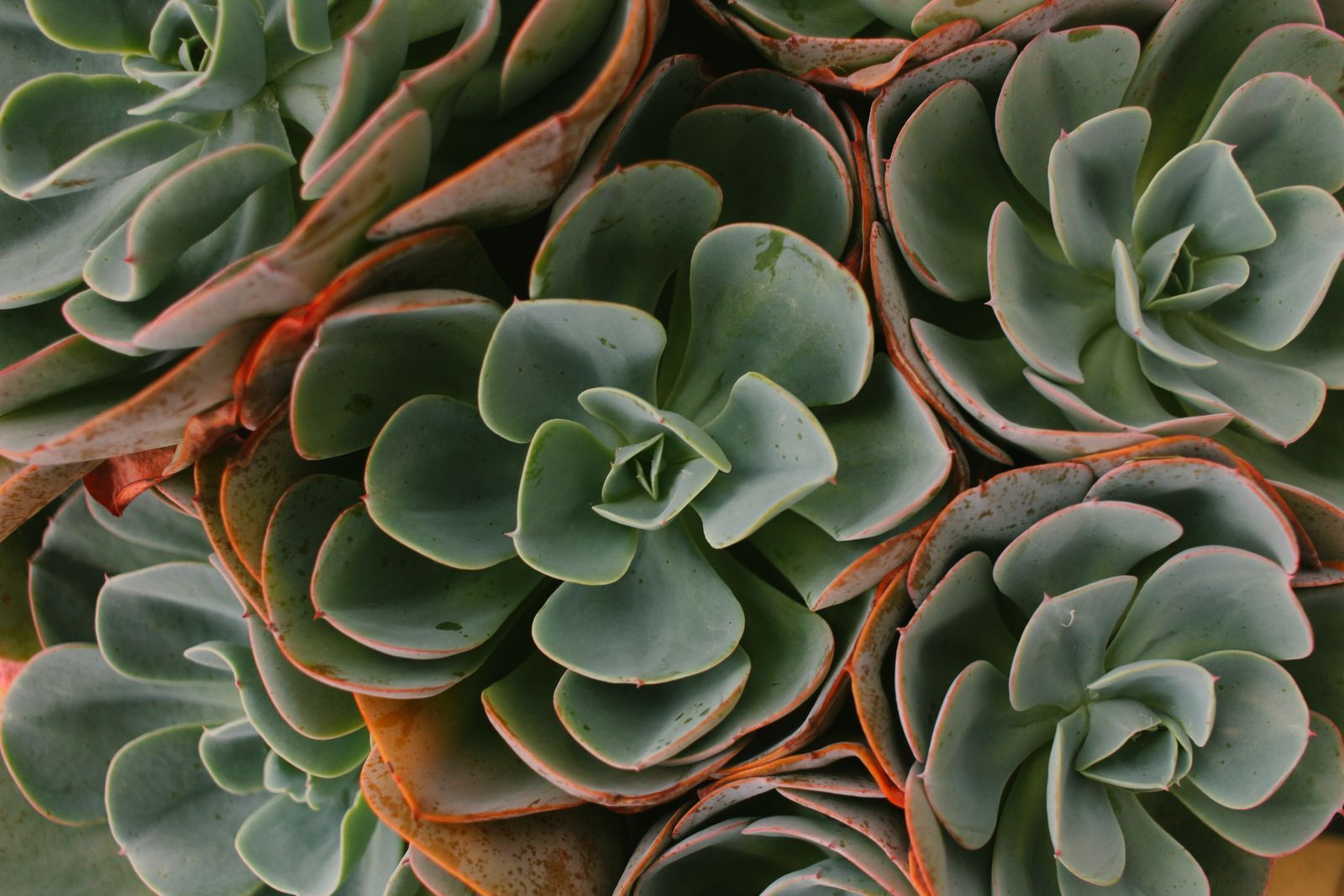
Photo: Ana Vieira / Pexels
Succulents die of love more often than neglect. The new owner waters on a schedule, a little every few days, the way you would a fern, and the plant rots from the base up while the leaves still look plump, because a succulent stores water in its body precisely so that its roots can live in dry soil between drinks. University extension guidance from Minnesota and Illinois, and every honest result for this question, converges on the same method: soak and dry. This page teaches that method as a system you can run on your own pots, in your own light, in both halves of the year.
Our snake plant watering guide owns that one famously patient plant. This page owns succulents as a group: the rosettes, the jade plants, the cacti, and the one jungle exception that plays by different rules.
Interactive tool
Watering Calculator: The Succulent Pot Audit
The soak half of soak and dry is a volume, and it depends on your pot. Enter your pot diameter as both length and width below and a depth of about 1 inch to see what one thorough watering is for a pot that size, then wait until the mix is dry all the way through before you repeat it.
19.9 gallons
For 32 square feet at 1 inch deep. That is about 76 liters, or 10 trips with a standard 2 gallon watering can.
A rain gauge or a straight sided can set in the bed tells you when a sprinkler or soaker hose has actually delivered this depth. Time alone is a guess, because hose pressure varies from house to house.
The conversion is arithmetic, not opinion: one inch over one square foot is 144 cubic inches of water, and a US gallon holds 231 cubic inches, so each square foot at one inch takes 0.62 gallons.
The Rule: Soak, Then Dry Completely
Watering a succulent means two opposite acts done fully. The soak: water slowly and thoroughly until the whole root ball is wet and water runs from the drainage hole, then empty the saucer so the pot never stands in water. The dry: then do nothing, for as long as it takes, until the soil is dry all the way to the bottom of the pot. Not mostly dry, not dry at the top, dry through. The interval between soaks is whatever your pot, your soil, your light, and your season make it, which is why the honest answer to how often is a check, not a number of days. The numbers below are starting points for your first month; the check is the permanent skill.
Why the Calendar Fails
Four variables move the interval more than any schedule can hold. Pot size: a two inch pot can dry in days where a ten inch pot holds moisture for weeks. Pot material: unglazed terracotta breathes and dries fast, glazed ceramic and plastic hold water far longer. Soil: a gritty, mineral mix drains in moments, while a peat heavy mix stays wet like a sponge. And season and light: a plant on a summer windowsill is growing and drinking, while the same plant in winter indoor light is nearly dormant and wants almost nothing. Any fixed rule, water every Sunday, is right for one of your pots in one of your months and quietly wrong for the rest. This is also why succulents die in mixed arrangements: one pot, four different thirsts, one watering can.
The Dry Check, Three Ways
The skewer. Push a wooden skewer or chopstick to the bottom of the pot, wait a minute, and pull it out. Soil clinging and dark means moisture remains; a skewer that comes out clean and dry means the pot is dry through and a soak is earned. This is the most reliable check in deep pots, where the surface lies.
The weight. Lift the pot right after a thorough soak and learn its heavy weight; lift it again every few days. A dry pot is startlingly light, and after two or three cycles your hand knows the difference without thinking. This is the fastest check once learned, and the one nurseries use on whole benches.
The leaves. A thirsty succulent tells you in its body: leaves that were plump go slightly soft, wrinkled, or deflated, and rosettes close a little. This is the plant's own signal and the safest trigger of the three, because a succulent showing mild thirst is a succulent in no danger at all. Water when the leaves ask, not before, and you will never rot one. What you must not do is read the opposite signal wrong: leaves turning translucent, yellow, and mushy at the base are not thirst. That is rot, and water is the cause, not the cure.
Starting Intervals: Season by Pot
Pot and place
Summer, bright light
Winter, indoor light
Small pot (2 to 4 in), terracotta
Check at 7 days; often waters every 1 to 2 weeks
Check at 3 weeks; often waters monthly or less
Medium pot (5 to 7 in), terracotta
Check at 10 days; often every 2 weeks
Check monthly; water only when dry through
Medium pot, glazed or plastic
Check at 2 weeks; often every 2 to 3 weeks
Check at 5 to 6 weeks; water rarely
Large pot (8 in and up)
Check at 2 to 3 weeks
Check at 6 weeks or more
Desert cacti, any pot
The longest intervals in the house
Nearly dry all winter; a small drink monthly at most
Read the table as training wheels: check on the day named, water only if the check says dry. Within a month the table has taught you your own intervals, and you can retire it. Note the pattern rather than the numbers: winter intervals run two to three times longer than summer ones, and plastic and glaze roughly double terracotta's patience.
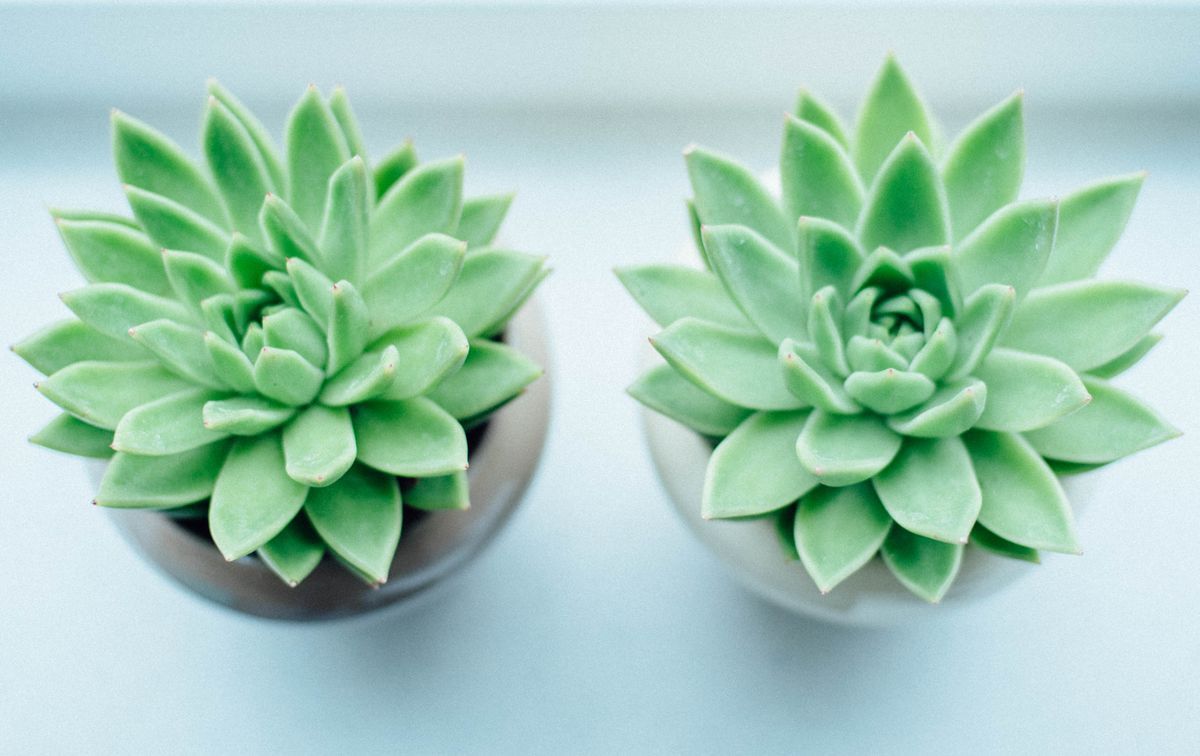
Two small potted succulents sitting on a white surface
The Jungle Exception
Not every succulent is a desert plant. The jungle cacti, Christmas cactus and its Easter and Thanksgiving relatives, plus rhipsalis and their kin, evolved on tree branches in forests and want a different rule: water when the top half of the mix has dried, and never let the whole pot go bone dry for weeks. They are the exception that proves the method, because even here the rule is a dryness check at a stated depth, not a calendar. If a plant's name or label suggests a forest origin, or its stems are flat, segmented, and spineless, check it against the jungle rule before the desert one starves it.
The Rot Rescue
Overwatering announces itself late: the base softens, leaves drop at a touch or turn translucent and mushy, and by then the stem may be rotting from inside. The rescue is surgery, and speed matters more than gentleness. Unpot the plant and shake the wet mix away. Cut the stem above every trace of rot with a clean knife, cutting until the cross section is firm, clean, and shows no brown ring. Let the cut end dry in open air for several days until it calluses, which is the plant sealing its own wound. Then set the cutting on dry, gritty mix, wait a further week before the first light watering, and let roots come find the moisture. Leaves that fell sound and plump can be laid on mix to root as new plants. What cannot be saved is a plant whose rot has reached the crown, and the lesson it leaves is the whole article in one line: succulents forgive drought completely and forgive water not at all.
Grouping by Thirst: The Arrangement Rule
Succulents are sold in charming mixed arrangements, and the arrangements fail on a watering schedule no single can can serve: the echeveria wants a drink when the haworthia is still damp, and the cactus in the corner is composing its resignation letter. The rule for keeping mixed plantings alive is to group by thirst rather than by looks. Desert cacti and the hardiest rosettes share the longest intervals and can live together on the driest rhythm. The general rosettes and jade plants share the middle. The jungle cacti and the leafy succulents, kalanchoe and string of pearls among them, drink noticeably more and belong in their own company. Where an arrangement already exists and cannot be rebuilt, water it to its thirstiest member's survival and its driest member's tolerance, which usually means watering less than the arrangement's seller implied, spot watering the thirsty corner with a narrow spout, and accepting that the driest member sets the ceiling. Separate pots in a shared tray or window box give the look of an arrangement with a watering can per thirst, and experienced growers quietly choose them for exactly that reason.
Succulents Outdoors and in the Ground
Everything on this page was written for pots, and the method survives the move outdoors with two translations. In the ground, in a climate where succulents are hardy, the soak becomes rainfall and irrigation run deep and rare, and the dry is enforced by the soil itself, which must be sharp draining: a succulent bed is built up, gravelly, and sloped if the native soil is clay, because winter wet, not winter cold, is what kills hardy succulents in most gardens. A plant that sails through 15 degrees F dry can rot at 30 degrees F wet. In containers outdoors, the pot rules apply with the weather as a co-waterer: a rainy week is a watering, counted as one, and a hot windy week shortens every interval on the table. Move tender pots under cover before the cold wet season rather than trusting drainage holes against a month of rain.
Frequently Asked Questions
How often should I water succulents indoors?
Start by checking a small terracotta pot at about a week in summer and about three weeks in winter, and larger or glazed pots less often, but water only when the check, skewer, weight, or leaves, says the soil is dry all the way through. Indoors in winter, monthly or less is normal for many pots, and the plant prefers your forgetfulness to your diligence.
What are the signs of overwatering a succulent?
Leaves that turn yellow or translucent, feel mushy, and drop at the lightest touch, a soft or blackening stem base, and soil that never seems to dry. Overwatered succulents look swollen rather than shriveled, which is the trap: the owner reads a sick plant as a thirsty one and waters again.
What are the signs my succulent needs water?
Leaves that wrinkle, curl, or feel soft and deflated instead of firm and plump, rosettes closing inward, and a pot that feels strikingly light. These are safe signals: a succulent at this stage recovers fully within a day or two of a thorough soak.
Should I mist succulents instead of watering?
No. Misting wets the leaves, where water invites rot, and barely dampens the surface, where there are no roots drinking. Succulents want the opposite pattern: a rare, deep soak at the roots and dry leaves and dry soil between soaks. Put the mister away and use the watering can, infrequently and thoroughly.
What soil and pot make watering easiest?
A gritty mix, roughly half mineral material like pumice, perlite, or coarse grit to half potting soil, in a pot with a drainage hole, unglazed terracotta if you tend to overwater. Fast drainage widens your margin for error in both directions: the soak drains freely, and the dry arrives on time.
Can I revive a succulent that has rotted?
Often, if any firm stem or sound leaves remain: cut above the rot to clean tissue, callus the cut for several days, and reroot on dry mix as described in the rescue section. A plant rotted through the crown cannot be saved, but its sound leaves can usually be propagated into its replacements.
Photo credits: Ana Vieira (Pexels); Lara (Pexels). Photos are served from this site; follow the credit to the library page for the original.