Ask how often to water a sunflower and the honest answer changes four times before the flower opens, because a sunflower is four different plants in sequence: a seed that must not dry, a seedling building a taproot, a towering stalk drinking like a corn plant, and a ripening head that wants to dry down. The general rule the guides converge on, about 1 inch of water per week for established plants, is true only of the third of those plants. Our how-to-grow-sunflowers owns the full season from sowing to seed harvest. This page owns the water year alone, stage by stage, with the numbers attached to the growth they belong to.
Home / Flowers and Houseplants
How Often to Water Sunflowers: The Stage by Stage Water Year
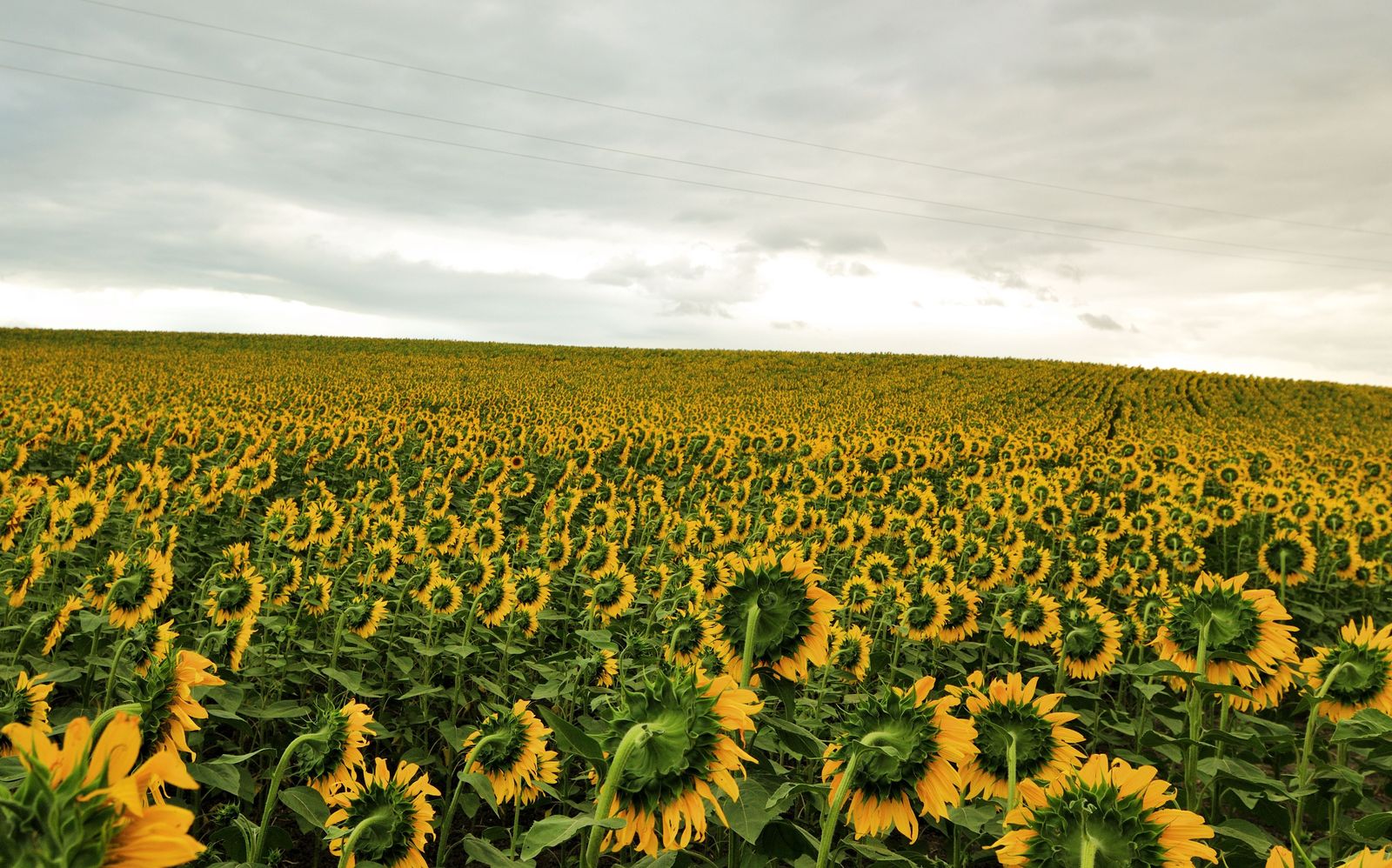
Photo: Yavuz Solgun / Pexels
Interactive tool
Watering Volume Calculator: The Sunflower Bed Audit
An established sunflower bed wants about an inch of water a week as one deep soak, and more at bud formation. Enter your bed length and width with a depth of 1 inch to size that weekly soak.
19.9 gallons
For 32 square feet at 1 inch deep. That is about 76 liters, or 10 trips with a standard 2 gallon watering can.
A rain gauge or a straight sided can set in the bed tells you when a sprinkler or soaker hose has actually delivered this depth. Time alone is a guess, because hose pressure varies from house to house.
The conversion is arithmetic, not opinion: one inch over one square foot is 144 cubic inches of water, and a US gallon holds 231 cubic inches, so each square foot at one inch takes 0.62 gallons.
Stage One: The Seedbed Never Dries
From sowing until emergence, the rule is constant moisture. A sunflower seed is large and its germination is vigorous, typically a week to 10 days, but the seed sits shallow and a crust of dry soil over it can stall or kill the sprout as it pushes. Water the seedbed lightly and often enough that the top inch never fully dries, and if you sow in a dry spell, a board or a piece of burlap laid over the row holds the moisture in and comes off the day the first shoots crack the surface. This is the only stage of the sunflower's life when frequent light watering is correct, and it ends at emergence. Growers who keep sprinkling daily all season are running stage one rules on a stage three plant, and the next sections explain what that costs.
Stage Two: Seedlings, and Building the Taproot
Once the seedling is up, begin the transition that defines sunflower watering: water deeply, then let the surface dry, so the young taproot chases moisture downward. Keep the soil consistently moist but not wet through the first few weeks, watering every few days in dry weather with a soak that reaches 6 inches down rather than a sprinkle that reaches one. The taproot is the plant's drought insurance and its anchor; a sunflower that builds a deep root in May stands through a July dry spell and a thunderstorm, while a shallow watered plant does neither. By the time the plant is knee high with a stem as thick as your thumb, it graduates to the established regime, and its water needs jump with its size: a plant adding inches of height a day in warm weather is transpiring through an enormous leaf area, and the weekly inch becomes a floor, not a ceiling, in hot wind.
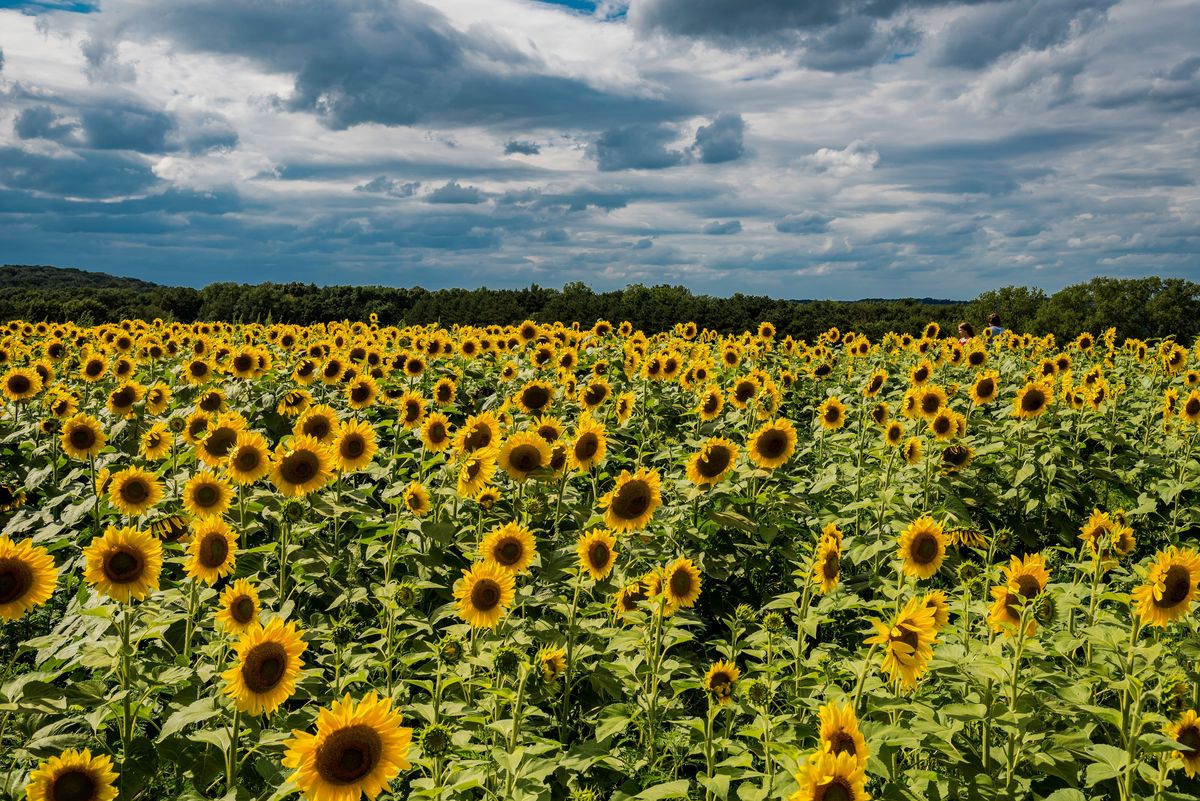
Stage Three: The Established Inch, and the Bud Window
The established rule, per the Scotts guidance that anchors the search results, is about 1 inch of water per week, delivered as one deep soak rather than split into sprinkles. Use the calculator above to translate: enter your bed length and width at a depth of 1 inch and that volume is the weekly drink. Rain counts; a rain gauge in the bed ends all guessing. Then comes the window that decides the harvest: bud formation. From the day the flower bud is visible at the top of the stalk until the petals open, water stress costs head size and seed fill that no later watering repays, and several guides raise the rate through this window to 1 to 1.5 inches per week. Watch the plant as well as the gauge: a sunflower wilts theatrically in afternoon heat and recovers by morning as a normal water saving behavior, but a plant still wilted at breakfast is a plant that needed water yesterday. Stake tall varieties before this stage if your site is windy, because a water heavy head on a tall stalk in wet soil is the combination that goes over in a storm.
Stage Four: The Ripening Taper
After flowering, the doctrine reverses, and this is the stage the guides most often omit. As the head fills and begins to ripen, the back of the head turning from green to yellow, taper the watering off. The plant is finishing, not growing; excess water now invites head rot and mold in the seed head, especially in humid weather, and delays the dry down you want for seed harvest. Let the soil dry between drinks, then stop watering as the head yellows and the leaves senesce, unless a severe drought threatens a still green plant. For seed saving, the head should dry on the plant as far as weather and birds allow, cut when the back is yellow to brown and the seeds are plump and striped, and finished under cover. A sunflower watered generously to the end gives you a rotted head and a lesson; a sunflower tapered gives you seed.
Sunflowers in Containers: The Daily Check
Everything above assumes roots in open ground, where the taproot can mine a cubic yard of soil. A sunflower in a pot, even a large one, has a bucket of mix and a huge leaf area, and in summer it can drink the pot dry in a day. Dwarf varieties in 5 gallon or larger pots are the container case that works; giants in pots are a stunt that usually ends in a wilted collapse at the bud stage, exactly when the plant can least afford it. Check container sunflowers daily in warm weather, water when the top inch is dry, soak to drainage, and feed every 2 weeks, because the frequent watering leaches a pot bare. The stage logic still applies in miniature: never let the seedbed dry, deepen the soak as the plant grows, protect the bud window absolutely, and taper as the head ripens. A pot also lets you move the plant, so use it: full sun is non negotiable at every stage, and a sunflower chasing light from a shaded patio leans, weakens, and drinks unevenly.
Soil, Drainage, and the Giant Varieties
Two modifiers bend every number on this page. The first is soil. A sunflower in sandy soil drinks on the short cycle: the weekly inch drains through quickly and the plant may want it split into two drinks in a hot spell, while a sunflower in clay holds its inch for the full week and resents a second one. Read the plant at breakfast and the soil at 3 inches deep, and let those two readings adjust the calendar, because the inch per week is a volume target, not a schedule, and how long your soil holds that volume is a property of your ground. The second modifier is size. A dwarf sunflower at 2 feet tall and a giant at 12 feet are both called sunflowers, but the giant is running several square yards of leaf and building a head the size of a dinner plate, and its water demand through the bud window can run half again the standard rate in hot, windy weather. Growers of giants for competition water and feed like corn farmers for a reason. Scale the drink to the plant in front of you: the bigger the leaf area and the taller the stalk, the closer to the top of every range on this page you should run, and the more a missed week in the bud window will cost you at the weigh in.
Frequently Asked Questions
How much water do sunflowers need per week?
About 1 inch per week for established plants in the ground, delivered as one deep soak, rising to 1 to 1.5 inches per week during bud formation and flowering in hot weather, which is the window when water decides head size. Seedlings need the soil kept consistently moist, and ripening heads need progressively less. Rain counts toward the weekly inch; a rain gauge in the bed is the simplest way to stop guessing. The calculator on this page converts the inch into gallons for your actual bed size.
Should I water sunflowers every day?
No, except for two cases: a seedbed waiting for germination, which must never dry out, and a sunflower in a container in hot weather, which can genuinely need a daily drink. An established sunflower in the ground watered daily stays shallow rooted, because the taproot never has a reason to dive, and shallow roots make the plant vulnerable to both drought and wind. Deep weekly soaking is the regime the plant's anatomy asks for: soak, let the surface dry, soak again.
Why is my sunflower wilting in the afternoon?
Probably because it is afternoon. Sunflowers wilt in heat as a deliberate water saving move, folding their leaves to reduce exposure, and a healthy plant recovers fully by evening or early morning. Judge the plant at breakfast, not at 3 in the afternoon: a sunflower still wilted in the cool of the morning is genuinely thirsty and needs a deep soak that day. Persistent morning wilt with yellowing lower leaves on a plant in dry soil is the bud stage emergency described on this page, and it costs head size if it happens while the bud is forming.
When should I stop watering sunflowers?
Taper as the flower finishes and the back of the head starts to yellow, and stop once the head is ripening and the leaves are senescing, unless a severe drought hits a still green plant. Water late in the season does the crop no good and does the head active harm: a wet ripening head is an invitation to mold and rot, and it delays the dry down you need for seed harvest. For cut flowers rather than seed, the question ends earlier, since the stem is cut as the petals open and the plant's watering story ends with it.
Can sunflowers get too much water?
Yes. Soggy soil rots the roots and the base of the stalk, invites fungal disease, and, late in the season, rots the ripening head itself. The signs are a plant that wilts in wet soil, yellowing from the base, and a stem base that feels soft. Sunflowers want a deep drink and a drying interval, in well drained soil; a plant in heavy ground that stays wet after rain is in the wrong spot more than on the wrong schedule, and raised beds or a sandier planting hole are the fix for next season.
Photo credits: Yavuz Solgun (Pexels); Good Free Photos.com (Pexels). Photos are served from this site; follow the credit to the library page for the original.