The potted tomato is the highest maintenance watering case in the vegetable garden, and it is worth understanding why before the schedule. A fruiting tomato is a large, fast, leafy plant carrying pounds of water filled fruit, and in a pot it runs that whole operation on 5 to 10 gallons of mix, in full sun, often against a hot wall. Its water budget has no bank. So the system this page teaches is a check, not a calendar: push a finger 2 inches into the mix every day, and whenever it is dry at that depth, water slowly and thoroughly until it runs from the base. In a normal summer that lands on daily watering for most containers. In a heat wave, small pots and fabric grow bags can need it twice a day, a figure carried by both Iowa State and University of Wisconsin guidance in the results. This article is the pot case only; the bed case lives in our general tomato watering guide, and the full growing system lives in our tomatoes in pots guide. Here, the subject is the water itself, and above all its consistency.
How Often to Water Tomatoes in Pots: The Daily Check, the Twice Daily Heat Rule, and the Consistency Cure
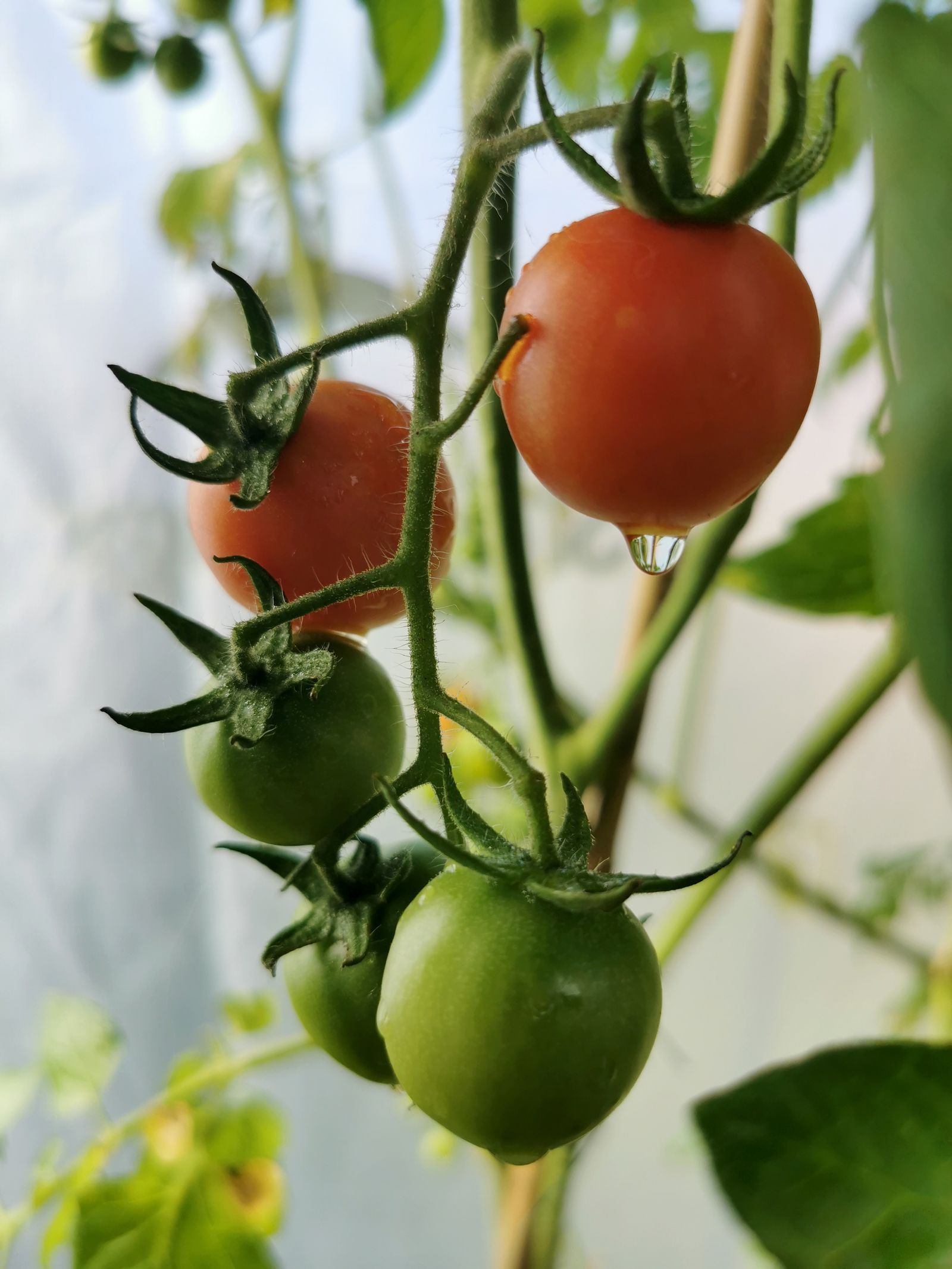
Photo: Karen Laårk Boshoff / Pexels
Watering Volume Calculator: The Tomato Pot Audit
A fruiting tomato in a 5 gallon pot can drink a gallon a day, and the dry then flood swing is what splits fruit. Enter your pot diameter as both length and width with a depth of 1 inch to size one even drink.
19.9 gallons
For 32 square feet at 1 inch deep. That is about 76 liters, or 10 trips with a standard 2 gallon watering can.
A rain gauge or a straight sided can set in the bed tells you when a sprinkler or soaker hose has actually delivered this depth. Time alone is a guess, because hose pressure varies from house to house.
The conversion is arithmetic, not opinion: one inch over one square foot is 144 cubic inches of water, and a US gallon holds 231 cubic inches, so each square foot at one inch takes 0.62 gallons.
The Daily Check: Two Inches Down, Every Morning
Two inches is the working depth for this plant, deeper than the houseplant inch, because a tomato's surface dries misleadingly fast in sun while the root zone below still holds moisture, and watering on a dry surface alone leads to the little and often pattern that keeps roots shallow and the plant perpetually half satisfied. The morning is the check's natural hour: the plant starts the day charged, you catch yesterday's consumption before today's heat adds to it, and foliage splashed in the morning dries fast, which matters for a plant whose diseases are mostly water borne leaf diseases. Water at the base, slowly enough for the mix to absorb rather than channel, and keep going until drainage runs; a 5 gallon pot in fruit can take a gallon or more at a sitting in hot weather, and the calculator above will show you what a full drink is for your pot's size. Then the discipline that separates growers: do not water again on appearance. A tomato wilting at 3 in the afternoon in a pot that was moist at 2 inches down this morning is heat wilting, and it recovers at dusk; watering it anyway trains the soggy half of the swing described below.
The Consistency Rule: Splitting and Blossom End Rot Are Watering Reports
More tomato fruit is ruined by irregular water than by too little or too much in total. A ripening tomato that goes through a dry spell takes up water slowly; the same plant then flooded, by hose or thunderstorm, pumps water into fruit whose skin has stopped stretching, and the fruit splits. Blossom end rot, the black leathery patch on the fruit's bottom, wears a calcium label, but in pots it is most often a water delivery failure: the calcium is in the mix, and it reaches the fruit only in a steady stream of water, so the dry then flood swing starves the far end of the fruit at exactly the growth stage that needs the stream unbroken. The cure is the system on this page: a daily check, thorough watering at the dry signal, mulch on the pot surface to slow the dry down, and a pot large enough that one missed morning is a shrug rather than a swing. Consistency also explains the one legitimate second watering: in a heat wave, a small pot that is dry at 2 inches by late afternoon gets watered again, because the check said so, and that is not a swing, it is the rhythm the weather imposed. The calendar never waters this plant. The check does, as often as it speaks.
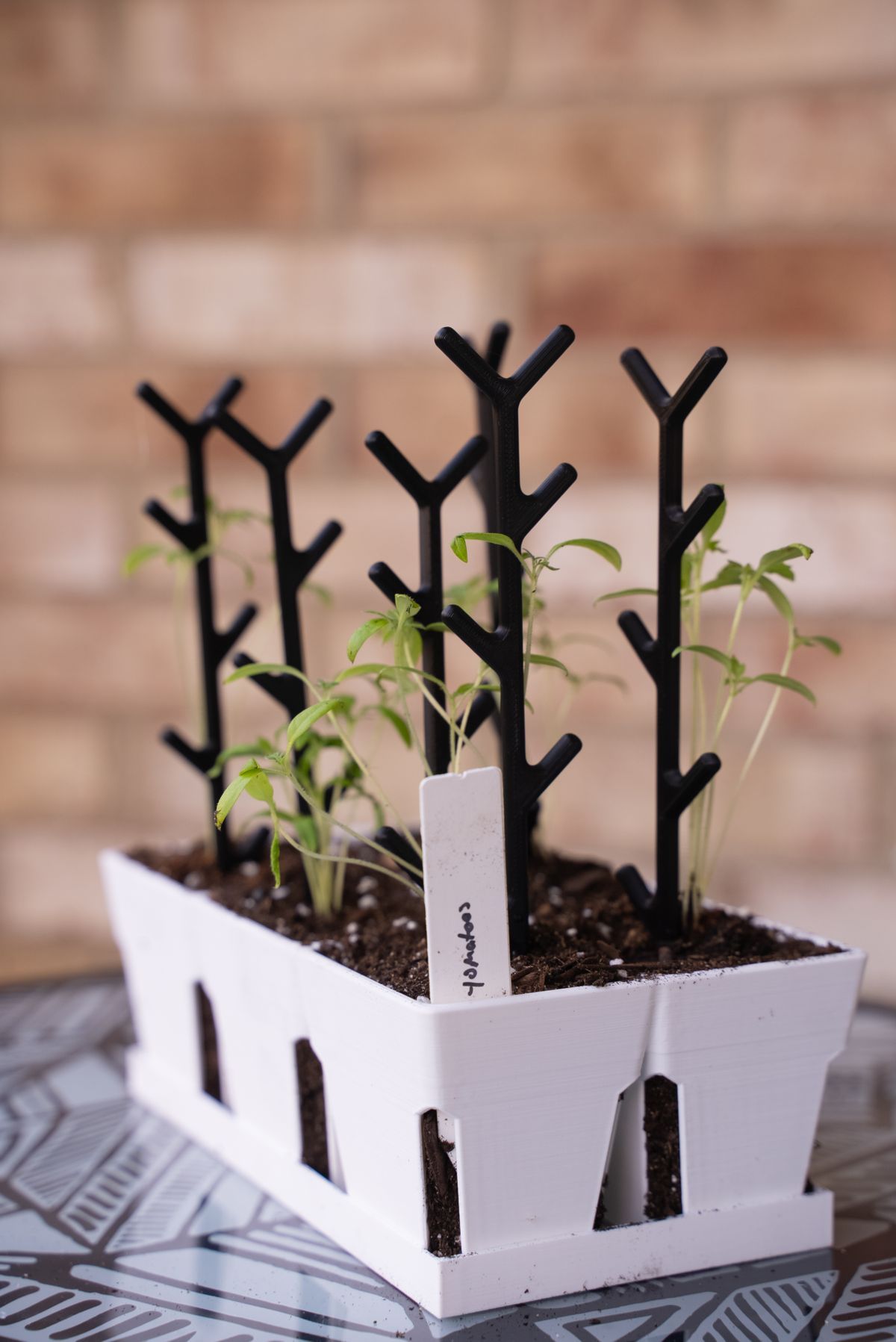
Pot Size and Type: The Real Fix for Chronic Wilt
A tomato that wilts daily despite correct watering is filing a report about its pot, and the experienced answer is to believe it. Five gallons is the floor for a determinate bush tomato and the working minimum for any tomato; indeterminate vines, which grow all season, belong in 10 gallons or more, and every extra gallon is watering interval bought outright. Fabric grow bags complicate the picture in a way the results name directly: they drain and breathe superbly and grow excellent roots, and they dry out markedly faster than plastic or ceramic, which is why the twice daily heat guidance so often attaches to them. In a hot climate a fabric bag tomato is a twice a day plant at the season's peak, and growers who cannot serve that rhythm should choose a plastic or glazed pot, or a larger bag, rather than blame the plant. Self watering containers with a reservoir are the engineered answer and suit tomatoes genuinely well, holding the even moisture this crop craves; if you use one, the daily check moves to the reservoir gauge, and the discipline becomes never letting it run dry, because a reservoir allowed to empty reinstates the swing with interest. Whatever the vessel, shade the pot itself in extreme heat where you can: the plant wants sun on its leaves and a root zone that is not being slow cooked against a south wall.
Rain Lies, and Other Pot Specific Traps
Three traps catch potted tomato growers that bed growers never meet. The first is rain. A tomato canopy is an umbrella: a summer downpour can soak the bed, rattle the gutters, and leave the pot under the foliage nearly dry, so growers who skip watering after rain because the garden got wet starve the one plant that did not. Check the pot after rain like any other morning. The second trap is the saucer habit, runoff left standing under the pot on a patio, which keeps the base mix sour and airless and invites the root problems that present, confusingly, as wilt that watering worsens. Empty saucers, or raise the pot on feet. The third is fertilizer burn by concentration: a pot watered lightly and often concentrates salts at the roots, and the fix is built into this page's method, since watering to drainage at every drink leaches the pot gently and continuously. Feed on the pot guide's schedule, every 2 to 3 weeks with a balanced tomato feed in the fruiting season, and always into moist mix, never onto a dry root ball. Read the check, keep the rhythm even, size the pot for the plant, and distrust the rain gauge: the potted tomato is thirsty work, but it is honest work, and it pays in fruit that does not split.
Frequently Asked Questions
How often should I water tomatoes in pots?
Check every day, 2 inches down, and water thoroughly whenever it is dry at that depth. In summer that means daily watering for most pots, and twice daily in heat waves for small pots and fabric grow bags, which both Iowa State and University of Wisconsin guidance in the results support. Water slowly at the base until it drains from the bottom, in the morning where you can. A large pot in cool weather may run every 2 days; the check, never the calendar, makes the call.
Why do my potted tomatoes split?
Because the water swung. Fruit that ripens through a dry spell has skin that has stopped stretching; a sudden flood of water, from a hose or a storm, swells the fruit faster than the skin can follow and it splits. The prevention is consistency: a daily 2 inch check, thorough watering at the dry signal, mulch on the pot surface, and a pot big enough that a missed morning does not become a drought. Pick fruit that is coloring ahead of a forecast downpour, since nearly ripe tomatoes split first.
What causes blossom end rot in pots?
Usually water delivery, wearing a calcium label. The black patch at the fruit's far end is tissue that starved for calcium during fast growth, and in a pot the calcium is normally present in the mix but reaches the fruit only in a steady flow of water. The dry then flood rhythm interrupts that flow. Even moisture is the cure: daily checks, thorough watering, mulch, adequate pot size. Adding more calcium to a pot that already has it, without fixing the rhythm, rarely changes anything.
How big a pot does a tomato need?
Five gallons is the working minimum, for a compact determinate type; indeterminate vines that grow all season belong in 10 gallons or more. Every added gallon is watering interval: a 5 gallon pot in fruit in hot weather is a daily plant, while a 10 gallon pot holds a day of grace. Fabric bags grow fine tomatoes but dry faster than plastic or glazed pots and are the usual case behind twice daily watering in heat waves, so size bags up one step from the plastic equivalent.
Should I water potted tomatoes after it rains?
Check first, because the plant may not have received the rain. A tomato's canopy sheds water outward like an umbrella, and a pot under full foliage can stay nearly dry through a storm that soaked the beds. Run the same 2 inch check on the morning after rain. If it is dry at depth, water as usual. Skipping on the assumption that rain did the job is one of the commonest causes of the dry then flood swing that splits fruit.
Photo credits: Karen Laårk Boshoff (Pexels); Taylor Thompson (Pexels). Photos are served from this site; follow the credit to the library page for the original.