How Often to Water Tomatoes: Deep, Steady, by Stage
By the Windchime Walker editorial team
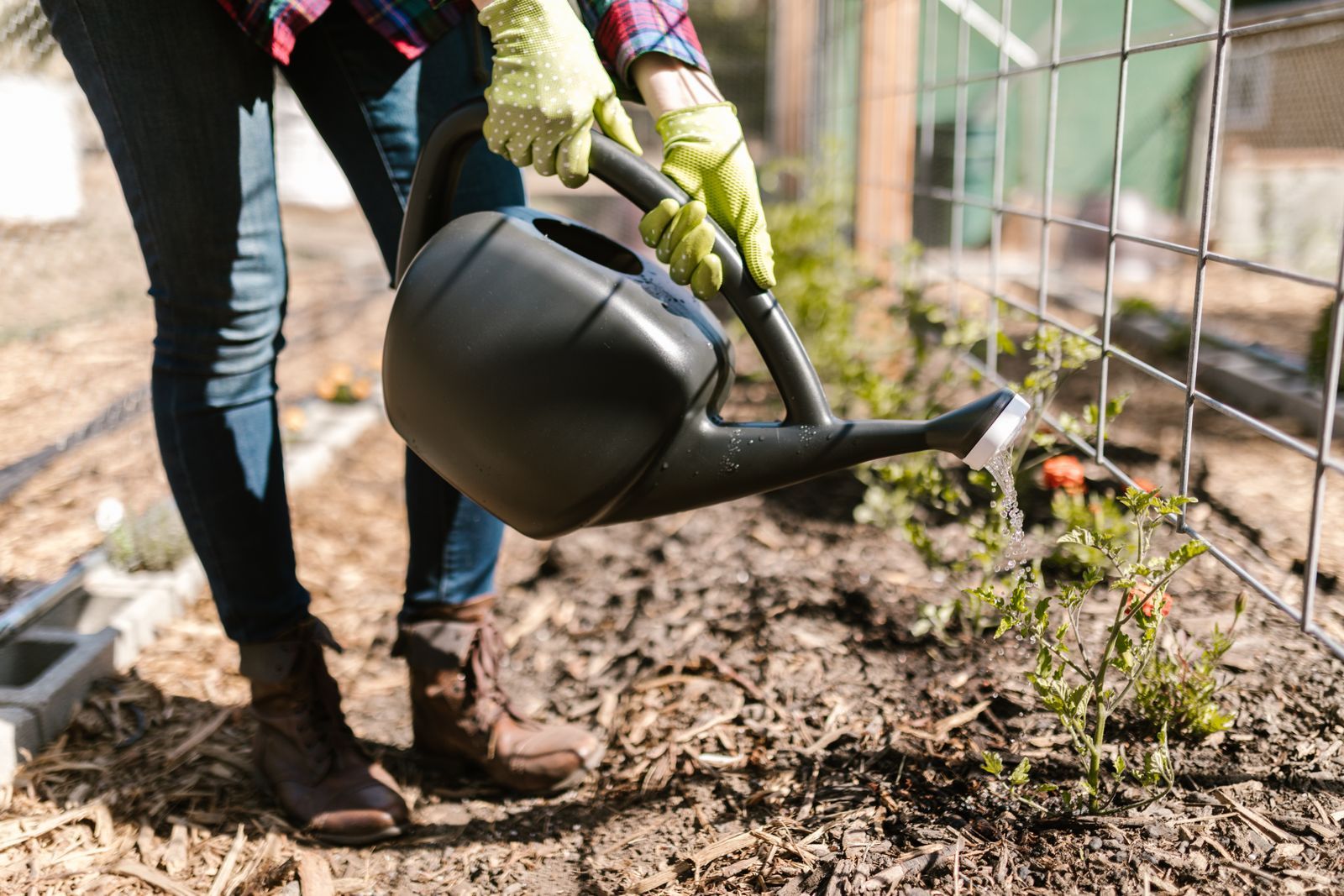
Photo: RDNE Stock project / Pexels
How often to water tomatoes is the wrong shape of question, and it causes more tomato trouble than any pest. It invites a schedule, every other day, twice a week, when the plant actually wants a condition: soil that stays evenly moist at root depth, through every stage of its life, without swinging between dust and flood. The schedule that produces that condition changes with the weather, the soil, and the plant's age, which is why rigid calendars fail. This guide gives you the condition, the way to test it with one finger, the amount of water it works out to per plant, and how the rhythm changes from transplant week to the height of fruiting.
The numbers first, because they anchor everything. University extensions put a tomato's need at about 1 to 2 inches of water per week including rain: the University of Minnesota Extension works to roughly 1 inch a week for the garden, while Utah State University and the University of Florida's IFAS guidance run 1 to 2 inches for fruiting tomatoes in warm conditions. Sandy soil and heat push you toward the top of the range; clay and cool weeks toward the bottom. One inch of water over one square foot is about 0.62 gallons, which turns the inches into something you can carry in a can.
The Watering Volume Calculator on this page does that arithmetic for your plants: enter your bed or row dimensions, or your plant count, and it returns gallons per watering at the depth you choose. Run it once for your tomato patch and you will know what a deep watering actually looks like in your garden, which is usually more water, less often, than instinct suggests.
Interactive tool
Watering Volume Calculator: Gallons for the Tomato Bed
Tomatoes want about an inch of water a week, deep and even. Enter your bed size below and a depth of 1 inch to turn that rule into gallons per watering for the bed you actually have.
19.9 gallons
For 32 square feet at 1 inch deep. That is about 76 liters, or 10 trips with a standard 2 gallon watering can.
A rain gauge or a straight sided can set in the bed tells you when a sprinkler or soaker hose has actually delivered this depth. Time alone is a guess, because hose pressure varies from house to house.
The conversion is arithmetic, not opinion: one inch over one square foot is 144 cubic inches of water, and a US gallon holds 231 cubic inches, so each square foot at one inch takes 0.62 gallons.
The Finger Test: The Only Schedule You Need
Push a finger into the soil beside the plant, away from the stem, down to 2 to 3 inches. If the soil at that depth is dry, water. If it is moist, wait. That is the entire daily technology, and it outperforms every calendar because it measures the thing the roots experience. Surface soil lies; it dries in an afternoon sun while the root zone below is still wet, and it stays damp after a shower that never reached the roots. The 2 to 3 inch depth is where a tomato's working roots begin, and its verdict is the one that counts.
In practice, for most gardens in summer, the finger test lands you at one or two deep waterings a week in the ground, fewer in cool spells, more in heat waves and sand. Containers break the pattern completely: a tomato in a pot in July sun may pass the finger test's dry verdict every single day, sometimes by noon, and that is not overwatering, it is arithmetic. A pot holds a few gallons of soil; a garden bed holds hundreds. Water the container when its soil says dry, which will be often, and never put a potted tomato on the in ground schedule.
Stage 1: Transplant Week, Keep It Consistently Moist
A new transplant has the root system of its pot and the leaf area of a plant expecting more. For its first week or so in the ground, keep the soil consistently moist around it while its roots reach outward into the bed. This is the one stage where watering little and often is correct, a drink every day or two in warm weather, because the plant can only drink from the small volume of soil its roots currently occupy.
Water at the base, settle the soil around the stem with the first watering, and mulch once the plant is established and the soil has warmed. From the second week, begin stretching the interval: water deeply, then wait for the finger test to call you back. You are training roots to chase moisture downward, and deep roots are the plant's own insurance policy for August.
Stage 2: The Growing Plant, Deep and Less Often
Once the plant is growing strongly, knee high and climbing its support, shift fully to the deep rhythm: one or two soakings a week that wet the soil to a foot or more, totaling in the 1 to 2 inch weekly range. A deep watering on a tomato in a bed works out to roughly 2 to 5 gallons per plant depending on spacing and soil, and the calculator on this page will size it for your layout. Shallow daily sprinkling at this stage is the classic error: it wets the top inch, trains roots to live there, and leaves the plant defenseless in the first real heat.
Mulch does heavy work now. A 3 to 4 inch layer of straw or shredded leaves over the bed, per University of Minnesota Extension practice, holds the moisture your deep watering delivered, keeps the soil surface from baking and cracking, and stops rain and watering from splashing soil onto the lower leaves, which is how the common leaf diseases arrive. Mulch is watering by other means: the same inch lasts twice as long under it.
Stage 3: Flowering and Fruiting, Evenness Above All
From first flowers to the last harvest, the plant's demand peaks and its tolerance for swings bottoms out. This is the stage where watering stops being about growth and becomes about fruit quality, and two famous tomato disorders live here, both of them watering disorders in disguise.
Blossom end rot, the dark leathery patch on the bottom of a ripening fruit, is a calcium problem caused by water, not by soil: the calcium is usually present, but irregular moisture interrupts its transport into the fruit. Clemson Extension and the University of Minnesota Extension both put even moisture at the center of prevention. The cure is not a calcium spray; it is a steady rhythm, deep watering, and mulch. Cracking is the mirror image: a fruit ripened through a dry spell meets a flood of water, from a storm or an overcorrected gardener, swells faster than its skin stretches, and splits. Steady moisture prevents most of it; harvesting fruit at first blush ahead of a forecast deluge saves the rest.
Keep the finger test running, water in the morning at the base of the plant, and count the rain honestly. A rain gauge, or a straight sided can under the sky, turns guessing into knowing: a week that delivered an inch of rain may need no watering at all, and a week of impressive thunderstorms that each dropped a tenth of an inch needs nearly the full amount from you.
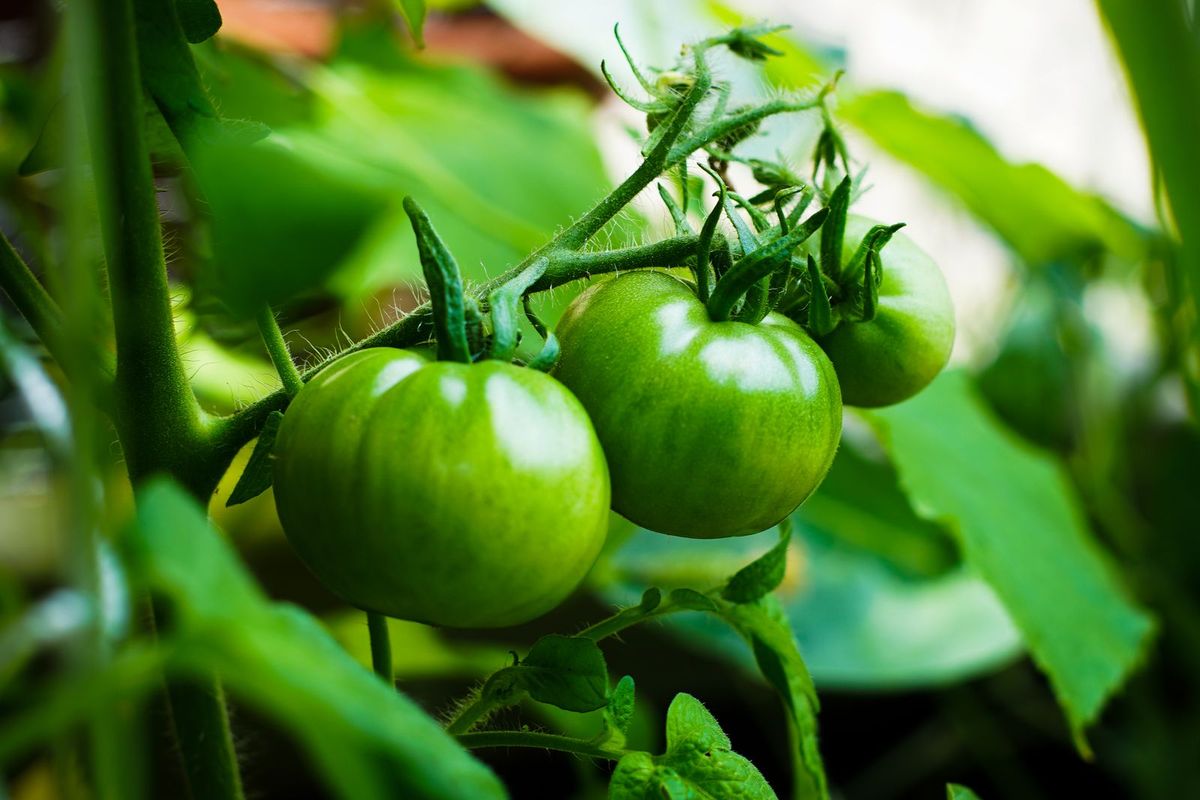
Green tomatoes hanging on the vine in a garden
Delivering the Water: Drip, Soaker, or Can
The method of delivery changes how well the same gallons work. Drip irrigation is the precision instrument: emitters at each plant deliver water slowly, directly to the root zone, with almost nothing lost to wind, evaporation, or the spaces between plants. A drip line on a timer is the closest a garden gets to watering itself, and tomatoes under drip, mulched, are the most evenly watered tomatoes a home gardener can produce. Its costs are setup and vigilance: emitters clog, lines get chewed and cut by hoes, and a system that waters automatically also fails automatically, silently, in a heat wave, so the finger test still makes its weekly rounds.
A soaker hose is the middle path: laid along the row under the mulch, it seeps water along its length at soil level, keeping foliage dry and losses low, for the price of a hose and an hour of your attention per session. Its weakness is evenness, more water near the spigot end than the far one, which laying it in a loop or keeping runs modest mostly solves. The watering can and the hose with a gentle breaker nozzle are the oldest system and remain perfectly respectable for a few plants: slow, targeted, and meditative, with the gardener's eye on each plant as it drinks, which catches problems no timer reports. Overhead sprinklers sit at the bottom of the list for tomatoes specifically, wetting foliage, inviting disease, and losing water to the air; if a sprinkler is what you have, run it early in the morning so the leaves dry fast in the sun, and lean harder on mulch.
Whichever system you choose, the measure of it is the same: soil evenly moist at 2 to 3 inches, checked by a finger that does not care how the water arrived.
Containers and Raised Beds: The Two Exceptions
A tomato in a container lives by different physics: little soil, drainage on all sides, and a root ball that fills the pot by midsummer. Expect to water daily in summer heat, deeply enough that water runs from the drainage holes, and expect the finger test to be your alarm clock. Large pots, 10 gallons and up, forgive a missed day; small pots forgive nothing. Feed container tomatoes lightly and regularly, because daily watering washes fertility out with it.
Raised beds sit between the two worlds: they drain faster than in ground soil and dry sooner, especially in their first year and in hot wind, but they hold far more soil than a pot. The finger test at 2 to 3 inches adjudicates, as always. Most raised bed tomatoes in summer land at two deep waterings a week, and their mulch layer matters even more than in the ground.
Reading the Weather: Adjusting the Rhythm by Week
The rhythm this guide teaches is not fixed, and the adjustments follow the sky rather than the calendar. In a cool, cloudy week, a tomato's drinking can halve; soil that took three days to dry at the finger test now takes six, and watering on the old schedule waterlogs a plant that was thriving. In a heat wave, the reverse: expect the finger test to call you a day early, expect containers to demand water twice a day, and expect the plant to wilt slightly at midafternoon even in adequately moist soil, a leaf posture that conserves water and recovers by evening. A tomato still wilted at dawn is the genuine alarm; a tomato wilted at 3 p.m. in a heat wave is a tomato behaving correctly.
Rain resets the count, but only rain you measured. A thunderstorm that dropped an inch in twenty minutes delivered less to the roots than its total suggests, because fast water runs off and puddles rather than soaking, while the same inch falling gently overnight is in the root zone by morning. The finger test adjudicates all of it, indifferent to what the sky performed: dry at 2 to 3 inches means water, whatever the weather app said, and moist means wait, whatever your schedule planned. That indifference is the test's entire virtue. Instruments that measure the plant's actual world beat predictions about it, in watering above all.
Frequently Asked Questions
How many inches of water do tomatoes need per week?
About 1 to 2 inches per week including rain. The University of Minnesota Extension works to roughly 1 inch weekly for garden soil, while Utah State University and University of Florida IFAS guidance runs 1 to 2 inches for fruiting plants in warm weather. Sandy soil and heat take you to the top of the range; clay soil and cool weeks to the bottom.
How do I know when my tomatoes actually need water?
Use the finger test: push a finger into the soil 2 to 3 inches deep beside the plant. Dry at that depth means water; moist means wait. The surface lies, drying in an afternoon while roots below are still wet, or staying damp after a shower that never reached them. In practice the test usually calls for one or two deep waterings a week in ground, and daily watering for containers in summer.
How many gallons is that per tomato plant?
One inch of water over one square foot is about 0.62 gallons. A plant spaced 2 feet by 2 feet therefore drinks roughly 2.5 gallons for each inch applied to its area, so a deep watering at the height of the season commonly runs 2 to 5 gallons per plant depending on spacing and soil. The calculator on this page sizes it exactly for your bed or row.
What causes blossom end rot and cracked tomatoes?
Watering swings, mostly. Blossom end rot is a calcium transport failure: the calcium is usually in the soil, but irregular moisture interrupts its movement into the fruit, which is why Clemson and University of Minnesota Extension guidance centers on even moisture and mulch rather than calcium products. Cracking happens when a dry spell is followed by a flood and the fruit swells faster than its skin. Steady, deep watering prevents most of both.
Should I water tomato leaves or the soil?
The soil, always, at the base of the plant, ideally in the morning. Wet foliage is how the common tomato leaf diseases spread and establish, and water on leaves in sun is water that never reaches a root. A 3 to 4 inch mulch layer under the plant keeps your watering and the rain from splashing soil up onto the lower leaves, which is the diseases' favorite road in.
How often do container tomatoes need water?
In summer heat, usually every day, sometimes twice in small pots during a heat wave. A pot holds a few gallons of soil against a garden bed's hundreds, and a mature plant drinks it dry quickly. Water deeply until it runs from the drainage holes, use the largest pot you can, at least 10 gallons for a full size plant, and let the finger test, not the calendar, give the order.
Photo credits: RDNE Stock project (Pexels); H La Kor (Pexels). Photos are served from this site; follow the credit to the library page for the original.