A wildflower meadow is the rare planting whose watering answer gets smaller every year, and the owners who fail it usually fail in the first month, in the direction of kindness misplaced in time: too little water while the seed is germinating, too much fussing once the meadow is grown. The plant community you sowed is mostly perennials and self sowing annuals adapted to your rainfall, but it arrives as seed lying on the soil surface, the most drought vulnerable object in the garden. This page runs the whole ladder by phase: the moist seedbed, the seedling weeks keyed to height, the first year inch budget, and the mature meadow's near independence. The wildflower sowing guide on this site owns seedbed preparation and sowing; this page owns the water from sowing day forward. The how-often-to-water-wildflower-seeds question folds in here as the ladder's first phase.
Home / Flowers and Houseplants
How Often to Water Wildflowers: The Phase Ladder from Moist Seedbed to Self Sufficient Meadow
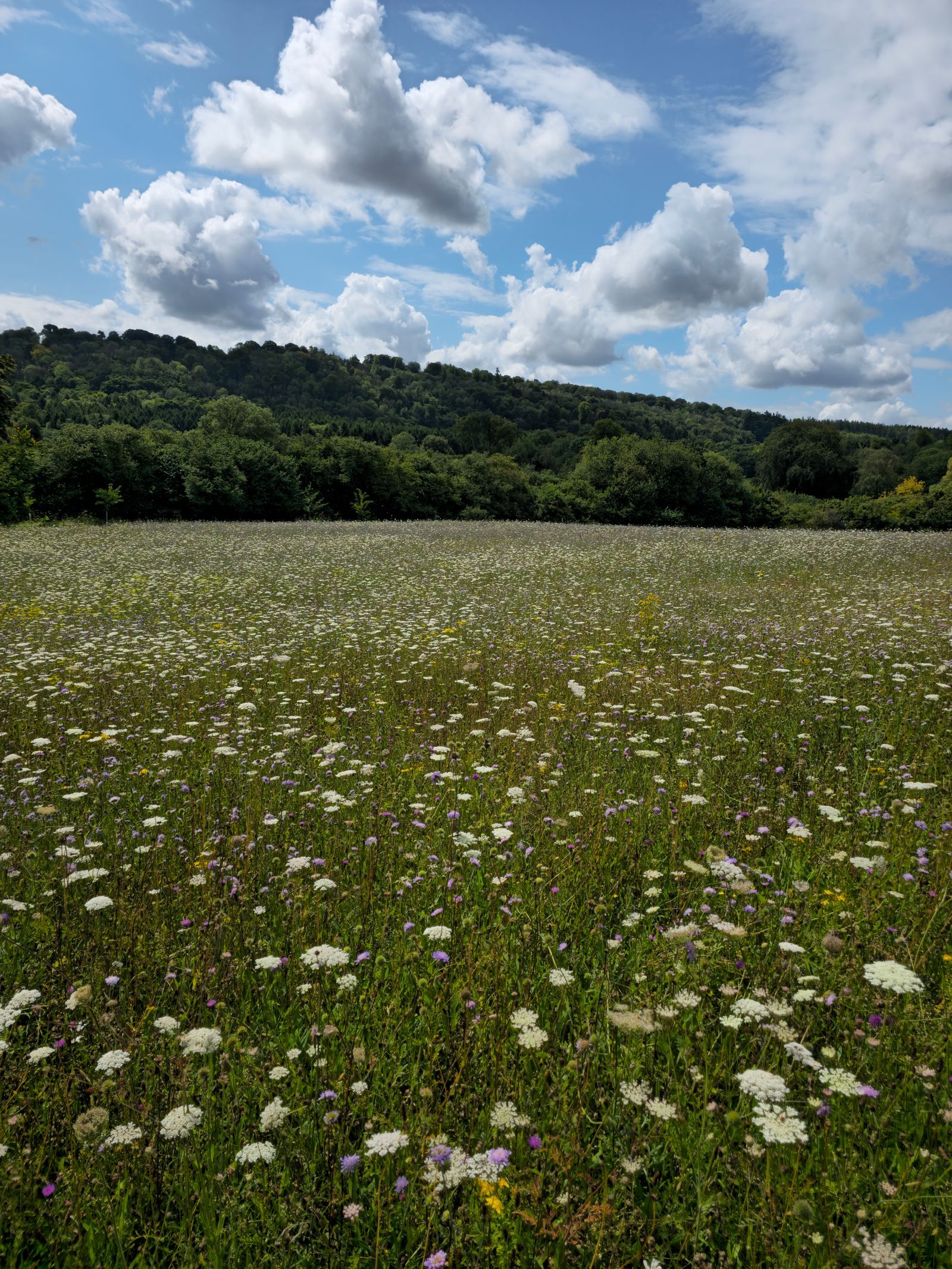
Photo: Ivan Dražić / Pexels
Watering Volume Calculator: The Wildflower Meadow Audit
An establishing meadow runs on about an inch of water a week, and the germination phase runs on far less, far oftener. Enter your bed length and width below and a depth of 1 inch to size the weekly inch, then read the phase ladder in this article for the light drinks.
19.9 gallons
For 32 square feet at 1 inch deep. That is about 76 liters, or 10 trips with a standard 2 gallon watering can.
A rain gauge or a straight sided can set in the bed tells you when a sprinkler or soaker hose has actually delivered this depth. Time alone is a guess, because hose pressure varies from house to house.
The conversion is arithmetic, not opinion: one inch over one square foot is 144 cubic inches of water, and a US gallon holds 231 cubic inches, so each square foot at one inch takes 0.62 gallons.
Phase One: The Moist Seedbed
From sowing until germination, the rule is that the seed zone, the top half inch where the seed lies in contact with the soil, must not dry out. Wildflower seed is sown shallow or on the surface, so it lives entirely in the layer that sun and wind strip first. The expert consensus in the results is light watering 1 to 2 times daily through this phase, little and often, a misting that recharges the surface without washing the seed into drifts. Kew guidance carried in the same results runs more sparingly, twice a week minimum in spring and more often in heat, and this page flags the spread rather than splitting it: the difference is sowing season and soil. A spring sowing on moisture holding soil in a cool climate survives the Kew end; a late spring sowing on sand in a warming week needs the daily end. The check arbitrates, as it does everywhere on this site: if the surface is dry and pale by midday, you are at the daily end whatever the calendar says. This phase lasts until the green haze appears, typically 2 to 4 weeks depending on the mix and the weather.
Phase Two: Seedlings to Six Inches
Once the seedlings are up, the ladder's step changes: light watering every other day, still shallow, still gentle, while the young plants build their first real roots. The phase is keyed to height rather than the calendar: until the stand averages 4 to 6 inches tall, roughly 4 to 6 weeks from germination in decent weather, the roots are still short and the surface moisture is still their whole world. Watering too deeply or too hard in this phase does its own damage, floating seedlings, crusting the surface, and encouraging the damping off fungi that thin a stand overnight; a fine rose on the can or a sprinkler with a gentle arc is the right tool. Begin stretching the interval as the stand approaches 6 inches, letting the surface dry between waterings for a day, then two, because the taper into phase three is a training program: roots follow moisture down only when the surface stops providing it.
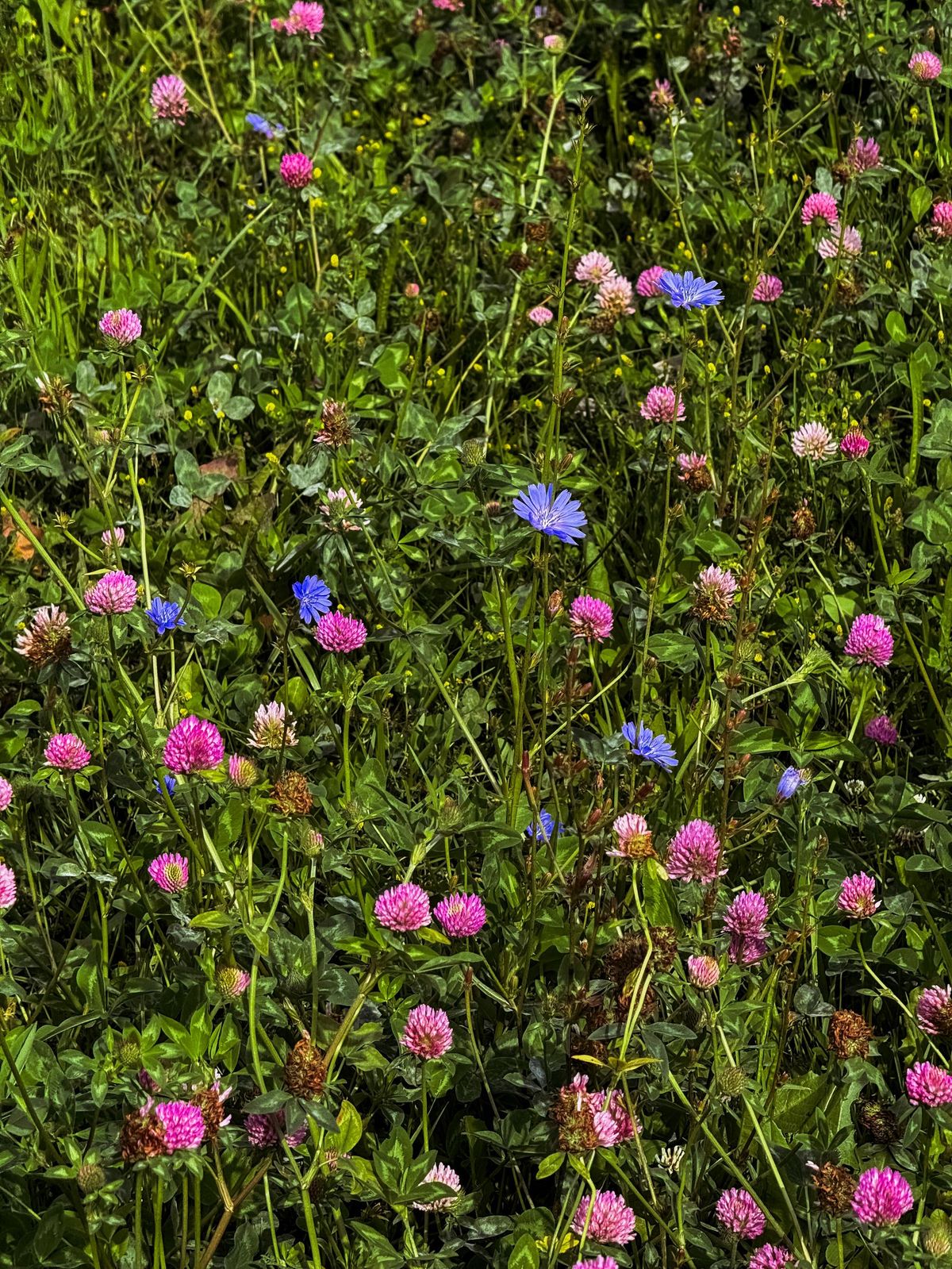
Phase Three: The First Year Inch
A meadow past 6 inches and growing away runs on the familiar budget: about an inch of water a week, rain included, delivered as one or two deeper waterings rather than daily sips. Use the calculator above to turn that inch into gallons over your actual bed; a meadow's area surprises owners, and the inch over 200 square feet is a real volume. The first summer is the establishment year that decides the meadow's composition: the species that survive it become the meadow, and a six week drought in year one edits the mix toward whatever was toughest, which is rarely what was sown. Watering through the first year's dry spells is therefore not coddling; it is composition insurance, keeping the desirable perennials alive until their roots reach the depth where they stop needing you. Annuals in the mix largely fend for themselves after germination and will reseed regardless.
Phase Four: The Mature Meadow Lets Go
In the second year the budget drops: water in genuine dry spells, a deep drink when the meadow has gone 3 to 4 rainless weeks in summer, and otherwise let rainfall run it. By the third year a well matched meadow is essentially self sufficient, watered only in exceptional drought, and this is the phase the whole system was buying. Two cautions keep owners from ruining it with kindness. A mature meadow watered and fed like a lawn becomes a lawn's ecology: grasses and lush weeds outcompete the flowers, which are adapted to leaner, drier conditions than turf. And fall sown seed, the other sowing route, needs almost no watering at all over winter in most regions: the seed sits dormant in cold soil and germinates on spring moisture, which is the strongest argument for fall sowing where winters allow it. The mature meadow's watering schedule, in the end, is mostly a decision to leave it alone.
Edges, Slopes, and Drought Triage
A meadow does not dry evenly, and the phase ladder applies unevenly across it. Edges dry first, where wind and the neighboring path or lawn pull moisture sideways; slopes dry from the top; and the soil under a tree's canopy is quietly robbed by its roots. During the germination and seedling phases these are the zones where the stand fails, and they repay targeted attention: an extra pass with the can over the top of the slope and the sunny edge while the flat interior coasts on the standard rhythm. In a first year drought, triage by value when water is short. The perennial core of the mix, the plants meant to become the permanent meadow, gets the water first; the annuals, which will reseed from a fraction of their number, get what is left; and a patch already lost is left alone rather than resurrected at the expense of the living. Water moves downhill and so does seed, which is why a slope's bottom often holds the lush strip and its top the bare one; next sowing, weight the seed toward the top, where both the water and the seed are trying to leave.
Frequently Asked Questions
How often should I water newly sown wildflower seed?
Keep the seed zone continuously moist until germination: light watering 1 to 2 times daily is the expert consensus, while Kew guidance runs twice a week minimum in spring and more in heat. The spread is real and the surface check arbitrates: if the top half inch is dry and pale by midday, water daily. The seed lies on or near the surface and dies dry in an afternoon, so this phase, lasting about 2 to 4 weeks, is the one that decides the meadow.
How long do wildflowers need regular watering?
Through establishment, on a tapering ladder. Seedlings get light watering every other day until they stand 4 to 6 inches tall, about 4 to 6 weeks. The first year then runs on about an inch a week, rain included. The second year needs water only in dry spells of 3 to 4 rainless weeks, and by the third year a mature meadow lives on rainfall with water reserved for exceptional drought.
Do established wildflower meadows need watering?
Almost never, and watering them like a lawn actively harms them. A mature meadow's flowers are adapted to lean, dry conditions; regular water and any feeding shift the competition toward grasses and lush weeds and the flowers thin out. Reserve water for exceptional drought, a deep drink after 3 to 4 rainless weeks in the second year, and less often than that once the meadow is fully mature.
Should I water wildflower seed sown in fall?
In most regions, almost not at all. Fall sown seed lies dormant through winter and germinates on spring's natural moisture, which is the main advantage of the fall route. A freak dry, warm spell after a fall sowing may justify one light watering to settle the seedbed, but the winter program is to leave it alone and let the season do the work.
Why did my wildflower patch come up patchy?
The germination phase is the usual suspect: the seed zone dried out during the 2 to 4 weeks before sprouting, and the bare patches are where the surface dried first, along edges, slopes, and sunny exposures. Seed washed into drifts by heavy watering is the other classic, visible as green clumps in the low spots. Next sowing, water little and often with a fine spray, and consider the fall sowing route, which removes the germination watering problem almost entirely.
Photo credits: Ivan Dražić (Pexels); Olga Petrova (Pexels). Photos are served from this site; follow the credit to the library page for the original.