With zinnias, where the water lands matters as much as how much arrives. Clemson University's HGIC guidance anchors the results and this page: water at the base of the plant when the top 1 to 2 inches of soil are dry, deliver about 1 inch a week, and keep water off the foliage, because zinnias are prone to leaf spot and powdery mildew and both diseases travel on wet leaves. A soaker hose at soil level is therefore not just an irrigation choice for this flower; it is a fungicide decision. Utah State's cut flower guidance adds the volume picture, running 1 to 1.5 inches per watering once plants are established, with heat pushing the weekly total toward the top of that range. What the short answers blur is the establishment phase, when seedlings and young transplants live on a completely different rhythm from the established bed. This site's zinnia grow guide owns planting and the season; this page owns water only: the budget, the delivery rule, the two phases, and the container cadence.
Home / Flowers and Houseplants
How Often to Water Zinnias: The Base Watering Rule and the Dry Foliage Discipline
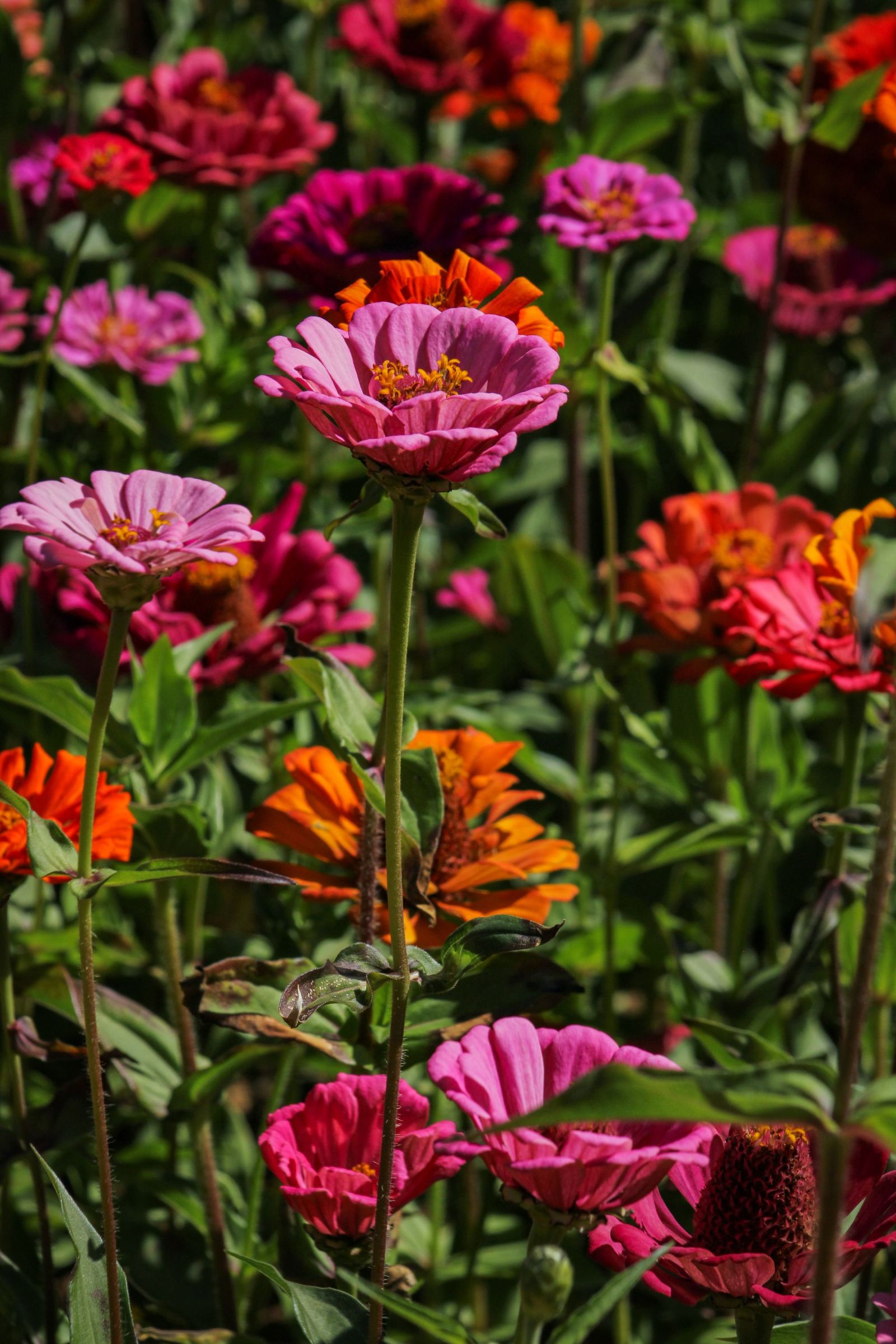
Photo: Senna Doe / Pexels
Watering Volume Calculator: The Zinnia Bed Audit
Zinnias take about an inch of water a week, delivered at the base so the foliage stays dry. Enter your bed length and width with a depth of 1 inch to size that weekly soak.
19.9 gallons
For 32 square feet at 1 inch deep. That is about 76 liters, or 10 trips with a standard 2 gallon watering can.
A rain gauge or a straight sided can set in the bed tells you when a sprinkler or soaker hose has actually delivered this depth. Time alone is a guess, because hose pressure varies from house to house.
The conversion is arithmetic, not opinion: one inch over one square foot is 144 cubic inches of water, and a US gallon holds 231 cubic inches, so each square foot at one inch takes 0.62 gallons.
The Established Budget: An Inch a Week, at the Base
Once zinnias are established and growing strongly, the system is simple to state and strict to run. Check the top 1 to 2 inches of soil; when dry, water deeply at the base to deliver roughly an inch, then let the surface dry again before the next drink. In most soils and most summer weather that lands at one deep watering a week, splitting into two in serious heat as Utah State's upper range suggests. The calculator above sizes a 1 inch drink for your bed's footprint, and the number surprises people: a 4 by 10 foot cutting bed needs about 25 gallons to receive its inch, which is why the sprinkler's cheerful 20 minutes so often delivers a third of a drink and a full dose of wet foliage, the worst of both trades. Drip lines and soaker hoses are the correct tools, laid along the rows at planting. Morning watering is the backup discipline for anyone who must use a hose: water early, at the base, so any splashed foliage dries in the day's first hours rather than sitting wet into the night, which is when the fungal diseases do their traveling.
The Establishment Phase Is a Different Rhythm
Seedlings and fresh transplants do not run on the weekly inch, and treating them as if they do is the common early failure. A newly sown bed needs its surface kept lightly and evenly moist until germination and through the first true leaves, which in warm weather can mean a gentle watering daily or even twice a day in a light, fast drying soil. Young transplants, set out from cells, want the same kindness for their first week or two while their roots leave the plug and enter the bed. The transition is the skill: as the plants size up and their roots go deep, stretch the interval and deepen the drink, moving the bed onto the established budget over about 2 weeks. A bed weaned too fast stalls and mildews from stress; a bed kept on the seedling rhythm into summer grows soft, shallow rooted plants that wilt at noon and spot at the first humid week. Read the plants: when a zinnia stands through a hot afternoon without flagging and the top 2 inches have dried, it is telling you it has arrived on the adult rhythm.
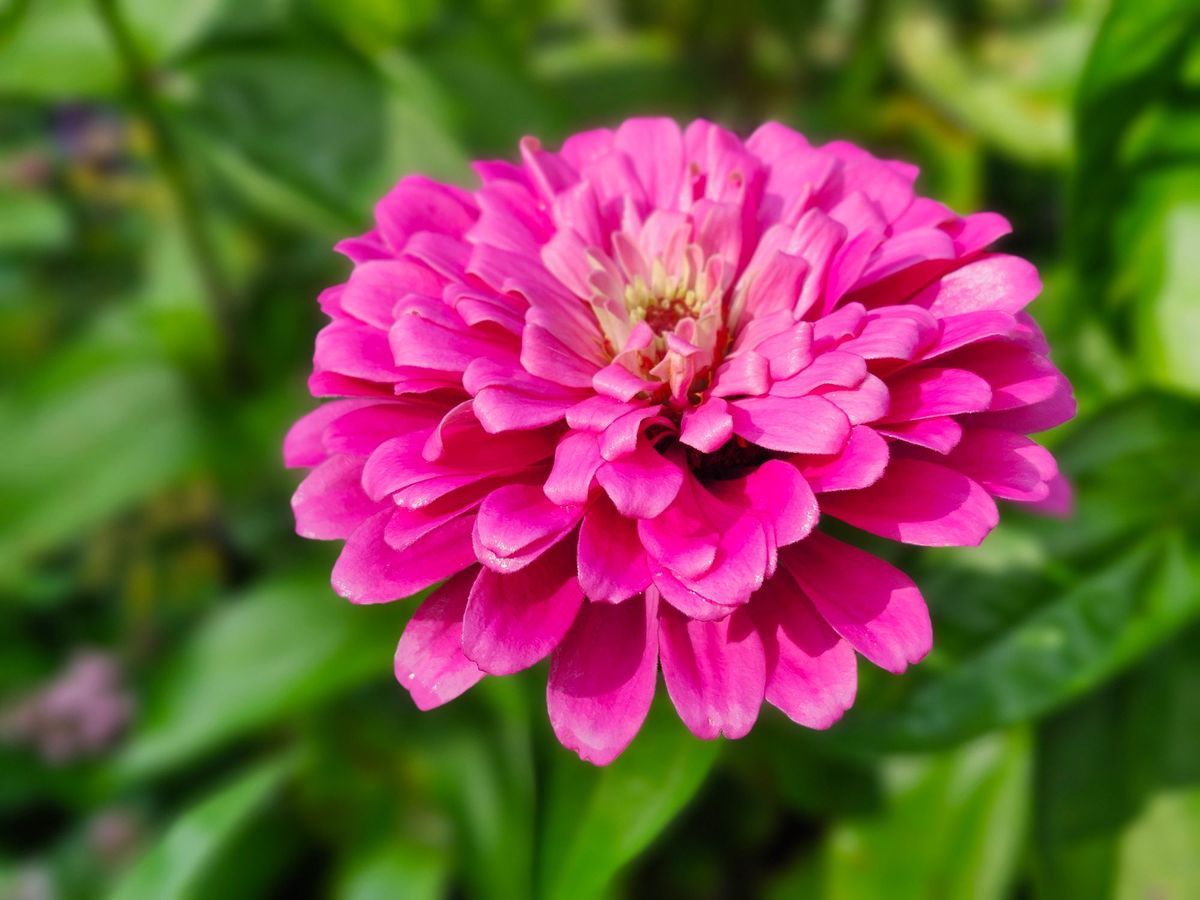
Containers: Every 1 to 2 Days, Same Rules
A zinnia in a pot in full sun runs the fastest clock on this page: every 1 to 2 days in summer is the guides' cadence, and a small pot in a heat wave wants its check daily. The delivery rule does not relax for containers. Water the mix, not the plant, pouring at the base until drainage runs, and empty the saucer so the pot is not standing in its own runoff, which rots roots in a plant that wants its moisture passing through. Pot zinnias mildew exactly as bed zinnias do, and the small canopy in a still corner is if anything more vulnerable; space pots for air, water in the morning, and accept the daily rhythm as the price of the vessel. Feeding rides along in containers: a half strength liquid feed every 2 weeks keeps a pot zinnia flowering, because the frequent watering that keeps it alive also leaches its small pantry bare by midsummer.
Mulch, Spacing, and the Disease Triangle
Zinnia disease needs three things at once: the fungus, which is everywhere; a susceptible plant, which a zinnia is; and wet foliage, which is the only leg of the triangle you control. Watering discipline is one half of that control. The other half is air. Space plants so the canopy dries: crowded zinnias hold humidity inside the planting and mildew in a wet year no matter how carefully you water. Mulch the bed 2 to 3 inches deep once plants are up, which does three jobs at once: it holds the soil moisture even between the weekly drinks, it stops the soil splash that carries leaf spot spores onto the lower leaves during rain and watering, and it keeps the surface from crusting. Then scout honestly. The first spotted lower leaves come off and go in the trash, not the compost, and a plant collapsing early in a crowded row is pulled to save its neighbors. In a dry year, none of this matters much and every zinnia grower looks skilled. In a wet year, the base watering, the mulch, and the air are the entire difference between a cutting garden and a mildew exhibit. Run the inch at the base, wean the seedlings on schedule, and keep the foliage dry: that is the whole zinnia watering system.
Crediting Rain Against the Inch, Honestly
The weekly inch counts rain, but not all rain counts equally, and over crediting a light shower is how zinnia beds quietly go thirsty in a wet looking week. A rain gauge in the bed, or a straight sided can, settles arguments the sky starts: a storm that drops a genuine half inch has paid half the week's budget, while the afternoon shower that darkens the mulch and registers a tenth of an inch has mostly wet the surface, and under a mulch layer some of that tenth never reaches the soil at all. The rule this page teaches: credit rain at face value only above a quarter inch; below that, treat it as a free surface drink for the seedlings and shallow roots and keep the week's deep watering on schedule. After any credited rain, run the finger check before the next scheduled watering anyway, because soil type arbitrates what the gauge cannot: sand spends a half inch in two days, clay holds it for five. Zinnias make the honest accounting worth doing, since their disease pressure punishes the opposite error too; the grower who waters on schedule through a genuinely wet week is bathing foliage that this page has already told you to keep dry. Gauge, credit, check: three small habits that keep the inch a measurement instead of a hope.
Frequently Asked Questions
How often should I water zinnias?
Established plants: when the top 1 to 2 inches of soil are dry, water deeply at the base to deliver about 1 inch, which works out to roughly once a week in most summer weather and twice in serious heat, per Clemson HGIC's pattern and Utah State's 1 to 1.5 inch range. Seedlings and new transplants run a different rhythm, with the surface kept lightly moist until they are established. Containers in full sun need water every 1 to 2 days. In every case, water the soil, not the foliage.
Can I water zinnias with a sprinkler?
You can, and it is the worst tool for this plant. Zinnias are prone to leaf spot and powdery mildew, and both spread on wet foliage, which is why Clemson HGIC specifies watering at the base. A sprinkler also delivers less than it appears to: a 4 by 10 foot bed needs about 25 gallons to receive a true inch. A soaker hose or drip line at soil level delivers the inch and keeps the leaves dry, doing the irrigation and the disease prevention in the same pass. If a hose is all you have, water early in the morning at the base.
Why do my zinnias get powdery mildew?
Because the foliage stays wet and the air stays still. Mildew needs wet leaves and humid, stagnant conditions inside the canopy, and overhead watering, tight spacing, and evening watering all supply them. The controls are the watering system on this page: water at the base in the morning, space plants for airflow, mulch to stop soil splash, and remove the first spotted leaves to the trash. In a wet summer some mildew arrives anyway by season's end; the discipline decides whether it arrives in June or September.
How much water do zinnias in pots need?
More often than the bed, on the same rules. A potted zinnia in full sun typically needs water every 1 to 2 days in summer, checked daily in a heat wave, pouring at the base until drainage runs and emptying the saucer afterward. The pot's small volume swings dry fast and leaches nutrients as it goes, so a half strength liquid feed every 2 weeks keeps a container plant flowering through midsummer. Never water the foliage to cool the plant; shade at noon does that job without the disease bill.
Do zinnias need less water once they are established?
They need it less often and deeper. The establishment phase runs on light, frequent watering, with the seedbed surface kept moist through germination and the first weeks. Once plants are growing strongly, stretch the interval and deepen each drink until the bed is on the adult budget of about an inch a week at the dry check. The transition takes about 2 weeks. A bed kept on the seedling rhythm all summer grows shallow rooted, soft plants that wilt at noon and mildew early; the weaning is part of the system.
Photo credits: Senna Doe (Pexels); Alex Ohan (Pexels). Photos are served from this site; follow the credit to the library page for the original.