How Often to Water a ZZ Plant: Watering the Plant That Stores Its Own
By the Windchime Walker editorial team
Photo: Elena Golovchenko / Pexels
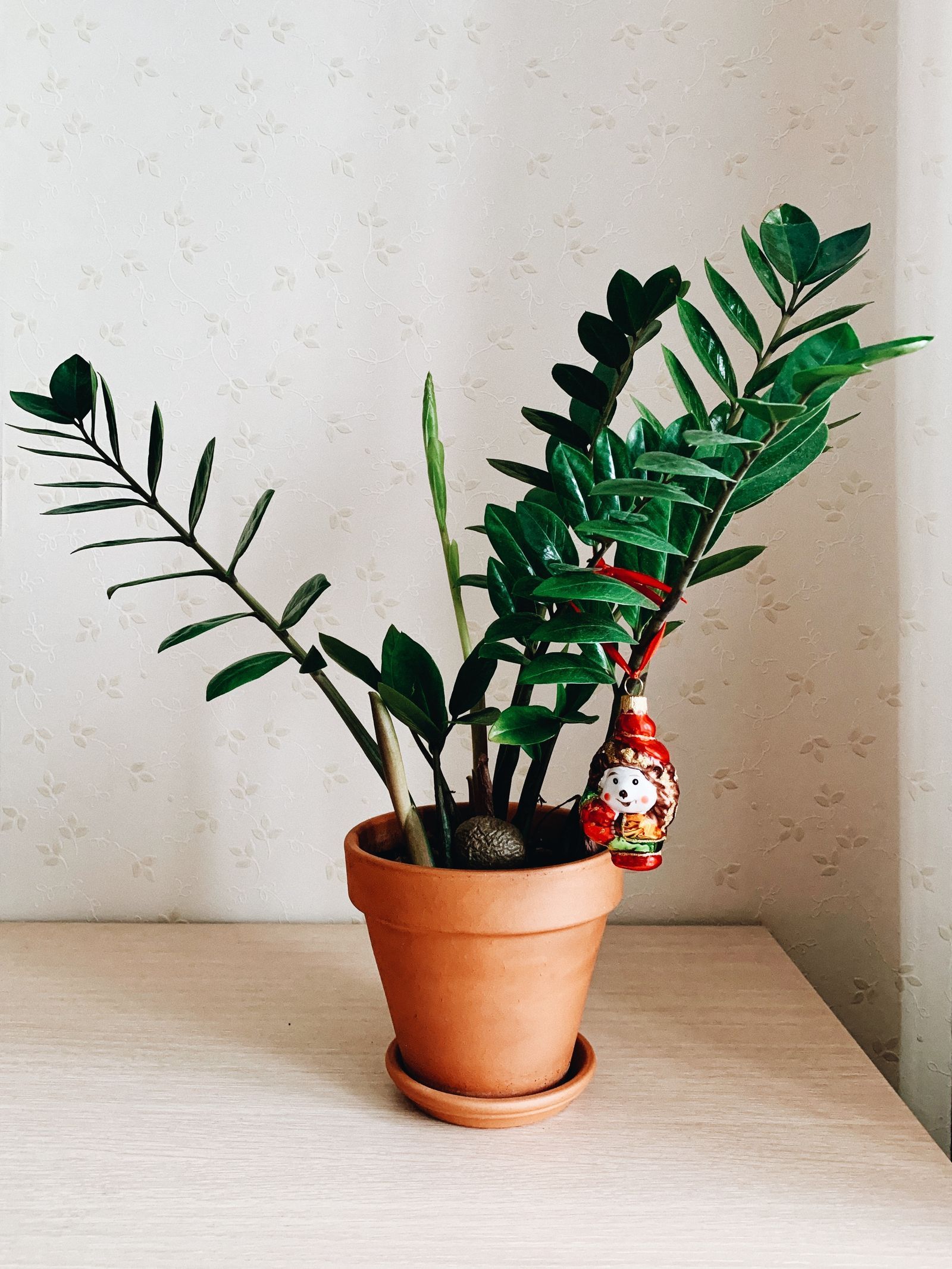
The ZZ plant is the answer people give when asked for a plant that thrives on neglect, and the neglect it thrives on is specifically yours at the watering can. Under the mix, a ZZ plant carries thick rhizomes, underground storage organs packed with water, and the whole watering system follows from that anatomy: the plant drinks from its own reserves between your drinks, and it is killed not by drought but by kindness. The rule is to water only when the mix is fully dry through the whole pot, which for most rooms means about every 2 to 4 weeks. NC State Extension's pattern is about twice a month in summer once the mix is fully dry, and monthly in winter. Clemson Extension's HGIC guidance names the same mechanism from the other side: the rhizomes store water, and overwatering and the rot that follows are the main way this plant dies indoors.
Our houseplant watering chart owns intervals across many plants. This page owns the ZZ plant alone.
Interactive tool
Watering Volume Calculator: The ZZ Plant Pot Audit
A ZZ plant drinks rarely but deeply: its rhizomes store water, so the pot must dry fully before the next soak. Enter your pot diameter as both length and width with a depth of 1 inch to size that soak when it finally comes.
19.9 gallons
For 32 square feet at 1 inch deep. That is about 76 liters, or 10 trips with a standard 2 gallon watering can.
A rain gauge or a straight sided can set in the bed tells you when a sprinkler or soaker hose has actually delivered this depth. Time alone is a guess, because hose pressure varies from house to house.
The conversion is arithmetic, not opinion: one inch over one square foot is 144 cubic inches of water, and a US gallon holds 231 cubic inches, so each square foot at one inch takes 0.62 gallons.
The Check That Lies, and the Two That Work
The standard finger test fails this plant in a specific way: the top 2 inches of a ZZ pot dry within days, while the mix around the rhizomes, in the bottom two thirds of the pot, stays moist for weeks. A finger says water; the rhizomes say the plant is still drinking from storage and the last drink has not finished. Two checks read the whole pot. The weight check: a fully dry ZZ pot is strikingly light for its size, and a pot with moisture still in the base has a heft you learn after two or three cycles of lifting before and after a soak. The dowel check: push a wooden skewer or chopstick to the bottom of the pot, leave it a minute, and pull it out. Damp mix clings and darkens the wood along the depth that is still wet; a skewer that comes out clean and dry to the bottom is the green light. Until one of those checks says dry, the answer is no, whatever the surface looks like and whatever week it is.
The Conflict in the Sources, Flagged Openly
Honest guidance on this plant has to admit a disagreement. Most extension and nursery guidance converges on the 2 to 4 week rhythm above. Iowa State Extension's houseplant guidance, however, describes a thorough watering every 7 to 14 days as usually fine for ZZ plants. Those are not the same instruction, and this page does not average them into a mushy every 2 to 3 weeks. The Iowa State interval can work in the specific conditions behind it: a small pot, a very free draining mix, bright light, and warm rooms, a setup where the whole pot genuinely dries within a fortnight. In the common setup, a larger pot in medium light, a 7 day rhythm keeps the rhizome zone permanently moist, which is the rot pattern. Our working standard is the full dry check with the 2 to 4 week expectation, because it is safe in both setups: a plant in fast drying conditions simply passes the check sooner. When sources conflict, follow the check, not the calendar, and the conflict stops mattering.
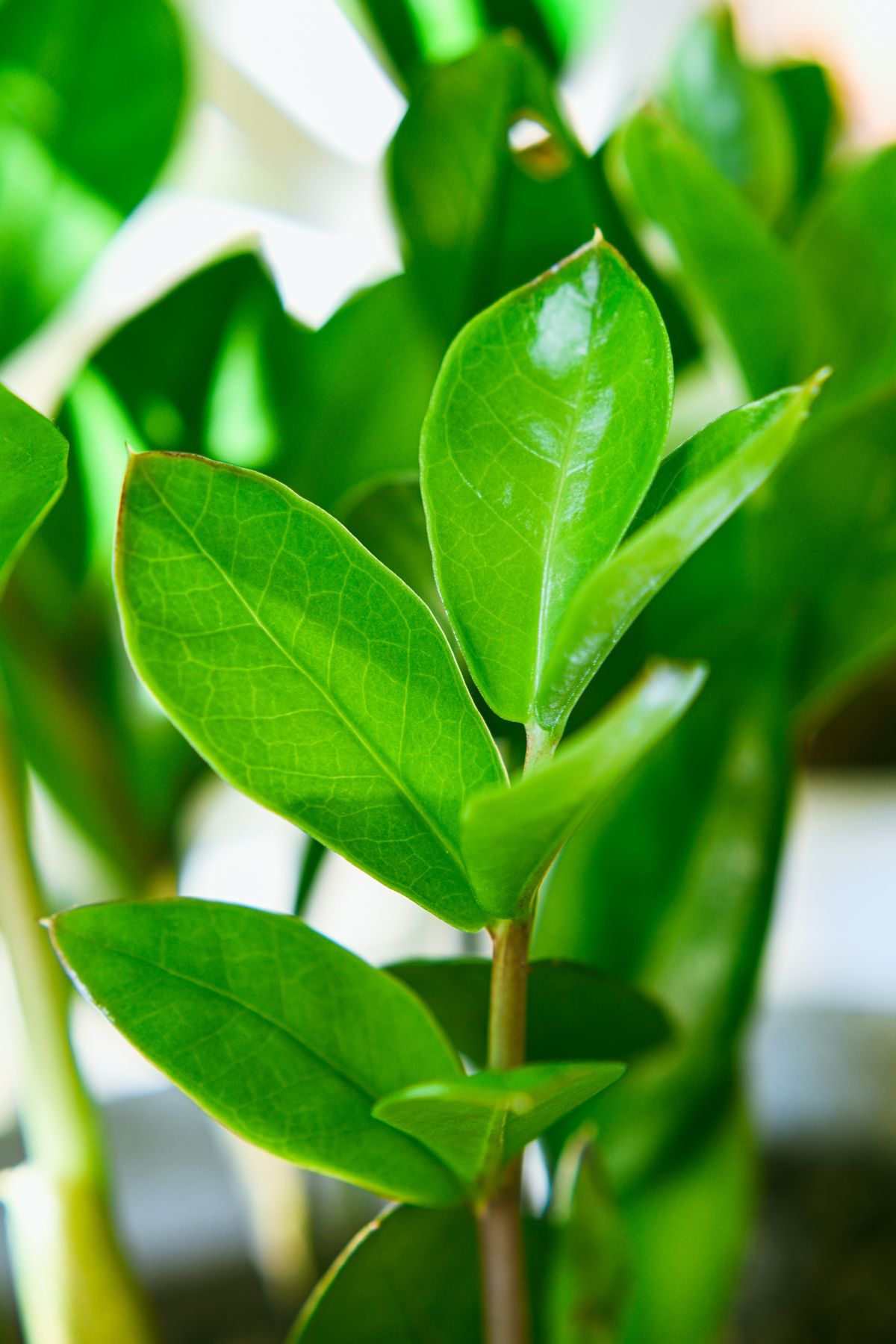
Glossy ZZ plant leaves and stems in close-up
The Drink: Rare, Deep, and Fully Drained
When the check finally says dry, the drink is thorough: water slowly over the whole surface until it runs from the drainage holes, let it drain completely, and empty the saucer. The calculator above sizes it: enter the pot diameter as both length and width with a depth of 1 inch for an estimate, and expect a big floor pot to take a satisfying amount, because you are refilling the whole system, not sipping. Then the pot goes back to its corner and the clock restarts. Two refinements matter. First, never give a ZZ plant a little top up to tide it over; a partial drink wets the top while the plant is adapted to full cycles, and it muddies your check for weeks. Second, drainage is non negotiable: a ZZ in a pot without holes, or standing in a cachepot of runoff, is a plant sitting on its own rot risk. If the display pot has no drainage, keep the plant in its nursery pot inside it and lift it out to water at the sink.
The Mushy Stem Rescue
The failure, when it comes, announces itself at the stem bases: a stalk goes soft and mushy at the bottom, yellows, and topples, while the mix is still wet from the last drink. That is rhizome rot, and it is the only ZZ emergency. Act the same day. Tip the plant out and inspect the rhizomes: firm and white to pale is healthy; brown and soft is rot. Cut away every soft rhizome section and stem with a clean knife, cutting back to firm tissue, and let the cuts air dry for a day. Repot what is healthy into fresh, dry, free draining mix in a pot with drainage, and do not water for a week; the stored reserves carry the plant while the cuts callus. Leaf stems with healthy bases can also be rooted as cuttings, and individual leaflets can be propagated in mix, slowly, as insurance. What you cannot do is water a rotting plant back to health, and the most common post mortem finding in ZZ care is a rescue attempt made of extra drinks.
Placement, Pets, and the Low Light Corner
The ZZ plant's famous low light tolerance is real and it is also a watering instruction: the dimmer the corner, the slower the plant drinks, and the longer the interval runs, sometimes past a month in winter. A ZZ in bright indirect light may run the 2 week end of the range; the same plant in a hallway runs the 4 week end or beyond, and both are healthy. Temperature swings matter less than light, except that a cold windowsill in winter plus wet mix is a rot invitation. One placement fact is not optional: the ZZ plant is toxic to people and pets if eaten, listed by the ASPCA, so it belongs out of reach of chewing cats, dogs, and toddlers, which usually means a shelf or a stand rather than the floor corner its size suggests. Put the plant where pets cannot browse it, run the full dry check, soak rarely and deeply, and a ZZ plant will outlast most of the furniture around it.
Repotting a Plant That Hates Attention
A ZZ plant asks to be repotted about as often as it asks to be watered, which is rarely, and it announces the need physically: the rhizomes grow so large they bulge the pot, in plastic pots visibly distorting the sides, and the mix line rises as the storage organs displace it. That is the signal, not roots at the drainage hole, which this plant shows early and means nothing by. Repot in spring into a pot only 2 inches wider, in a free draining mix with extra perlite or pumice, because the new mix around the rhizomes is exactly where a heavy first watering does its damage; water the repotted plant lightly once, then leave it alone for at least two weeks while it settles. Handle the rhizomes like the water tanks they are: firm ones are never cut for tidiness, and a rhizome that comes away in your hand with soft tissue goes to the rescue protocol above, not back into the pot. Most ZZ plants need this every 3 to 4 years. Between repots, the entire care program is the one this page opened with: the full dry check, the rare deep soak, the drained saucer, and otherwise the discipline of leaving a self sufficient plant alone.
Frequently Asked Questions
How often should I water a ZZ plant?
Only when the mix is fully dry through the whole pot: about every 2 to 4 weeks for most rooms, roughly twice a month in summer and monthly in winter. In low light the interval can run longer. Judge by pot weight or a dowel to the bottom, never by the dry surface alone.
Why does the finger test not work for a ZZ plant?
Because the pot dries from the top while the rhizome zone in the bottom two thirds stays moist for weeks. The top 2 inches can be dust dry while the plant is still well supplied. A skewer pushed to the bottom, or the learned weight of the dry pot, reads the whole profile honestly.
How much water does a ZZ plant need when I do water it?
A full soak: water until it runs from the drainage holes, then drain completely and empty the saucer. Rare and deep is the system. Never give small top ups between soaks; they keep the surface wet, confuse your dryness check, and do not match how the plant uses its stored water.
My ZZ plant has a mushy stem. Can it be saved?
Often, if you act fast. Unpot it, cut away every brown soft rhizome and stem back to firm tissue with a clean knife, air dry the cuts a day, and repot the healthy parts into fresh dry mix. Do not water for a week. Extra water during a rescue attempt is the most common way the plant is finished off.
Is the ZZ plant safe around pets?
No. It is toxic to cats, dogs, and people if eaten, per the ASPCA listing. Place it out of browsing reach, on a shelf or stand, especially with pets that chew leaves. Its low light tolerance makes raised placements easy, since it does not need the bright floor spot other large plants demand.
Photo credits: Elena Golovchenko (Pexels); Suki Lee (Pexels). Photos are served from this site; follow the credit to the library page for the original.