How to Care for Coneflowers: The Year Round Routine for a Prairie Plant
By the Windchime Walker editorial team
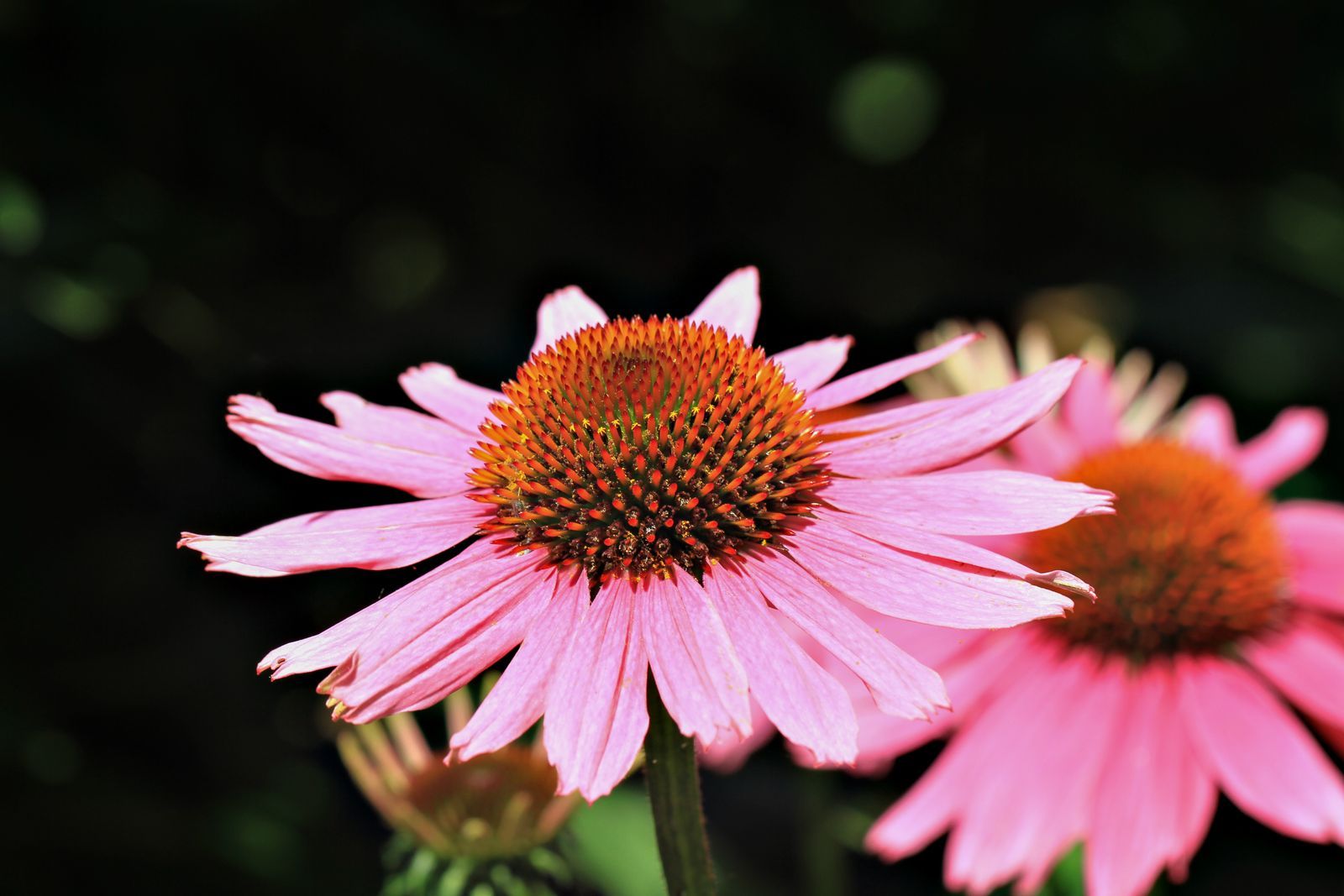
Photo: Nicky Pe / Pexels
Coneflowers ask the beginner to learn a new gardening virtue: restraint. Most garden plants are killed by neglect, but the coneflower, a true prairie native, is most often killed by kindness, by rich soil, regular fertilizer, and faithful watering lavished on a plant built for lean ground and long dry spells. Care for coneflowers well and the work shrinks every year: a first season of establishment watering, a midsummer deadheading rhythm, and then a plant that largely runs itself, feeds bees all summer and goldfinches all fall, and returns bigger each spring.
This page is the whole care year for this one plant. Our general deadheading guide owns the technique across flowers; here deadheading is one dated decision inside coneflower's own calendar.
Interactive tool
Coneflower Care Checklist
Check off each step as you finish it. Your progress stays on this page.
0 of 8 complete
0% done
The Ground Rules: Sun, Space, and Lean Soil
Plant coneflowers in full sun, 6 to 8 hours of direct sun, in soil that drains. Space plants 18 to 24 inches apart; a coneflower clump spreads into its space over two or three seasons, and air moving between clumps is disease prevention you install once. The soil doctrine is the part beginners resist: lean is correct. Do not amend the planting hole richly, do not fertilize an established plant, and keep the compost confetti for the vegetable beds. Rich soil and nitrogen push a coneflower into soft, floppy growth with fewer flowers, a plant literally weakened by generosity. In heavy clay, the fix is not richness but drainage: plant a little high, work in coarse organic matter across the whole bed rather than in a sump of a hole, and let winter decide whether the spot suits them, because winter is when clay makes its argument.
Step 1: The First Season, Watering That Tapers
A new coneflower needs a real establishment season, and this is the exception to the neglect doctrine. Water deeply at planting, then keep the root zone moist through the first weeks, tapering across the season: regular deep drinks in the first month or two, then watering only when a dry spell stretches past a couple of weeks, always deeply and at the base. The taper is the teaching: roots chase moisture downward as surface watering fades, and a plant that has been weaned by September enters winter with roots deep enough to run itself. From the second year on, an established coneflower wants water only in long droughts, and in many gardens, none at all. The beginner error is symmetrical: drowning a new plant with daily sprinkles that keep roots shallow, or abandoning it entirely in its first August. Establish, taper, then trust.
Step 2: The No Feed Rule, and Its Reason
Say it plainly so future you believes it: do not fertilize coneflowers. The plant evolved in prairie soils where nitrogen is scarce, and its whole architecture, stiff stems, modest foliage, generous flowers, assumes lean rations. Feed it and you get the prairie equivalent of a couch athlete: tall, soft, flopping stems, leaves out of proportion, and a bloom count that goes down as the greenery goes up. If your coneflowers look pale and thin in soil that grows everything else badly, a single light top dressing of compost in spring is the maximum intervention, and it is a soil correction, not a feeding program. Yellow leaves on coneflowers in decent soil usually mean wet feet, not hunger, and the cure is drainage, not fertilizer.
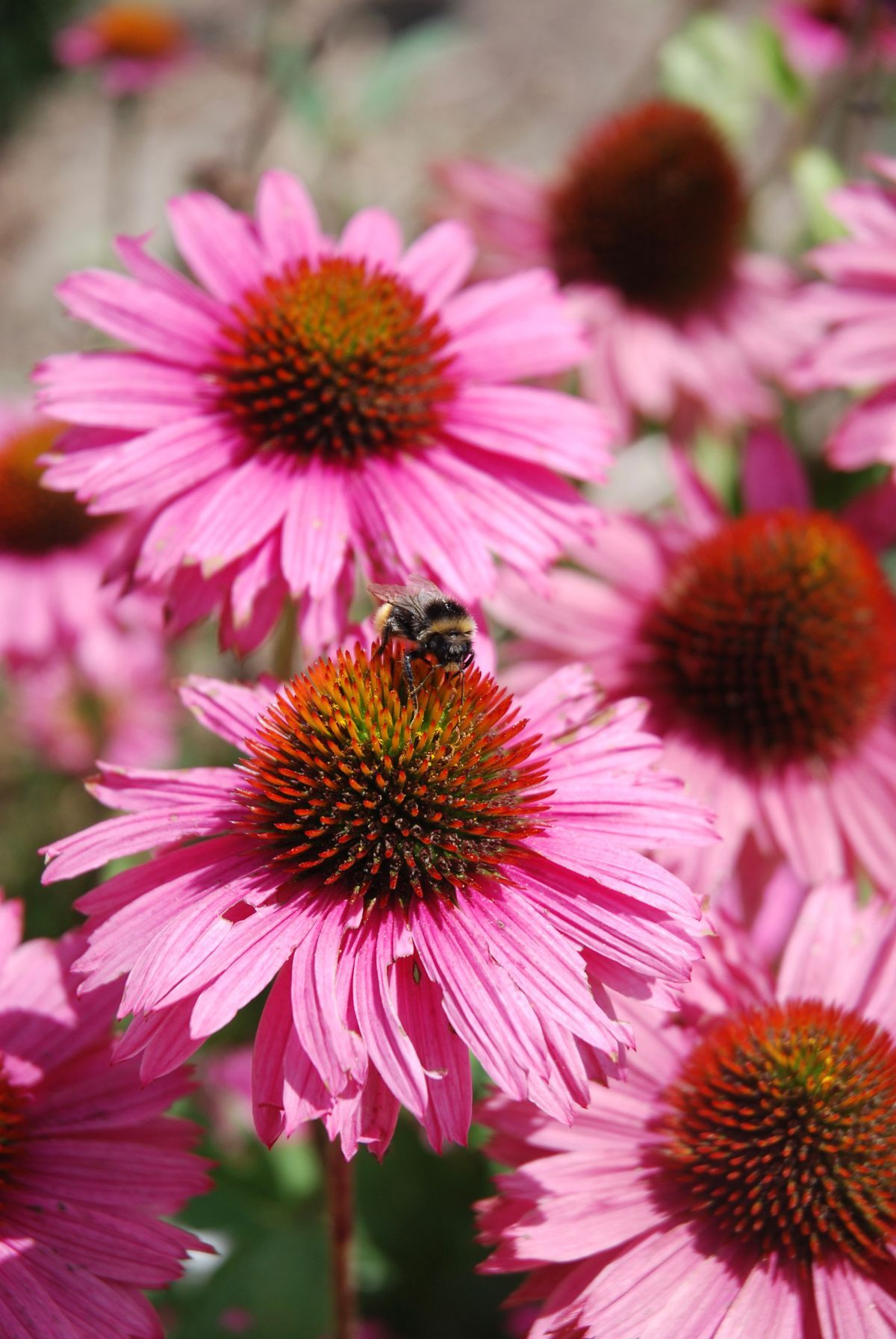
A bee pollinating pink coneflowers under summer sun
Step 3: The Deadhead Decision, Dated
Coneflower's signature choice arrives at the first spent bloom, and the answer is both options, in sequence. Through midsummer, deadhead: cut each faded flower stem down to a leaf or a side bud, and the plant responds with more blooms, extending the show for the bees and for you. Then, at the last flush of the season, stop. Leave the final seed heads standing. Goldfinches work coneflower heads like a trade, hanging upside down to pick the seeds, and the standing heads give the winter border its architecture and the plant its self sown volunteers. Cut the whole plant back in early spring, before new growth starts, rather than in fall; the standing winter plant is feeding birds and sheltering insects while the tidy fall cleanup version feeds only the gardener's sense of order. Our deadheading guide covers the cutting technique itself across flowers; the coneflower specific wisdom is purely the calendar: cut for bloom until late summer, then leave for the birds.
Step 4: Division at About Four Years, and the Hybrid Honesty
A coneflower clump tells you it wants dividing when its center dies out into a ring, or when the whole plant's vigor fades despite good conditions, typically at about four years. Divide in early spring as growth starts: lift the clump, cut or pull it into sections with roots and crowns in each, replant at the same depth with the 18 to 24 inch spacing, and water the divisions through their re establishment as if they were new plants, because they are. The honest exception belongs here: many modern coneflower hybrids, the sunset oranges and exotic doubles bred from the species, are shorter lived plants than the straight species and its classic purple forms, sometimes behaving like three or four year guests rather than permanent residents. That is breeding, not your failure. Let the good ones self sow, keep the species types as your backbone, and treat short lived hybrids as the price of novelty rather than a care mistake.
Step 5: Know Aster Yellows When You See It
One disease matters enough to learn by sight. Aster yellows is a phytoplasma spread by leafhoppers, and its signature is unmistakable once seen: flowers come out distorted and green, with leafy little growths sprouting from the cone where petals should be, and the plant declines into a stunted, yellowing shadow of itself. There is no cure, and the plant is a reservoir that infects its neighbors through the same leafhoppers, so the discipline is removal: dig the whole plant out, roots and all, bag it, and put it in the trash, never the compost. It feels harsh for a plant still technically alive, and it is the kindest thing you can do for the rest of the bed. The other coneflower troubles are lesser: powdery mildew on crowded, shaded plants (fix the spacing and sun, not the spray shelf), and the winter wet rot covered below.
The Main Killer: Wet Soil in Winter
Ask experienced growers what kills coneflowers and the answer surprises beginners who feared drought: it is winter wet. A coneflower crown sitting in cold, saturated soil through winter rots quietly, and the plant simply does not appear in spring, leaving the gardener blaming the cold. Everything in this page bends away from that ending: drainage at planting, no rich water holding amendments in the hole, no mulch piled against the crown in fall, and a raised or sloped spot in heavy soil country. In containers, the same rule wears different clothes: pots must drain freely and are better overwintered where rain cannot fill them faster than they empty. Respect the winter wet rule and coneflowers are among the longest lived, least demanding plants in the border. Ignore it in clay and you will replant them like annuals, wondering what everyone else sees in them.
Planting Coneflowers Well: Plugs, Plants, and Seed
How a coneflower arrives decides its first year. Nursery plants in pots are the reliable route: plant in spring or early fall at the same depth they grew in the pot, at the 18 to 24 inch spacing, water them in deeply, and run the establishment taper from step 1. Bare root plants and small plugs go in spring and ask for a more faithful first month of watering, in exchange for a lower price per plant and the satisfaction of watching a small thing become a border. Seed is the patient route and comes with a botanical footnote: coneflower seed germinates best after a period of cold, moist conditions, which is why fall sowing outdoors, letting winter do the work, outperforms a spring windowsill for many growers, and why a spring sown patch may germinate thinly and late rather than not at all. Seed grown plants commonly wait until their second year to flower, which is not a defect but the species' timetable. However they arrive, resist the urge to space young plants tightly for instant effect; a coneflower border is planted for its third year, and the gardener who spaces for that year, and fills the young gaps with annuals meanwhile, gets both the instant effect and the permanent one.
Coneflowers Beyond the Border: Cutting, Containers, and Company
Coneflowers earn their keep in more places than the perennial border. As a cut flower they are sturdy and long lasting in a vase, cut when the petals have opened fully and the cone is firm, and the cutting is simply deadheading with a destination, so a cutting patch extends its own bloom by being harvested. In containers they succeed where the container respects the two rules of this page: drainage that cannot fail, because a pot that holds winter water against the crown reproduces the winter wet death in miniature, and restraint with fertilizer, which in a pot is even easier to overdo than in the ground. Choose the compact forms for pots and expect to divide or refresh them sooner than their in ground cousins. As company, coneflowers are the middle layer of the classic prairie planting, with grasses behind them moving in the same wind they evolved in, black eyed Susans and gaillardia alongside in the same lean soil and full sun, and the autumn sedums closing the season after them. Plant them in drifts of three or more rather than single specimens scattered like punctuation; a drift reads as a place, feeds pollinators at a scale they can work profitably, and forgives the loss of any single plant. That is the whole aesthetic of the plant, really: not a specimen to be fussed over, but a citizen of a sunny, lean, well drained community, asking for a season of help and then a decade of being left gloriously alone.
Frequently Asked Questions
How much sun and space do coneflowers need?
Full sun, 6 to 8 hours of direct sun, and 18 to 24 inches between plants so air moves through the clumps as they spread. Less sun means fewer flowers and floppier stems; tighter spacing invites mildew. Coneflowers are prairie plants and want prairie conditions.
Should I fertilize my coneflowers?
No. Rich soil and nitrogen make soft, floppy growth and fewer flowers on a plant evolved for lean prairie ground. At most, a light compost top dressing in spring on genuinely poor soil. Pale leaves on coneflowers in decent soil usually mean wet feet, so check drainage before feeding.
How often do coneflowers need water?
Deeply through the first season, on a taper: regular deep watering in the first month or two, then only in dry spells stretching past a couple of weeks. From the second year, established plants want water only in long droughts, and often none. Overwatering is a far greater risk than drought for this plant.
Should I deadhead coneflowers or leave the seed heads?
Both, in sequence. Deadhead through midsummer to extend blooming, then stop and leave the last flush standing: goldfinches feed on the seed heads, and the standing plant serves the winter garden. Cut everything back in early spring before new growth, not in fall.
Why did my coneflower not come back in spring?
The usual cause is winter wet: crowns sitting in cold, saturated soil rot over winter, especially in clay. Plant with drainage, a little high in heavy soil, keep mulch off the crown, and avoid rich water holding amendments in the planting hole. Cold alone rarely kills an established coneflower.
What is aster yellows and what do I do about it?
A leafhopper spread disease with an unmistakable look: flowers distorted and green, with leafy growths sprouting from the cone. There is no cure, and an infected plant spreads it to neighbors, so dig the whole plant out, bag it, and trash it, never compost it. It is the one coneflower disease worth learning by sight.
Photo credits: Nicky Pe (Pexels); Elien (Pexels). Photos are served from this site; follow the credit to the library page for the original.