Dahlia care confuses beginners because the advice arrives as fragments, a pinch here, a stake there, a warning about watering that sounds backwards. Assembled in season order, it is one calm calendar: protect the tuber until it sprouts, build the plant's frame early, decide what kind of flowers you are growing, feed and water for bloom, then lift the whole enterprise out of the ground before winter takes it. This page is that calendar. It begins where planting ends: our how to grow dahlias guide owns choosing, planting, and the season's start. This page owns everything from the first sprout to the storage box, and it flags the one genuine disagreement in the sources, the pinch height, rather than hiding it.
Home / Flowers and Houseplants
How to Care for Dahlias: The In Season Calendar From Sprouts to Storage
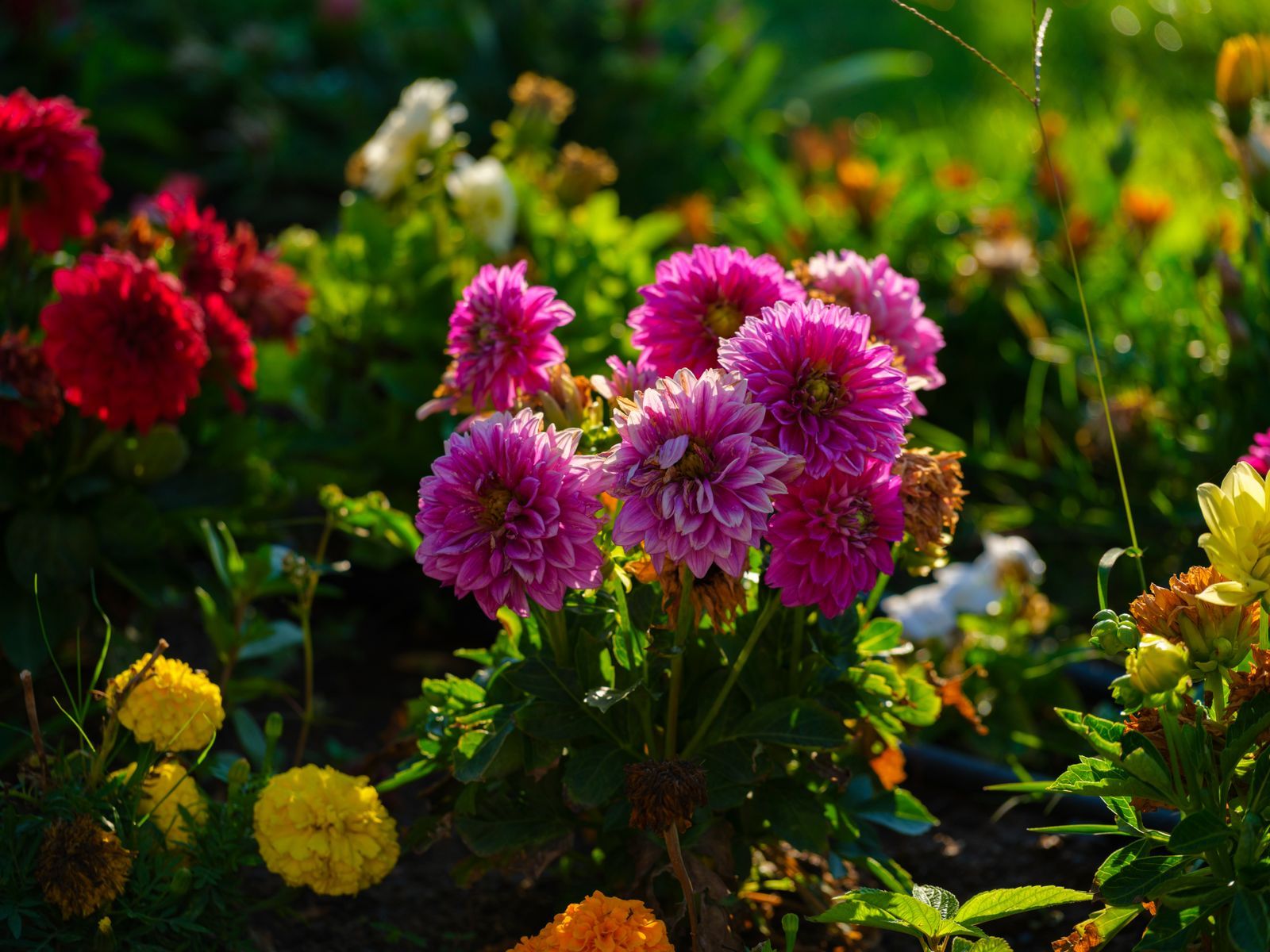
Photo: Engin Akyurt / Pexels
Interactive tool
Dahlia Care Checklist
Check off each step as you finish it. Your progress stays on this page.
0 of 8 complete
0% done
Rule One: No Water on a Sleeping Tuber
The first care rule is the counterintuitive one, and breaking it is the most common way dahlias die before they live. A planted dahlia tuber with no sprout above ground gets no water from you beyond the moisture in the soil at planting. The tuber is a storage organ with no roots drinking yet and no leaves spending, and wet soil around a dormant tuber is an invitation to rot. Rain is out of your hands and healthy tubers in drained soil shrug it off; your watering can is not. The first real drink waits until green growth shows above the surface, proof that roots are out and working. From that point the plant's thirst builds fast, and by midsummer a dahlia in a dry spell wants a deep soak once or twice a week at the base, foliage kept dry. But the season's water story is an arc, dry at the start on purpose, generous in the middle, and it is the flat, generous from day one rhythm that kills the spring planting.
The Pinch, With Its Conflict Flagged
When the young plant has several sets of leaves, you pinch out the growing tip to force branching: more stems, more flowers, a sturdier plant. On the height at which to do it, the sources genuinely disagree and this page will not pretend otherwise. Some guidance pinches early, at 6 to 12 inches tall. Other guidance waits until the plant is about 16 inches. The reasoning behind the disagreement is a real trade: pinch early and you get branching sooner on a plant that has barely started; pinch late and the plant has more leaf to fund the regrowth but you lose a week of season. Our working standard is the middle of the trade: pinch when the plant stands about 12 inches with at least three sets of leaves, taking the tip above the top leaf pair. What is not disputed is the once only nature of the job and its payoff, and the related truth that a dahlia never pinched grows into one tall stem with a flower on top and a wind problem all season.
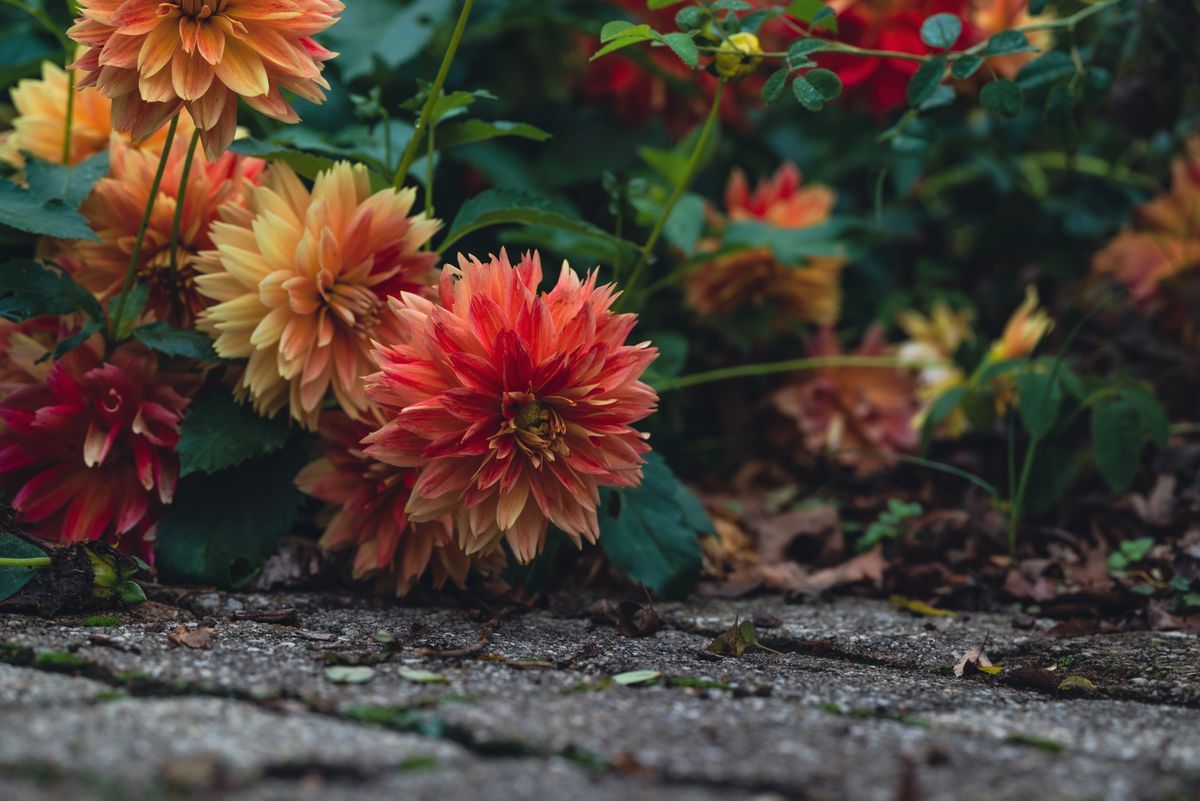
Staking: Before the Plant Needs It
Dahlias are tall, hollow stemmed, and brittle, and the staking rule is timing: set the stake, cane, or support ring at planting or while the plant is small, because driving a stake beside a mature plant spears the tuber and snaps roots you cannot see. A single sturdy stake per plant, tied loosely in a figure eight as the stems grow, serves most border dahlias; the big dinner plate types want a ring or a small cage. Tie with soft material, never wire, and re tie after storms rather than hauling a fallen plant upright by force, which tears the crown. This is the least glamorous entry on the calendar and the one whose absence is photographed most often in August, in other people's gardens, as a row of dahlias lying in the mud after one thunderstorm with their flowers in the dirt.
Disbud for Size or Deadhead for Quantity: Decide Per Plant
Mid season care splits into two philosophies, and the plant cannot have both at full strength. Disbudding removes the two side buds beside a terminal bud, sending the stem's whole budget into one flower: this is how exhibition blooms and the biggest cut flowers are grown. Deadheading removes spent flowers to stop seed setting and push the plant into making more blooms: this is how a border stays in flower for months. Decide per plant, by its job, vase or border, and be consistent. Both jobs depend on one identification skill, and it is the classic beginner loss: a spent dahlia head is pointed and cone shaped, while a new bud is round. They sit side by side on the same stem, feel similar to a thumb in a hurry, and cutting the round one removes next week's flower. Look before you cut, every time, until the shapes are automatic. One safety note that belongs in a care calendar: dahlias are toxic to dogs and cats on the ASPCA listing, so spent heads and cut stems go in the bin or the compost the pets cannot reach, not in a pile at the border's edge where a dog grazes.
Feeding and the Bloom Season Rhythm
Dahlias are hungry plants on a specific diet: low nitrogen, phosphorus forward. Nitrogen rich feeding grows the famous problem, a huge leafy bush with few flowers, because the plant spends the budget on canopy. A balanced or bloom weighted feed every 3 to 4 weeks through the season, watered in, is the standard rhythm, with the first feed as the plants come into strong growth after the pinch. Water and feed are partners here: deep soaking at the base in dry spells, morning if you can, keeps the foliage dry and the mildew pressure down, and a mulch over the bed from early summer holds the moisture even and the soil splash off the lower leaves. Deadheaded or disbudded on schedule, fed on the low nitrogen rhythm, and watered at the base, a dahlia plant does not really have an off switch until frost; the flowers keep coming because you keep removing the plant's reason to stop.
The Lift: Ending the Season Below Zone 8
Dahlia tubers survive winter in the ground only in the warm zones, roughly zone 8 and warmer with mulch; everywhere colder, the calendar ends with the lift. Wait until the first frost has blackened the foliage, which signals the plant to finish moving its reserves into the tubers, then cut the stems to a few inches and lift the clump gently with a fork, working wide of the crown. Shake off the loose soil, let the clump dry upside down for a few days so the stem drains, label it while you still know what it is, because every dormant clump looks like every other, and store in barely damp peat, shavings, or vermiculite in a cool dark place that stays above freezing and below about 50 degrees. Check monthly through winter: shriveled tubers want a whisper more moisture in the medium, moldy ones want air and the bad sections cut away. In spring the clumps divide, each division carrying an eye, and the calendar starts again with a sleeping tuber you do not water.
Cut Flowers: The Care That Starts in the Garden
For growers whose dahlias are headed for the vase, the calendar has a cutting protocol, and it begins the night before: water the plants deeply the evening before a cutting morning, because a stem cut from a fully hydrated plant lasts days longer than one cut from a thirsty plant at noon. Cut in the early morning, into a bucket of water carried to the plant, choosing blooms that are open but not yet shedding pollen from the center. Dahlia stems are hollow and the cut flower's known weakness is a short vase life compared with zinnias or roses; the conditioning that helps is immediate water, a recut under water, and removal of every leaf that would sit below the vase line. Back in the border, cutting is deadheading with better public relations: every stem you cut for the house is a spent flower the plant does not have to feed into seed, so a cutting garden deadheads itself as a byproduct of being enjoyed. The exhibition grower disbudding for one giant bloom and the cottage grower cutting armfuls are running the same plant on the two philosophies this page described, and the calendar serves both, because the tuber never knows which one you chose.
Frequently Asked Questions
Should I water dahlias right after planting the tubers?
No. A dormant tuber has no roots drinking and no leaves spending, and wet soil around it invites rot. The first real drink waits until green sprouts show above the surface. From then on the plant's thirst builds, reaching a deep soak once or twice a week in midsummer dry spells.
When should I pinch a dahlia?
Sources conflict: some say 6 to 12 inches tall, others about 16 inches. This page's working standard is about 12 inches with at least three sets of leaves, pinching the tip above the top leaf pair, once. The pinch forces branching, more stems, more flowers, and a sturdier plant.
How do I tell a spent dahlia flower from a new bud?
By shape. A spent head is pointed and cone shaped; a new bud is round. They grow side by side, and cutting the round one removes next week's flower, the classic beginner loss. Check the shape before every cut until it is automatic.
What fertilizer do dahlias want?
Low nitrogen and phosphorus forward, every 3 to 4 weeks through the bloom season. Nitrogen heavy feeding produces the leafy bush with few flowers. Pair the feeding with deep watering at the base and a mulch, and deadhead or disbud on schedule to keep the plant producing.
Do I have to dig up dahlias every year?
Below zone 8, yes, if you want the same varieties back. Lift after the first frost blackens the foliage, dry the clump a few days, label it, and store cool and dark, above freezing and below about 50 degrees, in barely damp medium. In zone 8 and warmer, a deep mulch usually carries them in the ground.
Photo credits: Engin Akyurt (Pexels); Chris F (Pexels). Photos are served from this site; follow the credit to the library page for the original.