How to Care for Fern Houseplants: the Three Dials, and the Species Ladder Nobody Ranks Honestly
By the Windchime Walker editorial team
Photo: Joshua Mcknight / Pexels
Ferns have a reputation as the houseplants that punish beginners, and the reputation is half earned. A fern is not difficult; it is specific. It runs on three settings, light, moisture, and humidity, and it declines when any one of them is wrong, in symptoms that look alike enough to confuse the diagnosis for months. This page assembles the system in one place, then does the thing the species lists rarely do: ranks the common ferns by forgiveness, so your first fern is one of the easy ones and the famous difficult one is bought, if ever, with open eyes.
Our Boston fern watering page owns that one plant's water in full. This page owns the family: the shared system, and the choice of which fern to bring home.
Interactive tool
Fern Care Checklist
Check off each step as you finish it. Your progress stays on this page.
0 of 8 complete
0% done
Dial One: Light, Bright and Indirect
The fern light rule is bright indirect light, and both words carry weight. Bright, because a fern in a dim corner does not die dramatically; it thins, stretches, and sheds until it is a rumor of a plant, and owners blame water for a light problem. Indirect, because direct sun through glass scorches fronds that evolved under a forest canopy, leaving bleached and browned patches within days. The placements that satisfy both words: a few feet from an east or north window, beside a south or west window rather than in it, or behind a sheer curtain on a bright sill. Rotate the pot a quarter turn weekly; ferns grow toward the light and a one sided plant is a rotation problem, not a growth problem. A fern that holds its color, pushes new fronds from the center, and does not lean is a fern whose light is right, and it is the first dial to check before adjusting anything else.
Dial Two: Moisture, Even and Never Soggy
Fern roots and rhizomes want to live in mix that is evenly moist at all times: never dried out through, never sitting in water. The check is the top of the mix; when the surface has just lost its damp feel, water. Water slowly and fully until it runs from the drainage holes, then empty the saucer without exception, because the one condition as fatal as drought is a crown sitting in runoff. This is the dial where species diverge a little, bird's nest ferns want water poured around the edge of the rosette rather than into its center, where standing water rots the crown, and maidenhair wants the moisture so constant that many growers keep it in a self watering setup. But the shared law holds across the family: the mix cycles between moist and just barely less moist, and both deserts and swamps are outside the design. If your schedule cannot hold that line by hand, a self watering pot or a wick system is not a gadget; for ferns, it is legitimate life support.
Dial Three: Humidity, the One That Actually Kills Ferns
Most fern failure blamed on watering is humidity failure. Ferns evolved in air that is wet, and they are comfortable at 50 percent humidity and above, while a heated or air conditioned home sits at 25 to 40 percent. In dry air the fronds lose water faster than the roots replace it, leaflets brown at the edges and drop, and the owner waters more, rotting the roots of a plant that was thirsty in its leaves and drowning in its pot. The fixes that work, in order of honesty: a humidifier in the room is the only fix that changes the number all day; grouping ferns and other houseplants together raises the humidity in their shared pocket of air and costs nothing; a pebble tray under the pot adds a little, locally; a bright bathroom borrows the shower's daily humidity. Misting, the most advised fix, raises humidity for minutes and is best understood as a ritual you may enjoy rather than a system. Temperatures ride along with this dial: 60 to 75 degrees F suits the family, and distance from heating vents, radiators, and air conditioning drafts matters as much as the thermostat, because moving dry air is a fern's worst weather.
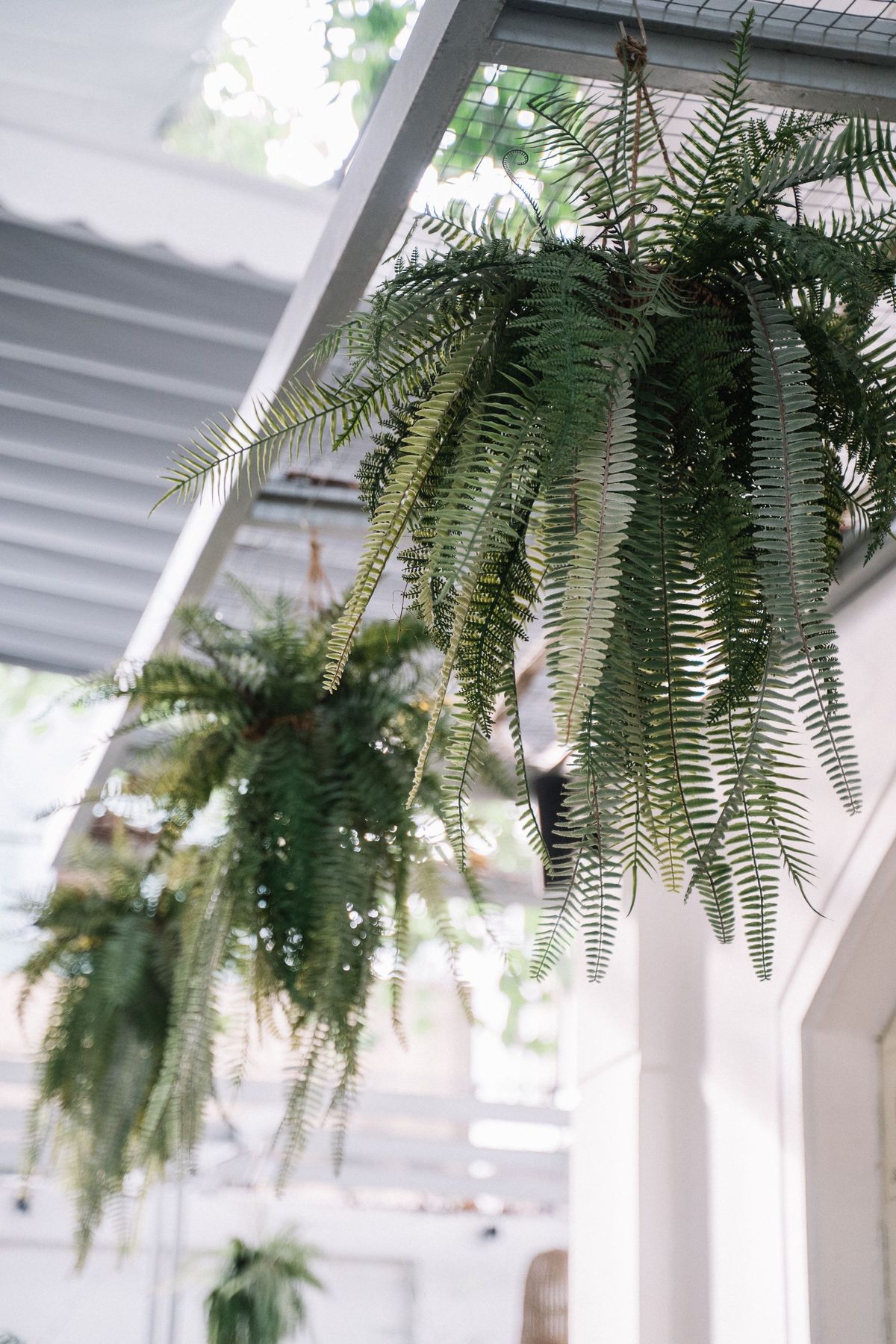
Hanging ferns thriving in a bright indoor space
The Species Ladder, Ranked by Forgiveness
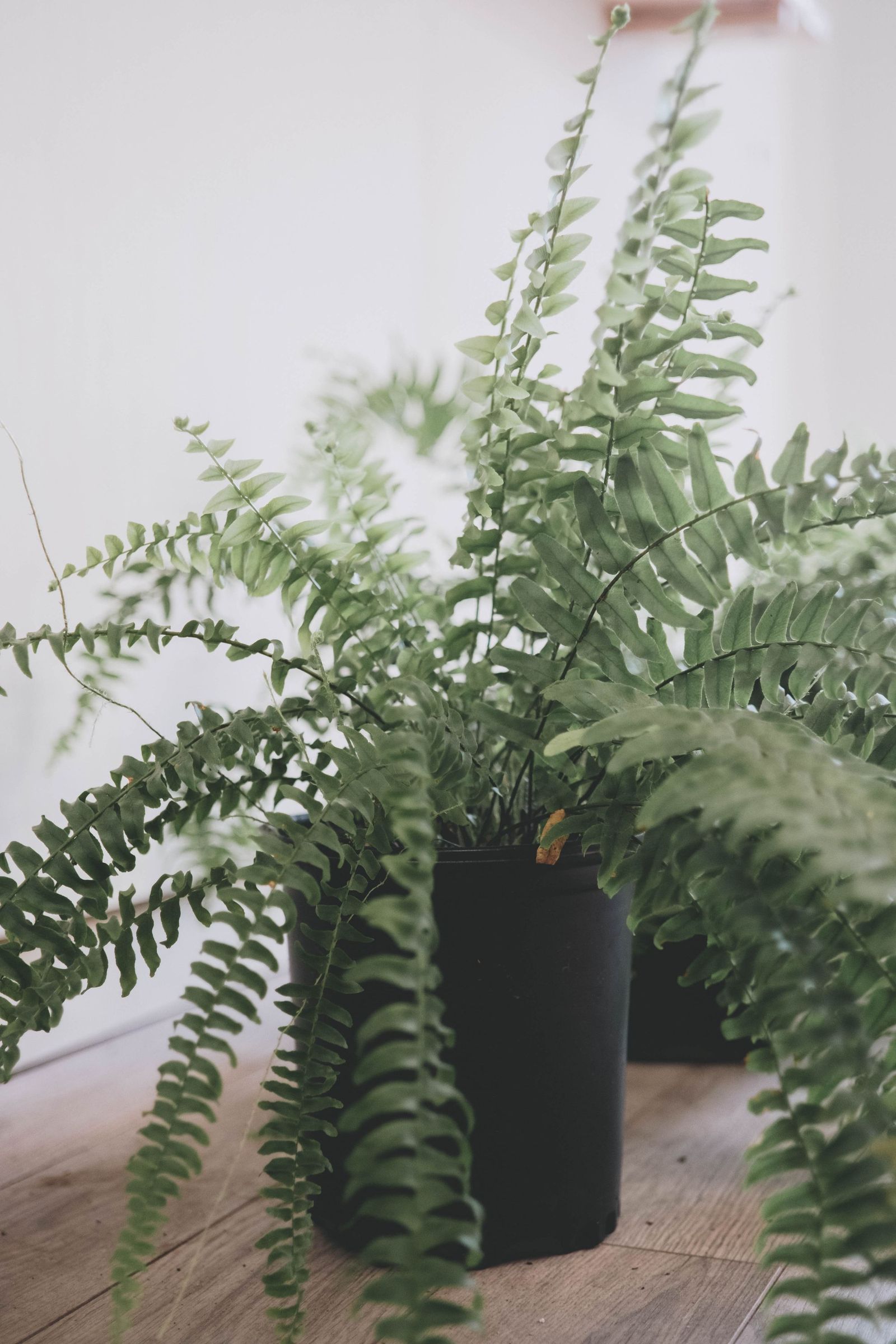
Bird's nest fern is the beginner's fern: broad, undivided fronds that do not shed leaflets on your floor, a tolerance for slightly lower humidity than its relatives, and a clear signal system, pale new growth for more light, brown edges for more humidity. Water around the rosette's edge, never into the nest. Kimberly queen fern is the upright, tidy sword fern, tougher than its Boston cousin, happier in brighter light, and the best fern for a floor pot. Blue star fern earns its place with unusual looks and unusual tolerance, forgiving an occasional missed watering better than most. Boston fern, the classic, sits in the middle: magnificent when the three dials are right, a leaflet shedding protest when they are not, and the subject of its own watering page on this site. Rabbit's foot fern, with its furry creeping rhizomes, is easy in care and asks only that the rhizomes not be buried. Maidenhair fern is the honest end of the ladder: the most beautiful and the least forgiving houseplant fern in common sale, demanding constant moisture, high humidity, and still air, and collapsing dramatically when any lapses. It recovers from the crown more often than its drama suggests, but buy it as a second or third fern, as a project, not as a first plant.
Feeding, Repotting, and the Asparagus Fern Correction
Feed ferns lightly: a balanced houseplant fertilizer at half strength once a month in spring and summer, none in winter, because fern roots are salt sensitive and the brown tips owners chase are often fertilizer burn wearing a disguise. Repot in spring when roots crowd the pot, one size up, in a peat or coir based mix that holds moisture evenly; divide a mature plant at the same moment if you want two. One correction saves real confusion: the asparagus fern is not a fern. It is an asparagus relative with different care, tougher, more drought tolerant, and thorned, and it should not be kept on the fern system or bought expecting fern behavior. Pet safety varies by species and is worth checking by name against the ASPCA list before purchase; the true ferns commonly sold, Boston, bird's nest, and maidenhair among them, are listed as nontoxic to cats and dogs, which is one more reason the family suits pet households willing to run the humidity dial. The checklist below turns the three dials and the ladder into a weekly routine and a buying decision.
The Weekly Routine, and Rescuing a Declining Fern
Systems become habits or they become nothing, so here is the fern system as a week. Once a week, on a day you choose, walk the ferns with a watering can and a fingertip: check each pot's surface moisture and water the ones that have reached the barely dry point, emptying every saucer. While you water, rotate each pot a quarter turn and look at the center of the plant for new fronds, the fern's all clear signal. Once a month in spring and summer, the watering includes the half strength feed. Twice a year, spring and fall, the routine adds a shower: the fern goes to a sink or tub, gets its fronds rinsed to clear dust and the occasional pest, drains fully, and returns. Dust matters on ferns more than on glossy leaved plants, because the fronds are the whole photosynthetic surface and a dusty fern is a dimmed one. The rescue protocol for a fern that has declined despite all this follows the dial logic: unpot it and read the roots and rhizomes, white and firm meaning the problem is in the air or the light, brown and soft meaning the problem is in the pot. Cut away dead fronds and rotted root back to firm tissue, repot in fresh mix one size smaller if the root loss was heavy, raise the humidity around it, and wait a month before judging; ferns rebuild from the crown at a pace that punishes impatient owners and rewards the ones who set the three dials and then leave the plant alone to answer.
Frequently Asked Questions
Why is my fern turning brown at the edges?
Most often humidity, not water. In dry indoor air the fronds lose water faster than the roots replace it, and the edges brown while the mix is correctly moist. Raise the air's water, with a humidifier, grouping, or a bathroom move, before changing the watering. Brown tips with a wet, heavy pot point the other way, at fertilizer salts or a crown sitting in runoff.
What is the easiest fern to grow indoors?
The bird's nest fern: broad fronds that do not shed, better tolerance of average room humidity than most ferns, and clear signals when light or air is wrong. Kimberly queen and blue star are close behind. The maidenhair is the hardest common fern and belongs later in a collection, bought as a project.
Do ferns need to be misted?
Misting raises humidity for a few minutes and does not run the system. Ferns want air at 50 percent humidity or above all day, which a humidifier delivers and grouping and pebble trays help with. Mist if you enjoy it; do not rely on it, and do not let it substitute for the fixes that last.
How often should I water a fern houseplant?
Whenever the top of the mix has just lost its damp feel, which in most rooms is once to twice a week, and in a self watering pot, whenever the reservoir empties. The family rule is even moisture: never dried through, never standing in water, and the saucer emptied after every watering.
Are ferns safe for cats and dogs?
The true ferns commonly sold as houseplants, including Boston, bird's nest, and maidenhair, are listed by the ASPCA as nontoxic to cats and dogs. Check any specific species by name before buying, and note the asparagus fern is not a true fern at all, despite the name.
Photo credits: Joshua Mcknight (Pexels); Anna Tarazevich (Pexels). Photos are served from this site; follow the credit to the library page for the original.