How to Care for Houseplants When on Vacation: The Triage System
By the Windchime Walker editorial team
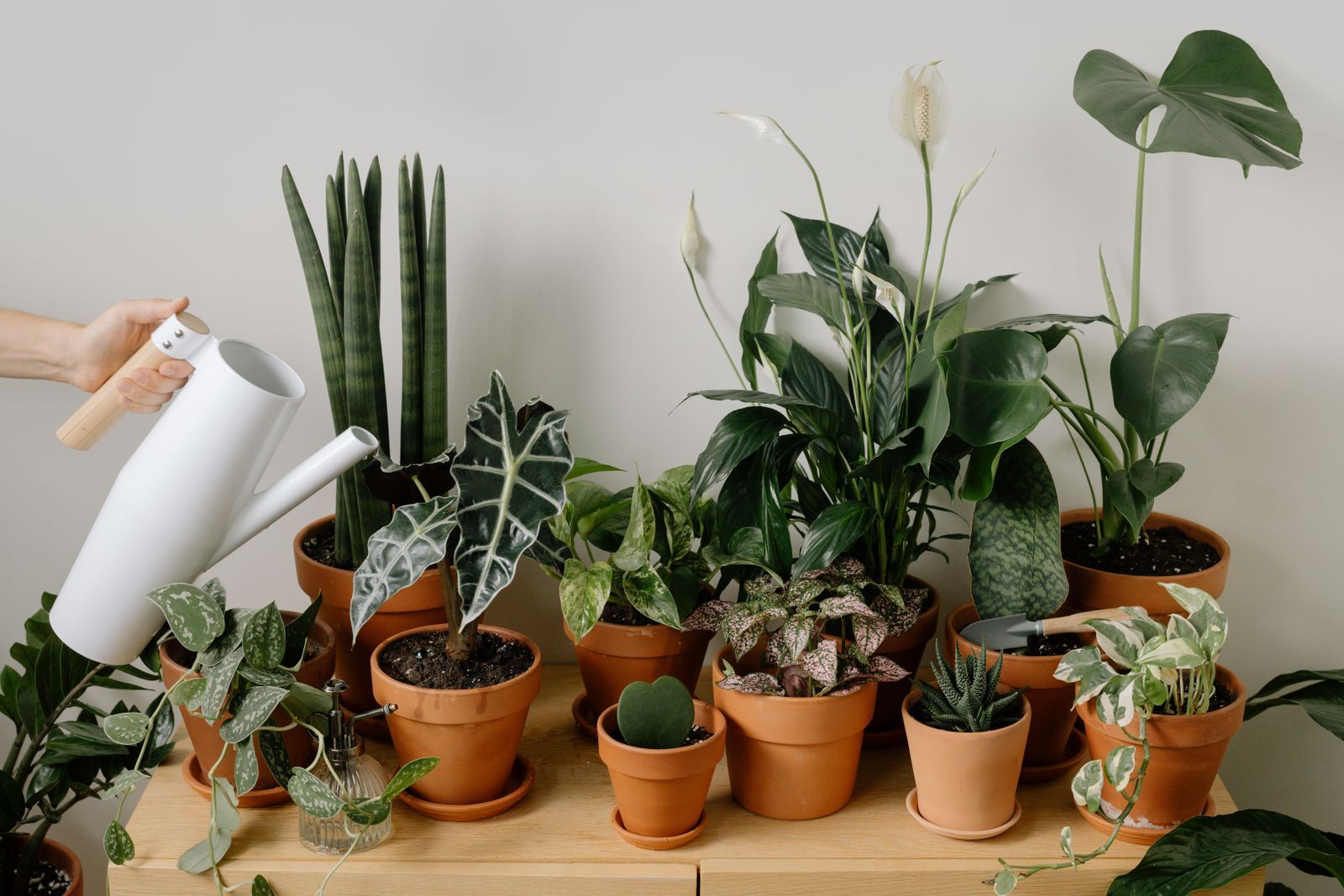
Photo: cottonbro studio / Pexels
Most vacation plant advice is a pile of gadgets and goodwill. What actually decides whether your plants survive a trip is triage: how long you are gone, and which of your plants are genuinely at risk in that window. A ZZ plant does not notice a two week trip. A Boston fern notices a long weekend. UF/IFAS guidance anchors the basics this page builds on: water thoroughly before leaving, and know that the bathtub method carries most plants through 1 to 2 weeks, with plants tolerating lower light than usual for a couple of weeks without harm. On top of those basics, this page adds the system: band the trip, sort the plants, water on the right day, and set only the methods each plant group can actually use.
The when away and when on holiday versions of this question are the same trip, and this page answers all three.
Interactive tool
Vacation Plant Care Checklist
Check off each step as you finish it. Your progress stays on this page.
0 of 8 complete
0% done
Step One: Band the Trip
Up to 3 days: almost nothing needs doing. Water on the normal schedule before you leave, move plants out of the hottest window, and go. The exceptions are seedlings, cuttings rooting in mix, and small pots in summer heat, which dry on a 2 day clock in any season. Four to 10 days: the working band. Most established houseplants cross it on one thorough watering plus placement changes, and the high risk plants need one real method from the list below. Ten days or more: the sitter and automation band. Past ten days, the honest options are a person, a timer based system, or accepting losses among the thirsty plants. Every year, plants die in week two of a three week trip inside systems designed for one week, because the trip was never banded honestly at the start.
Step Two: Sort the Plants by Risk
Use the collection you actually own. High risk, the plants that want moisture continuously: ferns first, Boston fern above all, then peace lily, and any plant in a small pot, which is a moisture risk whatever its species. Medium risk: most tropical foliage plants in medium pots, monstera and philodendron among them, which cross a week comfortably and a fortnight with help. Low risk, the storage plants: snake plant, ZZ plant, and pothos, whose rhizomes, thick leaves, and forgiving habits treat a fortnight as a long weekend; the watering singles on this site for each of those plants give their dry tolerances in full. Sort on paper, because the sort decides where the effort goes: the low risk shelf gets nothing but a normal watering, and every wick, tray, and favor is spent on the high risk end of the list.
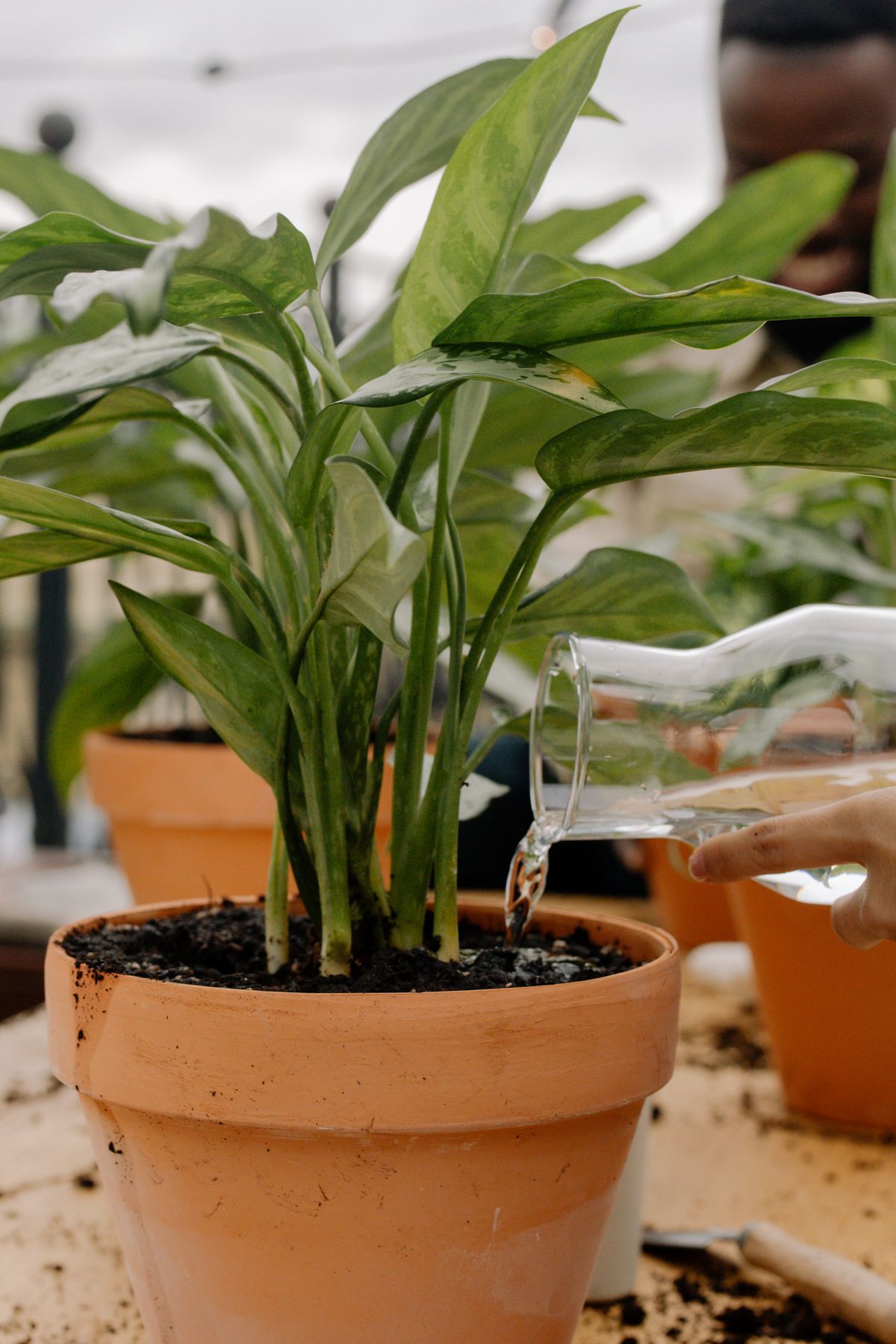
A houseplant in a terracotta pot being watered from a glass bottle
Step Three: Water the Day Before, Not the Morning Of
The timing detail the good guides agree on: give the deep watering 12 to 24 hours before departure, not in the scramble of leaving morning. Watering the day before lets the roots take the water up, lets you empty every saucer after the pots have drained, and means no plant spends the trip standing in runoff, which converts a thirst plan into a rot plan. Watering the morning of, in a hurry, is how pots get left sitting in an inch of water in a cachepot for two weeks. The day before watering is also your inspection: a plant that is struggling before the trip, pests, a yellowing decline, a pot that is root bound and drinking daily, gets promoted a risk band or moved to the sitter list, because trips amplify existing problems rather than pausing them.
The Methods, Matched to the Plants
Grouping is the free method and it works on everything: cluster the plants together on a tray or in one spot and they raise the humidity around each other measurably, slowing everyone's drying. Moving is the second free method: out of hot south and west windows into bright indirect light, because a plant in lower light drinks slower, and UF/IFAS confirms plants tolerate the dimmer seat for the couple of weeks a trip lasts. The bathtub method serves the high risk group on trips to two weeks: pots on a towel in the tub, a shallow layer of water, bright bathroom light if the room has it. Wick watering, a cord from a water reservoir into the pot, serves moisture lovers on the same trips and must never be fitted to the storage plants: a wick feeding a snake plant or a ZZ plant for two weeks is a rot machine aimed at the plants that needed nothing. Self watering globes and spikes are the unreliable middle, fine as a supplement for a medium plant, never as the only plan for a fern. Mulching pot surfaces with pebbles or bark slows the top drying on everything and costs five minutes.
Return Day: The Recovery Check
Come home to a routine, not a rescue panic. First pass: water everything that is dry, deeply, and let it drain; remove dead leaves; check the bathtub and wick plants for the opposite problem, mix that stayed saturated, and let those dry out properly before the next drink. Second pass, a few days later: return plants to their seats gradually if they were moved far from their light, because a plant that sat in dim light for two weeks can scorch if it goes straight back onto a hot sill. Expect some losses at the edges of the high risk group and read them as data: the fern that suffered on a 10 day trip gets a sitter next time, and the plant that crossed three weeks untouched gets promoted in your esteem and left alone with confidence. The system improves every trip, which is the point of running it as a system instead of a scramble.
Briefing a Sitter: The Instruction Sheet That Works
When the trip crosses into the sitter band, the quality of the outcome is set by the quality of the briefing, and most briefings fail by being either a novel or a shrug. The sheet that works has four lines per plant group, not per plant: what it is, where it stands, how much water and when, and what done looks like. Group the plants physically before you leave so the sitter waters zones, not a treasure hunt, and put the high risk group where the sitter cannot miss it, by the sink or the door they will use. Set out the watering can filled, the feed already measured or explicitly cancelled for the trip, because a sitter should never be asked to mix fertilizer, and a note of what to ignore: the plant that looks dead and is dormant, the leaf that is supposed to be yellow. Pay or reciprocate properly, and ask for one photo at the midpoint of a long trip rather than a daily report; a single picture of the high risk shelf tells you everything and asks almost nothing. The sitter system and the triage system are the same system: the sitter is simply the method assigned to the plants whose risk band exceeds every passive method you own.
One last group deserves its own line on the sheet: the plants in active projects, seedlings under lights, cuttings rooting, a plant in mid repot recovery. These do not triage by species at all, because their risk is set by their stage, and a tray of seedlings can be the highest risk square foot in the house. Either the trip bends around the project, the project gets finished or abandoned before departure, or the sitter's sheet leads with it. What does not work is hoping a seedling tray behaves like the snake plant beside it; it will not, and discovering that on return day converts a good trip into a lost month of growing.
Frequently Asked Questions
How long can houseplants go without water on vacation?
By plant, not by rule. Storage plants like snake plant and ZZ plant cross two to three weeks easily. Most tropical foliage plants cross a week on one thorough watering and manage a fortnight with grouping, moving, or a wick. Ferns and peace lilies are at risk past 4 to 5 days without a method. Trips over 10 days want a sitter or automation for the thirsty end of the collection.
When should I water before leaving, the day before or the morning of?
Twelve to twenty four hours before departure. The roots take the water up, the pots finish draining, and you empty the saucers, so nothing stands in runoff for the whole trip. Morning of watering, done in a rush, is how plants end up sitting in water and rotting while you are away.
Does the bathtub method work?
Yes, for moisture loving plants on trips up to about two weeks: pots on a towel in the tub with a shallow layer of water, in the brightest bathroom light available. UF/IFAS guidance supports it for that window. It is the wrong method for plants that need a dry cycle, like snake plants and ZZ plants.
Can I use wick watering for all my plants?
No. Wicks suit moisture lovers, ferns and peace lilies and thirsty tropicals. Never wick a plant that stores water and needs to dry out, snake plant, ZZ plant, or succulents; a wick keeps their mix permanently damp and rots them. The low risk plants need nothing but a normal watering before you leave.
Should I move plants away from windows while I am away?
Yes, out of hot direct sun into bright indirect light. Lower light slows drinking, and plants tolerate a dimmer seat for the couple of weeks of a trip without harm. Grouping them together in the new spot raises local humidity as a bonus. Move them back gradually on your return to avoid scorching.
Photo credits: cottonbro studio (Pexels); cottonbro studio (Pexels). Photos are served from this site; follow the credit to the library page for the original.