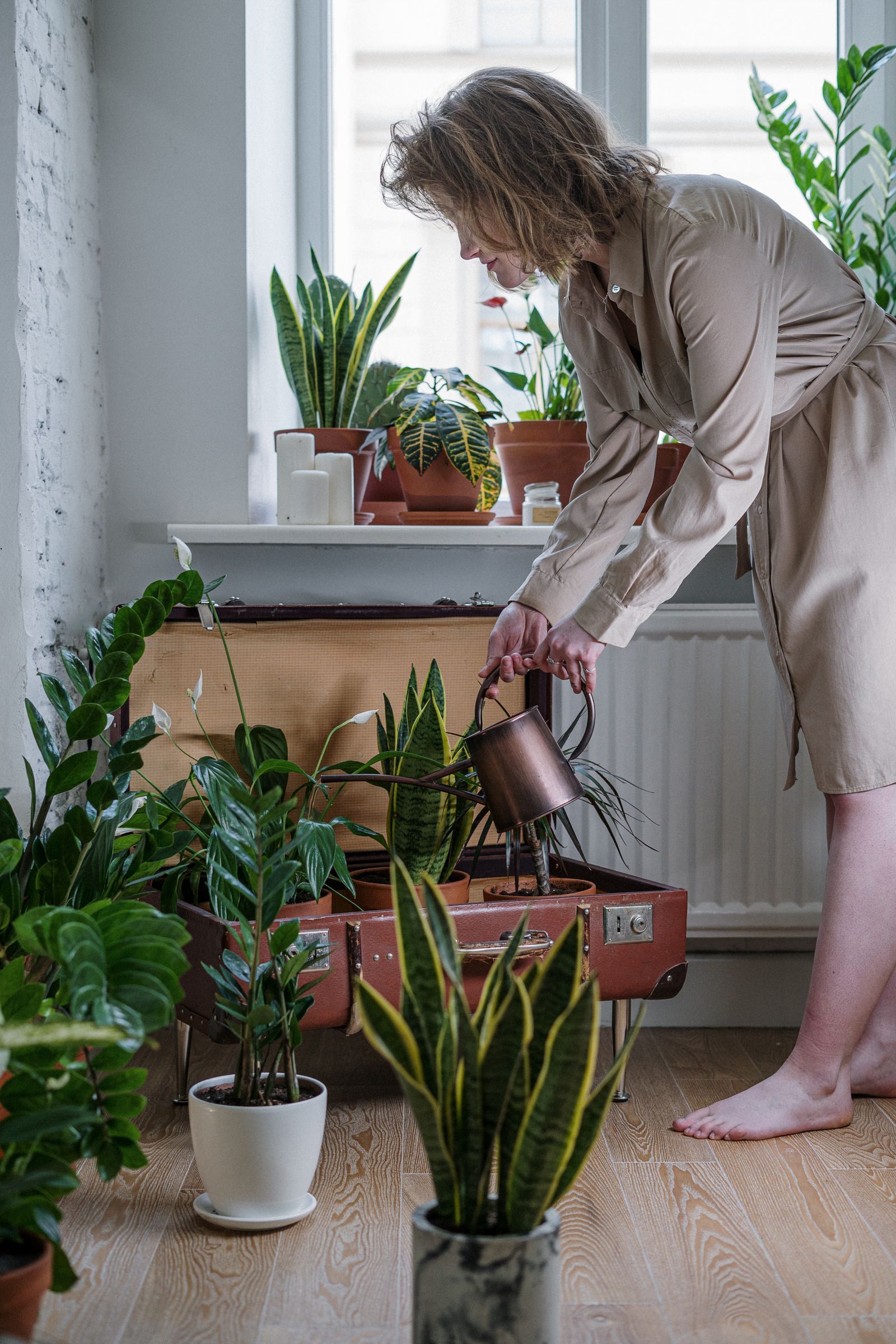
Houseplants do not die from exotic causes. They die from the two simplest ones, too much water and too little light, delivered slowly by people who love them. The overwatered plant is the saddest object in indoor gardening, because it was killed by attention. The good news hidden in that is that houseplant care is not a gift or a mystery. It is a short routine, done in a fixed order, that matches what plants actually need: the right light, water only when the soil asks for it, and a few minutes of looking closely enough to catch problems while they are still small.
This guide gives you that routine, the weekly ten minute round, and explains the judgment behind each step so the routine survives contact with your actual plants, which will include a fern that drinks like a sailor and a succulent that wants to be forgotten. Care is mostly the same for all of them. The differences are in frequency, and the finger test, taught properly below, is how you read each plant's frequency instead of guessing.
Before the round, run the Pot Audit with the Watering Calculator on this page. Enter your largest pot's diameter as both length and width and a depth of about 1 inch, and it will show you roughly how much water a thorough soaking of a pot that size involves. Most beginners are startled by the number, because their usual watering is a splash a fraction of that size, and a plant can be simultaneously overwatered at the schedule level and underwatered at the root level. The audit fixes your sense of scale once, and every watering after it is better aimed.
Interactive tool
Watering Calculator: The Pot Audit
A thorough watering means wetting the whole root ball, not a splash on top. Enter your pot diameter as both length and width below and a depth of about 1 inch to see roughly how much water a full soak takes for a pot that size.
19.9 gallons
For 32 square feet at 1 inch deep. That is about 76 liters, or 10 trips with a standard 2 gallon watering can.
A rain gauge or a straight sided can set in the bed tells you when a sprinkler or soaker hose has actually delivered this depth. Time alone is a guess, because hose pressure varies from house to house.
The conversion is arithmetic, not opinion: one inch over one square foot is 144 cubic inches of water, and a US gallon holds 231 cubic inches, so each square foot at one inch takes 0.62 gallons.
First, the Two Foundations: Light and Drainage
Everything in the weekly round assumes two foundations are in place, and no routine compensates for either being wrong. The first is light. Most common houseplants want bright, indirect light: the light of a spot near a window, where the sun's rays do not fall directly on the leaves for long but the plant can, in the old phrase, see the sky. Low light plants tolerate dimmer corners and direct sun plants want the sill itself, but the commonest indoor error is a plant slowly starving in a room that feels bright to human eyes and is a cave to a leaf. If a plant stretches thin, leans hard toward the window, or stops growing entirely, light is the first suspect, always.
The second foundation is drainage. Every pot needs holes in its bottom, and every watering needs somewhere for the excess to go that is not back into the pot. A plant standing in a saucer of its own runoff is a plant sitting in a swamp, and roots in a swamp rot. Decorative outer pots without holes are fine as covers, as long as the inner pot drains and you empty what collects. Settle these two foundations once, and the weekly round becomes maintenance instead of rescue.
The Weekly Ten Minute Round, in Order
Walk the round in this order, plant by plant, and it will take about ten minutes for a typical collection. The order matters: you look before you water, and you water before you groom, so every decision is based on the plant's current state rather than your schedule.
One: Look. Before touching anything, look at each plant for ten honest seconds. New growth, color, posture, any leaf yellowing or spotting, anything different from last week. Plants report their problems visually and early; the round exists to catch the reports. A plant you look at weekly almost never dies by surprise.
Two: The finger test. Push a finger into the soil up to about your first knuckle, roughly the top inch. For most common houseplants, the rule is to water when that top inch feels dry. Moist soil at that depth means the plant is fine and you move on, even if your watering day has arrived, because the calendar does not drink; the plant does. Some plants, ferns and peace lilies among them, prefer to be watered just before the top inch fully dries, and succulents and snake plants want the soil to dry much deeper between waterings. The finger test reads all of them; you only adjust how dry you let each one get.
Three: Water thoroughly. When a plant passes the finger test as thirsty, water it properly: pour water slowly over the whole soil surface until it runs freely from the drainage holes, which is how you know the entire root ball is wet rather than one channel through it. This is the audit's lesson in practice. A thorough watering is measured in cups or quarts for a real pot, not in splashes. Then empty the saucer or outer pot after a short soak, so the plant is not standing in the runoff.
Four: Rotate. Give the pot a quarter turn. Indoor light comes from one side, and plants grow toward it, becoming lopsided and weak stemmed on their shaded side. A weekly quarter turn evens the growth so quietly that you will forget the plant was ever uneven.
Five: Wipe and tidy. Dust on leaves is not cosmetic; it dims the light the leaf can use. Wipe large leaves with a damp cloth as you go, and remove dead or yellowing leaves at their base, because they shelter pests and the plant is done with them. Ten seconds per plant, and the collection looks cared for because it is.
Six: Check the undersides. Once a week, turn a few leaves over and look at the undersides and the joints where leaf meets stem. That is where the common indoor pests, spider mites, mealybugs, and scale, set up first, as tiny dots, webbing, or cottony specks. Caught at this size, most pests are a wipe with a damp cloth or a rinse in the sink. Caught a month later, they are a campaign.
Feeding: Less Than the Bottle Suggests
Houseplants in fresh potting mix arrive with some nutrition in the soil, and most need feeding only during their growing season, spring and summer for most homes, when they are actively making leaves. A balanced houseplant fertilizer at the label's strength, or weaker and more often, covers it. The errors are at the extremes: never feeding a plant that has lived in the same soil for years, so it slowly starves, and feeding on a rigid schedule through winter rest, so unused fertilizer salts build up in the soil and burn roots. If you see a white crust on the soil surface or pot rim, that is salt buildup: flush the pot with a long, thorough watering and let it drain completely.
When in doubt, underfeed. A hungry plant grows slowly and tells you so with pale new growth, and it recovers in weeks when fed. An overfed plant with burned roots is a rescue case. Houseplants, like tomatoes, are harmed by generosity more often than by neglect.
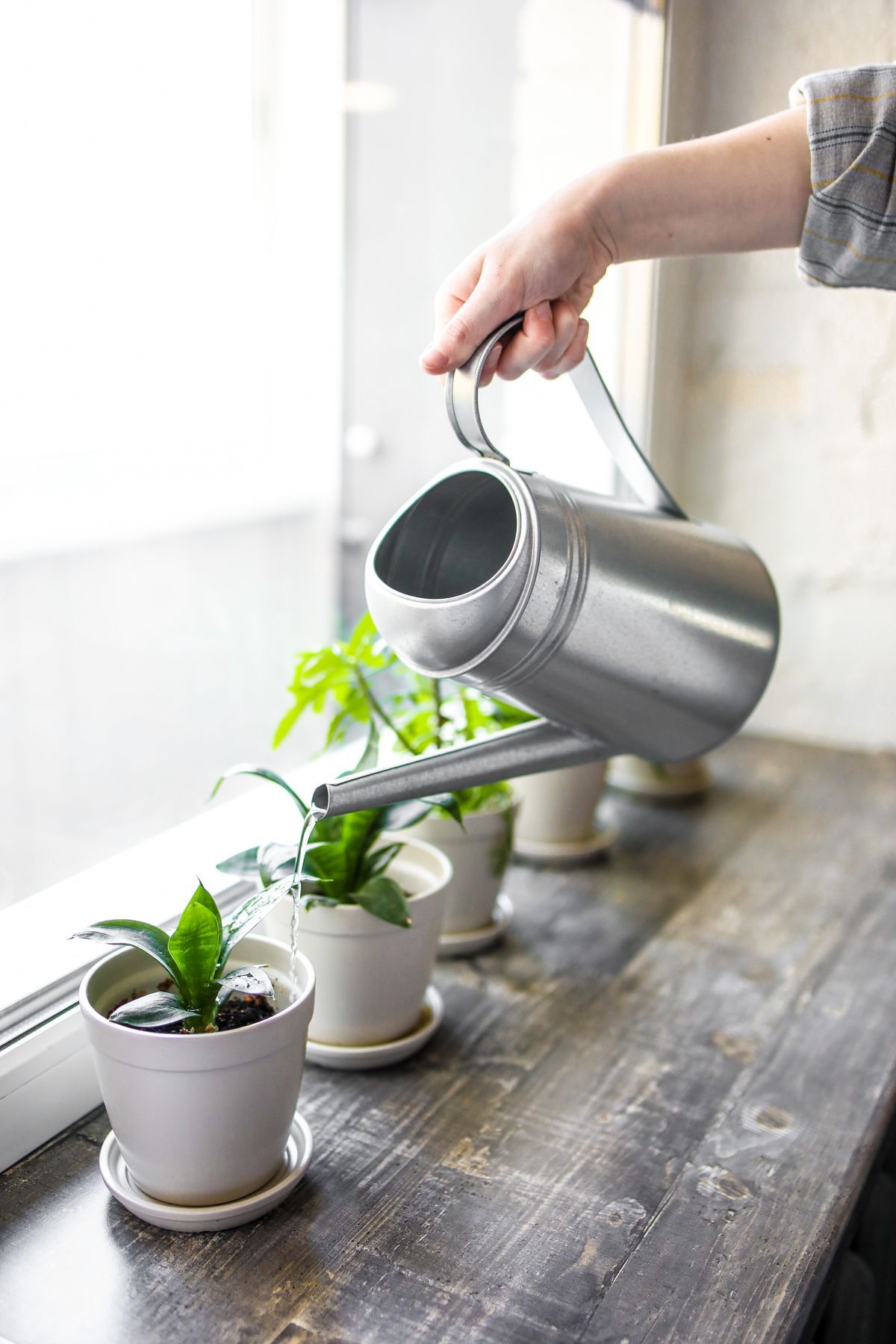
A hand watering indoor plants on a windowsill with a metal watering can, the thorough soak the pot audit measures
Repotting: The Signs and the Method
A plant needs a bigger pot when its roots circle the drainage holes or emerge from them, when water runs straight through the pot without soaking in because roots have displaced the soil, when the plant becomes top heavy and tips, or when growth stalls despite good light and feeding. Most houseplants want this every year or two, not every spring by the calendar.
Move up one pot size at a time, a couple of inches wider, not into a swimming pool of soil: a pot far too large holds more water than the roots can use and invites rot. Water the plant the day before so the root ball holds together, ease it out, loosen circling roots gently, set it in the new pot on a layer of fresh potting mix, fill around it at the same depth it grew before, and water thoroughly to settle. Then resume the round. Repotting is a ten minute job that buys a plant its next two years.
Seasonal Shifts: Winter Is the Test
Houseplant care changes with the year, and winter is where collections are lost. Light falls in both hours and strength, so plants grow slowly or rest, and their water use drops sharply; the finger test automatically adjusts your watering if you trust it over the calendar. Heating dries indoor air, which some plants, ferns and prayer plants especially, feel keenly: grouping plants together and keeping them away from radiators and heating vents does more than misting, whose benefit lasts minutes. Most houseplants also want a winter rest from feeding entirely.
Spring reverses everything: light returns, new growth starts, water use climbs, feeding resumes, and the repotting season opens. The gardener who reads the plant instead of the calendar sails through both transitions, which is the entire philosophy of the weekly round: the plant is the schedule.
Rescues: Yellow Leaves and Drooping
A yellowing lower leaf now and then is normal aging; remove it and carry on. Widespread yellowing with wet soil is overwatering until proven otherwise: check that the pot drains, empty the saucer, let the soil dry to the finger test's standard before watering again, and be patient, because recovery is measured in weeks. A plant that droops dramatically and perks up within hours of watering was simply thirsty, and it is teaching you its interval; write it down. A plant that droops in wet soil has root trouble, and the honest rescue is to unpot it, cut away black, mushy roots with clean scissors, and repot into fresh mix in a clean pot, then water sparingly while it regrows roots. Many plants survive this surgery. Almost none survive being watered more.
Placing Plants: Match the Spot to the Plant
The weekly round keeps a well placed plant thriving; it cannot rescue a badly placed one forever, so placement deserves one careful pass. Start by reading your rooms as a plant experiences them. The sill of a south or west window is high light territory, suited to succulents, cacti, and herbs. A few feet back from that window, or at an east window, is the bright indirect light most foliage houseplants are built for. Across the room is genuinely low light, whatever it feels like to you, and only the tolerant shortlist, snake plants, pothos, ZZ plants, and cast iron plants, will truly live there rather than slowly decline.
Then adjust for the room's other forces. Keep plants out of the direct blast of heating and cooling vents, off radiators, and away from exterior doors whose drafts swing their temperature daily. Bathrooms offer humidity that ferns and prayer plants love, if they have a window; kitchens offer light and your attention, which is itself a care input. A plant placed where you see it every day gets its weekly round without effort, and placement that builds the habit is worth as much as placement that builds the light. When a plant struggles and the round is faithful, move the plant before you change anything else. Location is the strongest medicine in indoor gardening.
Propagation: The Round Makes More Plants
A cared for collection starts offering free plants, and taking them is part of the pleasure. Many common houseplants propagate from a stem cutting in water or soil: pothos and philodendron root at the leaf joints along a cut stem, visibly, in a jar on the sill, which makes them the perfect first propagation. Spider plants grow their own babies on long stems, ready to pin into a small pot of mix and snip free once rooted. Snake plants and ZZ plants divide at repotting time, the clump teased or cut into sections, each with roots and leaves, and potted separately.
Propagation belongs in this guide for a practical reason beyond generosity: it is insurance. A cutting of a beloved plant, rooted and growing in a second pot, means a pest outbreak, a vacation accident, or a winter disaster costs you a plant, not the plant. Gardeners who propagate sleep better. Take a cutting or two each spring as part of the round, give the extras away, and your collection becomes both larger and safer for the same ten minutes a week.
Frequently Asked Questions
How often should I water my houseplants?
When the soil asks, not when the calendar says. Push a finger about an inch into the soil: dry at that depth means water thoroughly for most common houseplants; moist means wait, even if a week has passed. Succulents, cacti, and snake plants prefer to dry much deeper between waterings, while ferns and peace lilies like water just before the top inch fully dries. The finger test, done weekly, reads every plant correctly.
What is the most common houseplant mistake?
Overwatering, and it is usually a drainage problem in disguise. Plants die standing in water: pots without holes, saucers never emptied, and frequent small waterings that keep roots constantly wet while never soaking the root ball. Water thoroughly until it runs from the holes, empty the runoff, and then do not water again until the finger test says the plant is thirsty.
How much water is a thorough watering?
More than most beginners pour. Use the Watering Calculator on this page as a pot audit: enter your pot's diameter as length and width with about 1 inch of depth to see the volume a real soaking represents for a pot that size. In practice, water slowly over the whole surface until it flows from the drainage holes, which guarantees the whole root ball is wet rather than one channel through dry mix.
Do houseplants need fertilizer?
During active growth, yes, modestly. Feed a balanced houseplant fertilizer at label strength or weaker through spring and summer, and stop in winter when most plants rest. A plant in the same soil for years with pale, slow new growth is hungry; a plant with a white crust on the soil has had too much and needs a long flushing watering. Underfeeding is the safer error: it is reversible in weeks, while burned roots are a rescue.
When does a houseplant need repotting?
When roots circle or emerge from the drainage holes, when water runs straight through without soaking in, when the plant tips over from top heaviness, or when growth stalls despite good light and care. Move up only one size, about a couple of inches wider, into fresh potting mix, and water thoroughly to settle. Most houseplants need this every year or two, not on an annual schedule.
Why are my plant's leaves turning yellow?
One or two lower leaves yellowing occasionally is normal aging. Widespread yellowing with constantly wet soil points to overwatering and root trouble; check drainage and let the soil reach the finger test's dryness before watering again. Yellowing with dry soil and crispy edges points the other way, to underwatering. Pale new growth on an otherwise watered plant suggests hunger or too little light, the two quiet deficiencies of indoor life.
Photo credits: cottonbro studio (Pexels); Polina Tankilevitch (Pexels). Photos are served from this site; follow the credit to the library page for the original.