Rose care looks complicated because it is usually taught as a pile of disconnected tasks, and the tasks contradict each other until you put them in season order and split them by rose type. This page is the calendar. Our how-to-plant-roses owns planting day, and how-often-to-water-roses owns water in full; this page owns the recurring year: when to prune which rose and how hard, when to feed and how much, the mulch, the deadheading rhythm, and the disease hygiene that decides whether the foliage survives the summer. The framework follows the Royal Horticultural Society's pattern, the most complete of the incumbent guides: feed twice a year, in spring and again in mid summer after the first flush, at about 70 grams per square meter, mulch with well rotted manure, deadhead weekly, and water established plants only in dry spells, at roughly 5 to 10 liters per plant once a week when rain fails.
Home / Flowers and Houseplants
How to Care for Roses: The Year Round Calendar
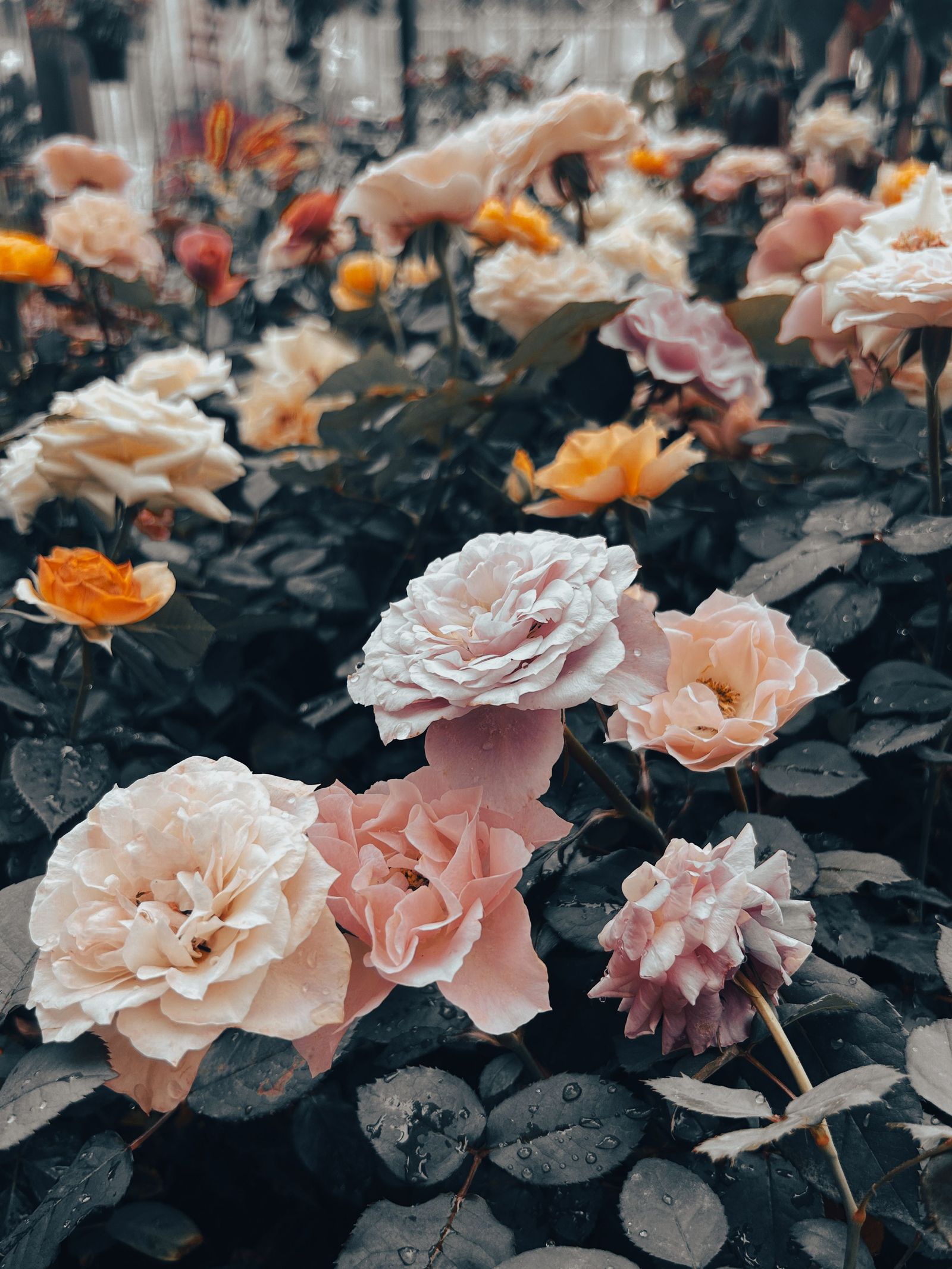
Photo: Leticia Signorin / Pexels
Rose Care Calendar Checklist
Check off each step as you finish it. Your progress stays on this page.
0 of 8 complete
0% done
Know Your Rose Before You Touch It
Every care rule on this page bends by type, so the first job is identification. Hybrid teas and floribundas, the classic bedding roses, flower on new wood and take a hard spring prune. Shrub roses and old garden roses flower on new wood too but keep a natural shape and take only a light prune. Climbers flower on a framework of older canes trained horizontally, and ramblers flower once, on last year's wood, and are pruned after flowering. Ground cover roses mostly want a tidy, not a prune. If you inherited a rose and do not know its type, watch one season before any hard pruning: when it flowers and on what age of wood tells you its class, and a year of light care harms nothing. Pruning an unknown rose hard in spring is how ramblers and old wood flowerers lose their entire bloom year, and it is the most common unforced error in rose care.
The Spring Prune: Forsythia Is the Clock
The traditional cue is still the best one: prune when the forsythia blooms in your neighborhood, which is to say in early spring as the buds begin to swell but before leaves open. For hybrid teas, prune hard: remove dead, damaged, and crossing wood first, then cut the remaining strong stems back to 4 to 6 buds, roughly 8 to 12 inches, always cutting a quarter inch above an outward facing bud at a slight angle. Floribundas get the same treatment a degree lighter, keeping more stems for their cluster display. Shrub roses get a third of the oldest wood out at the base every year or two and a light shaping, nothing more. Climbers keep their framework: tie in strong new canes as horizontally as the support allows, because horizontal canes flower along their length, and shorten the side shoots to 2 or 3 buds. Use clean, sharp bypass pruners, disinfect between a diseased plant and a healthy one, and seal nothing; rose cuts heal best left open to the air.
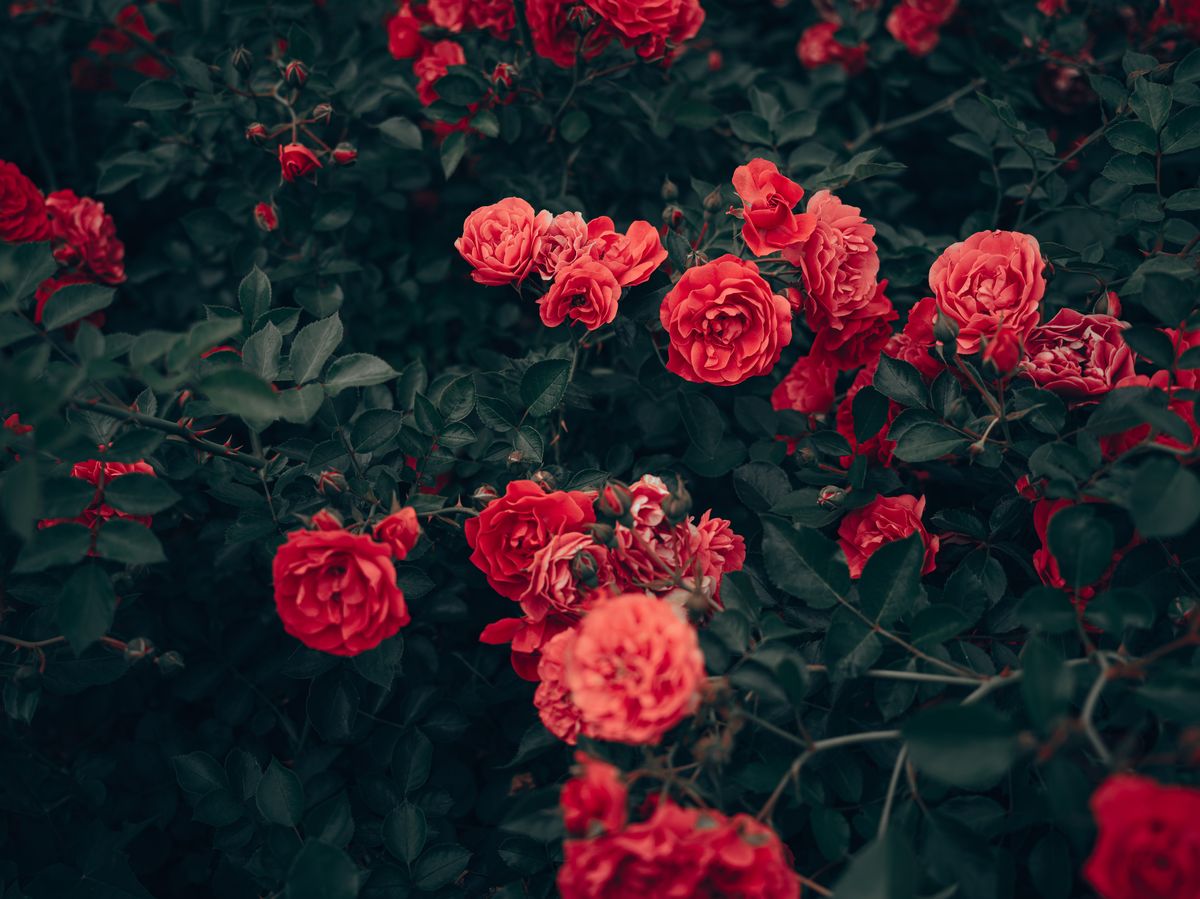
Feeding: Twice a Year, On the Flush Cycle
The RHS pattern is two feeds, and the timing matters more than the product. The first feed comes in spring, as growth starts after pruning: a rose fertilizer or a balanced granular feed at about 70 grams per square meter, scattered over the root zone and watered in. The second comes in mid summer, right after the first flush of flowers fades and you have deadheaded it, funding the second flush that repeat flowering roses are grown for. One time shrub roses and ramblers need only the spring feed. Organic growers can run the same calendar with pelleted poultry manure or a compost top dressing plus a liquid seaweed feed at the flush points. What to avoid is late feeding: nitrogen after late summer pushes soft growth that winter will kill and disease will colonize, so the fertilizer bag closes after the second feed. A rose that yellows between the veins on alkaline soil may be asking for iron rather than more feed; check the pattern of the yellowing before adding anything.
Mulch and the Base of the Plant
After the spring feed, mulch the bed 2 to 3 inches deep with well rotted manure or garden compost, pulled back an inch or two from the stems themselves. The mulch does three jobs at once: it holds soil moisture through the dry spells the watering rule assumes, it suppresses the weeds that compete with a shallow rooted feeder, and it breaks the rain splash that carries black spot spores from the soil onto the lower leaves, which makes it a disease control measure and not just a tidy up. Refresh it when it thins, usually at the second feed. Keep the crown of the plant, where the stems meet the roots, visible and unburied; a rose planted or mulched too deep sulks, and in cold climates the graft union's depth is set at planting and should not drift upward under accumulating mulch over the years.
Deadheading: The Weekly Rhythm
Repeat flowering roses bloom in flushes, and deadheading is how you hurry the next one. Once a week through the season, walk the plants with snips: cut each spent flower or cluster back to the first strong five leaflet leaf below it, at an outward facing bud if one is visible. A plant left carrying hips reads the season as finished and slows its flowering to put energy into seed; a plant deadheaded weekly keeps reblooming into fall. Two exceptions: roses grown for their hips, many species and rugosa types, are not deadheaded at all, and one time flowerers get their tidy after the single flush, combined with their prune. Deadheading is also your inspection round: the aphid colony, the first black spot lesion, and the sawfly larvae all get found on the weekly walk while they are still small problems, which is worth more than any spray schedule.
Black Spot and the Hygiene Doctrine
Black spot is the disease that defines rose care in humid climates, and the doctrine against it is hygiene, not chemistry. The fungus overwinters on fallen leaves and infected canes and splashes upward in rain. So: water at the base of the plant, never over the foliage, which is one reason the watering single insists on it; clear every fallen leaf from under the plants, in fall above all, and bin or burn them rather than composting them at home; prune for an open center so air dries the foliage quickly; and mulch, as above, to break the splash. Fungicides exist and organic options like sulfur and neem have their place, but they protect new growth only and cannot cure infected leaves, so they are the second line behind the hygiene that removes the inoculum. A rose defoliated by black spot is not dead; it will releaf, weaker, and the correct response is the full hygiene program plus patience, not heavier spraying of a plant with no leaves left to protect.
Winter: The Quiet Season's Two Jobs
Winter care is brief. In cold climates, mound soil or compost 8 to 10 inches over the crown of tender hybrid teas after the ground cools, and remove it as growth starts in spring. Leave the final fall flowers to form hips on repeat bloomers rather than deadheading late, because the hip signal helps the plant harden off, and delay any pruning beyond removing obviously dead wood until the forsythia cue in spring: winter pruning invites dieback into the cuts and removes the very wood you would use to judge what survived. Then the calendar closes where it opened: forsythia, pruners, the first feed, and another year of roses.
Frequently Asked Questions
When should I prune my roses?
In early spring, when the forsythia blooms locally and the buds are just swelling, for hybrid teas, floribundas, and shrub roses. Pruning earlier invites frost dieback into fresh cuts; pruning later wastes the plant's first growth. The exceptions are the once flowering types: ramblers and old wood flowerers are pruned right after they flower in summer, because their bloom comes on the previous year's wood and a spring prune removes it. Climbers are tidied and tied in during late winter or early spring, with their framework canes preserved.
How much fertilizer do roses need?
Two feeds a year at about 70 grams per square meter, following the RHS pattern: the first in spring as growth starts, the second in mid summer after the first flush of flowers, for repeat flowering roses. Use a rose specific fertilizer or a balanced granular feed, scatter it over the root zone, and water it in. Once flowering shrub roses and ramblers manage on the spring feed alone. Do not feed after late summer; the soft growth it produces is winter killed and disease prone.
Why do my roses get black spot every year?
Because the fungus overwinters where it fell. Black spot survives on infected fallen leaves and canes under your plants, then splashes up onto new foliage in spring rain. The fix is a hygiene program, not a stronger spray: clear every fallen leaf in fall and through the season, water at the base only, mulch to break soil splash, prune for airflow, and remove infected leaves as you find them on the weekly deadheading walk. Fungicides, including organic sulfur and neem, only protect healthy new growth; they cannot cure spotted leaves, which is why sanitation does the heavy lifting.
Should I deadhead all roses?
Deadhead repeat flowering roses weekly, cutting spent flowers back to a strong five leaflet leaf, and you will be rewarded with faster repeat flushes. Do not deadhead roses grown for decorative hips, such as rugosas and many species roses, or you will cut off the autumn display you planted them for. Once flowering roses are tidied after their single bloom, usually combined with their summer prune. And stop deadheading repeat bloomers in late fall: letting the last flowers set hips signals the plant to harden off for winter.
How do I care for a rose I cannot identify?
Watch it for one season before pruning hard. Note when it flowers, whether the bloom comes once or repeats, and whether flowers appear on new spring growth or on wood from last year. Repeat flowering on new wood means it can take the standard spring prune and the two feed calendar. One flush on last year's wood means prune after flowering only. Give it the universal care in the meantime, the spring feed, the mulch, base watering, and fallen leaf hygiene, which suit every class of rose, and you will do it no harm while it tells you what it is.
Photo credits: Leticia Signorin (Pexels); Egor Komarov (Pexels). Photos are served from this site; follow the credit to the library page for the original.