Zinnias ask for so little that their care page is really about three habits done on rhythm: water at the base, deadhead constantly, and keep the foliage dry and aired. This article owns the in-season care layer of the plant's life. The sowing system lives in our zinnias from seed guide, and the watering depth lives in our zinnia watering guide; what sits between them, the pinching, feeding, deadheading, and disease defense that decide whether a zinnia plant is a June promise or an August spectacle, is here. The factual spine is Clemson Extension's zinnia guidance: roughly an inch of water a week, applied at the base, with spacing and air circulation as the front line against the powdery mildew that is this plant's signature disease. Run the checklist above as the season's audit, and the sections below as the reasoning behind each habit.
Home / Flowers and Houseplants
How to Care for Zinnias: The Base Watering Rule, the Deadhead Rhythm, and Mildew Defense
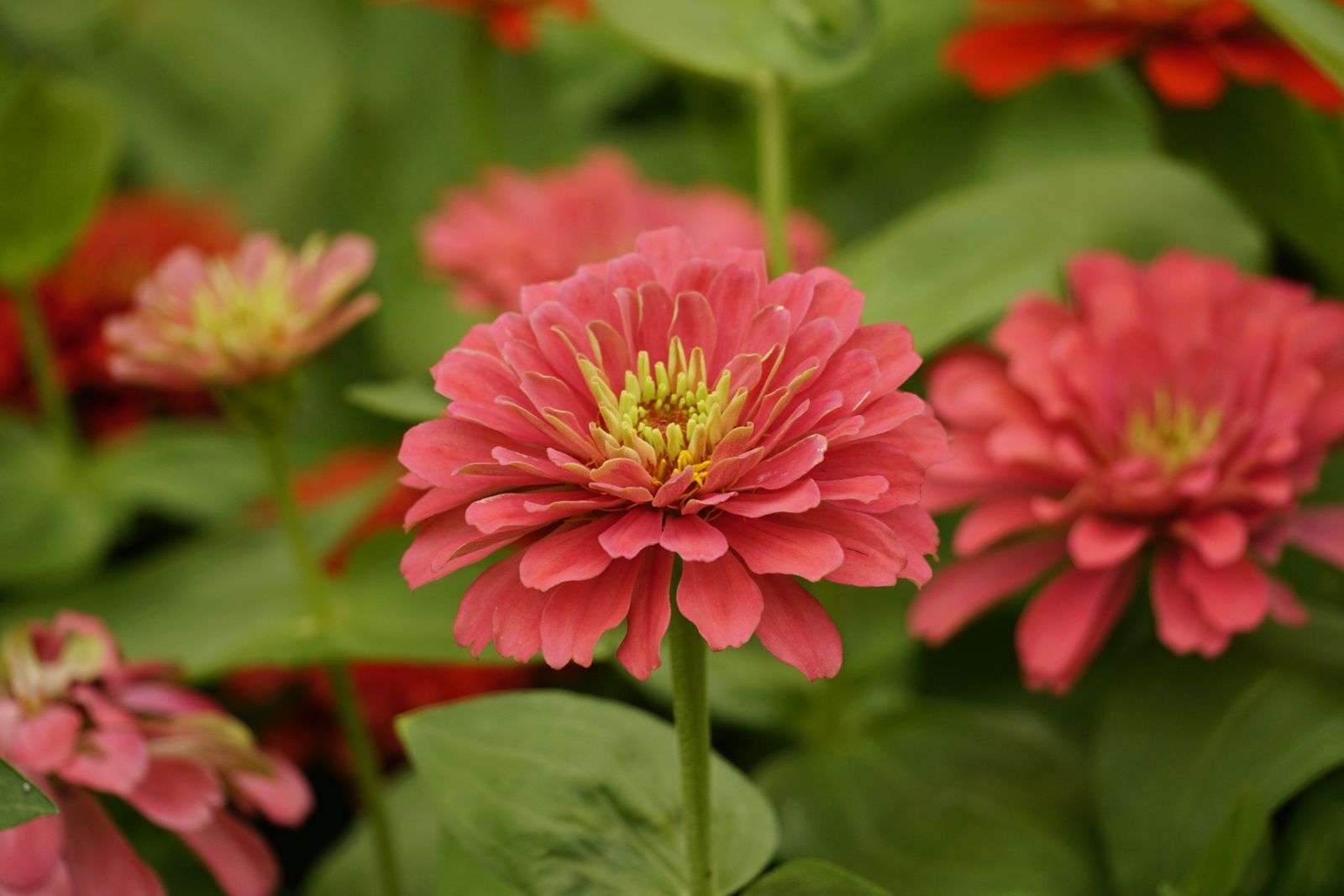
Photo: Duy Le Duc / Pexels
Zinnia Care Checklist
Check off each step as you finish it. Your progress stays on this page.
0 of 8 complete
0% done
Water at the Base: The Inch a Week, Delivered Low
Clemson's figure for zinnias is about an inch of water a week, and the delivery matters as much as the amount. Zinnia foliage kept wet is foliage at risk: the plant is famously prone to powdery mildew and to bacterial leaf spot, both of which spread in water films and splashed soil. So the inch arrives at the base, by soaker hose, drip line, or a watering can aimed at the soil, in the morning so the plant starts the day dry. Overhead watering in the evening is the single most damaging routine a zinnia can be kept on, worse than a missed week. In a dry spell the inch is genuinely needed, because a drought stressed zinnia stops flowering and sets small, tired blooms; in a rainy week the inch is skipped entirely, since the sky delivered it. Mulch under the plants completes the system, holding the soil moisture even and, just as importantly, stopping rain and watering splash from carrying soil borne bacteria onto the lower leaves. A zinnia bed watered low, mulched, and spaced for air can run the whole summer on this one habit and never need a fungicide conversation.
Deadheading: The 3 to 4 Day Rhythm That Is the Bloom
A zinnia plant has one program, to set seed, and every faded flower left on the plant is the program advancing. Deadheading is how you interrupt it: cut each spent bloom back to the next set of leaves or branching stem, and the plant answers with new branches and new buds, because its seed quota is unmet and the season is still on. In full production, midsummer, the rhythm is every 3 to 4 days with snips in hand, a five minute pass that removes the browning heads before they tax the plant. Cut deep enough; nipping the flower alone leaves a stub that rots and a branch that does not fork, while cutting to a leaf pair triggers the branching the next flush grows from. The same pass doubles as the disease inspection: spotted, mildewed, or bacterially marked leaves are removed and bagged out of the garden, never composted, and the plant's center is opened to air. The one exception to the rhythm is the season's end, when you stop deadheading deliberately and let a few heads ripen, because zinnia seed is easy to save and the birds work the standing heads in the meantime. Until that decision, the rule is simple: a zinnia you deadhead is a zinnia still blooming.
Pinching and Feeding: Bushiness Bought Early, Flowers Bought Light
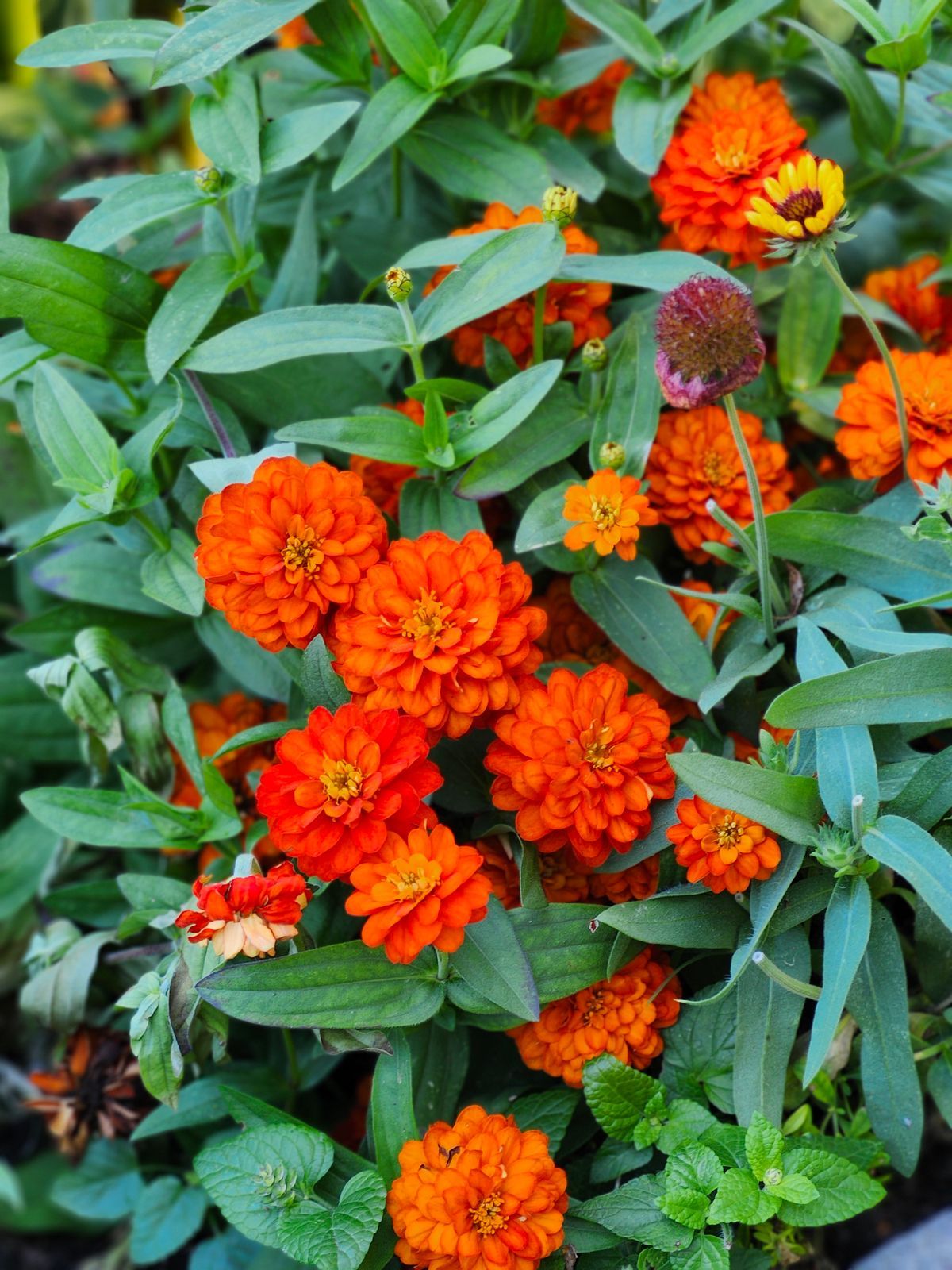
Two early decisions shape the plant before the deadheading rhythm takes over. The first is the pinch: when a young zinnia stands 8 to 12 inches tall with several sets of true leaves, cut the growing tip back to a strong leaf pair. The plant forks into two or more stems, and the result is a bushier, sturdier, more floriferous plant that stands up to weather instead of flopping from a single stalk. It costs a week of bloom and pays for the whole season. The second is feeding, and zinnia feeding is a lesson in restraint. The results for this query carry a striking trial finding, carried in the University of Vermont's zinnia coverage, that heavy nitrogen feeding cut bloom production dramatically, with high fed plants producing over half fewer flowers in the trial account; the mechanism is no mystery, because nitrogen grows the leaf the plant already has enough of. Feed zinnias lightly: a modest balanced feed at planting and perhaps once more mid season on poor soil, compost as the base dressing, and nothing like the feeding schedule a tomato or a rose receives. A zinnia that is all leaf and no bloom is almost never hungry. It is overfed, and the cure is to stop and let it spend its nitrogen down into flowers.
The Disease Defense: Airflow First, Chemistry Last
Powdery mildew is the zinnia's expected late season companion, white dusting on the leaves as nights cool and dews lengthen, and bacterial leaf spot is its uglier relative in wet summers, dark angular spots that shred the foliage. The defense is architectural before it is chemical. Space plants so air moves between them, Clemson carrying rows at 12 to 18 inches for exactly this reason, and choose the mildew resistant series, the Profusion and Zahara types, where the disease is a yearly certainty; the tall old fashioned varieties are the most susceptible and the most beloved, which is a fair trade only with eyes open. Water at the base, mulch against splash, remove marked leaves on the deadheading pass, and rotate the zinnia bed year to year so soil borne pressure does not compound. When mildew arrives anyway, as it does in most gardens by late summer, judge it honestly: a dusted plant still blooms, and the usual verdict is to let the display run and pull the plants when they tire, rather than spray a flower bed weekly for a cosmetic disease. Bacterial spot is the one to act on fast, because it spreads in wet weather through the whole planting; remove badly marked plants entirely. Care for zinnias is mostly these rhythms kept: water low, deadhead deep, feed light, air always. Do them and the plant does the rest, loudly, until frost.
Frequently Asked Questions
How often should zinnias be watered?
About an inch of water a week, per Clemson Extension, delivered at the base of the plants rather than over the foliage. In dry spells that inch is a real weekly drink, ideally by soaker hose or drip in the morning. In rainy weeks, skip it; the sky has delivered. The delivery rule matters as much as the amount, because wet zinnia foliage invites the powdery mildew and bacterial leaf spot the plant is prone to, and mulch under the plants stops soil splash onto the lower leaves.
How do I keep zinnias blooming all summer?
Deadhead on a 3 to 4 day rhythm in midsummer. Cut each spent flower back to the next set of leaves or branching stem, not just the flower head, and the plant forks and buds again instead of setting seed. Pinch young plants once at 8 to 12 inches for a bushy, multi stemmed frame. Feed lightly or not at all beyond a modest planting feed, because heavy nitrogen grows leaves at the direct expense of flowers. Stop deadheading only at season's end, when you want seed.
Why are my zinnias all leaves and no flowers?
Usually overfeeding, sometimes shade. A University of Vermont trial account in the results found high nitrogen feeding cut zinnia bloom production by more than half; nitrogen grows foliage, and a zinnia with plenty of leaf has no urgency to flower. Stop feeding, let the plant spend its nitrogen down, and confirm it is getting full sun, because zinnias in part shade also leaf out and bloom sparsely. The cure is restraint and patience, not more fertilizer.
How do I prevent powdery mildew on zinnias?
Architecturally. Space plants for airflow, with rows at 12 to 18 inches per Clemson guidance, water at the base in the morning, mulch to stop soil splash, and remove spotted leaves on your deadheading rounds, bagging them out rather than composting. In gardens where mildew is a yearly certainty, plant the resistant series such as Profusion and Zahara. Late season mildew on a still blooming plant is usually tolerated rather than sprayed; bacterial leaf spot, the dark angular spotting, is the serious one and badly marked plants should come out entirely.
Should I pinch zinnia seedlings?
Yes, once, when the plant stands 8 to 12 inches tall with several sets of true leaves. Cut the growing tip back to a strong pair of leaves. The plant forks into multiple stems and finishes bushier, sturdier, and more floriferous than an unpinched plant, at the cost of about a week of bloom. It is the highest value single cut in zinnia care, and it is the same cut, deepened to a leaf pair, that the deadheading rhythm uses all season.
Photo credits: Duy Le Duc (Pexels); Alex Ohan (Pexels). Photos are served from this site; follow the credit to the library page for the original.